China anchors Africa zero-tariff pledge into 15th Five-Year Plan
The Ministry of Commerce will grant duty-free market access to 53 African nations, excluding only Eswatini, across its 2026-2030 trade blueprint.
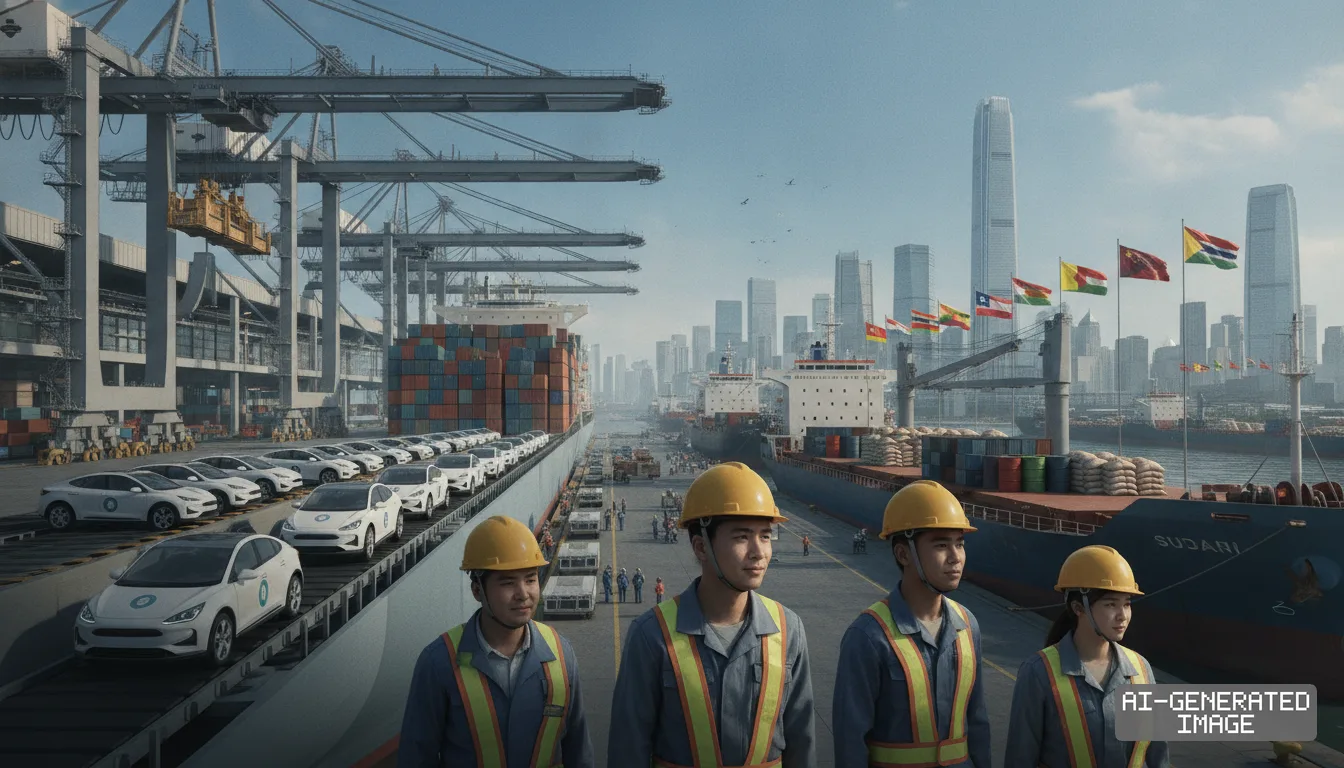
China's Ministry of Commerce said Nov. 11, 2026 it will anchor comprehensive zero-tariff treatment for 53 African diplomatic partners into the country's upcoming 15th Five-Year Plan covering 2026 through 2030.
The announcement came during an interagency press briefing in Beijing organized by the National Development and Reform Commission. Song Lihong, first-class inspector at the commerce ministry's Comprehensive Department, presented the trade roadmap.
The tariff policy covers 53 of the 54 sovereign nations in Africa, leaving out only Eswatini. The exemption grants preferential duty-free market access to roughly 98% of the continent's jurisdictions.
Song said the ministry will focus on trade innovation during the 2026 to 2030 planning cycle. Priorities include carrying out full zero-tariff measures and expanding imports of raw materials and farm goods.
Beijing is cementing trade rules that took effect in phases over the past two years. China granted zero-tariff status on 100% of tariff lines to 33 African least developed countries on Dec. 1, 2024.
Chinese President Xi Jinping then announced an expansion of the tariff waiver on Feb. 14, 2026 during the African Union summit. The expansion added 20 African nations that do not qualify as least developed economies.
The State Council Customs Tariff Commission implemented that decision through Announcement No. 5 of 2026. The General Administration of Customs issued origin certification rules under Announcement No. 54 of 2026 on April 28, 2026.
Those decrees took effect May 1, 2026 and apply to regional economic heavyweights including Algeria, Egypt, Kenya, Nigeria and South Africa. The preferential schedule runs for a two-year trial period ending April 30, 2028.
Under the customs rules, tariffs fell to zero on all eligible tariff lines. For products subject to import quotas, in-quota duties dropped to zero while out-of-quota tariff rates remained unchanged, according to the State Council notice.
The move established China as the first major economy to offer unilateral duty-free entry to almost all African nations. The mechanism seeks to secure supply chains for energy, critical minerals and agricultural commodities.
Initial clearance data showed prompt uptake across southern maritime gateways. Guangzhou Customs reported more than 1.63 billion yuan ($226 million) in goods declared under the new preferential codes during May 2026, the policy's first operating month.
Early shipments through Shenzhen Bay port included South African fresh apples, followed by Egyptian frozen strawberries and Kenyan avocados. Chinese customs officials enabled online origin certificate issuance to accelerate clearance times at container terminals.
Song highlighted five structural priorities for international trade rule-making under the 15th Five-Year Plan. A central plank is negotiating bilateral Economic Partnership Framework Agreements for Shared Development with African partner states.
The ministry intends to use these framework agreements to formalize market opening into binding bilateral structures. The agreements will link tariff waivers directly to trade facilitation, digital logistics and supply chain cooperation.
Beijing has started testing the model on island nations. China signed an economic partnership framework agreement with Cape Verde on Sept. 9, 2026 and agreed on an early-harvest tariff arrangement with Seychelles on Sept. 11, 2026.
The five-year strategy also calls for expanding cross-border e-commerce networks under the Silk Road E-Commerce initiative. Song said the ministry will guide industrial enterprises into overseas cooperation zones and green infrastructure projects.
Chinese mining and processing companies hold large operating assets across Central and Southern Africa, including cobalt, copper and lithium ventures. Eliminating import tariffs lowers processing costs for domestic refiners sourcing raw ores from African extraction hubs.
The ministry briefing did not name corporate beneficiaries or publish enterprise-level tariff quota distributions. Official releases also omitted volume quotas assigned to state-owned commodity trading groups or private industrial consumers.
Trade analysts note that converting unilateral concessions into bilateral treaties requires consensus with sovereign partners. African governments are concurrently managing external tariff commitments through the African Continental Free Trade Area secretariat.
What the ministry did not settle on Nov. 11 is the exact timetable for negotiating the broader framework treaties. MOFCOM has not published draft legal texts or set dates for opening rounds with individual African capitals.
The existing preferential duty schedule remains in force through April 30, 2028 under the State Council's trial timeline. China's 15th Five-Year Plan formally begins in 2026, setting policy directives for industrial raw material flows over the subsequent five years.
Impact map
How this development propagates across the region and out to global buyers.
| Event | Korea | China | Japan | Global impact |
|---|---|---|---|---|
| China-Africa zero-tariff policy | Korean smelters face stiffer raw mineral procurement competition in Central Africa | Chinese refiners secure duty-free access across 53 African partner countries | Japanese trading houses see higher supply competition for African copper and lithium | African export flows shift toward Chinese ports under zero-tariff preferences |
In this story
- Policy
- Tariffs
- Impact
- Supply ChainCost StructureCompliance
Track every Tariffs development →
Related briefings
- USTR extends Section 301 tariff relief on 178 Chinese product lines Also on Tariffs, Compliance, Cost Structure
- USTR limits US-China tariff relief to $60B in consumer goods Also on Tariffs, Compliance, Cost Structure
- China waives tariffs on African trade with no political terms Also on Tariffs, Compliance, Cost Structure
- Trump 100% China tariff threats hit Asian intermediate hubs Also on Tariffs, Compliance, Cost Structure
Sources
Primary documents
Reporting
Confidence: high — how we grade this
The documents behind this briefing are linked above. East Asia Brief produces its English text with AI assistance under human editorial review, and does not translate or republish other outlets' articles. See our methodology and AI policy. Spotted an error? Tell us.
The Morning Brief
What changed in Korean, Chinese and Japanese industry overnight — and what it means for your supply chain. One email, weekday mornings, US time. Free.
The Morning Brief is in preparation. Leave your address and we will write to you once — when the first issue is ready. Nothing before that.