China cautions US on AI export controls amid $30B tariff talks
The foreign ministry cautioned that expanded technology restrictions threaten supply chains as Beijing keeps mineral export retaliation measures paused.
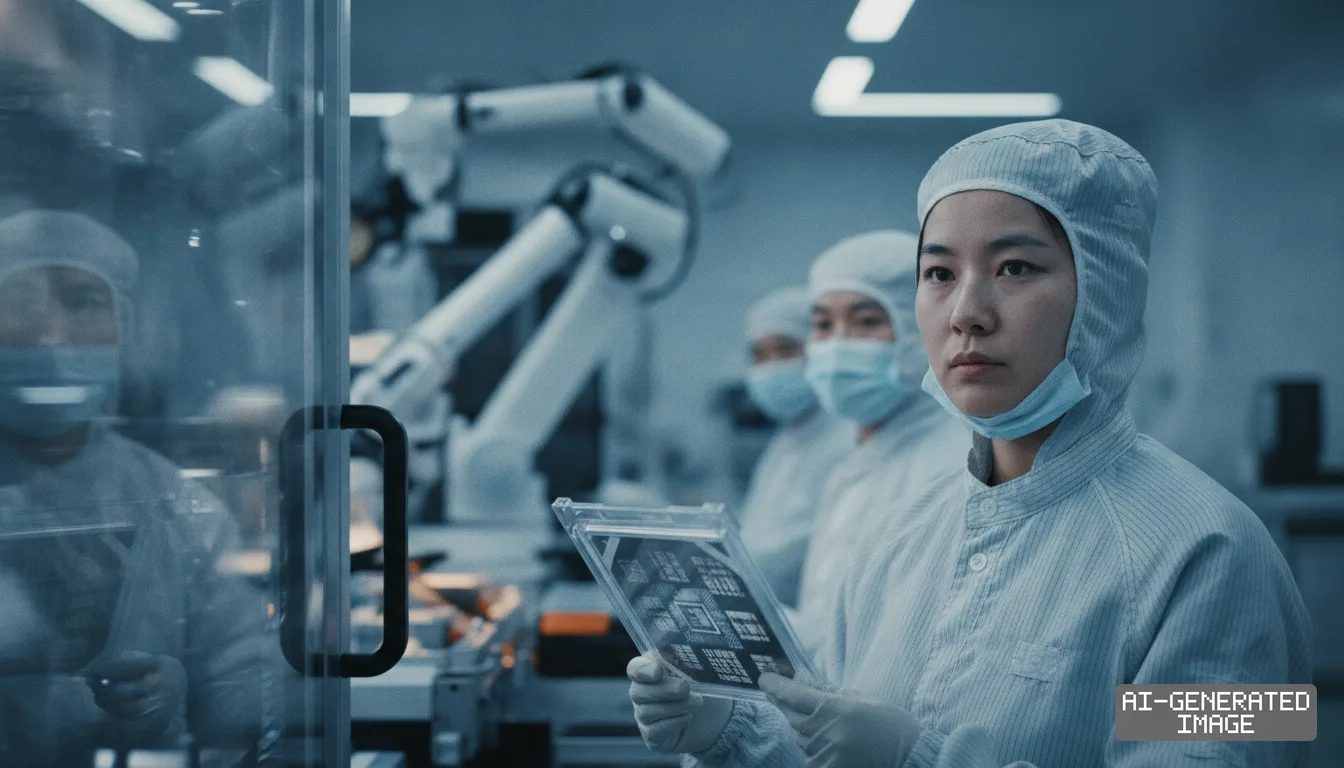
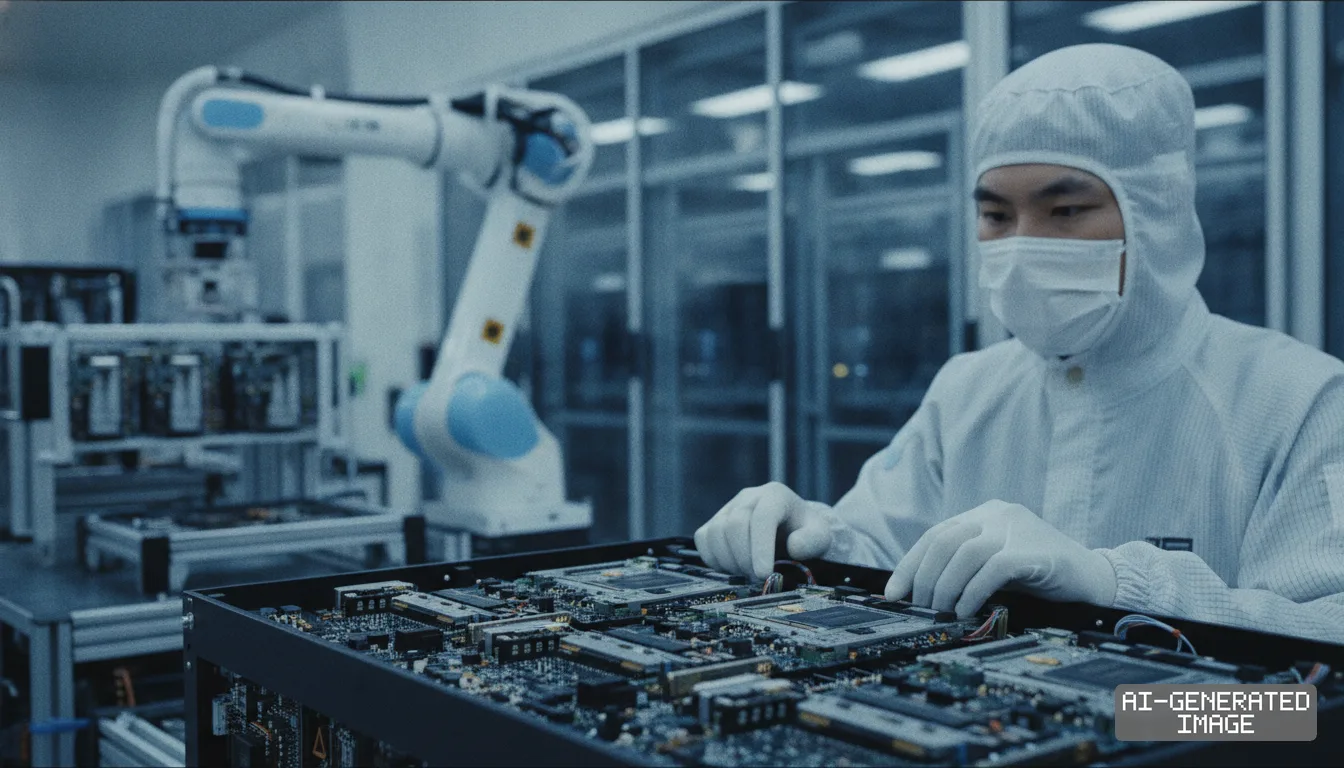
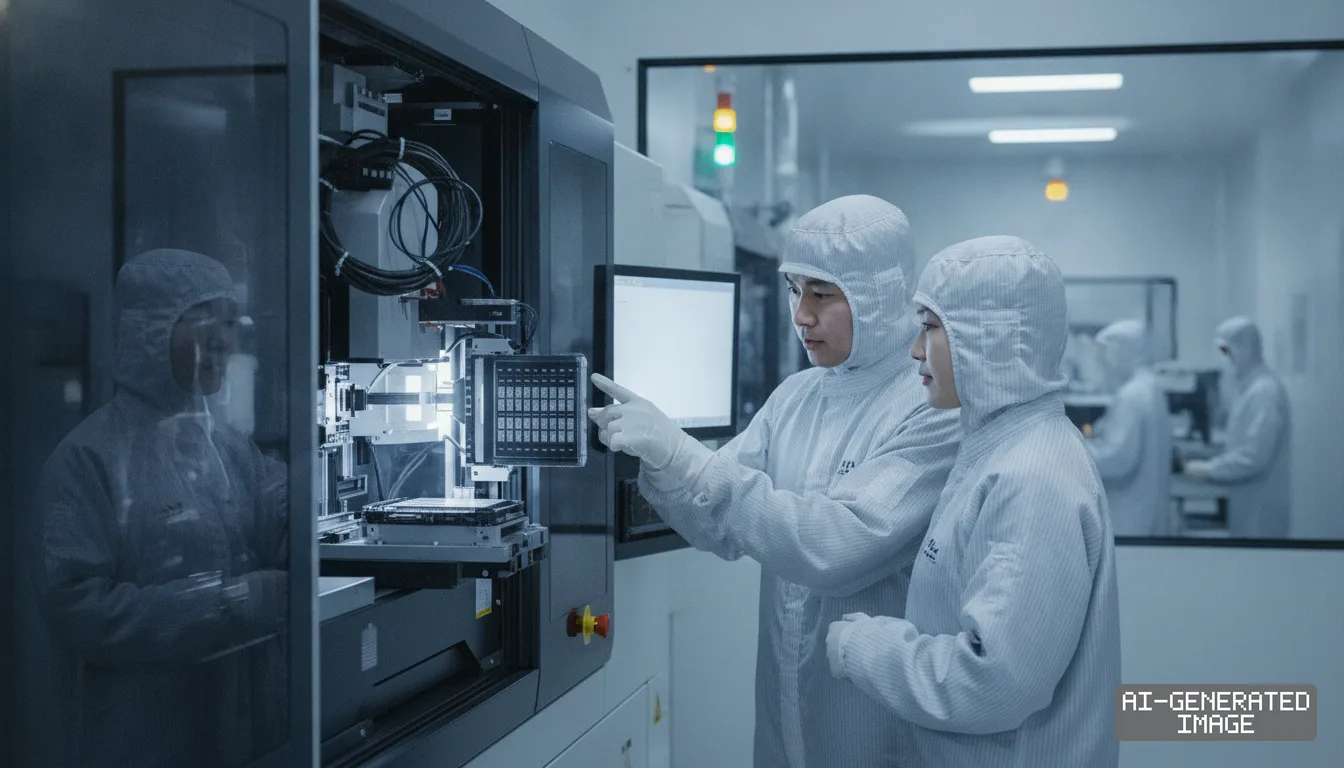
China warned Washington on Nov. 13, 2026 against tightening export controls on artificial intelligence semiconductors, cautioning that additional technology curbs would destabilize global industrial supply chains without serving either country's economic interests.
Spokesperson Mao Ning addressed lawmakers in Washington who are seeking expanded restrictions on semiconductor equipment and computing access. The diplomatic caution followed bilateral progress on a $30 billion reciprocal tariff reduction package discussed earlier this week.
China has kept its primary retaliatory mechanisms paused under Announcement No. 58 of 2026. The Ministry of Commerce extended a suspension of export restrictions on rare earth minerals to the United States until Jan. 10, 2027.
The two-month extension preserves global access to critical refining outputs while trade talks continue. The joint notice with the General Administration of Customs suspended enforcement of six previous export control decrees originally published in 2025.
The Ministry of Commerce also renewed suspensions on non-tariff trade countermeasures targeting American commercial interests. In a statement released Nov. 9, the ministry extended a waiver on dual-use export prohibitions against 16 American entities until Jan. 10, 2027.
The reprieve covers restrictions first imposed under Announcement No. 21 of 2025. The suspension reflects arrangements reached during the eighth round of bilateral economic and trade consultations, the ministry spokesperson said.
A separate ministerial decree maintained regulatory reprieves across maritime manufacturing. Ministry of Commerce Order No. 4 of 2026 extended a suspension of countermeasures against five American subsidiaries of Hanwha Ocean until Jan. 10, 2027.
The diplomatic friction centers on market exposure for American computing architecture providers. Nvidia announced a sudden leadership reorganization on Nov. 12, with Chief Executive Officer Jensen Huang resigning immediately from his executive and board posts.
Chief Financial Officer Colette Kress assumed the role of interim chief executive, Nvidia said. Harvey C. Jones took over as board chair while the company addresses regulatory scrutiny surrounding its Chinese distribution channels.
Lawmakers in the United States have cited the leadership transition to call for broader export limits. Proposed legislative measures seek to restrict Chinese commercial access to remote cloud infrastructure and high-bandwidth memory accelerators.
Beijing rejected claims that Chinese entities used informal channels to bypass American semiconductor controls. Technological advancement in domestic artificial intelligence relies on independent research rather than unauthorized component transfers, Mao said.
The Chinese government urged American authorities to avoid constructing pretexts for broader trade blockades. Both nations should implement the common understandings reached by their respective state leaderships, the Foreign Ministry said.
Chinese trade officials have avoided escalating formal countermeasures despite legislative rhetoric in Washington. Ministry of Commerce spokesperson He Yadong addressed bilateral tariff schedules on Nov. 12 without introducing fresh retaliatory penalties against foreign semiconductor firms.
The ministry retains statutory authority under its anti-discrimination framework established in September 2025. Announcement No. 50 of 2025 initiated an investigation into American export restrictions on integrated circuits, creating an administrative channel for reciprocal duties.
Market analysts have tracked whether Chinese regulators might initiate antitrust reviews against multinational technology groups. State agencies have not opened new antimonopoly proceedings against American semiconductor designers or equipment suppliers this week.
Supply chain exposures remain acute across raw material processing facilities. China refines roughly 70% of global rare earth output and processes more than 90% of commercial neodymium-iron-boron magnet capacity.
Any disruption to current mineral exemptions would affect procurement schedules across industrial sectors. Western electric vehicle manufacturers and defense contractors rely heavily on heavy rare earth oxides sourced through licensed Chinese ports.
Multinational semiconductor manufacturers maintain substantial commercial operations within China. Upstream wafer fabricators and packaging plants purchase Chinese specialty gases and thermal interface compounds governed by dual-use licensing registries.
Regional diplomacy is providing a temporary buffer against immediate trade enforcement. China will host the 33rd Asia-Pacific Economic Cooperation Economic Leaders' Meeting in Shenzhen next week, where trade ministers plan to meet.
Diplomatic delegations are working to finalize the Shenzhen Leaders' Declaration on digital trade and technology standards. The gathering brings together regional trade ministers before the expiration of current bilateral tariff suspensions.
Both sides face a hard deadline when existing regulatory pauses lapse. Licences and waivers issued under Announcement No. 58 and related ministry orders expire Jan. 10, 2027, requiring formal bilateral renewal or automated re-imposition.
The Ministry of Commerce has not published any formal decree establishing new retaliatory export controls or antimonopoly fines, leaving mineral waivers operational through the January review deadline.
Impact map
How this development propagates across the region and out to global buyers.
| Event | Korea | China | Japan | Global impact |
|---|---|---|---|---|
| China export control suspension extension | Hanwha Ocean protects five US subsidiaries through Jan. 10 under Decree No. 4 waiver | Ministry of Commerce retains leverage over rare earth quotas while advancing APEC digital declarations | Japanese magnet and auto supply chains avoid raw material disruptions under Announcement No. 58 | AI chip developers face policy uncertainty through Jan. 10, 2027 while US-China trade talks proceed |
In this story
- Companies
- NvidiaHanwha Ocean
- Tickers
- NVDA042660.KS
- Policy
- Export ControlsTariffs
- Impact
- Supply ChainCompliance
Track every Export Controls development → Track every Tariffs development →
Related briefings
- China delays rare earth and mineral export controls until Jan. 10 Also on Hanwha Ocean, Tariffs, Export Controls
- Nvidia halts H200 chip lines, shifting TSMC output to Rubin Also on Nvidia, Tariffs, Export Controls
- Korean battery makers secure non-FEOC LFP supply contracts Also on Nvidia, Tariffs, Export Controls
- Xi Jinping plans business delegation for Donald Trump summit Also on Nvidia, Tariffs, Export Controls
Sources
Primary documents
Reporting
Confidence: high — how we grade this
The documents behind this briefing are linked above. East Asia Brief produces its English text with AI assistance under human editorial review, and does not translate or republish other outlets' articles. See our methodology and AI policy. Spotted an error? Tell us.
The Morning Brief
What changed in Korean, Chinese and Japanese industry overnight — and what it means for your supply chain. One email, weekday mornings, US time. Free.
The Morning Brief is in preparation. Leave your address and we will write to you once — when the first issue is ready. Nothing before that.