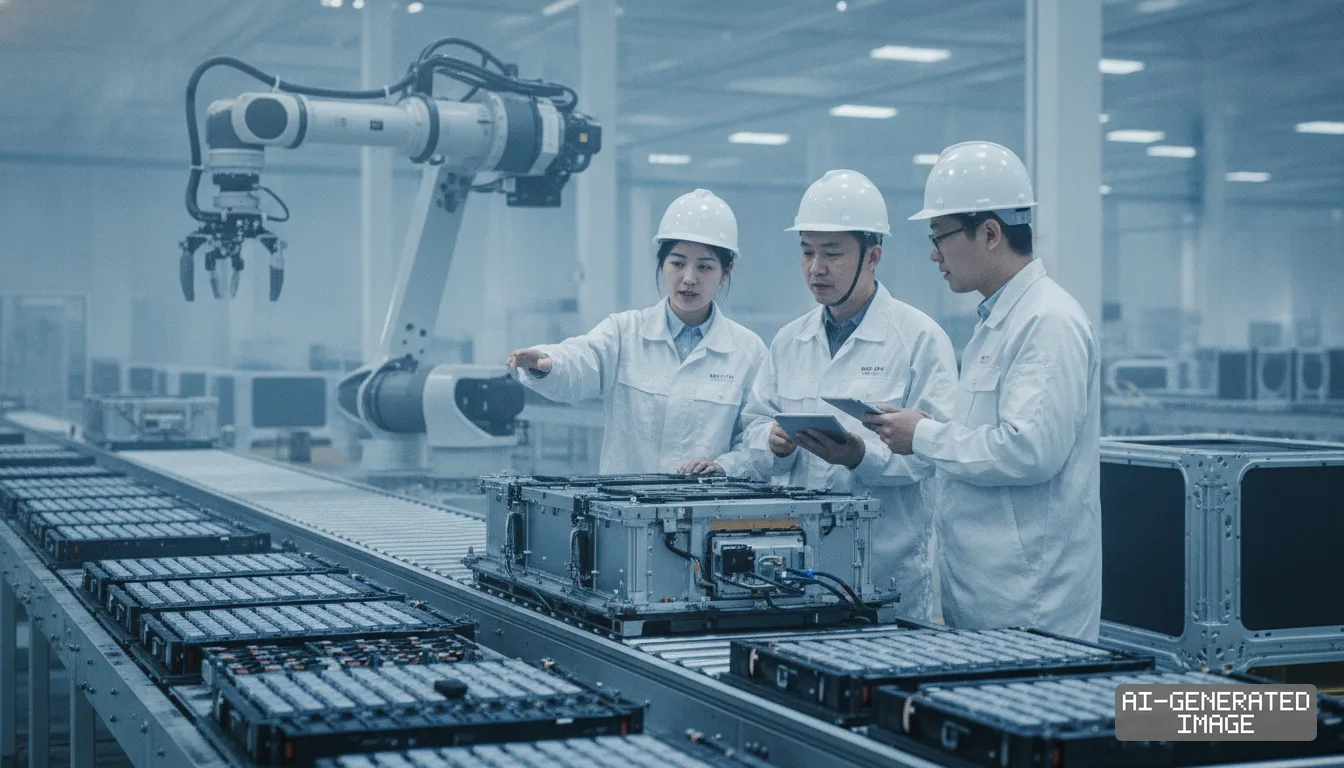
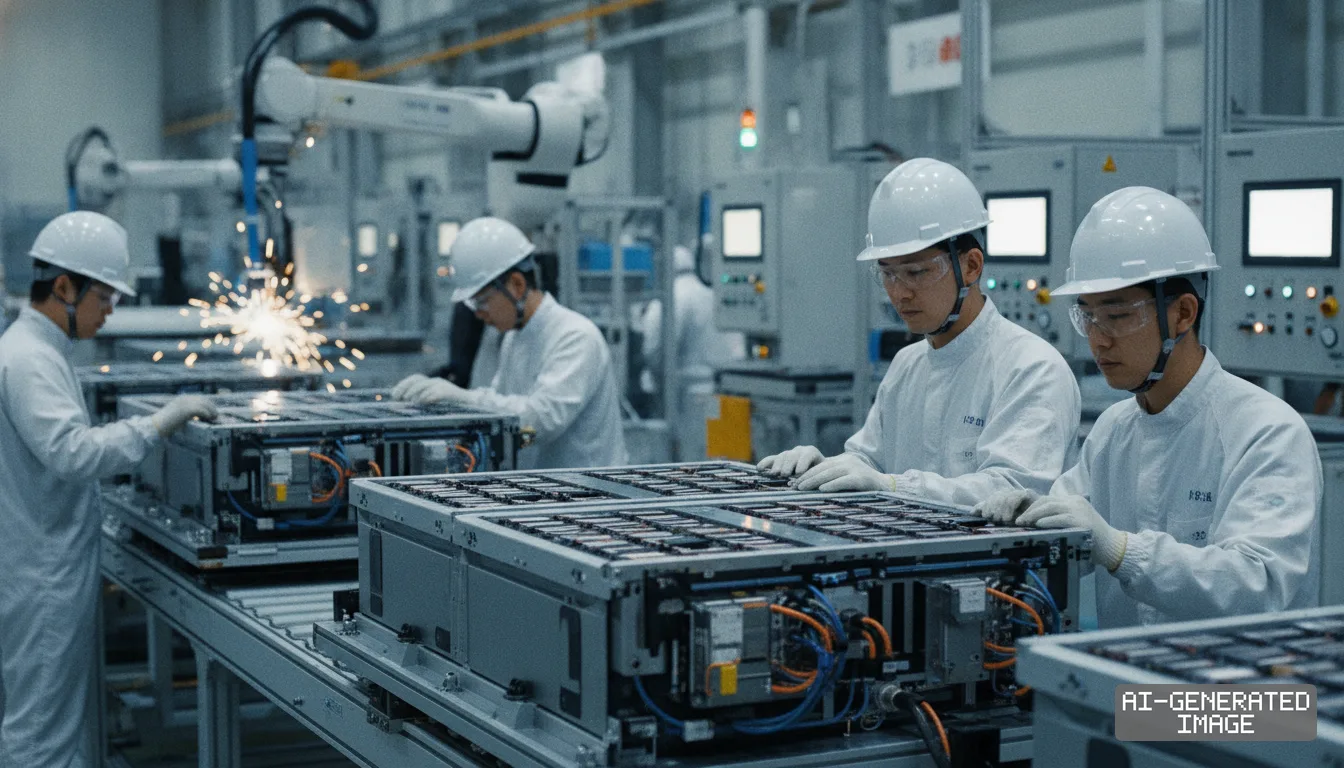
Korean battery makers secure non-FEOC LFP supply contracts
LG Energy Solution and Samsung SDI are locking in North American materials contracts before federal rules end transition relief on Dec. 31, 2026.
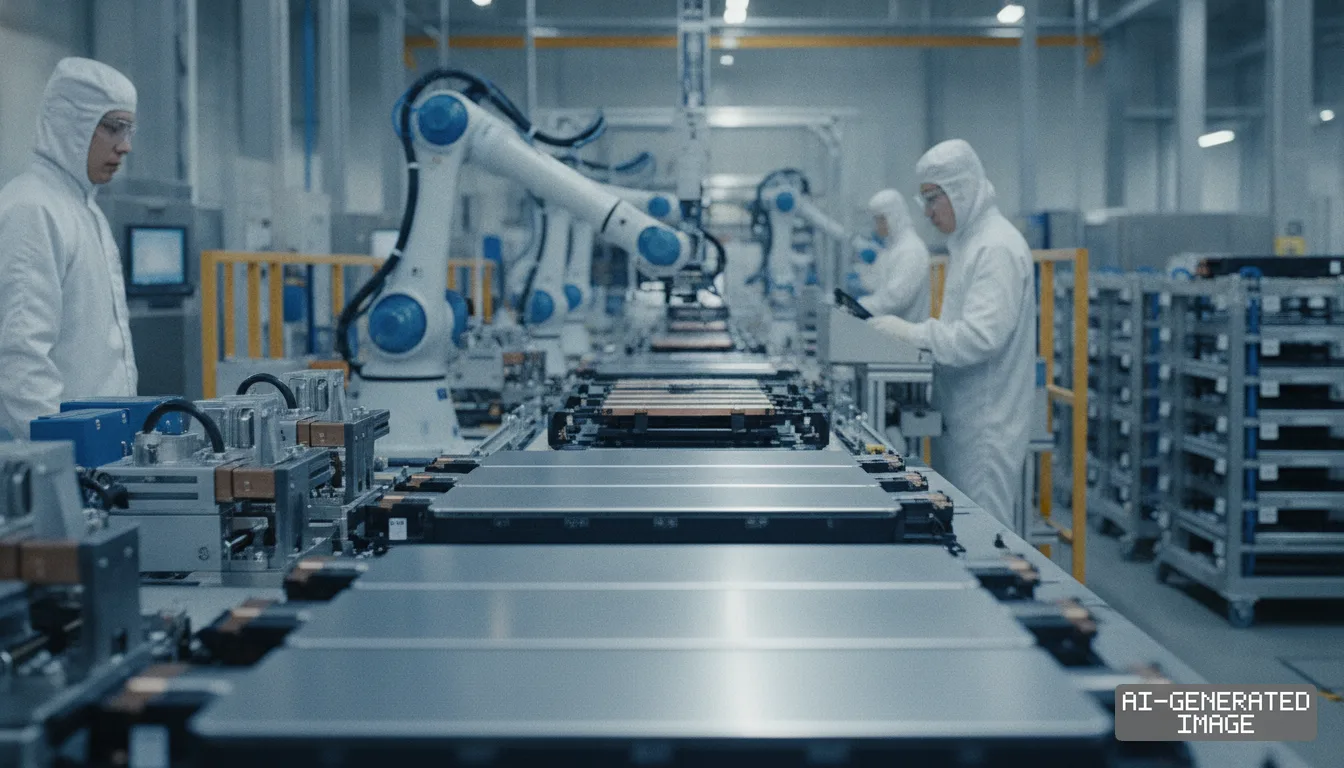
South Korean battery makers accelerated procurement for North American energy storage projects on Oct. 12, 2026, positioning non-Chinese lithium iron phosphate cells ahead of federal subsidy deadlines.
The commercial pivot addresses shifting tariff schedules in the United States. Federal authorities raised Section 301 import duties on Chinese non-electric vehicle lithium-ion batteries from 7.5% to 25%, reshaping utility procurement costs.
The tariff increase creates an immediate opening in grid-scale energy storage. Chinese manufacturers supplied over 80% of North American storage cells prior to the tariff revisions, according to customs tracking.
Supply chain adjustments crystallized in commercial agreements earlier this month. Samsung SDI signed a 6 trillion won ($4.4 billion) contract with POSCO Future M on Oct. 6, 2026, to purchase lithium iron phosphate cathode materials.
The agreement covers six years from 2027 through 2032. The binding commitment represents roughly 30% of Samsung SDI's projected cathode requirements for non-automotive storage systems over that operating window.
Both companies executed the contract at the Dongtan research facility in Gyeonggi Province. The terms require materials that comply with United States Foreign Entity of Concern regulations, the companies said.
Korean battery makers previously focused capital on nickel-rich chemistries. That focus left low-cost commercial energy storage and entry-level electric vehicles to Chinese producers using lithium iron phosphate, an iron-based chemistry known as LFP.
American tax regulations altered that capital allocation. LG Energy Solution completed a long-term spodumene concentrate supply agreement with Elevra Lithium on Oct. 8, 2026, to feed regional processing lines.
The contract secures 240,000 metric tons of lithium concentrate over four years starting in late 2026. The feedstock yields about 30,000 metric tons of battery-grade lithium hydroxide from the Charlotte deposit in Quebec.
The raw material intake underpins factory capacity in Arizona. LG Energy Solution is building a 16-gigawatt-hour standalone energy storage production plant in Queen Creek, targeting commercial volume in 2026.
Downstream system integration contracts are expanding alongside chemical supply. LG Energy Solution was selected Sept. 22, 2026, to supply its JF2 alternating-current storage units to Nvidia's DSX Ready data center power architecture.
The artificial intelligence server market requires dedicated stationary power. Power requirements for regional computing centers are projected to double by 2028, according to power utility filings.
The underlying statutory framework traces to rules issued two years ago. The Department of Energy published its final interpretive rule defining foreign entities of concern on May 6, 2024, under docket 89 FR 37079.
The Department of the Treasury released matching vehicle tax credit rules the same day. Those rules, under 89 FR 37706, disqualify entities with 25% or more board control or equity held by covered governments.
Covered jurisdictions include China, Russia, Iran and North Korea. The restrictions barred non-compliant battery components starting in January 2024, followed by critical mineral exclusions in January 2025.
Cell makers received temporary relief through a transition rule. The Internal Revenue Service permitted manufacturers to omit certain low-value, untraceable minerals from origin tracing through the end of 2026.
That compliance grace period terminates Dec. 31, 2026. Automakers and storage developers face full origin audits on all cathode and anode constituent minerals starting Jan. 1, 2027.
South Korean producers must still overcome significant cost premiums. Domestic LFP cathode output carries estimated manufacturing costs 15% to 20% higher than Chinese state-subsidized facilities, industry filings show.
Higher domestic labor rates and imported precursor inputs account for that cost differential. Korean processors are building regional refining networks across North America to counter the disparity.
United States agencies issued no new enforcement directive or rule update on Oct. 12, 2026, despite regional market commentary asserting fresh administrative bans.
Federal procurement audits will proceed under the established 2024 statutory calendar. Battery manufacturers must submit verified supply chain ledgers to federal review portals before the December deadline expires.
Impact map
How this development propagates across the region and out to global buyers.
| Event | Korea | China | Japan | Global impact |
|---|---|---|---|---|
| FEOC rule enforcement | LG Energy Solution and Samsung SDI secure North American cathode deals to capture ESS market | Contemporary Amperex Technology faces 25% Section 301 tariffs and federal clean vehicle exclusions | Panasonic shifts procurement toward domestic and allied refining sources | Grid storage procurement costs face near-term inflation as supply chains decouple from China |
In this story
- Companies
- LG Energy SolutionSamsung SDIPOSCO Future M
- Tickers
- 373220.KS006400.KS003670.KS
- Exposed
- Nvidia
- Policy
- Export ControlsSubsidiesTariffs
- Impact
- Supply ChainCapexCompliance
Track every Export Controls development → Track every Subsidies development → Track every Tariffs development →
Related briefings
- CATL Surpasses Korean Battery Trio in Markets Outside China Also on POSCO Future M, Samsung SDI, LG Energy Solution
- China Customs tightens origin documentation for graphite transit shipments Also on Posco Future M, Samsung SDI, LG Energy Solution
- China Tightens Dual-Use Graphite Export Licensing for Anode Supply Chains Also on POSCO Future M, Samsung SDI, LG Energy Solution
- POSCO Future M signs $776M LFP cathode supply deal with SK On Also on POSCO Future M, Samsung SDI, LG Energy Solution
Sources
Primary documents
Reporting
Confidence: high — how we grade this
The documents behind this briefing are linked above. East Asia Brief produces its English text with AI assistance under human editorial review, and does not translate or republish other outlets' articles. See our methodology and AI policy. Spotted an error? Tell us.
The Morning Brief
What changed in Korean, Chinese and Japanese industry overnight — and what it means for your supply chain. One email, weekday mornings, US time. Free.
The Morning Brief is in preparation. Leave your address and we will write to you once — when the first issue is ready. Nothing before that.