Xi Jinping plans business delegation for Donald Trump summit
Beijing aims to ease trade friction and protect cross-border commerce as U.S. tariffs and export controls tighten ahead of the bilateral meeting scheduled for Sept. 24.
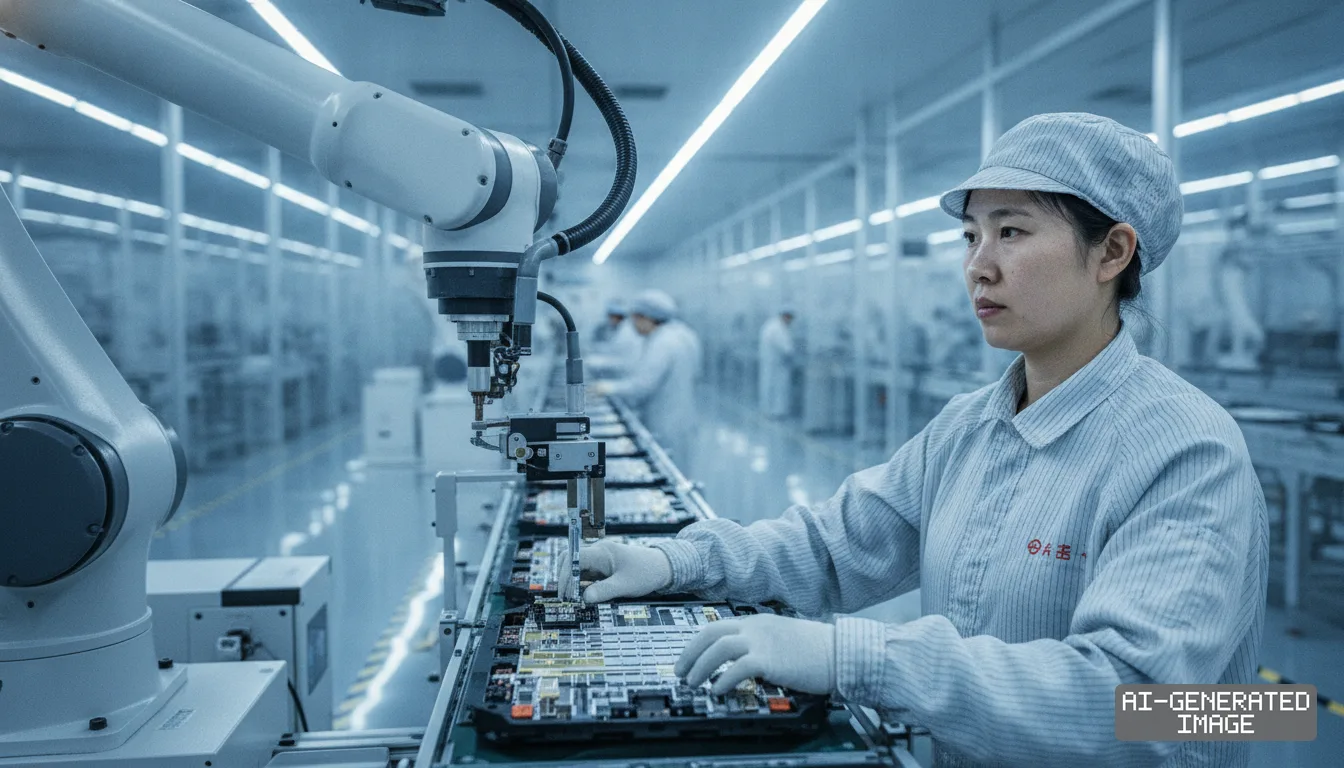
Chinese President Xi Jinping began assembling a delegation of corporate executives on Sept. 5 to join his Washington summit with U.S. President Donald Trump later this month.
The planned bilateral summit will take place at the White House on Sept. 24, Trump said during a press briefing on Sept. 2. The event marks Xi's first visit to Washington since September 2015.
Beijing organized the business contingent to signal support for commercial ties as trade barriers multiply. One person familiar with bilateral planning said the mission could offer the White House economic deliverables before the November congressional midterm elections.
The exact roster of participating Chinese executives remains provisional and has not been finalized. Chinese authorities have not published an official participant list or confirmed which industrial sectors will send delegates.
U.S. officials took a guarded stance regarding the planned delegation. The White House is not tracking a Chinese corporate delegation, an administration official said, declining to elaborate on the scope of monitoring.
The U.S. Department of the Treasury declined to comment on the planned business delegation. China's Ministry of Commerce did not respond to inquiries or release an official statement outlining summit participation.
Taking corporate executives on state travel represents an unusual step for Beijing under current political conditions. Xi rarely travels abroad with private sector leaders following a series of regulatory crackdowns launched in 2020.
Those regulatory interventions curbed expansion across China's technology, consumer internet and property sectors. Major corporate figures subsequently lowered their public profiles and stepped back from high-profile diplomatic delegations.
The approach contrasts with earlier diplomatic practice during Xi's first presidential term. Xi previously brought a large corporate contingent to the United States in September 2015 during the administration of President Barack Obama.
That 2015 delegation included Alibaba Group founder Jack Ma and Tencent Holdings founder Pony Ma alongside executives from state-owned lenders. During that trip, Chinese buyers signed an agreement to purchase 300 Boeing aircraft valued at $38 billion.
Xi also convened formal roundtables with American technology leaders during that 2015 tour. Attendees included Apple Chief Executive Tim Cook, Amazon founder Jeff Bezos and Meta Chief Executive Mark Zuckerberg.
Commercial delegations have also served as diplomatic instruments for Washington in reciprocal exchanges. Trump traveled to Beijing in May with 18 American business leaders, including Nvidia Chief Executive Jensen Huang and Tesla Chief Executive Elon Musk.
The September summit convenes against extensive trade restrictions enacted by the United States against Chinese industrial exports. Washington enforces a 100% tariff on imported Chinese electric vehicles to shield domestic manufacturing lines from price competition.
Federal agencies have also restricted imports of foreign unmanned aerial drones, network routers and industrial automation equipment. In addition, the U.S. government enacted statutory requirements forcing ByteDance to divest its American TikTok operations.
The U.S. Department of Commerce has placed dozens of Chinese advanced technology manufacturers on the Entity List. The Pentagon maintains a separate blacklist restricting American capital investment in firms linked to China's defense apparatus.
Trade negotiators from both governments have begun technical consultations to determine potential summit deliverables. Officials are discussing reciprocal tariff reductions covering approximately $30 billion worth of bilateral industrial and agricultural trade.
Both governments will announce procedural measures covering agricultural market access and non-tariff barriers, U.S. Trade Representative Jamieson Greer said on Sept. 3. Negotiators continue to review technical inspection protocols.
Negotiations remain complicated by disagreements over defining which exported products qualify as non-sensitive commercial merchandise. U.S. export controls continue to restrict advanced semiconductor fabrication equipment and high-performance computing components.
Mineral trade controls represent another major friction point between the two governments. China maintains stringent export licensing requirements on gallium, germanium, antimony and refined rare earths used in advanced defense and electronics manufacturing.
Multilateral economic diplomacy adds pressure to bilateral trade talks. U.S. Treasury Secretary Scott Bessent said he plans to urge Group of 20 finance ministers to review international trade terms concerning Chinese manufacturing capacity.
Beijing seeks to deploy commercial relationships to stabilize broader diplomatic ties during periods of friction. Engaging American corporate executives allows Chinese officials to build direct commercial connections with U.S. industrial buyers.
For global manufacturers, the upcoming summit carries direct consequences for component sourcing and regulatory exposure. Equipment suppliers and vehicle makers face continuous compliance obligations as trade rules shift across borders.
Neither government has published a binding bilateral agreement, ministerial order or official delegation itinerary ahead of the talks. The final composition of the delegation depends on preparatory talks between trade officials in Washington and Beijing.
Technical teams from the Office of the U.S. Trade Representative and China's Ministry of Commerce will conduct preparatory meetings until the scheduled Sept. 24 White House summit.
Impact map
How this development propagates across the region and out to global buyers.
| Event | Korea | China | Japan | Global impact |
|---|---|---|---|---|
| CEO delegation to Washington | monitor tariff shifts | corporate diplomacy push | supply chain compliance | tariff and licensing talks |
In this story
- Companies
- BoeingAppleNvidiaTeslaByteDanceAlibaba GroupTencent Holdings
- Tickers
- BAAAPLNVDATSLA9988.HK0700.HK
- Policy
- TariffsExport ControlsEconomic Security
- Impact
- Supply ChainCompliancePricing
Track every Tariffs development → Track every Export Controls development → Track every Economic Security development →
Related briefings
- China MOFCOM restricts AI model and chip IP export transfers Also on Alibaba Group, Export Controls, Compliance
- China curbs exports of 40 AI, solar and biotech technologies Also on Tencent Holdings, Export Controls, Compliance
- CXMT starts pilot HBM3E production as China accelerates AI chip self-reliance Also on Alibaba Group, Export Controls, Compliance
- CXMT beats SK hynix and Micron in DRAM margin at 87.59% gross rate Also on ByteDance, Export Controls, Pricing
Sources
Primary documents
Reporting
Confidence: high — how we grade this
The documents behind this briefing are linked above. East Asia Brief produces its English text with AI assistance under human editorial review, and does not translate or republish other outlets' articles. See our methodology and AI policy. Spotted an error? Tell us.
The Morning Brief
What changed in Korean, Chinese and Japanese industry overnight — and what it means for your supply chain. One email, weekday mornings, US time. Free.
The Morning Brief is in preparation. Leave your address and we will write to you once — when the first issue is ready. Nothing before that.