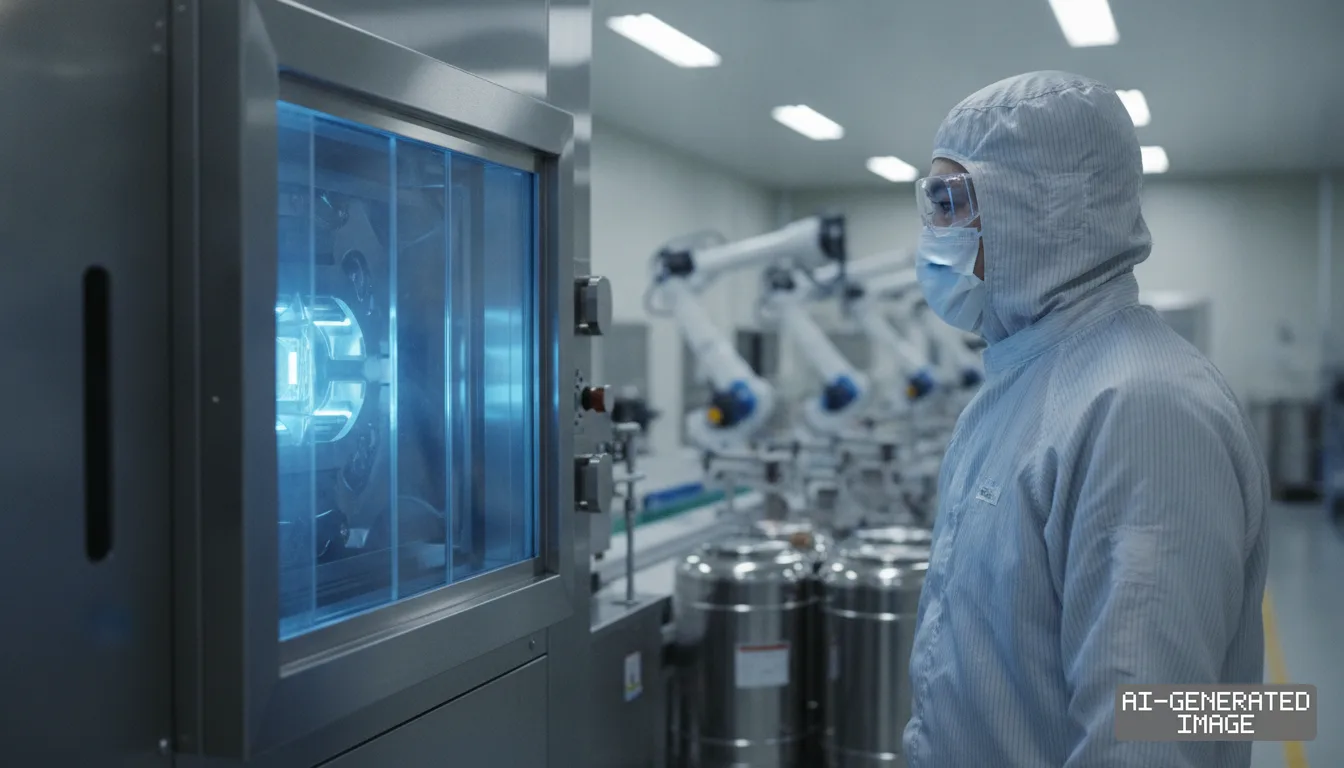
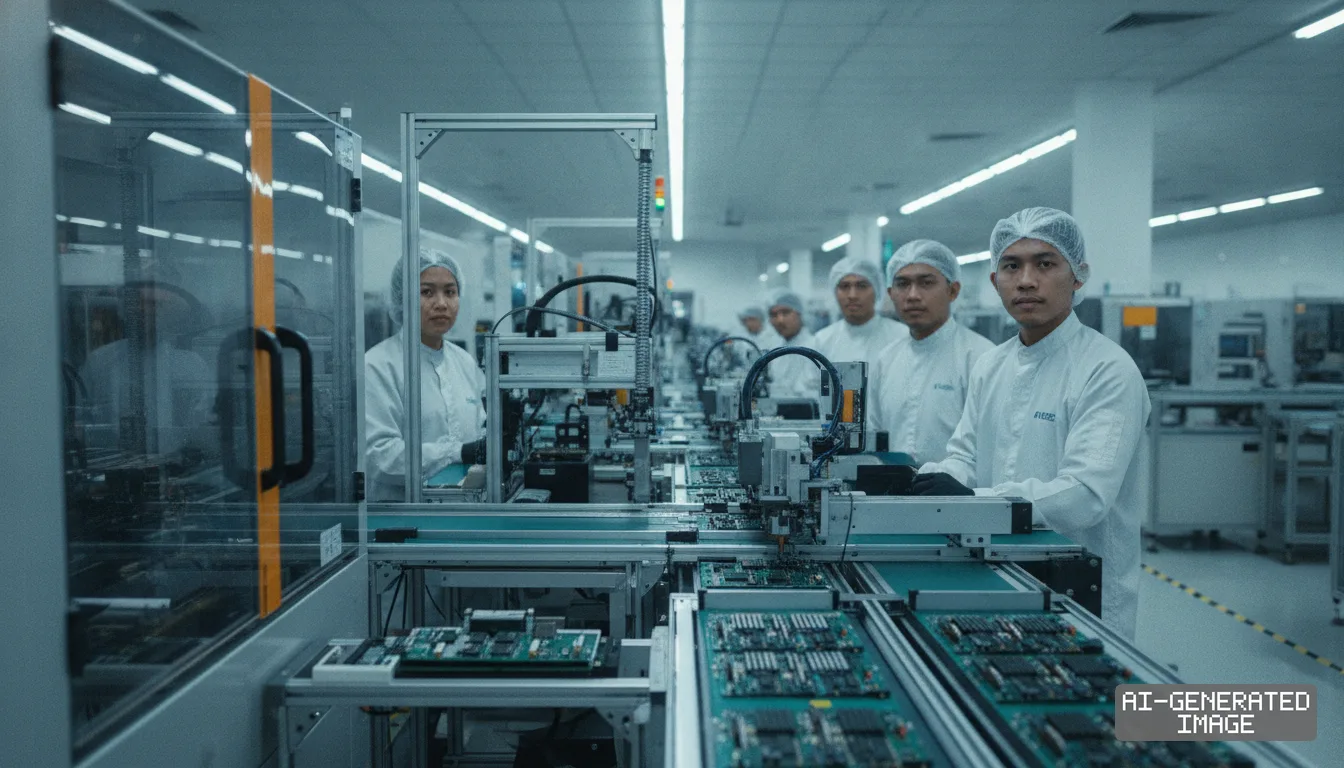
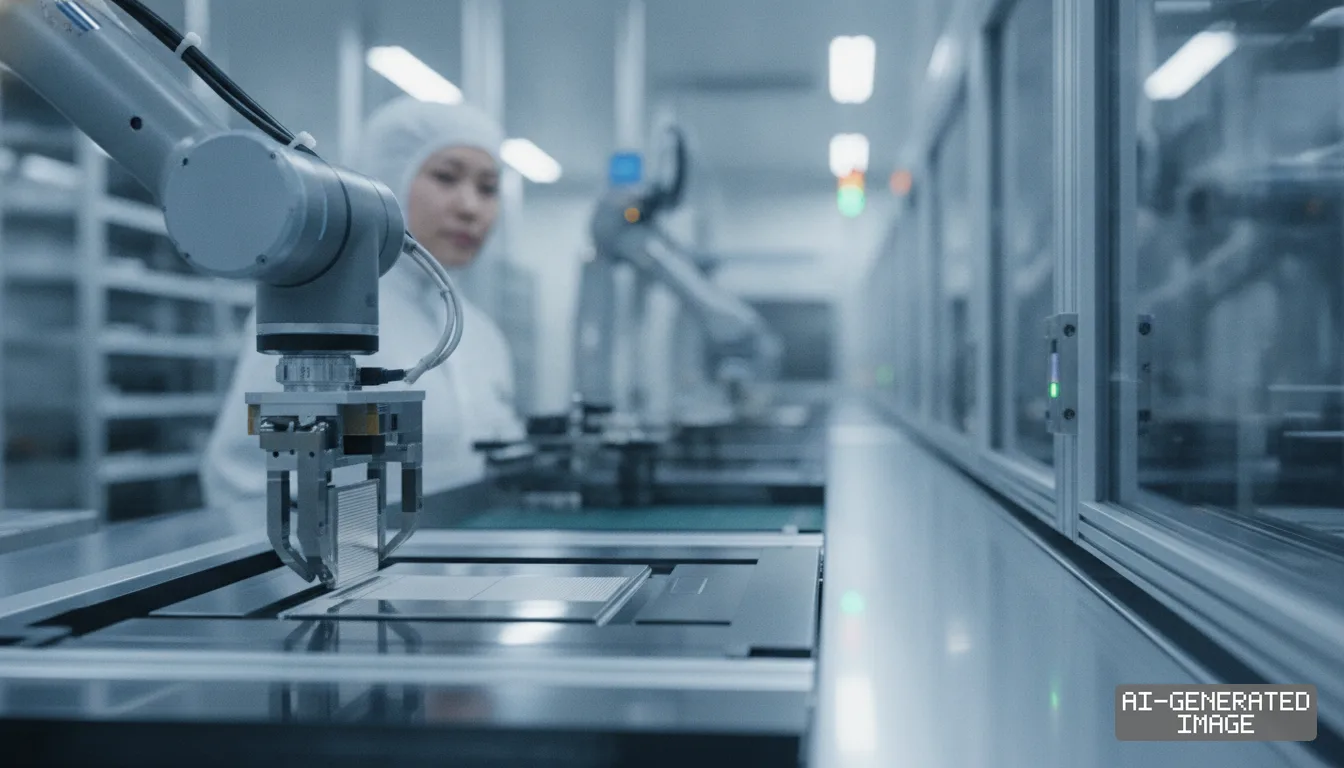
TSMC beats quarterly forecasts as 3nm lines hit full capacity
Taiwan Semiconductor Manufacturing Co. posted record third-quarter net income of NT$763 billion on relentless demand for advanced AI processors and CoWoS packaging lines.
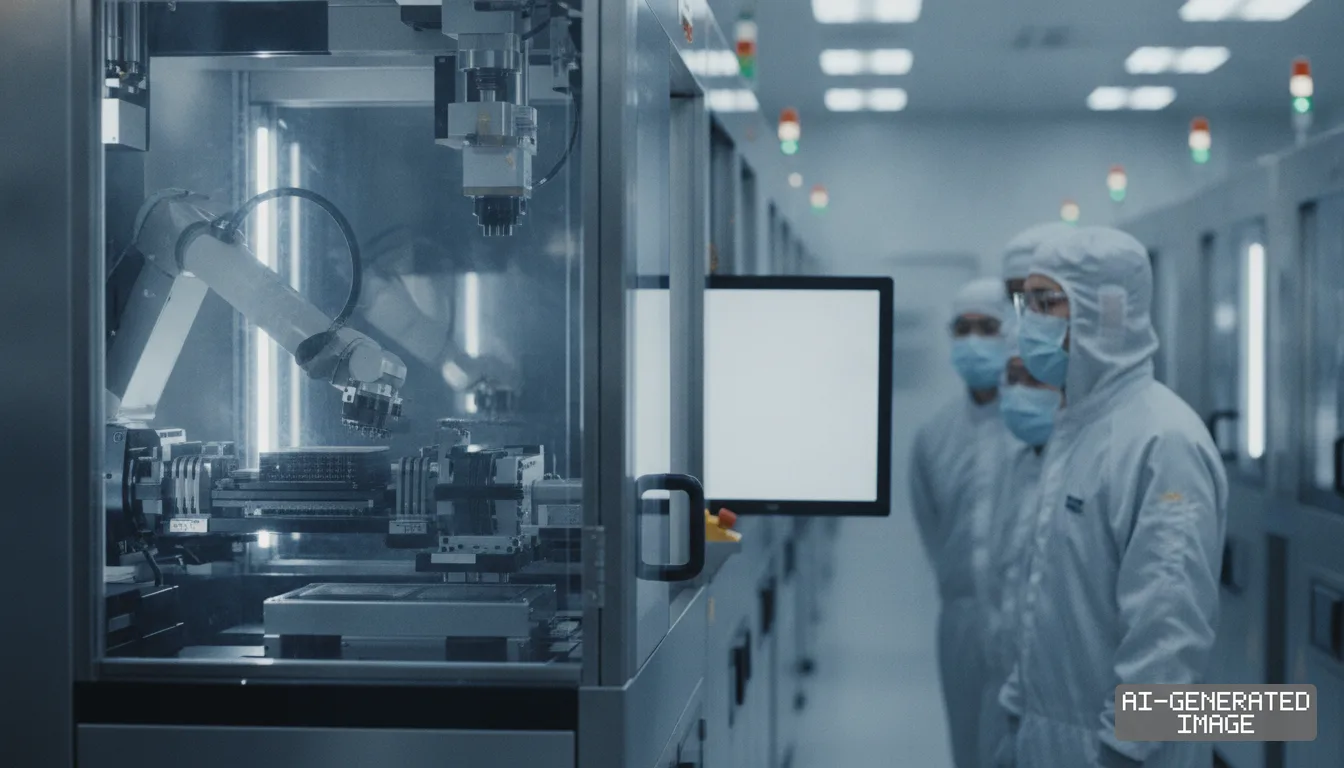
Taiwan Semiconductor Manufacturing Co. posted record third-quarter consolidated revenue of NT$1,494.24 billion ($46.72 billion) on Oct. 15, 2026, beating consensus estimates on high utilization for its 3-nanometer lines.
Net income climbed 68.7% from a year earlier to NT$763.06 billion, while gross margin expanded to 66.4%, the Hsinchu-based chipmaker said. Advanced nodes at 7-nanometer and below generated 79% of total wafer sales.
The 3-nanometer process generated 33% of wafer revenue during the quarter, overtaking the 5-nanometer family at 28%. TSMC's newest 2-nanometer node contributed 8%, up from 3% in the prior three months.
High-performance computing expanded 22% sequentially to capture 68% of company revenue. Strong accelerator orders from hyperscale cloud operators sustained maximum production across leading-edge fabrication plants, Chief Financial Officer Wendell Huang said.
Silicon packaging capacity remains the binding bottleneck across the artificial intelligence hardware supply chain. TSMC's proprietary Chip-on-Wafer-on-Substrate method — a technique bonding logic dice and high-bandwidth memory onto an intermediary silicon interposer — operated beyond rated volume.
Nvidia Corp. and Apple Inc. absorb the vast majority of TSMC's sub-5-nanometer output. Nvidia relies entirely on the Taiwanese foundry for graphic processing units and custom accelerators that anchor commercial model training.
To alleviate physical interposer constraints, TSMC concluded a five-year, $2 billion component supply agreement with GlobalFoundries Inc. on Oct. 8. The deal assigns production of silicon packaging interposers to American plants.
Equipment availability presents an additional ceiling on foundry expansion. Lithography supplier ASML Holding NV logged €11.7 billion in quarterly bookings on Oct. 14, noting extreme ultraviolet machinery delivery schedules through 2028 will trail demand.
Capital expenditures during the three months ended Sept. 30 totaled NT$443 billion ($13.8 billion). Full-year 2026 capital investments will support fab builds across Taiwan, Japan and the United States, Huang said.
The foundry group maintains 13 advanced fabrication and packaging construction projects across Taiwan. Overseas construction includes five fabrication sites spanning Kumamoto, Dresden and Phoenix to support multinational client commitments.
TSMC is adding two 3-nanometer fabrication lines in Tainan to relieve customer backlogs. The first Tainan facility begins high-volume production in the first half of 2027, followed by a second unit in early 2028.
Overseas leading-edge fabrication remains on track despite labor and integration hurdles. The company's second Arizona manufacturing plant will commence 3-nanometer commercial wafer shipments in the third quarter of 2027, Huang said.
Initial volume production of 2-nanometer wafers produced a 1.3 percentage point sequential gross margin dilution. Mass output across Hsinchu and Kaohsiung sites will double wafer output on the node during 2027.
Next-generation A14 node development remains on schedule for risk production in 2027. Management expects customer design adoptions on A14 to exceed the lifetime volumes logged on the 2-nanometer node.
Operating margin reached 58.7% in the quarter, supported by high factory operating rates. Operating activities generated NT$920 billion in cash, lifting liquid reserves and marketable securities to NT$4 trillion ($126 billion).
Chip physical footprints continue to expand as artificial intelligence accelerators incorporate larger transistor arrays. TSMC is producing advanced packages spanning five times standard reticle dimensions while engineering nine-fold and 14-fold packaging sizes.
Fourth-quarter revenue will reach between $52.3 billion and $54.3 billion, the company said in guidance filed with regulators. The forecast implies a 14% sequential expansion based on a 31.8 exchange rate.
Full-year 2026 consolidated revenue will expand approximately 44% year-over-year in U.S. dollar terms. Strong server accelerator uptake continues to outstrip seasonal weaknesses across legacy consumer device components, Huang said.
The filing does not state TSMC's exact monthly wafer capacity for CoWoS packaging lines, and the company has not published contract allocation shares among individual AI accelerator customers.
TSMC reports monthly sales figures for October on Nov. 10, providing the initial operational verification for fourth-quarter guidance targets.
Impact map
How this development propagates across the region and out to global buyers.
| Event | Korea | China | Japan | Global impact |
|---|---|---|---|---|
| TSMC Q3 capacity surge | SK hynix and Samsung face sustained HBM supply pressure to match CoWoS packaging output | Fabless AI designers remain restricted from TSMC sub-7nm foundry allocations | Tokyo Electron and local chemical suppliers see advanced packaging tool backlogs expand | AI server delivery timelines remain dictated by TSMC packaging slot quotas through 2027 |
| TSMC Q3 capacity surge | SK hynix and Samsung face sustained HBM supply pressure to match CoWoS packaging output | Fabless AI designers remain restricted from TSMC sub-7nm foundry allocations | Tokyo Electron and local chemical suppliers see advanced packaging tool backlogs expand | AI server delivery timelines remain dictated by TSMC packaging slot quotas through 2027 |
In this story
- Companies
- TSMC
- Tickers
- 2330.TWTSM
- Exposed
- NvidiaAppleGlobalFoundriesASML
- Impact
- Supply ChainCapexPricing
Related briefings
- GlobalFoundries signs $2B TSMC packaging deal for AI chips Also on GlobalFoundries, Apple, TSMC
- TSMC captures 72.5% foundry share as gap with Samsung widens Also on GlobalFoundries, Apple, Nvidia
- Japan funds $21 billion GlobalFoundries build in New York Also on GlobalFoundries, Apple
- TSMC widens CoWoS supply chain with $2 billion US interposer deal Also on GlobalFoundries, Nvidia
Sources
Primary documents
Reporting
Confidence: high — how we grade this
The documents behind this briefing are linked above. East Asia Brief produces its English text with AI assistance under human editorial review, and does not translate or republish other outlets' articles. See our methodology and AI policy. Spotted an error? Tell us.
The Morning Brief
What changed in Korean, Chinese and Japanese industry overnight — and what it means for your supply chain. One email, weekday mornings, US time. Free.
The Morning Brief is in preparation. Leave your address and we will write to you once — when the first issue is ready. Nothing before that.