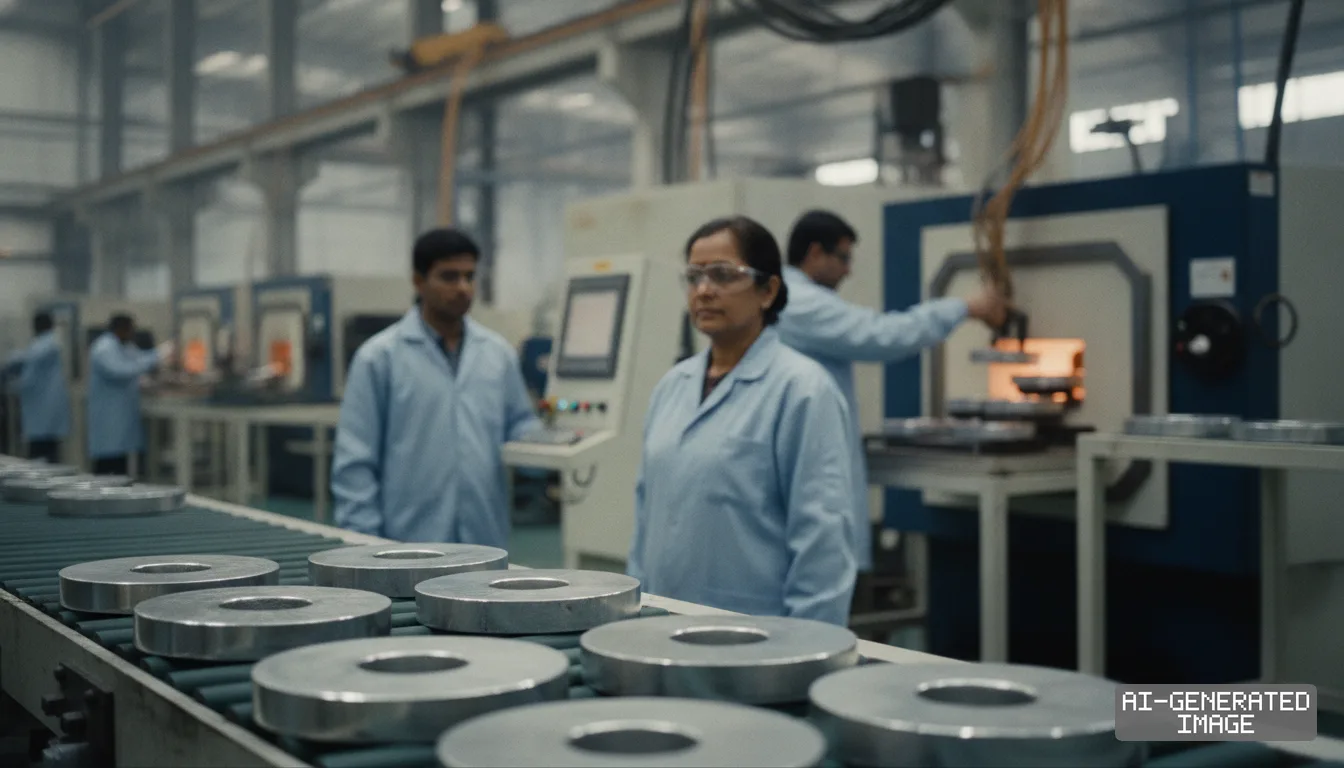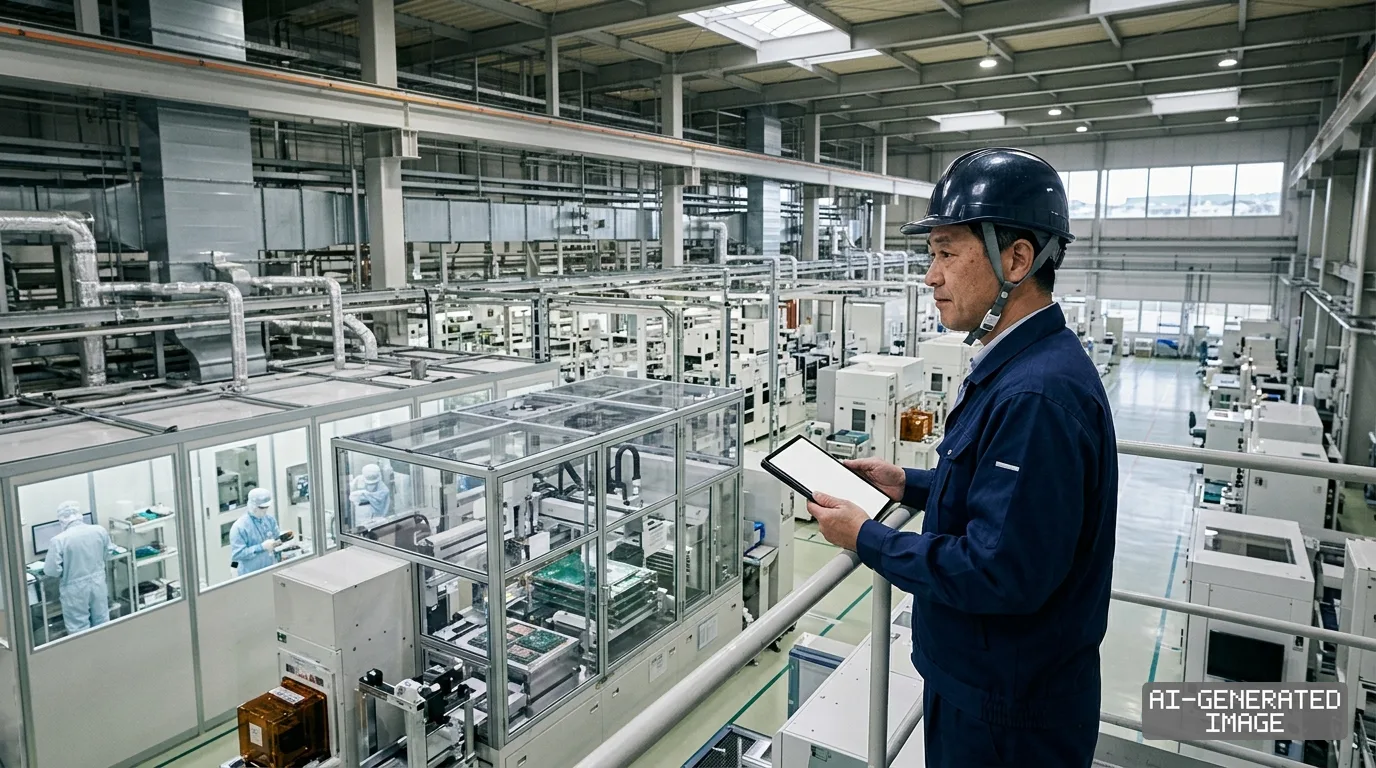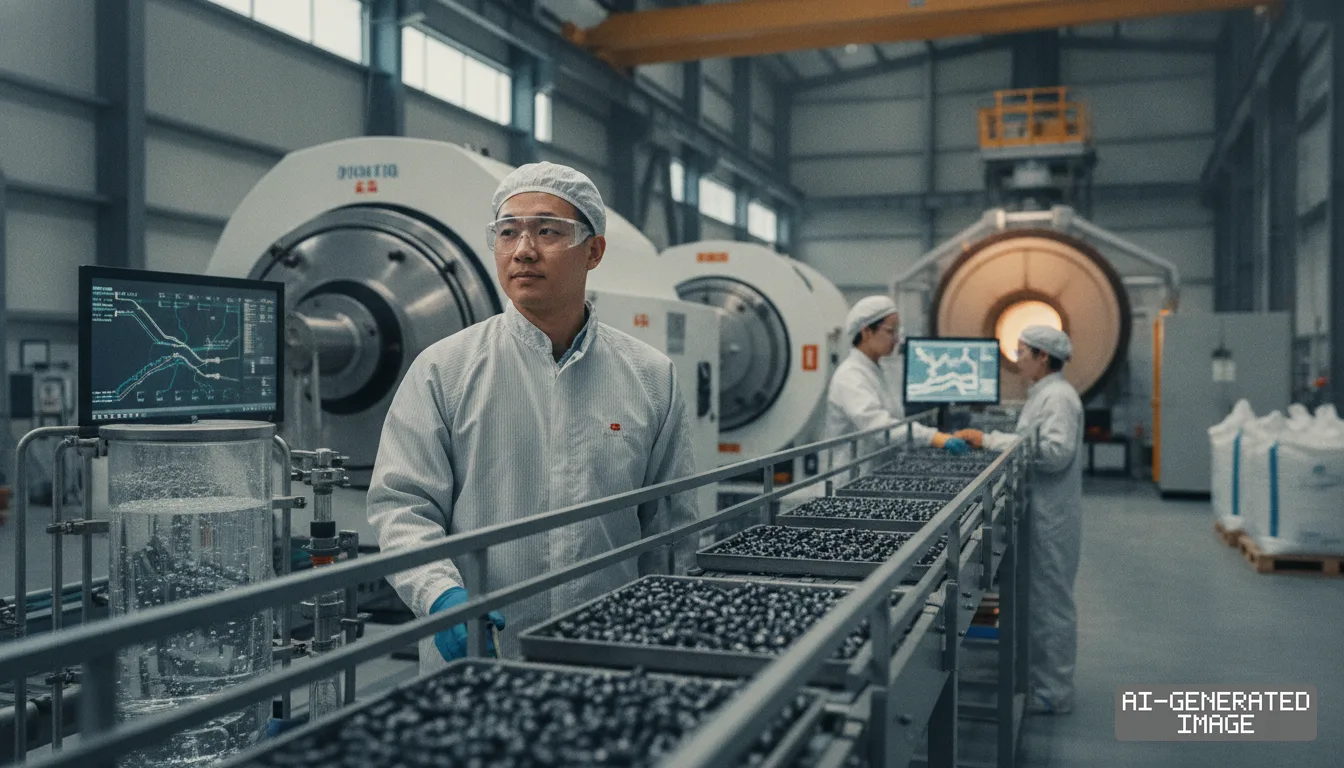
Tata Electronics readies Assam chip plant with non-China network
The $3.2 billion Jagiroad OSAT facility enters pilot testing ahead of a December launch, lining up nine non-China vendors to assemble 48 million chips daily.
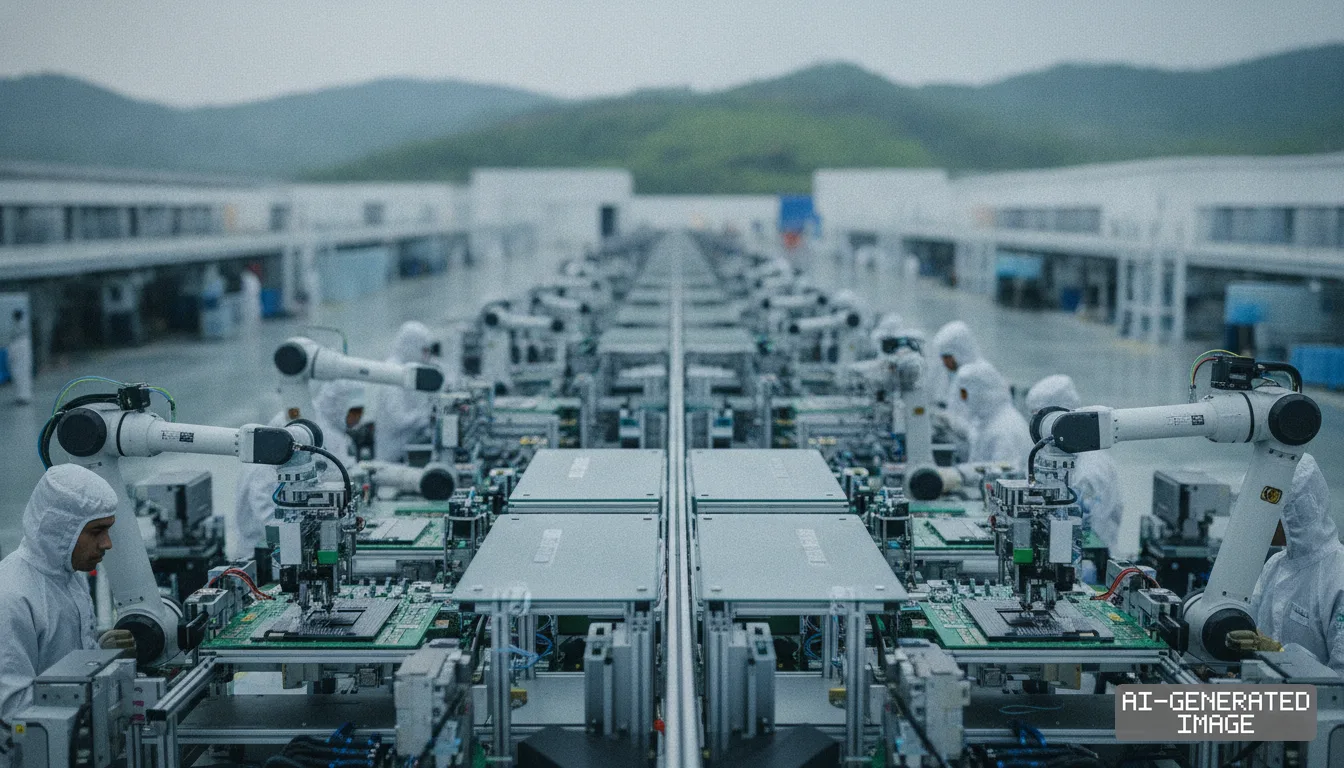
Tata Electronics established on Oct. 5, 2026, an alternative supply network bypassing China for its $3.2 billion semiconductor packaging facility in Assam, preparing for commercial opening in December.
The greenfield unit in Jagiroad spans 171 acres and targets a daily capacity of 48 million packaged chips. The capital outlay of 270 billion rupees ($3.2 billion) receives 70% backing from Indian federal and state subsidies.
The facility gives global semiconductor design firms their first large-scale packaging alternative on the subcontinent. Most outsourced semiconductor assembly and test facilities rely on China for 55% to 60% of their subcomponents.
Primary cleanroom construction finished on Oct. 3, allowing engineers to begin trial operations. The plant will enter commercial operation between December 2026 and January 2027, according to Assam state officials.
Tata Electronics brought together at least nine equipment and material suppliers outside China to insulate production from export curbs. The framework covers assembly machinery, precision lead frames, chemicals and technical services.
Netherlands-based BE Semiconductor Industries agreed on Sept. 17 to supply advanced packaging equipment for the Jagiroad site. The Dutch group will deliver die-attach tools and train local engineers on high-density packaging lines.
Enomoto signed a supply pact on Sept. 18 to deliver precision lead frames to Assam. The Japanese manufacturer will also evaluate localizing lead frame output inside India to shorten transport cycles.
Singapore-based ASMPT agreed to provide wire-bonding equipment, assembly systems and operational software. The toolmaker will manage on-site servicing to maintain packaging line uptime.
Dutch chipmaker Nexperia joined the network to support packaging qualification and test procedures for automotive parts. The company will help link European component buyers to the new Indian site.
Fujifilm agreed to supply chemical materials and photolithography consumables used during chip encapsulation. The Japanese materials group will study local distribution hubs to prevent cross-border shipment delays.
Malaysia-based Kelington secured contracts to install specialty gas delivery networks and cleanroom infrastructure. The engineering firm built the initial exhaust and chemical supply grids for the first production modules.
Qualcomm agreed in February to package automotive connectivity modules at the facility. The US chipmaker plans to integrate cellular and infotainment silicon assembled on the Jagiroad lines into global vehicle platforms.
Building an OSAT plant away from East Asia carries steep initial operating challenges. New assembly sites typically experience lower initial yields while operators calibrate automated wire bonders and molding presses.
Indian technicians must achieve the low defect rates demanded by automotive and industrial clients. Quality certification in automotive electronics often requires six to nine months of continuous trial data.
Global logistics links around northeastern India remain an operational hurdle for time-sensitive cargo. Transporting delicate silicon wafers from foundries in Taiwan to Assam requires strict temperature controls and reliable air corridors.
Tata Electronics plans to mitigate shipping risks through dedicated customs clearance lanes at Guwahati airport. Road transit along the 60-kilometer corridor between the airport and Jagiroad will handle incoming wafer shipments.
The project forms the packaging half of the conglomerate's $14 billion semiconductor initiative. Tata Electronics is also constructing a commercial wafer fab in Dholera, Gujarat, in partnership with Taiwan's Powerchip Semiconductor Manufacturing Corporation.
The Assam plant does not manufacture silicon wafers. The facility receives fabricated wafers, dices them into individual dies, bonds external connectors, and seals them in protective resin.
Commercial commissioning begins in December, when the first customer qualification batches move through the cleanroom. Volume shipments under the Qualcomm automotive agreement are scheduled to follow in the first quarter of 2027.
The company has not disclosed the names of five remaining vendors in the nine-supplier network. Indian authorities have also not published final defect-rate benchmarks required for the disbursement of state operational grants.
Impact map
How this development propagates across the region and out to global buyers.
| Event | Korea | China | Japan | Global impact |
|---|---|---|---|---|
| Tata Assam OSAT launch | monitors potential back-end packaging orders moving away from East Asia | loses share of 55-60% packaging supplier base for Indian chip allocation | Enomoto and Fujifilm secure direct supply agreements for Assam production | Fabless chipmakers gain secondary packaging corridor for 48M daily units |
In this story
- Companies
- Tata Electronics
- Exposed
- QualcommBE Semiconductor IndustriesEnomotoASMPTNexperiaFujifilm
- Policy
- SubsidiesSupply Chain
- Impact
- Supply ChainCapexOrder Book
Track every Subsidies development → Track every Supply Chain development →
Related briefings
- SK hynix and foundries advance hybrid bonding for AI silicon in 2027 Also on BE Semiconductor Industries
- Fujifilm plans $83 million chip materials plant in India Also on Tata Electronics
- Sojitz and NRS agree to build Tata fab chemical supply chain in India Also on Tata Electronics
- TSMC raises 2nm wafer target to 120,000 units as orders surge Also on Qualcomm, Order Book
Sources
Reporting
Confidence: medium — how we grade this
The documents behind this briefing are linked above. East Asia Brief produces its English text with AI assistance under human editorial review, and does not translate or republish other outlets' articles. See our methodology and AI policy. Spotted an error? Tell us.
The Morning Brief
What changed in Korean, Chinese and Japanese industry overnight — and what it means for your supply chain. One email, weekday mornings, US time. Free.
The Morning Brief is in preparation. Leave your address and we will write to you once — when the first issue is ready. Nothing before that.