Japan Display sells Mobara fab to Shinko for chip packaging
The transaction yields an estimated 51.4 billion yen extraordinary gain for the display maker as Shinko converts the site into an AI substrate facility.
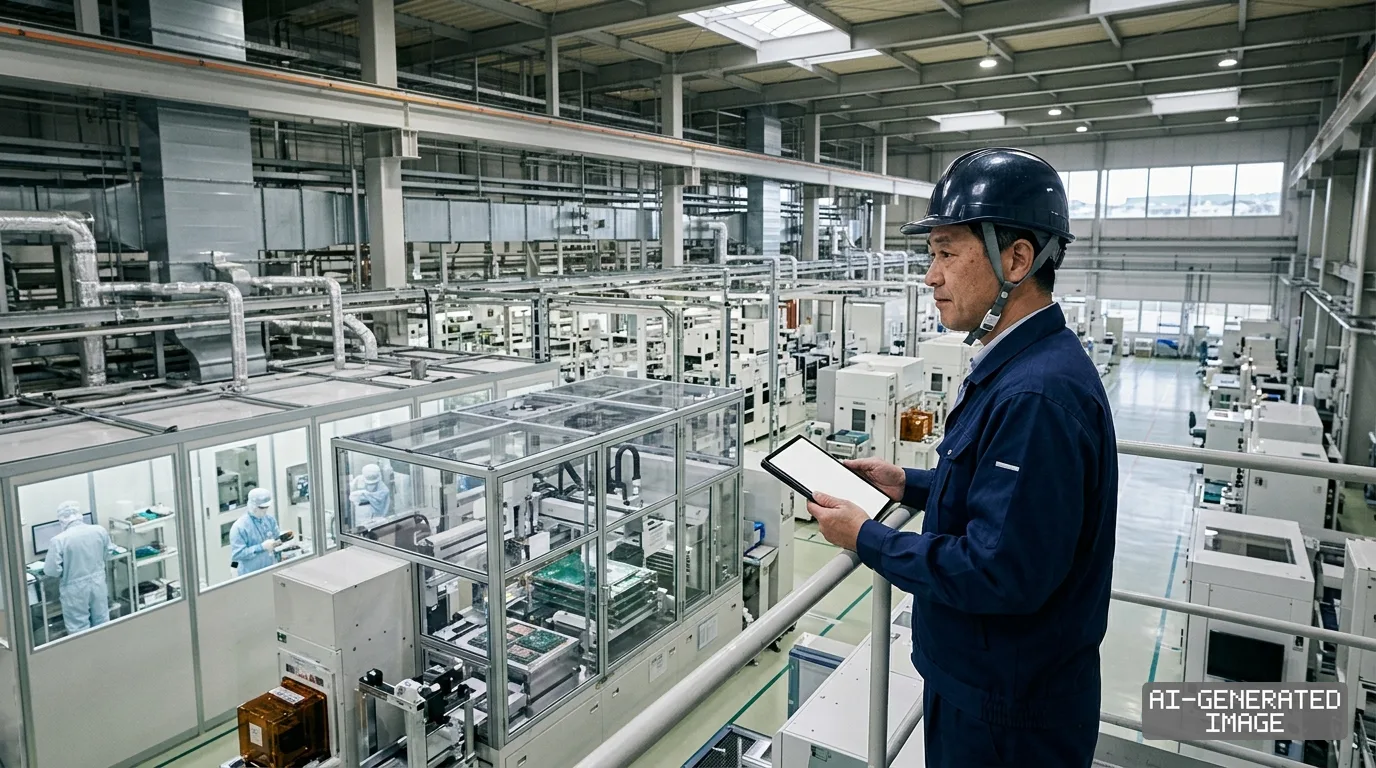
Japan Display Inc. confirmed Oct. 1 it signed a definitive agreement to sell its Mobara plant to Shinko Electric Industries, booking an estimated 51.4 billion yen extraordinary gain on the transaction.
The transaction transfers a 373,483-square-meter facility in Chiba Prefecture to Shinko, an integrated circuit substrate manufacturer that supplies flip-chip packages for artificial intelligence accelerators.
JDI expects to record the 51.4 billion yen ($350 million) gain in the fourth quarter of the fiscal year ending March 2027, against an estimated asset book value of 26.6 billion yen.
The extraordinary profit will reach roughly 54.9 billion yen ($373 million) on a non-consolidated basis. The proceeds will shore up the manufacturer's equity balance following persistent annual net losses.
Display panel production at the Mobara campus already ceased in November 2025. JDI phased out display manufacturing at the site to eliminate heavy depreciation charges tied to idled Generation 6 production lines.
The company concentrated its remaining panel fabrication at its Ishikawa plant, which operates Generation 4.5 and Generation 6 glass substrate lines. That facility produces automotive screens and specialized industrial display panels.
JDI has pivoted toward an asset-light operating model for eLEAP, its proprietary photolithography-based organic light-emitting diode technology. The company licenses the process to external foundries instead of financing new domestic fabrication plants.
Under its restructuring plan, JDI is directing engineering staff toward non-display products, including automotive touch sensors and semiconductor packaging substrates. The Mobara sale removes its largest idle fixed asset to finance that transition.
Shinko will officially take possession of the Mobara site on March 31, 2027. The packaging manufacturer positions the campus as a new core factory to expand advanced semiconductor package substrate production.
Global demand for flip-chip ball grid array substrates has surged because AI accelerators and high-performance computing processors require larger substrate areas and denser wiring layers to connect multiple silicon dies.
Shinko produces flip-chip substrates primarily across several manufacturing hubs in Nagano Prefecture. Capacity limits across those existing sites prompted the company to secure an external facility capable of rapid conversion.
Acquiring an established electronics plant allows Shinko to bypass multi-year construction timelines for cleanrooms and industrial utility hookups. The Mobara facility provides power distribution and industrial wastewater systems built for panel processing.
Alongside the primary transaction, Shinko signed a sale contract with its manufacturing partner FICT. Shinko will retain the eastern campus and transfer the western parcel of 232,745 square meters directly to FICT.
The parcel transferred to FICT accounts for roughly 62% of the overall Mobara land area. The two suppliers intend to divide the industrial campus while coordinating substrate and packaging manufacturing activities.
FICT manufactures printed circuit boards and advanced packaging components that feed into Shinko's assembly processes. Shared occupancy on the Mobara site aims to shorten development cycles for high-density semiconductor substrates.
The plant sale settles local economic uncertainty following the display line closure last year. Shinko and FICT plan to recruit several hundred manufacturing technicians and engineers in Chiba Prefecture before starting commercial operations.
The deal reflects a broader industrial realignment across East Asia as legacy Japanese flat-panel facilities surrender market share to South Korean and Chinese rivals. JDI faced heavy pricing competition across mobile and tablet panels.
Samsung Display and BOE Technology Group captured major shares of the smartphone OLED market that previously sustained Japanese LCD factories. That shift made large-scale domestic display production economically unsustainable for mid-tier Japanese producers.
Japan's trade ministry has prioritized domestic backend chip manufacturing and advanced packaging capacity over mature display assembly. Repurposing cleanrooms addresses backend bottlenecks by siting packaging capacity near domestic silicon wafer and chemical suppliers.
The companies did not disclose the total transaction price at the buyer's request. JDI also has not published the specific financial terms governing Shinko's parcel transfer to FICT.
Property handover is scheduled for March 31, 2027, according to JDI's filing to the Tokyo Stock Exchange. Shinko and FICT plan to begin commercial semiconductor packaging operations during fiscal 2028.
Impact map
How this development propagates across the region and out to global buyers.
| Event | Korea | China | Japan | Global impact |
|---|---|---|---|---|
| Mobara fab sale and AI packaging conversion | Samsung Display maintains lead in mobile OLED panels without Japanese fab competition | BOE Technology Group gains market share after JDI ended Mobara panel fabrication in 2025 | Shinko adds a Chiba packaging hub by 2028, JDI sheds 26.6 billion yen in book assets | Flip-chip packaging substrate supply expands for AI accelerators facing severe backend bottlenecks |
In this story
- Companies
- Japan Display Inc.Shinko Electric Industries
- Tickers
- 6740.T6967.T
- Exposed
- FICTSamsung DisplayBOE Technology Group
- Policy
- Subsidies
- Impact
- CapexSupply Chain
Track every Subsidies development →
Related briefings
- China Substrate Makers Speed Glass Core Lines for AI Chips Also on BOE Technology Group
- Samsung SDI buys GM stake in Indiana battery venture for ESS Also on Samsung Display
- South Korean substrate makers develop embedded silicon bridges for AI chips Also on Shinko Electric Industries
- Ibiden and Shinko ramp high-layer FC-BGA lines as AI server package sizes expand Also on Shinko Electric Industries
Sources
Reporting
Confidence: medium — how we grade this
The documents behind this briefing are linked above. East Asia Brief produces its English text with AI assistance under human editorial review, and does not translate or republish other outlets' articles. See our methodology and AI policy. Spotted an error? Tell us.
The Morning Brief
What changed in Korean, Chinese and Japanese industry overnight — and what it means for your supply chain. One email, weekday mornings, US time. Free.
The Morning Brief is in preparation. Leave your address and we will write to you once — when the first issue is ready. Nothing before that.