SK hynix expands server DRAM and eSSD sales to protect margins
Shipments of server DDR5 jumped over 40% as 321-layer NAND output heads toward 50%, diversifying cash flow beyond high bandwidth memory accelerators.
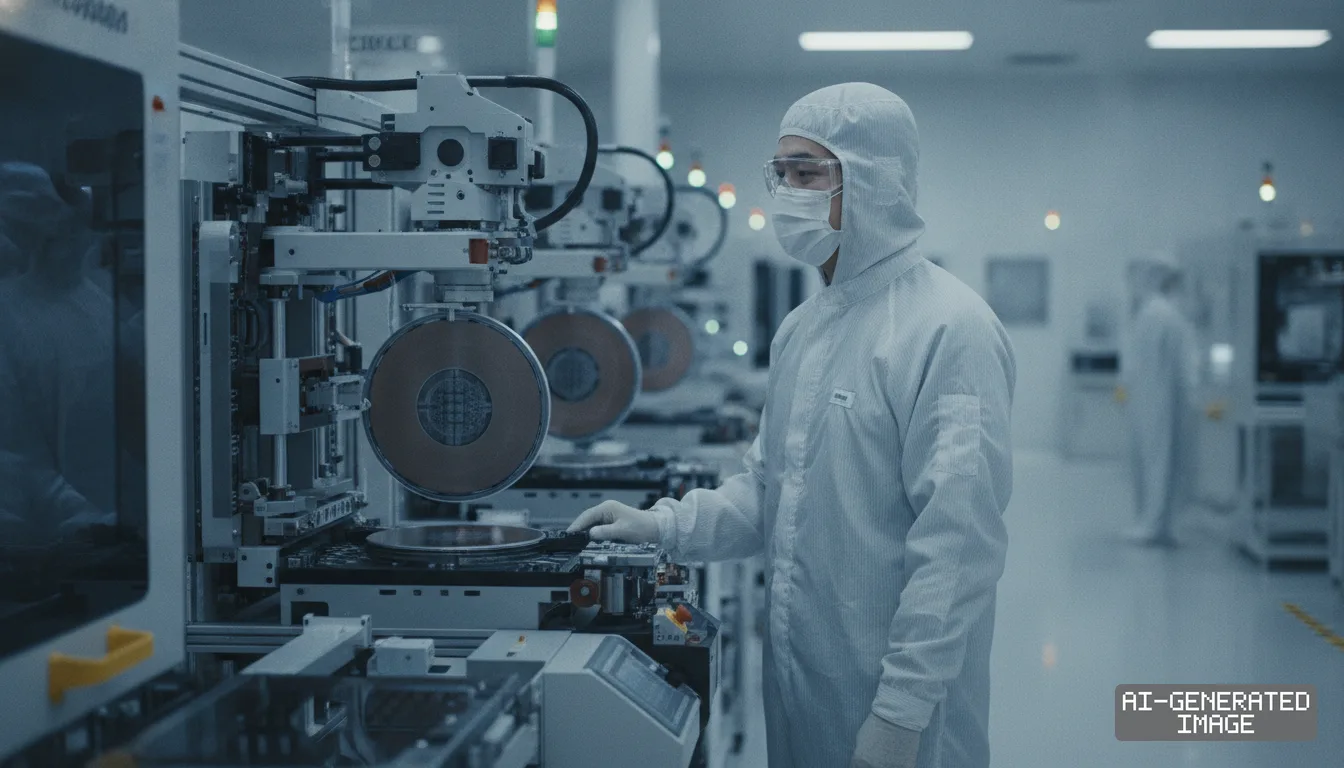
SK hynix demonstrated its next-generation memory architecture at the Supercomputing 2026 summit on Nov. 20, pushing server DRAM and enterprise solid-state drives beyond high bandwidth memory.
The South Korean chipmaker leads global high bandwidth memory supplies for artificial intelligence accelerators, but enterprise storage and standard server memory now anchor a growing portion of its quarterly cash flow.
The company posted a consolidated operating profit of 83.33 trillion won ($62.6 billion) on revenue of 104.62 trillion won in the third quarter, achieving an operating margin of 80%.
DRAM bit demand expanded across server installations as major cloud platforms upgraded computing clusters. Server DDR5 unit shipments grew more than 40% quarter over quarter, the company said during its quarterly earnings conference.
Average selling prices for DRAM rose in the high-20% range over the prior quarter. Tight availability across high-density server modules allowed the chipmaker to sustain pricing power alongside premium high bandwidth memory stacks.
In enterprise flash memory, average selling prices rose in the mid-20% range over the same three-month period. High-value data center purchases offset a minor contraction in total quarterly NAND bit shipments.
Industry commentary circulated on Nov. 20 suggesting SK hynix secured roughly $8.7 billion in operating profit from non-HBM commodity DRAM and enterprise solid-state drive product lines.
SK hynix has not published a discrete profit breakdown attributing $8.7 billion specifically to non-HBM commodity DRAM and eSSD lines, and regulatory filings do not substantiate that standalone figure.
The company instead reports consolidated earnings without isolating margin contributions between custom high bandwidth stacks and standard enterprise storage arrays.
High-capacity enterprise solid-state drives continue to generate substantial revenue through Solidigm, the California-based NAND subsidiary acquired from Intel. Solidigm specializes in high-density quad-level cell architectures designed for deep data archives.
Solidigm supplies 60-terabyte and 122-terabyte enterprise solid-state drives to hyperscale operators managing large language models. The subsidiary plans to introduce 244-terabyte storage units to meet growing inference dataset retention requirements.
SK hynix halted plans for an initial public offering of Solidigm on Oct. 23, citing equity market conditions and share valuation considerations. The decision keeps Solidigm entirely within the parent company's consolidated balance sheet.
Rival manufacturer Samsung Electronics retained the top global revenue ranking in enterprise solid-state drives with $3.2 billion in quarterly sales, supported by high-volume shipments of sub-8-terabyte modules to server clients.
Micron Technology discontinued its consumer Crucial brand earlier this year to reallocate fabrication lines toward server modules and enterprise storage, restricting spot supply across conventional memory channels.
At the Chicago supercomputing exhibition, SK hynix displayed its memory-centric AI rack system, called MARS. The architecture integrates Compute Express Link technology to pool DRAM resources across multi-server installations.
The company also demonstrated processing-in-memory chips that perform data operations directly inside DRAM cells. The approach aims to reduce bandwidth transfer delays between central host processors and high-capacity system memory.
Long-term supply agreements now cover more than 50% of projected production capacity for 2027 and 2028 across 14 major cloud service providers, the company said in its third-quarter financial presentation.
Cash and cash equivalents reached 114.5 trillion won ($86 billion) at the end of September. Outstanding debt fell to 15.8 trillion won, expanding net cash reserves to 98.7 trillion won ($74 billion).
Structural supply deficits in high-density DRAM and NAND will persist through 2030 due to wafer fabrication complexity, the company said during its analyst briefing.
Domestic manufacturing facilities will convert more than 50% of their NAND wafer production to 321-layer triple-level cell processes before the current quarter ends on Dec. 31.
Shipments of sixth-generation HBM4 memory will surpass fifth-generation HBM3E in both bit volume and revenue share during the fourth quarter, the company said.
Equipment move-in continues at the M15X fabrication cleanroom in Cheongju to prepare the line for volume manufacturing by the end of 2026.
Impact map
How this development propagates across the region and out to global buyers.
| Event | Korea | China | Japan | Global impact |
|---|---|---|---|---|
| AI server storage expansion | SK hynix converts 50% of domestic NAND lines to 321-layer nodes by Dec. 31 | CXMT faces wider density gaps as Korean producers lock 1c DRAM server capacity | Kioxia faces pricing competition against Solidigm 60TB and 122TB QLC drives | Hyperscale cloud providers secure over 50% of 2027-2028 memory under long-term contracts |
In this story
- Companies
- SK hynix
- Tickers
- 000660.KS
- Exposed
- SolidigmSamsung ElectronicsMicron Technology
- Impact
- Supply ChainPricingCapex
Related briefings
- Solidigm weighs $45B US NAND plant as AI SSD demand surges Also on Solidigm, Micron Technology, SK hynix
- SK hynix subsidiary Solidigm weighs NAND fab in New York Also on Solidigm, Micron Technology, SK hynix
- Solidigm $45 Billion Fab Speculation Collides With SK hynix Financing Limits Also on Solidigm, Micron Technology, SK hynix
- Korea opens US talks as tool license delays hit SK hynix Dalian Also on Solidigm, SK hynix, Samsung Electronics
Sources
Reporting
Confidence: medium — how we grade this
The documents behind this briefing are linked above. East Asia Brief produces its English text with AI assistance under human editorial review, and does not translate or republish other outlets' articles. See our methodology and AI policy. Spotted an error? Tell us.
The Morning Brief
What changed in Korean, Chinese and Japanese industry overnight — and what it means for your supply chain. One email, weekday mornings, US time. Free.
The Morning Brief is in preparation. Leave your address and we will write to you once — when the first issue is ready. Nothing before that.