Japan seeks Peru critical mineral pact to counter export curbs
Prime Minister Sanae Takaichi updates bilateral mining cooperation with Lima to safeguard copper and zinc flows from third-country trade restrictions.
Japanese Prime Minister Sanae Takaichi asked Peruvian President Keiko Fujimori on Nov. 20, 2026, to cooperate on critical minerals to prevent arbitrary export restrictions in global supply chains.
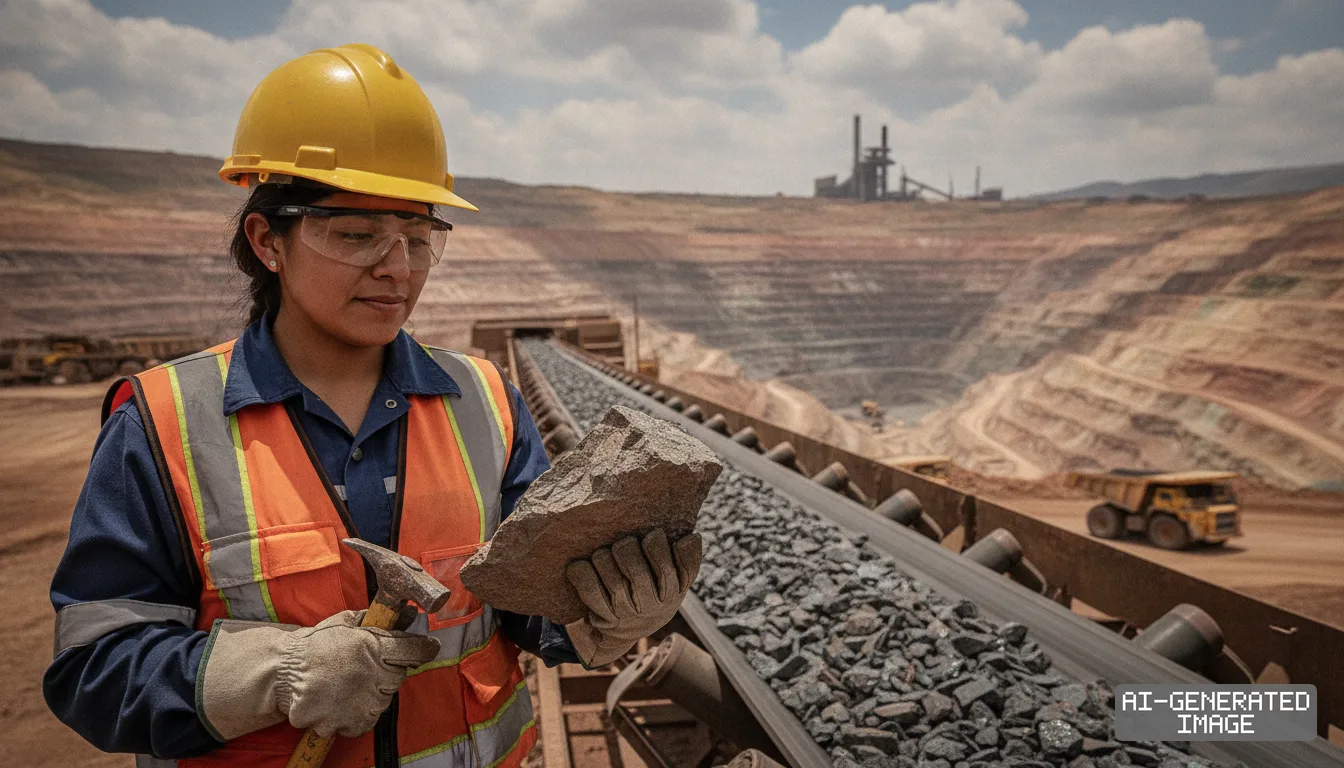
Peru accounts for 12% of global copper mine production and 12% of global zinc output, according to data from the U.S. Geological Survey. The South American nation serves as Japan's second-largest supplier of copper and zinc concentrates after Chile.
During their bilateral summit in Tokyo, Takaichi described arbitrary export controls imposed by third countries as an urgent global challenge. Unilateral supply curbs threaten industrial stability across allied manufacturing networks, Takaichi said.
Following the summit, Japanese State Minister of Economy, Trade and Industry Miyamoto and Peruvian Minister of Energy and Mines Guillermo Shinno Huamani signed a memorandum of cooperation on critical minerals. The agreement took effect immediately upon signature.
The new accord formally replaces an earlier mining cooperation memorandum concluded in 2016. It shifts the bilateral framework from basic geological exploration toward economic security and supply chain risk mitigation, the trade ministry said.
The updated text prioritizes downstream processing and smelting diversification. Both governments pledged to facilitate joint corporate investment in copper smelting, aiming to reduce dependence on intermediate processing hubs located in mainland Asia.
Peru's energy ministry simultaneously renewed its cooperation agreement with the Japan Organization for Metals and Energy Security, known as JOGMEC. The state agency provides technical support and debt guarantees to Japanese resource explorers.
Under the renewed framework, JOGMEC will expand joint geological surveys across Peruvian copper belts. When exploration projects prove commercially viable, the agency transfers development rights to private Japanese consortia under established partnership protocols.
Global copper concentrate markets have faced severe supply tightness and tumbling processing fees. Spot treatment and refining charges — the fees miners pay smelters to process ore — fell below historic break-even levels earlier this year, squeezing smelter margins.
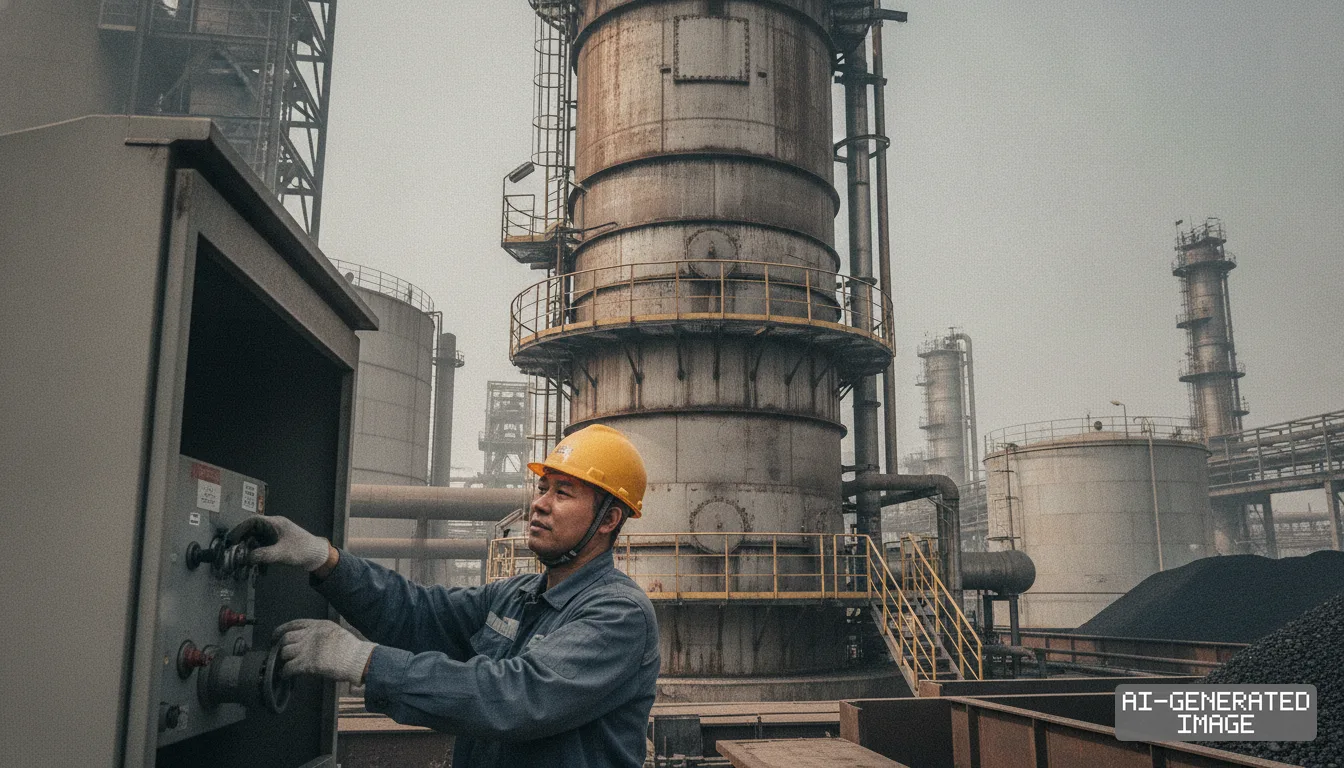
Japanese non-ferrous metal producers rely heavily on South American ore to run domestic smelting facilities. Sumitomo Metal Mining, which operates the Toyo Smelter and Refinery with an annual copper cathode capacity exceeding 400,000 metric tons, sources concentrate directly from Pacific rim mines.
Trading houses also hold substantial direct equity exposure in Andean extraction. Marubeni Corporation maintains ownership interests in major South American copper deposits, booking roughly 15% of its metals segment earnings from regional joint ventures supported by JOGMEC.
Mining activity remains the primary driver of Peru's domestic economy, generating 12% of gross domestic product and 64% of national export revenues. Preserving stable commercial access to Asian consumers provides crucial foreign exchange liquidity for the government in Lima.
Japan consumes more than 1 million metric tons of refined copper annually to feed automotive, power transmission and electronic component fabrication. Domestic demand will increase steadily through 2030, driven by grid upgrades and factory electrification, the trade ministry said.
The agreement with Peru forms part of a wider Japanese campaign to secure South American resource corridors. On the same day in Tokyo, Japanese officials concluded a parallel critical minerals framework with Chilean President Jose Antonio Kast.
Chile and Peru together supply over 40% of global mined copper. Establishing bilateral economic security agreements with both governments establishes a coordinated Pacific supply perimeter for Japanese battery, electrical equipment and industrial machinery manufacturers.
Tokyo and Lima first outlined a 10-year resource cooperation roadmap during the Asia-Pacific Economic Cooperation summit in Lima in November 2024. The 2026 agreement converts those general policy guidelines into enforceable administrative mechanisms.
Japanese policymakers remain concerned about foreign dominance over Peruvian maritime and mining infrastructure. Chinese state conglomerates have expanded ownership in major deposits such as Toromocho, while financing massive container terminal terminals along the central Peruvian coastline.
To counter concentration risks, Japan offers advanced environmental remediation and tailings management technology. Deploying Japanese separation systems allows Peruvian operators to extract high-grade concentrate while lowering chemical discharge into local watersheds, ministry officials said.
The ministry has not published specific financing figures or committed procurement volumes under the memorandum of cooperation. The public announcement does not identify which commercial mining concessions will receive initial equity allocations under the bilateral pact.
Bilateral working groups under the Ministry of Economy, Trade and Industry and Peru's mining ministry will convene in Tokyo in the first quarter of 2027 to review initial joint commercial ventures.
Impact map
How this development propagates across the region and out to global buyers.
| Event | Korea | China | Japan | Global impact |
|---|---|---|---|---|
| Japan-Peru critical minerals agreement | domestic smelters face stiffer regional competition for South American copper concentrates | state smelters retain dominant share of Peruvian ore but lose exclusive downstream leverage | Sumitomo Metal Mining and trading houses gain state-backed shields against arbitrary export curbs | copper and zinc supply security tightens across Pacific maritime corridors |
In this story
- Companies
- Sumitomo Metal MiningMarubeni
- Tickers
- 5713.T8002.T
- Policy
- Export ControlsProcurement Rules
- Impact
- Supply ChainCompliance
Track every Export Controls development → Track every Procurement Rules development →
Related briefings
- Japan, Uzbekistan agree to refine critical minerals locally for export Also on Marubeni, Compliance
- UK and Japan ink offshore wind compact for £9 billion pipeline Also on Marubeni
- Japanese trading houses expand cobalt refining ties to counter supply risk Also on Sumitomo Metal Mining, Compliance
- Sumitomo Metal Mining targets copper stakes to bridge 80,000-ton gap Also on Sumitomo Metal Mining
Sources
Primary documents
Reporting
Confidence: high — how we grade this
The documents behind this briefing are linked above. East Asia Brief produces its English text with AI assistance under human editorial review, and does not translate or republish other outlets' articles. See our methodology and AI policy. Spotted an error? Tell us.
The Morning Brief
What changed in Korean, Chinese and Japanese industry overnight — and what it means for your supply chain. One email, weekday mornings, US time. Free.
The Morning Brief is in preparation. Leave your address and we will write to you once — when the first issue is ready. Nothing before that.