Korea Zinc Secures US Backing for $7.4B Tennessee Smelter
The federal support package includes $210 million under the CHIPS Act and FAST-41 permitting to build capacity for 11 critical minerals currently dominated by China.
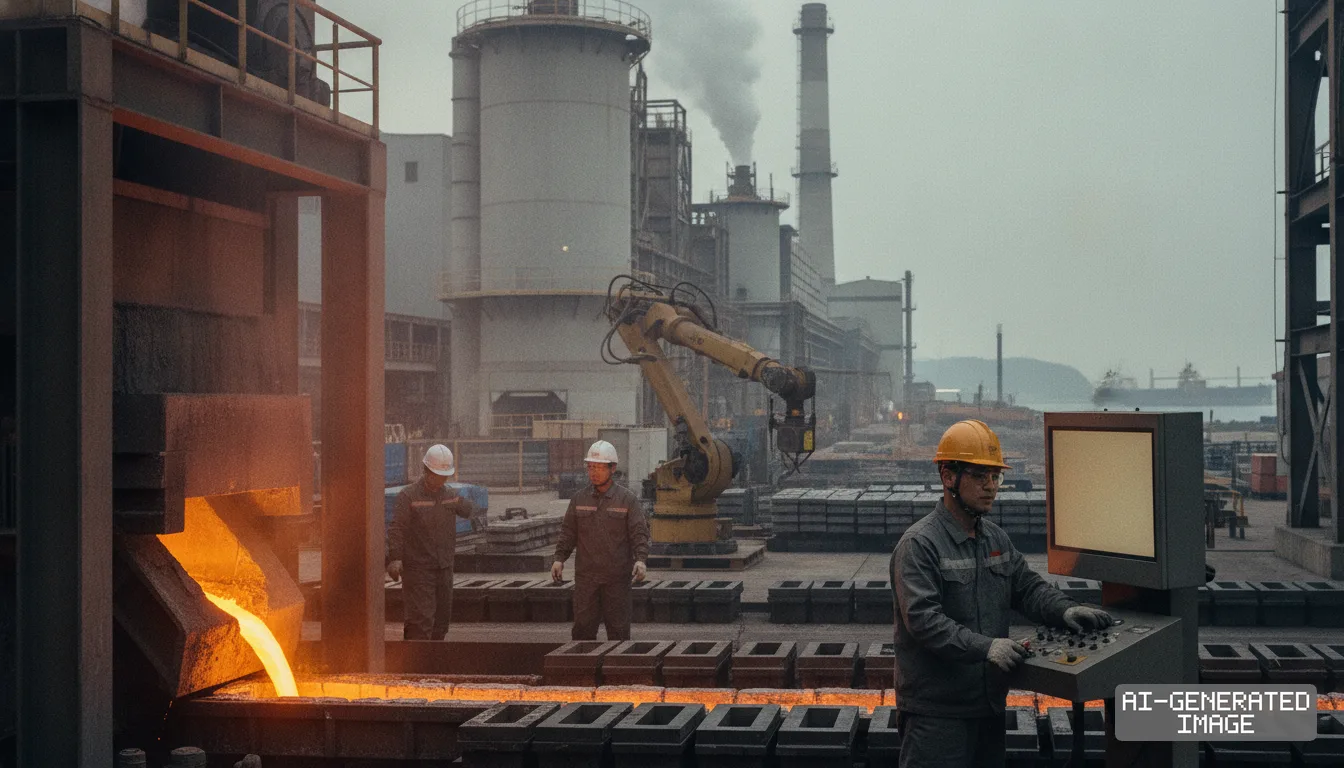
Korea Zinc secured formal United States federal support on Oct. 15, 2026, anchoring a $7.4 billion integrated critical minerals smelter project in Clarksville, Tennessee, designed to counter Chinese processing dominance.
The Seoul-based company operates the world's largest nonferrous metals smelter in Onsan, South Korea. The Tennessee venture, named Project Crucible, marks its first comprehensive refining expansion inside the United States.
The facility will process 1.1 million metric tons of raw material annually to yield 540,000 tons of finished metals. That volume equals roughly half the operating capacity of Korea Zinc's flagship Onsan plant.
Washington backed the investment with a $210 million direct grant awarded through the CHIPS and Science Act. Federal regulators also placed the project under FAST-41, an expedited review process that compresses statutory permitting timelines.
The Pentagon completed a National Environmental Policy Act assessment for the site in September 2026, issuing a Finding of No Significant Impact. That determination cleared the path for coordinated Department of Defense infrastructure financing.
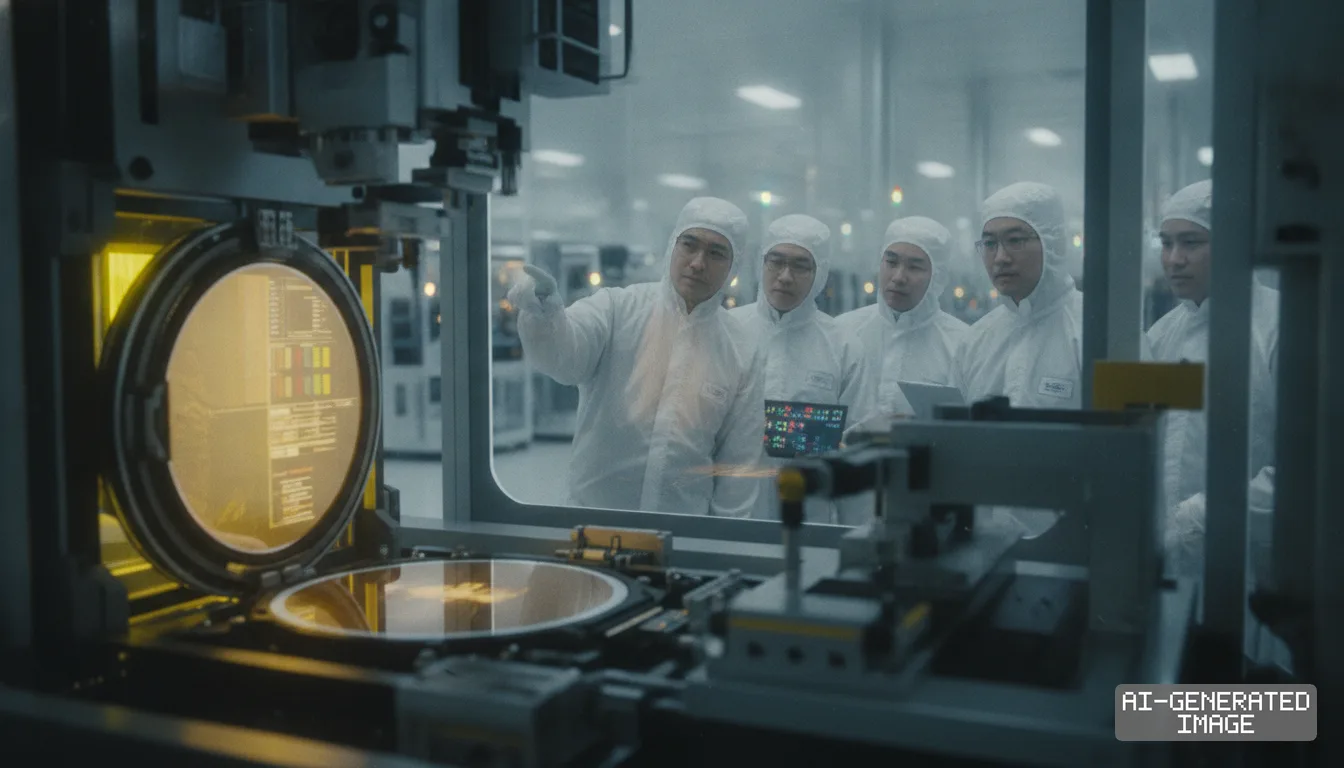
The complex will produce 11 minerals designated as critical by the United States Geological Survey. Output covers gallium, germanium, indium and antimony, materials essential to semiconductor fabrication, defense radar and aerospace optics.
China currently controls over 90% of global primary gallium refining and roughly 60% of refined germanium capacity. Export restrictions imposed by Beijing in 2023 had restricted Western defense contractors from securing reliable secondary feedstocks.
Smelting recovers these strategic minerals as trace byproducts during base metal refining. Korea Zinc will extract germanium and gallium directly from zinc concentrates and from untreated residues known as pond cake.
Korea Zinc acquired the 160-acre Clarksville facility and two regional zinc mines from European commodities trader Trafigura's Nyrstar unit on April 1, 2026. The site hosted the only operating primary zinc smelter in the United States.
Trafigura continues to market the smelter's refined zinc output and supply base feedstocks under a commercial contract running through Dec. 31, 2026. Korea Zinc will then assume independent ore procurement and direct product distribution.
The project will double the footprint of the Clarksville facility and rebuild processing lines across 650,000 square meters. The complex will house specialized pyro-metallurgical and hydro-metallurgical extraction circuits for secondary metals recovery.
Federal incentives also include manufacturing production tax credits under Section 45X of the Inflation Reduction Act. The statutory provision grants a 10% credit against production costs for critical minerals processed inside domestic facilities.
Korea Zinc contracted low-cost industrial electricity from the Tennessee Valley Authority at 4.18 cents per kilowatt-hour. Industrial electricity at the Onsan facility in South Korea costs roughly 12.8 cents per kilowatt-hour under state utility tariffs.
The electricity price difference yields an estimated $4.83 billion in utility savings over 30 years, Korea Zinc reported in company filings. Refining nonferrous metals requires continuous electrolytic currents, making power the dominant operating expenditure.
The feedstock plan relies on diversified allied trade routes to avoid geopolitical chokepoints. North American and Mexican mines will supply 55% of zinc concentrates, while Peruvian and Mexican producers provide half the lead concentrate feed.
Secondary raw material streams will draw copper scrap from domestic United States and European industrial recyclers. Recovering copper from industrial residues feeds directly into clean energy equipment and regional utility grid expansion projects.
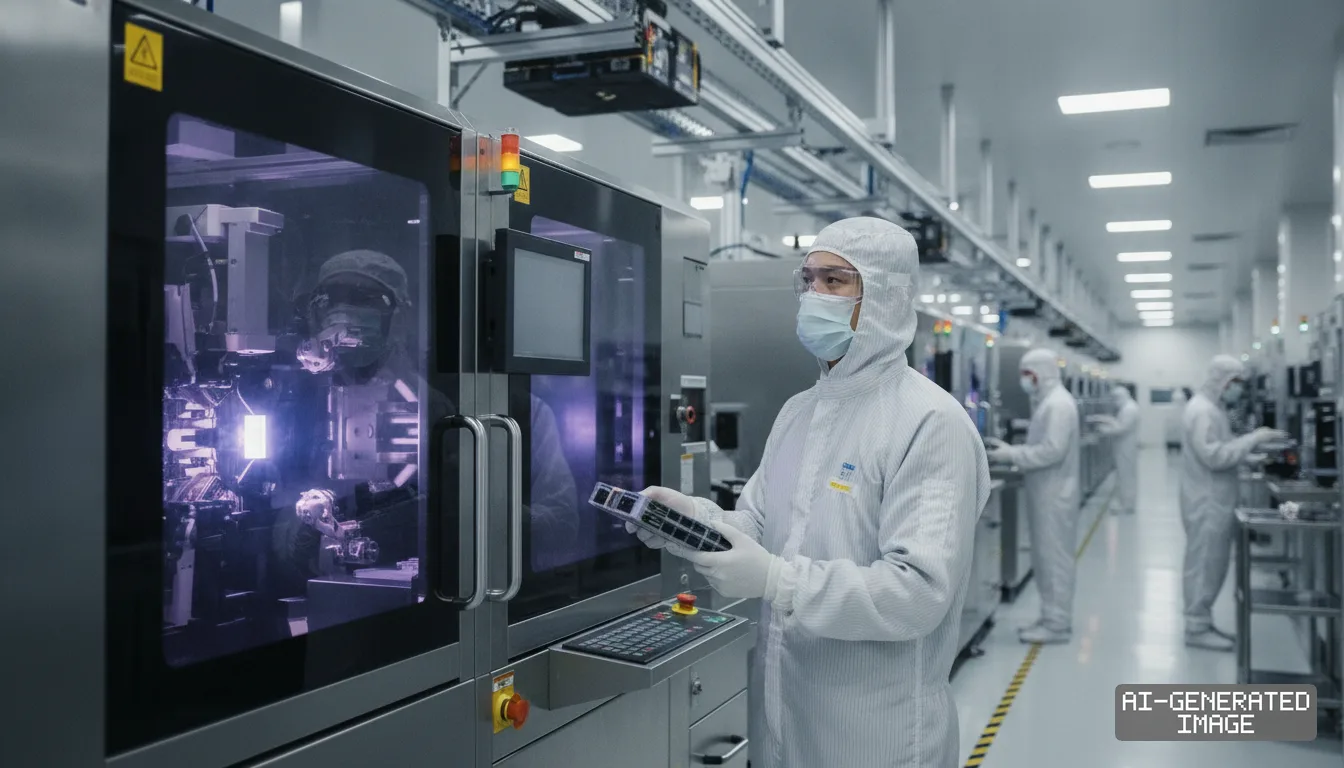
The refinery will also produce electronic-grade sulfuric acid for advanced semiconductor fabrication plants. Chipmakers in Texas and Arizona currently rely on maritime imports of ultra-pure wet chemicals for wafer rinsing and etching processes.
Bill Frauenhofer, executive director for semiconductor investment at the Commerce Department, addressed supply vulnerabilities at SEMICON West 2026 on Oct. 13. Expanding wafer fabs without domestic chemical processing creates critical manufacturing exposure, Frauenhofer said.
Clarksville Mayor Joe Pitts endorsed the project on Oct. 14, 2026, citing its role in mineral security. Montgomery County officials expect the refinery to create 420 direct jobs, alongside 320 positions at regional mines.
Korea Zinc allocated $6.6 billion in capital expenditure for Crucible Metals LLC, its American subsidiary. The company projects an operating margin before interest, tax, depreciation and amortization of 17% to 19% between 2030 and 2050.
The project financing structure draws roughly $4.7 billion in senior debt, syndicated with assistance from JPMorgan Chase. The United States government arranged an initial $1.4 billion conditional commitment through defense and commerce development mechanisms.
The notice does not state the precise debt-equity allocation among private syndication partners, and the Department of Commerce has not published the disbursement schedule for the remaining grant tranches.
Civil engineering and foundational preparation work will run through 2026 before full-scale commercial construction begins in 2027. Initial test operations are scheduled for 2029, with full commercial refining operations slated for early 2030.
Impact map
How this development propagates across the region and out to global buyers.
| Event | Korea | China | Japan | Global impact |
|---|---|---|---|---|
| Project Crucible smelter support | Korea Zinc builds $7.4B base replicating 50% of Onsan capacity | Chinese refiners face direct allied competition in gallium and germanium | Japanese electronics firms gain non-China supply channel for electronic sulfuric acid | Global critical mineral supply diversifies away from Chinese export licensing chokepoints |
In this story
- Companies
- Korea Zinc
- Tickers
- 010130.KS
- Exposed
- TrafiguraNyrstarJPMorgan Chase
- Policy
- SubsidiesEconomic SecurityTax Credits
- Impact
- Supply ChainCapexCost Structure
Track every Subsidies development → Track every Economic Security development → Track every Tax Credits development →
Related briefings
- Korea Zinc wins US political backing for Tennessee smelter Also on Nyrstar, Korea Zinc
- Shipyards Fill VLCC Slots as Crude Tanker Rates Hit Records Also on JPMorgan Chase
- LG Energy Solution locks US lithium supply in Smackover pact Also on Trafigura, Tax Credits
- Korea Zinc taps e-waste to build non-China rare earth supply Also on Korea Zinc
Sources
Primary documents
Reporting
Confidence: high — how we grade this
The documents behind this briefing are linked above. East Asia Brief produces its English text with AI assistance under human editorial review, and does not translate or republish other outlets' articles. See our methodology and AI policy. Spotted an error? Tell us.
The Morning Brief
What changed in Korean, Chinese and Japanese industry overnight — and what it means for your supply chain. One email, weekday mornings, US time. Free.
The Morning Brief is in preparation. Leave your address and we will write to you once — when the first issue is ready. Nothing before that.