Shipyards Fill VLCC Slots as Crude Tanker Rates Hit Records
Chinese yards took 90% of first-half tanker awards, leaving Hanwha Ocean to secure high-margin orders as 43% of the global fleet reaches replacement age.
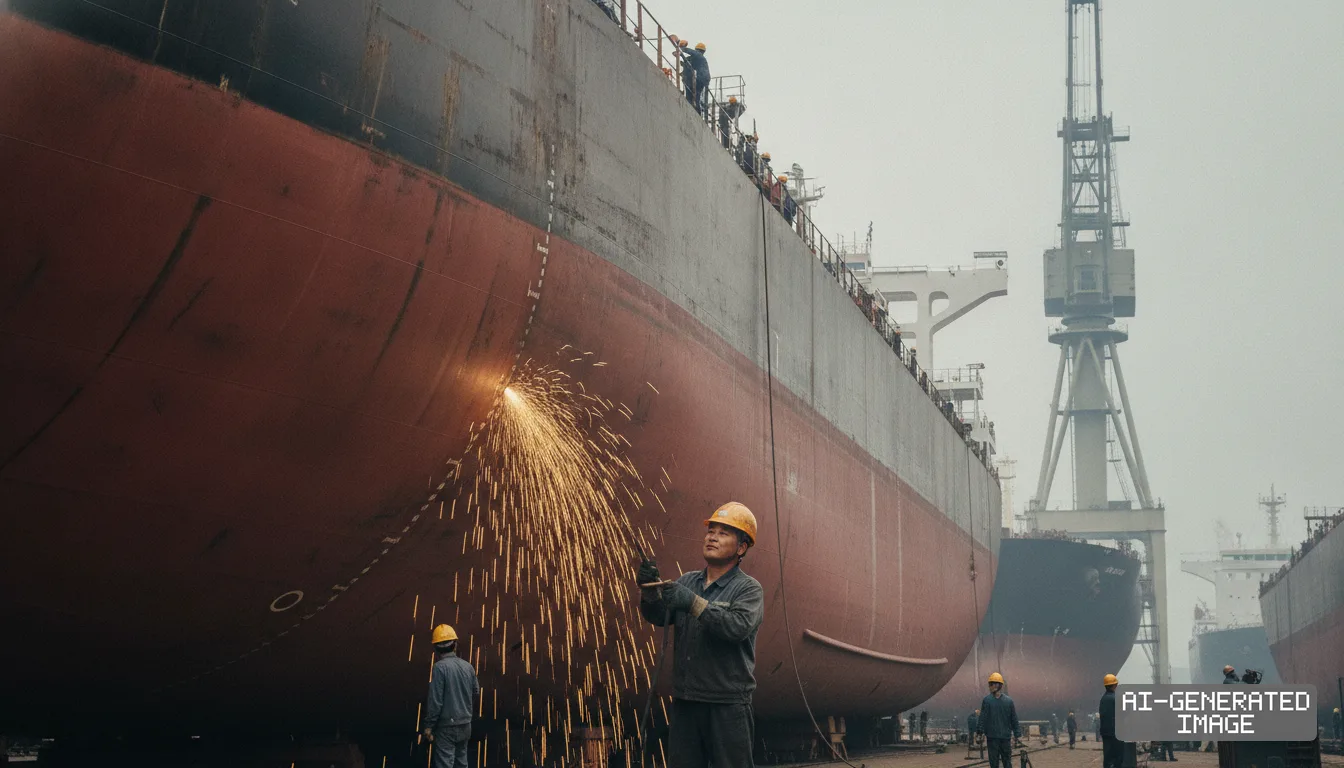
Global tanker operators accelerated fleet replacement orders on Oct. 14, 2026 as soaring crude freight rates driven by Middle East disruptions exhausted delivery slots across major Chinese and South Korean shipyards.
Spot freight rates for Very Large Crude Carriers averaged $665,000 per day during the first week of October. That figure marks a 72% jump from early March, according to shipping industry benchmarks.
One-year time charter rates crossed $210,000 per day over the same period. Replacement demand is mounting across the sector because 42.6% of the active global VLCC fleet is now 15 years or older.
Shipbrokers estimate that fleet aging will generate replacement orders for roughly 130 crude tankers. Prolonged naval instability around the Strait of Hormuz has magnified transit risks, forcing charterers to retire older hulls.
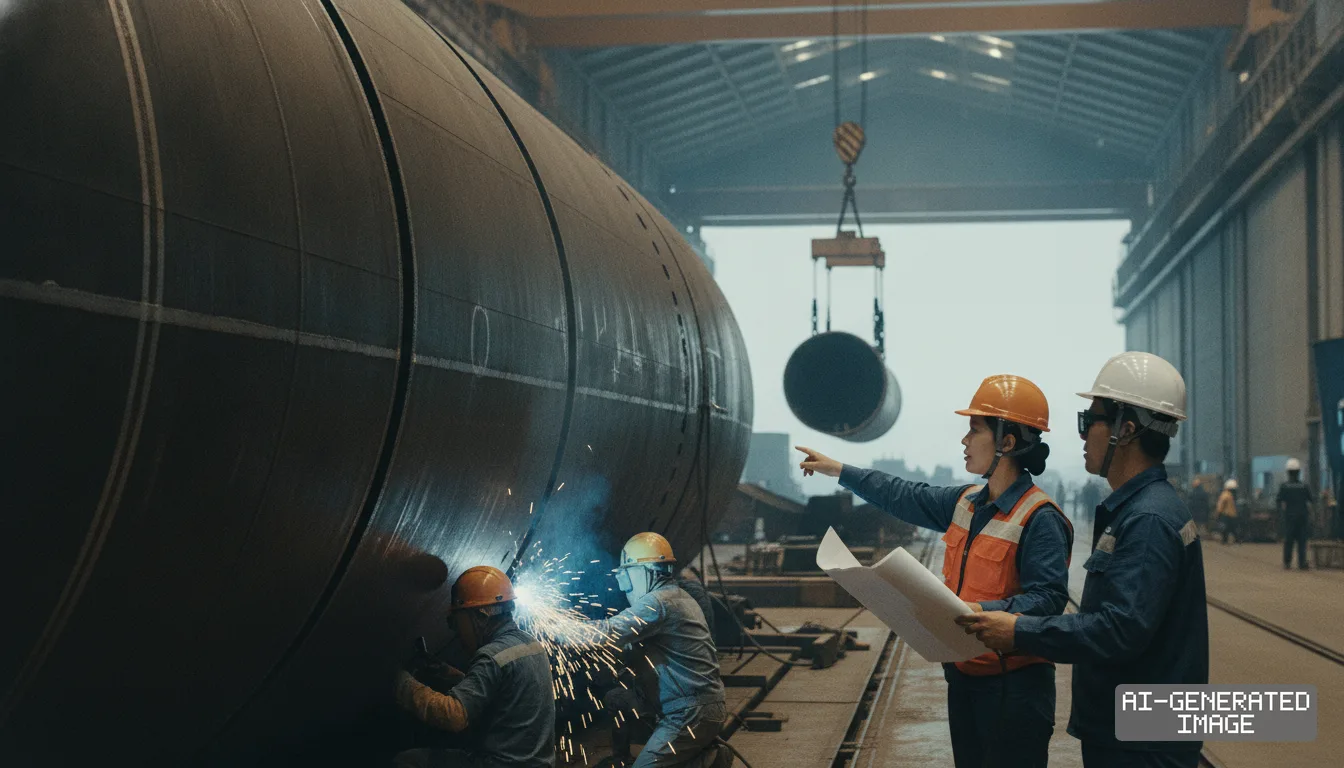
Chinese shipbuilders absorbed between 89% and 90% of all newbuild VLCC awards placed during the first half of 2026. Shipyards in China secured 67 crude tanker orders during the first quarter alone.
Those early contracts closed at baseline prices between $122 million and $123 million per vessel. The sudden wave of contracts committed drydock availability in China through 2028 and into 2030.
With Chinese builders unable to take more orders, crude tanker operators turned to South Korea. Korean shipbuilders offer earlier delivery windows, allowing them to charge a premium on newly signed berths.
Hanwha Ocean signed a 394.3 billion won ($266 million) contract on July 14, 2026 with a maritime investment fund managed by J.P. Morgan. The deal covers two 320,000 deadweight-ton VLCCs.
The transaction prices each carrier at roughly $131 million, among the highest rates logged this cycle. Delivery of both vessels is scheduled for the first quarter of 2030, Hanwha Ocean said.
The contract brought Hanwha Ocean's year-to-date VLCC tally to 17 vessels. Very Large Crude Carriers now account for 45% of the shipbuilder's total order backlog, according to regulatory filings.
Domestic shipping companies have also competed for construction slots. South Korean carrier Pan Ocean committed 783.4 billion won ($518 million) in May for four newbuild VLCCs to renew its commercial wet bulk capacity.
Sinokor Maritime deployed approximately $7 billion earlier in the year to acquire a massive fleet. The purchase gave Sinokor control of nearly 10% of global VLCC capacity, dedicated primarily to Middle Eastern shuttle routes.
Sinokor has also pursued structural expansion through cross-border partnerships. Antitrust authorities in Greece and Cyprus logged merger filings in March regarding MSC Mediterranean Shipping Company acquiring a 50% equity stake in Sinokor Maritime.
Charterers now face an unusually tight market for modern, eco-design hulls. Older crude carriers consume significantly more marine fuel and struggle to meet international maritime carbon efficiency rules, raising operating costs.
Drydocks in Geoje and Ulsan must also balance tanker berths against prior commercial commitments. High-margin contracts for liquefied natural gas carriers and container vessels already occupy prime South Korean slipways through late 2027.
Newbuilding price indices tracked by Clarksons Research indicate average conventional VLCC prices sit at $130.5 million. That represents the highest pricing tier recorded in the sector since late 2008.
Shipowners seeking prompt berths must pay higher down payments to secure shipyard space. Major shipbuilders have shifted negotiations to selective contracting, giving priority to repeat customers with firm financing.
South Korean yards have capitalized on this leverage to widen operating margins. Yard executives have stated they will preserve late-2028 drydock positions for high-value gas and petroleum tonnage rather than discount berths.
Chinese shipbuilders, by contrast, face lengthening delivery backlogs that stretch past four years. Heavy yard utilization limits their ability to capture near-term pricing spikes in the crude carrier segment.
Commercial berths for crude carriers across East Asia are now committed into the next decade. Final deliveries under Hanwha Ocean's recent carrier backlog are scheduled to run through March 2030.
The South Korean Ministry of Trade, Industry and Energy has not published an official policy directive on drydock slot reservations for crude carriers. State maritime agencies have issued no formal shipyard allocation mandates.
South Korean yards continue to negotiate bilateral slot reservations directly with international tanker operators under private commercial terms.
Impact map
How this development propagates across the region and out to global buyers.
| Event | Korea | China | Japan | Global impact |
|---|---|---|---|---|
| VLCC replacement cycle surge | Hanwha Ocean books 17 VLCCs at | — | — | — |
| VLCC replacement cycle surge | Hanwha Ocean books 17 VLCCs at $131M each, tankers reach 45% of backlog | Shipyards take 90% of H1 orders, fully booking 2028-2030 drydock capacity | Japanese yards stay focused on domestic bulkers, capturing no major VLCC slots | Aging fleet of 130 vessels forces charterers to pay $210,000 daily time-charter rates |
In this story
- Companies
- Hanwha OceanSinokor Maritime
- Tickers
- 042660.KS
- Exposed
- JPMorgan ChaseMediterranean Shipping CompanyPan Ocean
- Policy
- Economic Security
- Impact
- Order BookPricingCapex
Track every Economic Security development →
Related briefings
- Hanwha Ocean bids against Chinese yards for Maersk mega-ships Also on Mediterranean Shipping Company, Hanwha Ocean, Pricing
- CSSC Reallocates Yard Drydocks to Accelerate Large Containership Output Also on Mediterranean Shipping Company, Hanwha Ocean, Order Book
- J.P. Morgan adds two Samsung Heavy VLGCs to expand gas fleet Also on Hanwha Ocean, Pricing, Order Book
- HD Hyundai and Hanwha Ocean Lock In LNG Carrier Berth Slots Through 2029 Also on Hanwha Ocean, Pricing, Order Book
Sources
Reporting
Confidence: medium — how we grade this
The documents behind this briefing are linked above. East Asia Brief produces its English text with AI assistance under human editorial review, and does not translate or republish other outlets' articles. See our methodology and AI policy. Spotted an error? Tell us.
The Morning Brief
What changed in Korean, Chinese and Japanese industry overnight — and what it means for your supply chain. One email, weekday mornings, US time. Free.
The Morning Brief is in preparation. Leave your address and we will write to you once — when the first issue is ready. Nothing before that.