Korea commits $599M to on-device AI chips with Samsung fab lines
The trade ministry commits 511.1 billion won in state subsidies through 2030 to develop ten on-device processors and reserve 21 foundry slots.
South Korea's Ministry of Trade, Industry and Energy accelerated an 800.2 billion won ($599 million) national artificial intelligence chip roadmap on Nov. 13, 2026, pulling forward domestic hardware fabrication schedules.
The ministry, which directs South Korea's industrial research and technology subsidies, finalized the operational timetable in Seoul at the biannual conference of the AI Semiconductor Manufacturing AI Transformation Alliance.
The multi-year program commits 800.2 billion won through 2030, with national government coffers funding 511.1 billion won ($382 million). Participating device manufacturers and domestic chip design houses will supply the remaining 289.1 billion won.
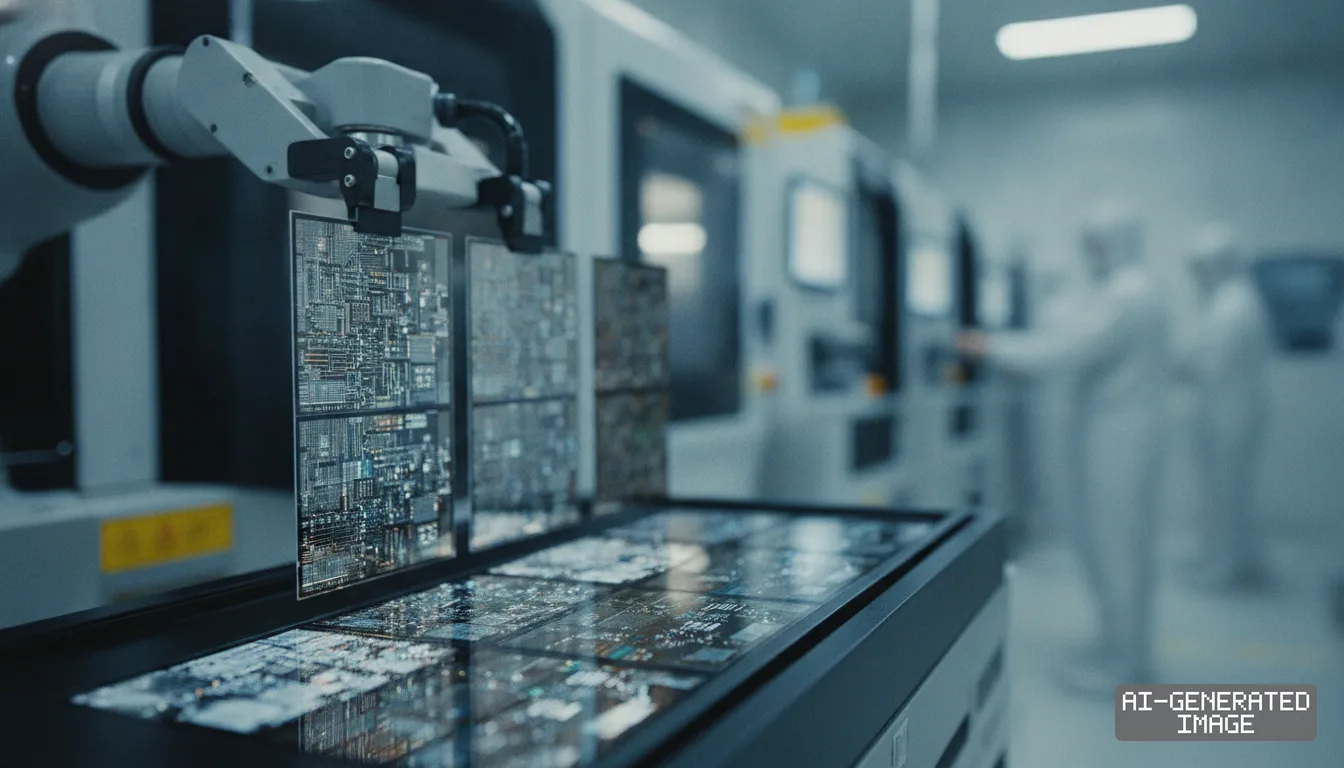
Under the roadmap, South Korea will develop and verify 10 distinct edge artificial intelligence hardware assets. The list includes eight specialized neural processing units and two semiconductor intellectual property blocks.
The eight target processors will cover four core manufacturing sectors. Automotive suppliers will develop one autonomous driving processor, home appliance makers will produce three appliance chips, and machinery builders will deploy four dedicated robotic units.
The four robotics processors will serve collaborative factory robots, humanoid units, agricultural machinery and unmanned aerial drones. Each processor will execute computer vision and motion control tasks on the physical machine.
The two proprietary intellectual property blocks cover physical design libraries for advanced manufacturing nodes and extreme industrial environments. Domestic fabless companies will license these shared design blocks at discounted fees.
Government planners moved the manufacturing schedule for one smart appliance processor forward by more than 12 months. Prototype wafer fabrication for that home appliance chip will now begin in late 2027, the ministry said.
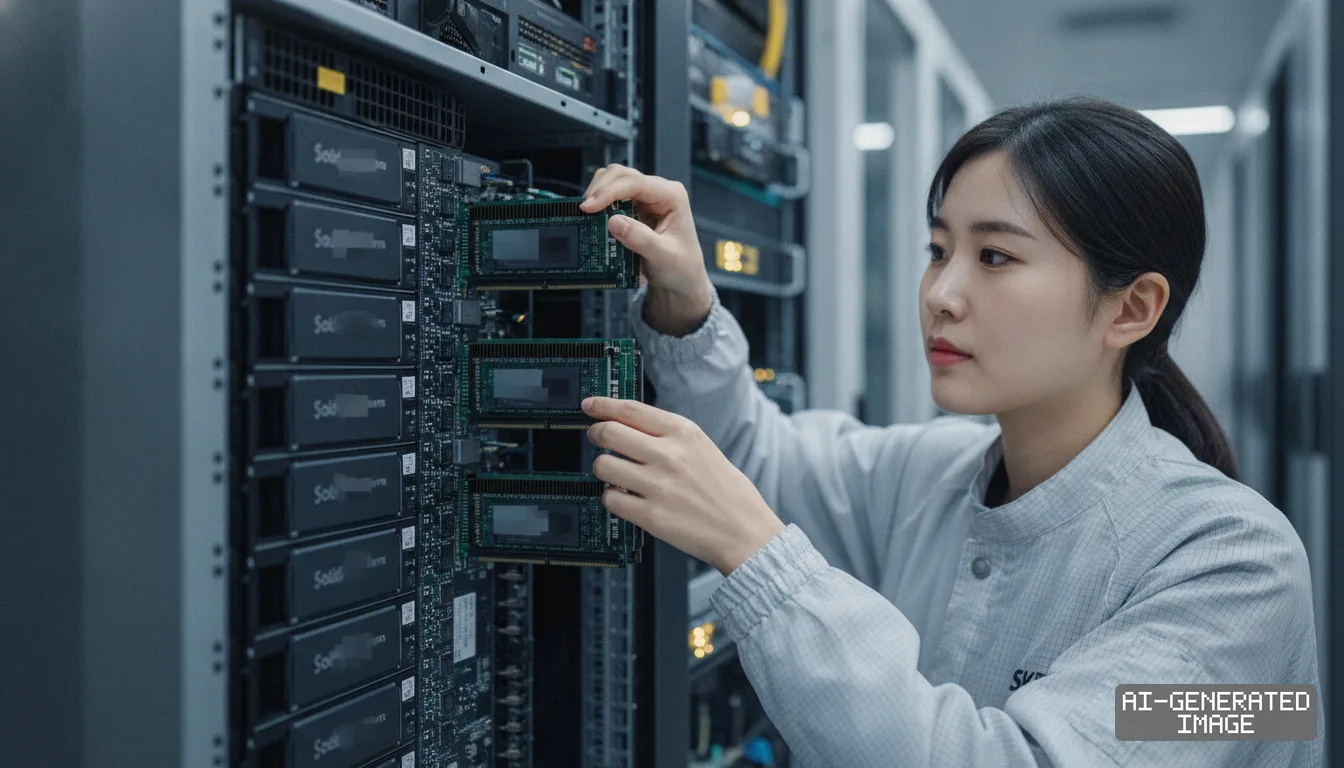
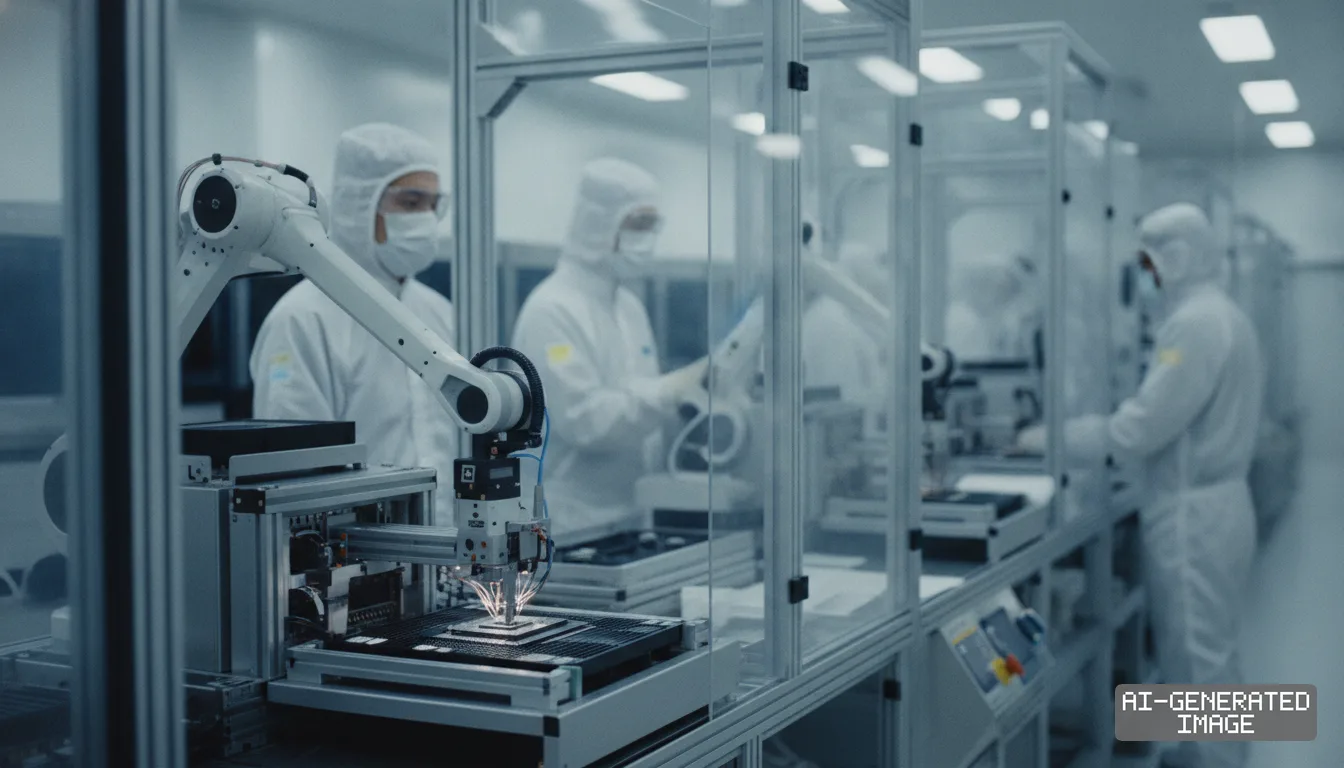
Samsung Electronics will provide guaranteed fabrication capacity to prevent manufacturing delays for participating chip designers. The chipmaker committed 21 prototype runs across its domestic foundries during 2027, ministry officials said.
Samsung will split the 21 runs between multi-project wafer shuttles and dedicated engineering runs. The allocation includes three runs at the 2-nanometer node, four at 4-nanometer, three at 5-nanometer, three at 8-nanometer, three at 14-nanometer and five at 28-nanometer.
Those 21 scheduled runs represent roughly 15% of Samsung's annual domestic prototype wafer capacity dedicated to local fabless firms. The reservation shields small designers from losing fab access when commercial production lines fill up.
Openedges Technology will supply memory subsystem design IP and neural processing unit interface blocks to participating consortium partners. State-sponsored research initiatives provided about 18% of the IP vendor's annual domestic licensing revenue last year.
Downstream industrial manufacturers will serve as active evaluators rather than passive buyers. Hyundai Motor, LG Electronics and Doosan Robotics will provide operational test rigs to validate sample chips inside production vehicles, consumer appliances and mechanical arms.
On-device artificial intelligence hardware runs mathematical computations directly on local microchips without sending sensor streams over wireless networks. The architecture reduces data transmission latency and cuts operational power consumption in industrial machinery.
Local machinery builders currently import more than 90% of their high-performance artificial intelligence processors from foreign designers such as Nvidia. Trade officials structured the funding package to replace foreign edge accelerators with domestic silicon by 2030.
A joint public-private strategy committee will manage the execution of the chipmaking roadmap. South Korea's vice minister of trade and Kyung Hee University President Kim Jin-sang will lead the steering committee as co-chairmen.
The steering committee will convene in January 2027 to review first-phase design milestones and verify foundry production schedules. Consortium members developing the fast-tracked appliance processor must submit completed mask designs to Samsung by October 2027.
The ministry notice does not state whether any portion of the 800.2 billion won budget extends to high-bandwidth memory or data-center accelerators, leaving server hardware under separate science ministry programs.
Impact map
How this development propagates across the region and out to global buyers.
| Event | Korea | China | Japan | Global impact |
|---|---|---|---|---|
| K-On-Device AI semiconductor roadmap acceleration | Samsung commits 21 prototype runs, Openedges supplies memory IP for 10 chip designs | Chinese fabless competitors face Korean substitution in robotics and home appliance supply chains | Japanese power and analog IP vendors face Korean displacement in regional automotive modules | Industrial OEMs gain alternative to Nvidia edge processors across autonomous and robotic machinery |
In this story
- Companies
- Samsung ElectronicsOpenedges Technology
- Tickers
- 005930.KS394280.KQ
- Exposed
- Hyundai MotorLG ElectronicsDoosan Robotics
- Policy
- Subsidies
- Impact
- CapexSupply ChainOrder Book
Track every Subsidies development →
Related briefings
- LG taps Samsung Foundry for appliance AI chips under Korean state project Also on LG Electronics, Doosan Robotics, Hyundai Motor
- Korean robot makers surge as Nvidia expands physical AI ties Also on LG Electronics, Doosan Robotics, Samsung Electronics
- Mobilint tests robot AI chips with Doosan to curb Nvidia costs Also on LG Electronics, Doosan Robotics, Subsidies
- Trump threatens 300% tariff on foreign factories exporting to US Also on LG Electronics, Hyundai Motor, Samsung Electronics
Sources
Primary documents
Reporting
Confidence: high — how we grade this
The documents behind this briefing are linked above. East Asia Brief produces its English text with AI assistance under human editorial review, and does not translate or republish other outlets' articles. See our methodology and AI policy. Spotted an error? Tell us.
The Morning Brief
What changed in Korean, Chinese and Japanese industry overnight — and what it means for your supply chain. One email, weekday mornings, US time. Free.
The Morning Brief is in preparation. Leave your address and we will write to you once — when the first issue is ready. Nothing before that.