Mobilint tests robot AI chips with Doosan to curb Nvidia costs
South Korea will invest 511.1 billion won through 2030 to deploy domestic neural processing units across collaborative arms, humanoid systems and autonomous tractors.
South Korean chip startup Mobilint said Sept. 28, 2026, it joined four state-backed consortiums with LG Electronics, Doosan Robotics and Daedong to test custom neural processing units in commercial robots.
The projects form part of an 800.2 billion won ($590 million) national development program directed by South Korea's Ministry of Trade, Industry and Energy. The government provides 511.1 billion won through 2030 to build 10 application-specific chips across manufacturing sectors.
Under the initiative, domestic fabless designers collaborate directly with industrial manufacturers from early architectural planning. Demand-side companies specify computing constraints, power limits and operational benchmarks before the chip designer finalizes silicon layouts.
Korean robotics manufacturers have historically relied on imported processors, particularly Nvidia graphic processing units, for vision tasks. Those foreign modules add steep hardware costs and consume tens of watts, creating thermal bottlenecks inside sealed robot joints.
Neural processing units (NPUs) — specialized circuits engineered specifically for matrix multiplication in machine learning models — offer higher electrical efficiency. They execute artificial intelligence inference tasks using a fraction of the power required by general-purpose chips.
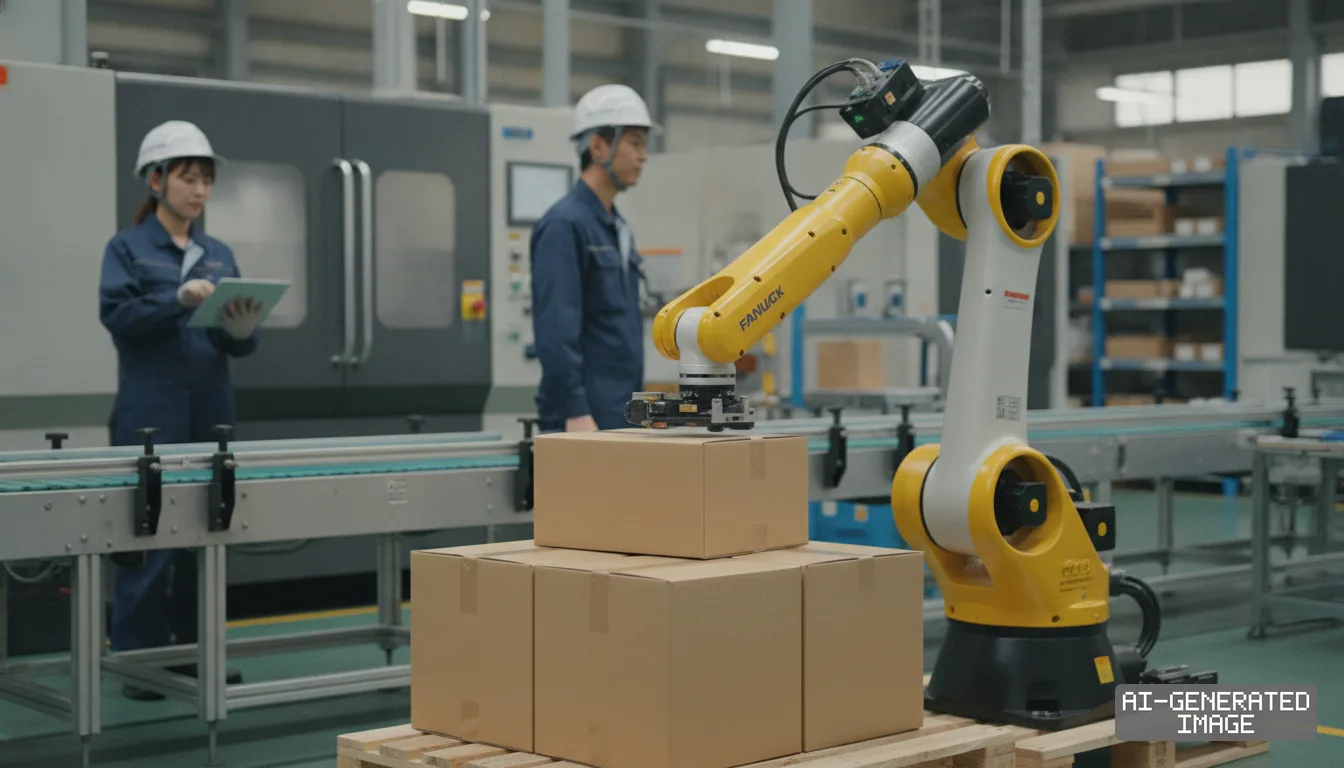
For Doosan Robotics, Mobilint leads development of a dedicated NPU and a specialized software development kit. Doosan Robotics controls roughly a third of South Korea's collaborative robot market and seeks lower-cost domestic controllers.
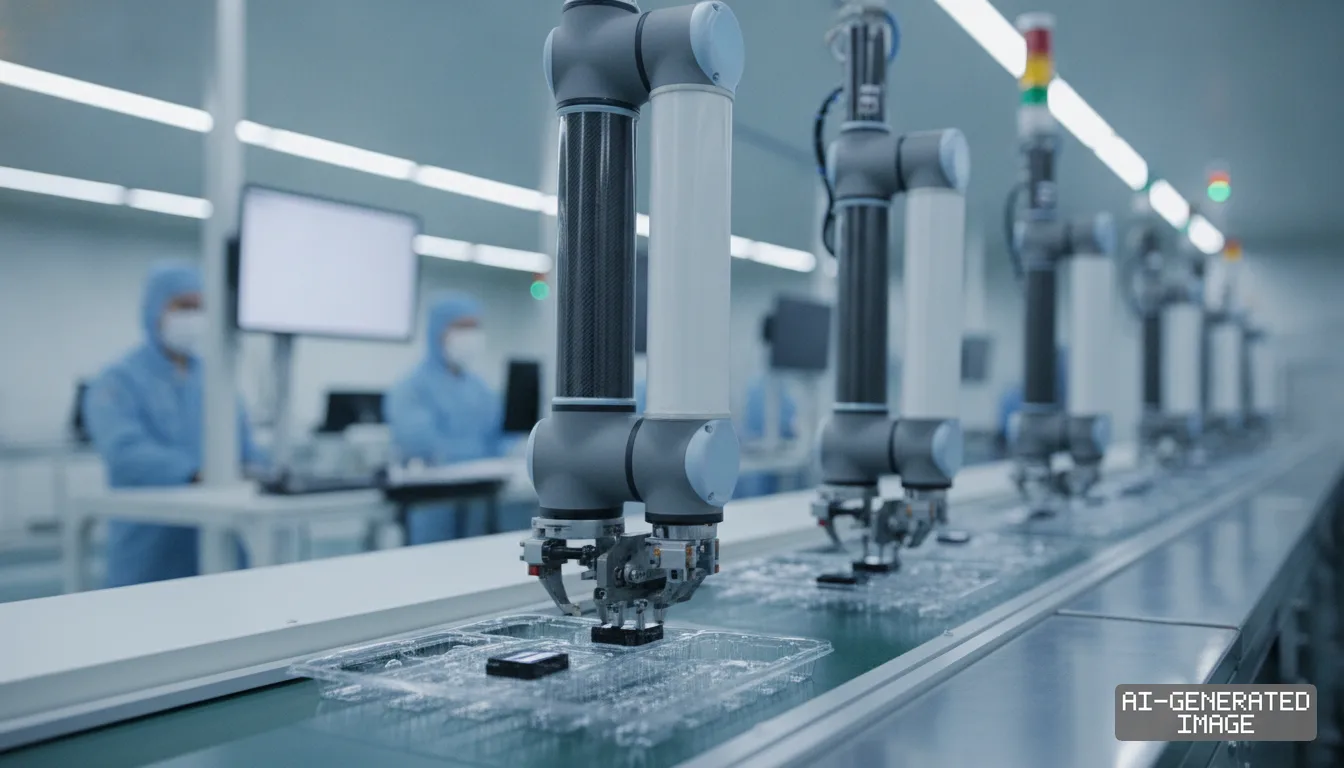
Collaborative robots, or cobots, operate alongside human factory workers, requiring immediate sensor processing to prevent workplace collisions. Moving visual processing inside the robot arm eliminates network latency, enabling safety reaction times under 10 milliseconds.
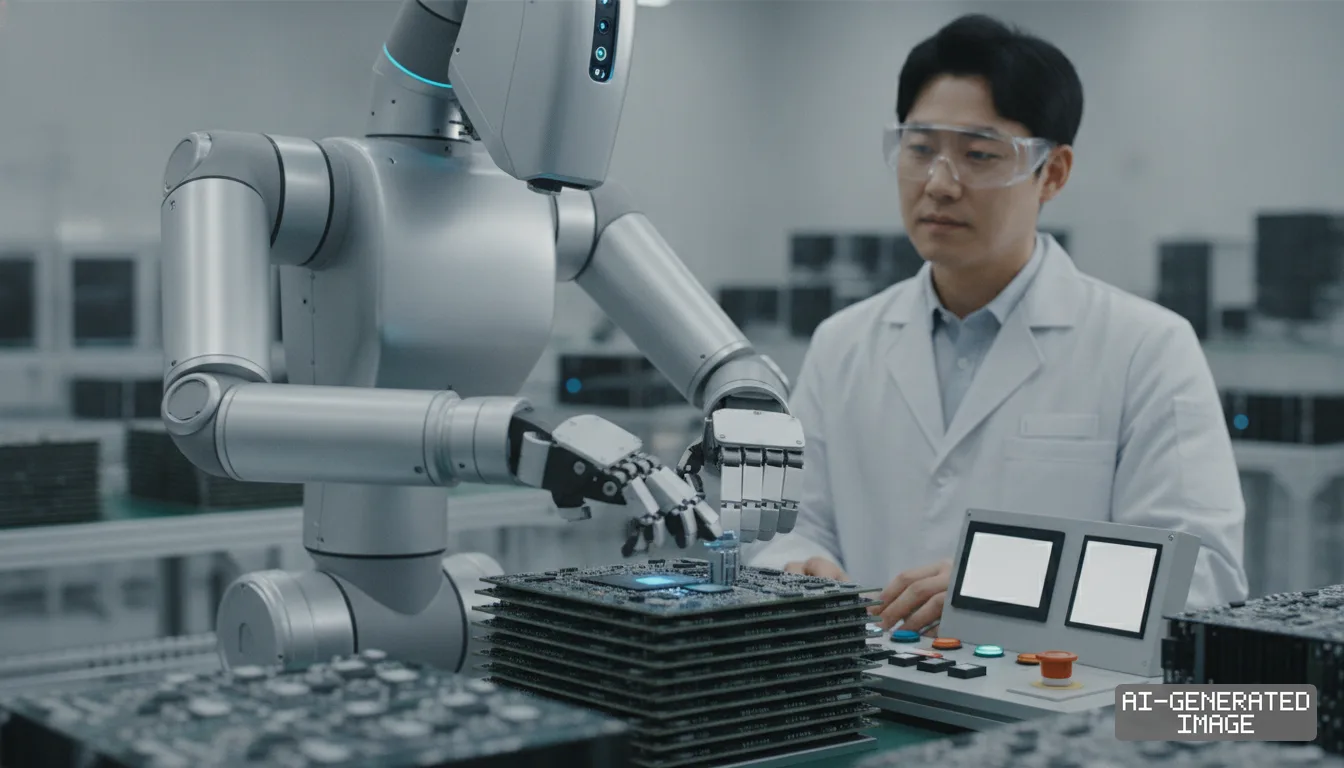
Mobilint will also design the on-device accelerator powering a full-scale humanoid robot under development at LG Electronics. The processor will handle spatial awareness, object recognition and real-time physical navigation without relying on cloud servers.
Software optimization specialist Nota joined the humanoid team on Sept. 8, 2026, to lightweight Vision-Language-Action (VLA) models. Those models translate human speech and camera feeds into precise physical motor commands for robotic limbs.
Sending continuous video feeds to cloud infrastructure introduces latency and risks network disconnections. Local silicon ensures humanoid systems maintain balance, track nearby pedestrians and react safely even when wireless connections drop.
For Daedong, South Korea's largest agricultural machinery producer with annual sales exceeding 10,000 tractors, Mobilint will develop an autonomous farming chip. The hardware must survive extreme outdoor temperatures, field dust and rough mechanical vibrations.
Remote agricultural acreage often lacks high-speed wireless connectivity. Autonomous tractors and weeding robots must process camera and obstacle sensor data entirely on board to navigate unpaved furrows without mobile network access.
In the fourth project, Mobilint acts as a joint research partner with LG Electronics for smart home appliances. The consortium will develop low-power edge processors for next-generation domestic refrigerators, ovens and washers.
Consumer appliances operate under thin profit margins and strict electrical standby limits. Standard graphics processors prove too expensive and power-hungry for household goods, requiring purpose-built domestic silicon that costs only a few dollars.
The Ministry of Trade, Industry and Energy exempted the initiative from preliminary feasibility reviews in August 2025, citing economic security risks and the global gap in edge artificial intelligence.
The final project budget reached 800.2 billion won, scaled down from an earlier 1 trillion won proposal. The ministry finalized the spending framework in June 2026 to ensure public grants targeted production-ready industrial applications.
Domestic fabless companies previously struggled to secure major manufacturing clients due to high upfront design costs. Commercial robot makers often favored proven foreign platforms rather than untested domestic chips with unproven software tools.
Software support remains a major barrier in displacing established computing platforms. Mobilint supplies its proprietary compiler and runtime libraries alongside the physical silicon to allow roboticists to port existing PyTorch models easily.
Founded in 2019, Mobilint previously introduced its Aries accelerator for industrial computer vision and its Regulus edge system-on-chip. The startup raised private Series B funding in 2024 to expand its edge product portfolio.
Parallel consortium members have begun detailing their grant allocations. Design house CoAsia SEMI previously booked a 31 billion won ($23 million) government grant share to manage design services for the AI Home appliances sub-task.
Robot builders will integrate the first prototype boards directly into motor controllers and sensor hubs. Engineers will benchmark inference frame rates, power consumption under sustained load and thermal dissipation inside sealed chassis.
The 54-month development schedule runs through December 2030, with participating manufacturers scheduled to receive physical prototype chips for platform validation in 2028. Full field rollouts are planned across all four sectors by 2030.
The announcement did not disclose Mobilint's specific research grant allocation, and the ministry has not published the foundry assignments or manufacturing process nodes for the planned chips.
Evaluation panels from the Korea Evaluation Institute of Industrial Technology will conduct intermediate milestone reviews at 12-month intervals, monitoring physical test results before clearing successive grant disbursements.
Impact map
How this development propagates across the region and out to global buyers.
| Event | Korea | China | Japan | Global impact |
|---|---|---|---|---|
| Korea on-device AI robotics chips | Doosan Robotics and LG validate local NPUs to lower edge BOM by replacing imported accelerators | CXMT and domestic robot makers accelerate localized edge processors under parallel industrial subsidies | Fanuc and Yaskawa rely on proprietary motion ASICs while monitoring Korean low-cost open NPU alternatives | Nvidia faces localized edge inference chip competition in industrial cobot and appliance tiers |
In this story
- Companies
- MobilintDoosan RoboticsLG ElectronicsDaedong
- Tickers
- 454910.KS066570.KS000490.KS
- Exposed
- NvidiaNotaCoAsia SEMI
- Policy
- SubsidiesEconomic Security
- Impact
- Supply ChainCost StructureCapex
Track every Subsidies development → Track every Economic Security development →
Related briefings
- LG taps Samsung Foundry for appliance AI chips under Korean state project Also on Mobilint, Daedong, LG Electronics
- South Korea battery pack makers standardize cell-to-pack designs for rural utility machinery Also on Daedong, Cost Structure
- LG Energy Solution wins NVIDIA DSX Ready status for AI power backup Also on LG Electronics, NVIDIA
- South Korean toolmakers advance glass substrate TGV laser drillers to volume lines Also on LG Electronics
Sources
Primary documents
Reporting
Confidence: high — how we grade this
The documents behind this briefing are linked above. East Asia Brief produces its English text with AI assistance under human editorial review, and does not translate or republish other outlets' articles. See our methodology and AI policy. Spotted an error? Tell us.
The Morning Brief
What changed in Korean, Chinese and Japanese industry overnight — and what it means for your supply chain. One email, weekday mornings, US time. Free.
The Morning Brief is in preparation. Leave your address and we will write to you once — when the first issue is ready. Nothing before that.