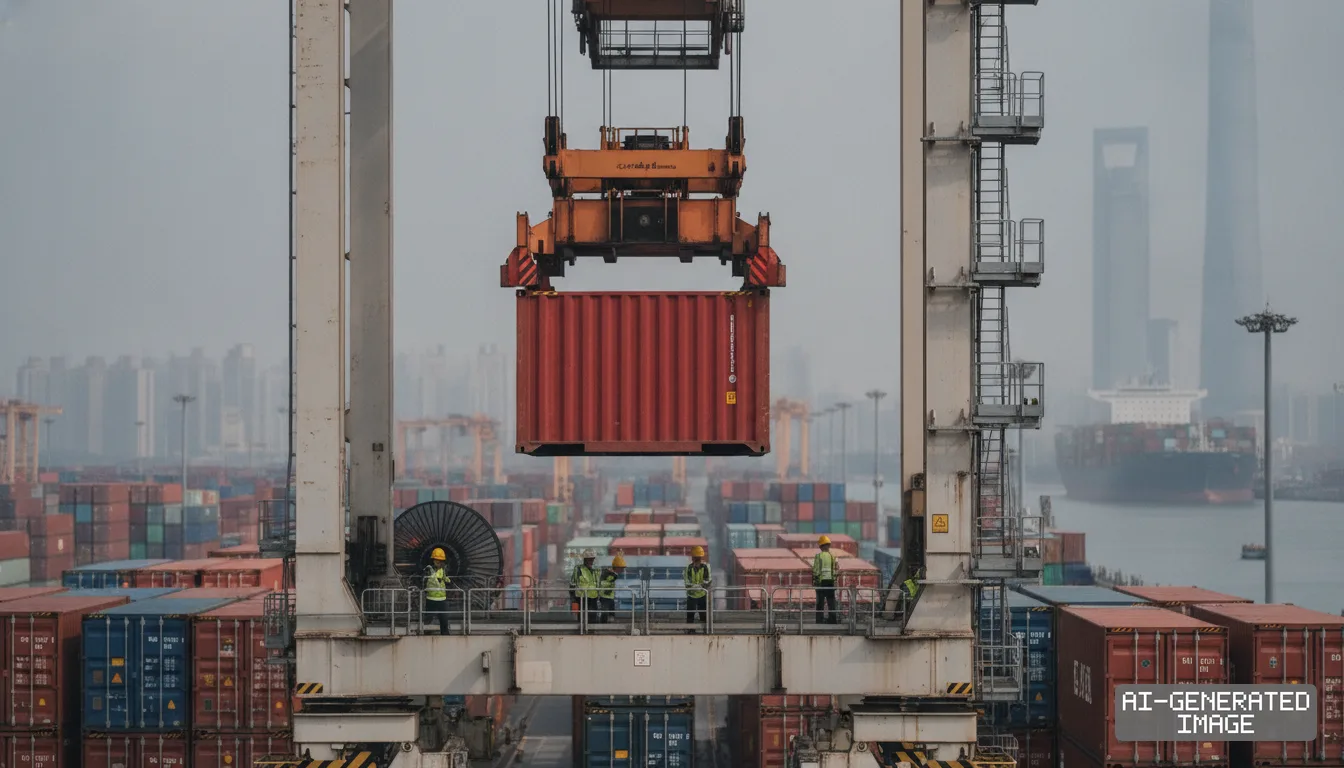
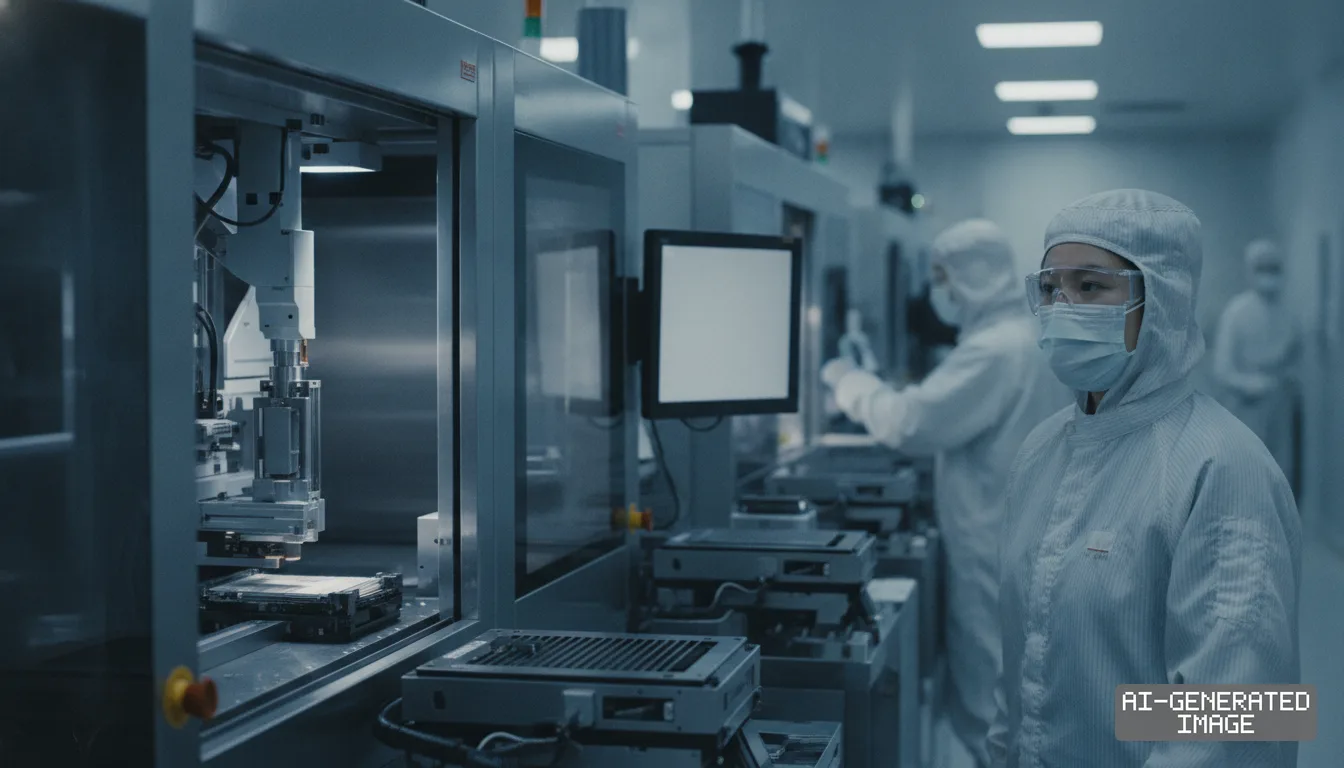
Japan seeks rare earth supply pact with India's Andhra Pradesh
Ambassador Keiichi Ono requested supply access across a coastal tract holding nearly a quarter of India's beach sand mineral deposits.
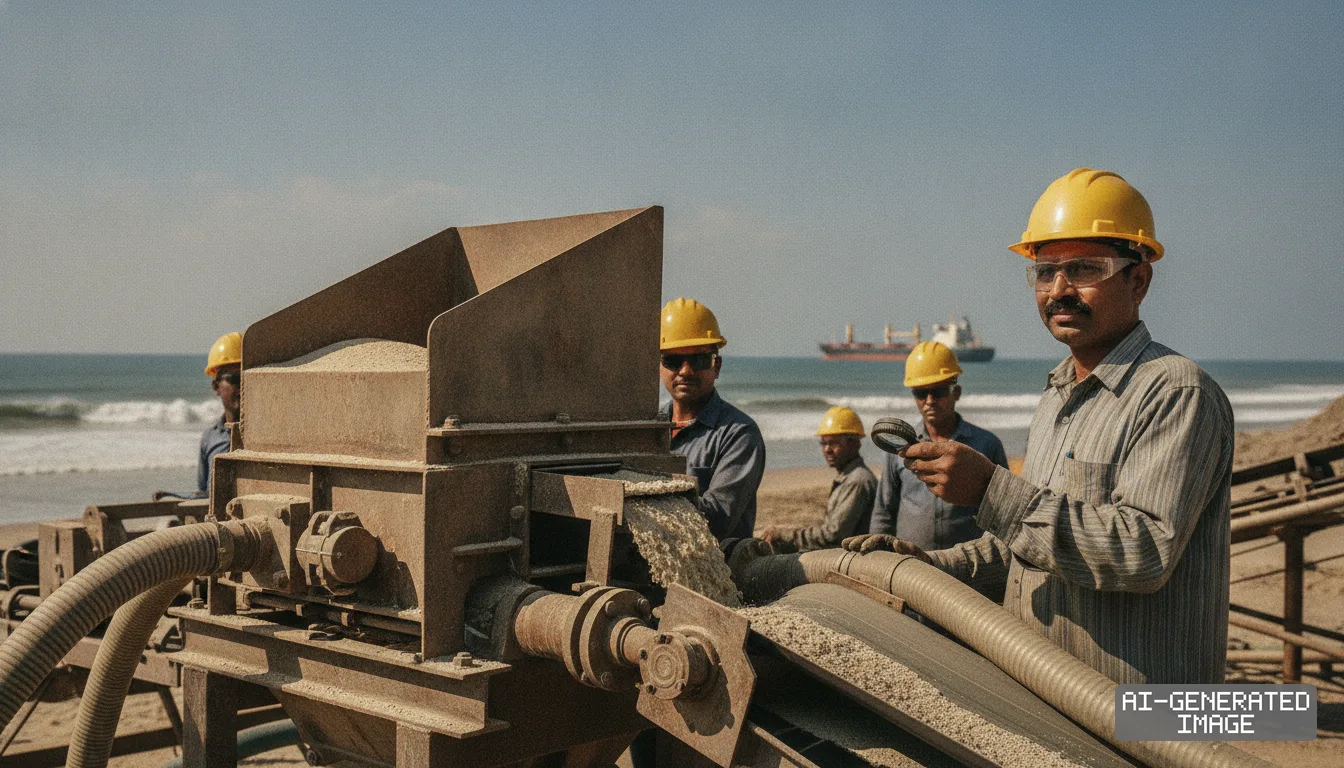
Japanese Ambassador to India Keiichi Ono asked the Andhra Pradesh government on Nov. 12, 2026, to secure long-term rare earth mineral supplies for Japanese manufacturers.
The request was submitted to Andhra Pradesh Chief Minister N. Chandrababu Naidu in Visakhapatnam. The coastal state holds nearly 25% of India's beach sand mineral deposits, the second-largest national reserve.
State mining authorities have mapped 16 distinct mineral varieties across more than 16,000 hectares. Those deposits contain heavy concentrations of monazite — a phosphate ore bearing neodymium, praseodymium and dysprosium — alongside ilmenite and zircon.
Andhra Pradesh is organizing those coastal tracts into a designated rare earth corridor. State planners want to process raw heavy mineral sands domestically rather than export unprocessed ore.
The state government previously reserved 12 square kilometers in Palnadu district for the Atomic Minerals Directorate for Exploration and Research. That agency oversees federal exploration for rare earth elements and associated radioactive minerals.
Tokyo is pursuing alternative supply hubs as China enforces strict export licensing on refined rare earths and magnet manufacturing technologies. Japan imports the bulk of its heavy rare earths from Chinese refiners.
Securing feedstock from Andhra Pradesh supports Tokyo's critical mineral diversification targets established with Quad partners. Those initiatives aim to construct non-Chinese processing networks linking India, Japan, Australia and the United States.
The outreach builds on the bilateral mineral and energy partnership signed by New Delhi and Tokyo in August 2025. It also aligns with the United States-India critical minerals framework concluded in May 2026.
Downstream Japanese manufacturers have expanded capital expenditure across Andhra Pradesh to capture emerging incentives. Proterial, formerly Hitachi Metals, secured state approval in June 2026 for a 22.5 billion rupee ($270 million) plant in Atchutapuram.
The Atchutapuram factory is designed to produce 1,200 metric tons of sintered rare earth permanent magnets annually. The output supplies electric vehicle traction motors and wind turbine generators seeking certified non-Chinese components.
Proterial also plans to commence amorphous metal production at its Sri City facility in December 2026. The high-permeability magnetic alloy feeds production of high-capacity electrical distribution transformers.
Trading house Toyota Tsusho maintains a refining presence in the state through its subsidiary, Toyotsu Rare Earths India. The company operates a processing unit inside the Visakhapatnam Special Economic Zone.
The facility refines rare earth feedstocks extracted from monazite sand supplied by state-run miner IREL (India) Limited. The chemical concentrate is then exported to downstream magnet makers in Japan.
Monazite extraction in India faces strict statutory controls under the Atomic Energy Act because the ore contains thorium. Private companies cannot mine monazite directly and must procure processed feedstocks from state-owned IREL.
Japanese trade representatives have sought formal intergovernmental agreements to ensure consistent feedstock allocations from those state facilities. Reliable allocations allow Japanese refiners to justify downstream processing expansions.
The bilateral discussions also linked mineral security with green industrial power. Japanese utility JERA concluded a preliminary agreement to purchase 70,000 metric tons of green ammonia annually over five years from Kakinada.
The Japanese delegation asked state authorities for logistical assistance to support semi-finished steel imports. The material feeds finishing lines at the ArcelorMittal Nippon Steel India plant on the Andhra Pradesh coast.
The state government has also agreed to host a new bilateral Global Capability Centre in Visakhapatnam this year. The facility will train local engineers for Japanese manufacturing operations.
India currently imports more than 75% of its titanium dioxide pigment, drawing nearly two-thirds of those shipments from China despite holding extensive ilmenite reserves, state records show.
Expanding beach sand processing in Andhra Pradesh allows domestic processors to replace Chinese titanium imports while giving Japanese firms direct access to separated rare earth oxides.
Proterial plans to begin operations at its Sri City amorphous metal plant next month. State mining officials will review parcel allocations within the 16,000-hectare corridor before the end of the year.
The state government notice does not state whether the bilateral discussions concluded in a binding long-term offtake contract specifying annual shipment tonnages or pricing mechanisms.
State officials and Japanese delegates will continue bilateral industrial consultations during the Confederation of Indian Industry Partnership Summit concluding in Visakhapatnam on Nov. 13.
Impact map
How this development propagates across the region and out to global buyers.
| Event | Korea | China | Japan | Global impact |
|---|---|---|---|---|
| Japan-India rare earth supply talks | Hyundai and Kia gain access to non-Chinese magnet supply from local Indian plants | China rare earth export controls face supply bypass as Indian refining expands | Proterial and Toyota Tsusho secure raw feedstocks outside Chinese export quota | Non-Chinese permanent magnet supply expands by 1,200 metric tons per year |
In this story
- Companies
- ProterialJERAToyota Tsusho
- Tickers
- 8015.T
- Exposed
- AM GreenArcelorMittal Nippon Steel IndiaIREL (India) Limited
- Policy
- Export ControlsProcurement Rules
- Impact
- Supply ChainCapex
Track every Export Controls development → Track every Procurement Rules development →
Related briefings
- Seven Japanese firms order ammonia car carriers for 2030 fleet Also on AM Green, JERA
- India pushes rare earth magnet output to counter China curbs Also on IREL (India) Limited, Proterial, Export Controls
- Namibia rare earth project faces water shortfall, clouding JOGMEC plans Also on Toyota Tsusho, Procurement Rules
- Japan chemical makers expand LiFSI electrolyte salt synthesis for fast-charging EVs Also on Toyota Tsusho
Sources
Reporting
Confidence: medium — how we grade this
The documents behind this briefing are linked above. East Asia Brief produces its English text with AI assistance under human editorial review, and does not translate or republish other outlets' articles. See our methodology and AI policy. Spotted an error? Tell us.
The Morning Brief
What changed in Korean, Chinese and Japanese industry overnight — and what it means for your supply chain. One email, weekday mornings, US time. Free.
The Morning Brief is in preparation. Leave your address and we will write to you once — when the first issue is ready. Nothing before that.