TSMC shifts 25% of advanced packaging tool orders to Taiwan
Senior Vice President Cliff Hou told a Taipei conference that domestic suppliers now provide up to a quarter of backend machinery while front-end localization stays under 1%.
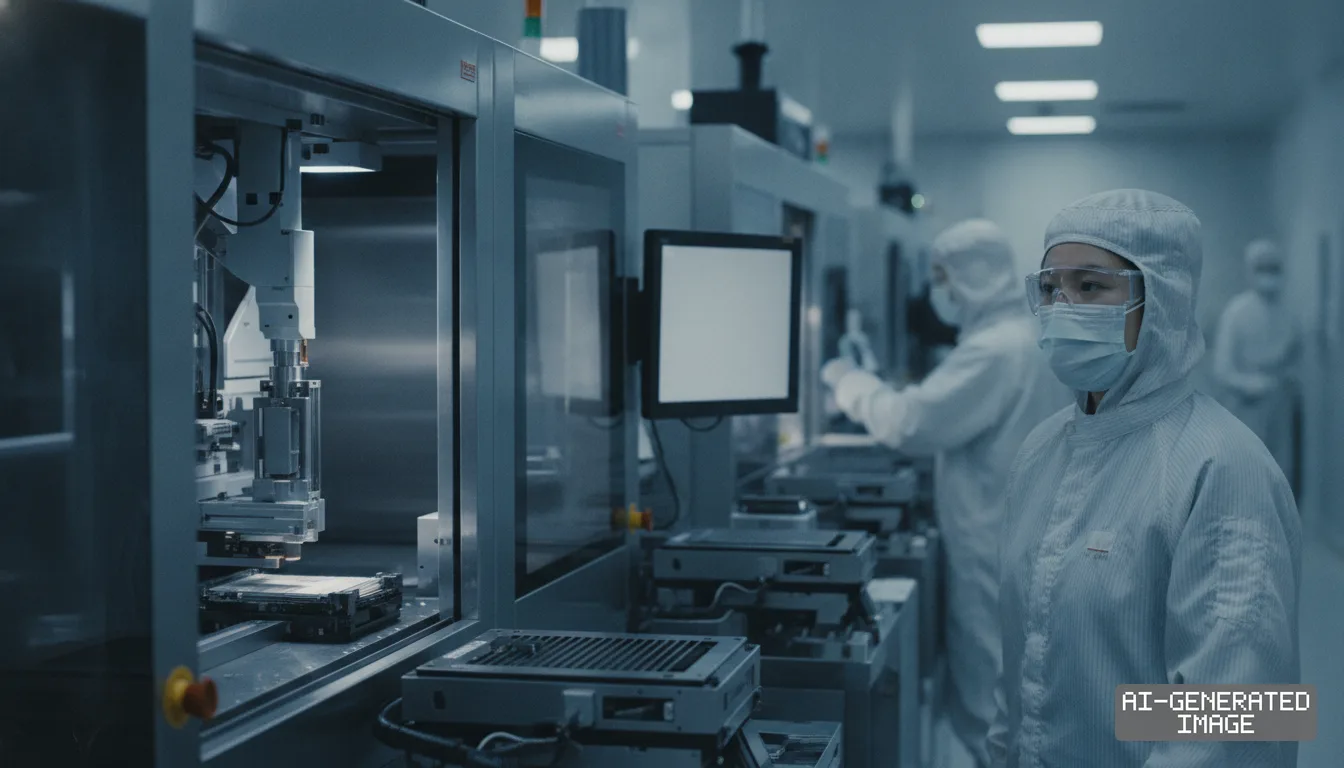
Taiwan Semiconductor Manufacturing Co. Senior Vice President Cliff Hou said Nov. 12 that domestic suppliers now account for 20% to 25% of the company's advanced packaging equipment purchases.
Hou revealed the figure during a keynote speech at the 80th Industrial Day conference in Taipei. The gathering was organized by the Chinese National Federation of Industries.
The procurement share marks the first time local toolmakers have captured a quarter of TSMC's backend machinery spending. The shift reflects efforts to alleviate bottlenecks across chiplet packaging lines.
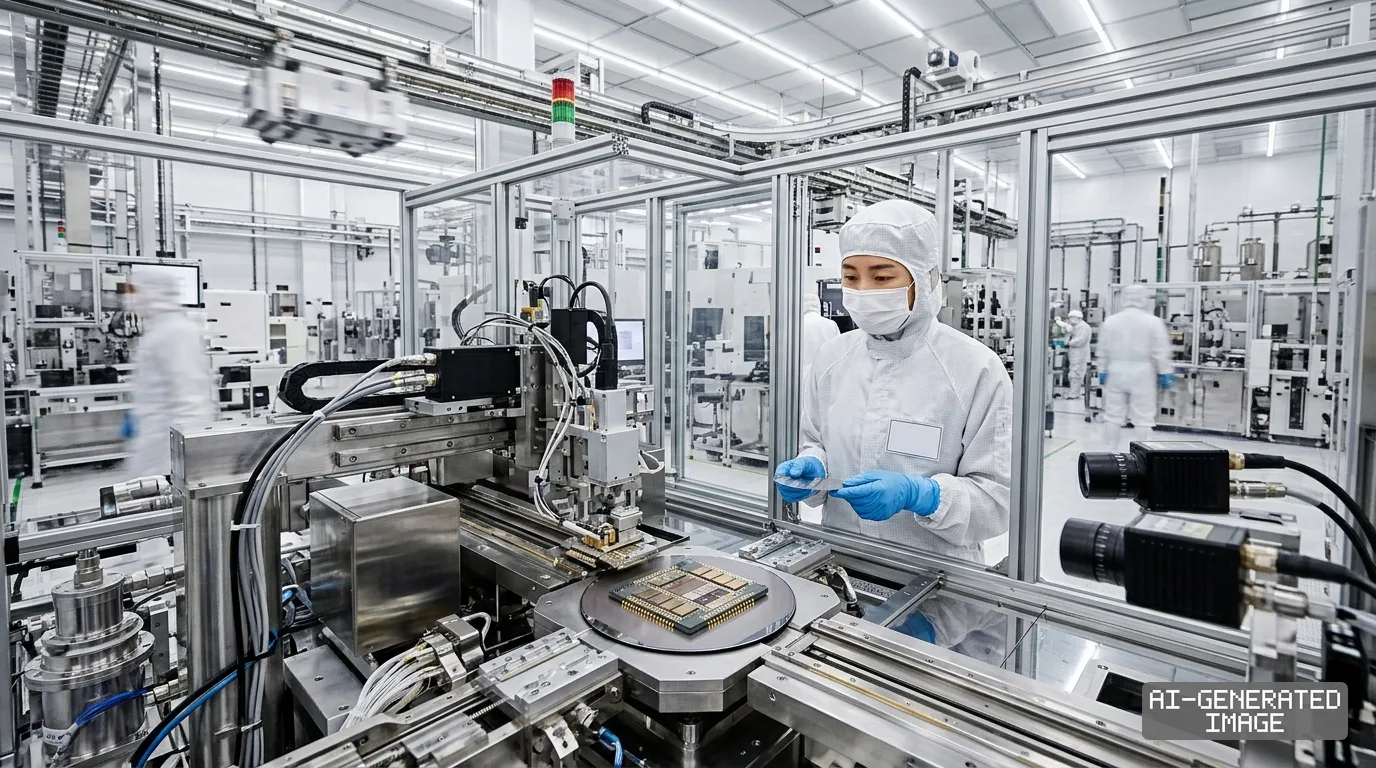
Advanced packaging combines multiple silicon dies onto a high-density interposer substrate. The architecture allows graphic processing units and high-bandwidth memory to communicate with lower power consumption and higher transmission speeds.
Demand for TSMC's Chip-on-Wafer-on-Substrate technology has surged alongside worldwide orders for artificial intelligence processors. That surge previously stretched delivery lead times for specialized packaging equipment beyond eight months.
The worldwide market for advanced packaging equipment and associated industrial software has reached roughly $50 billion, Hou said. Machinery builders in East Asia have competed aggressively for pieces of that procurement pool.
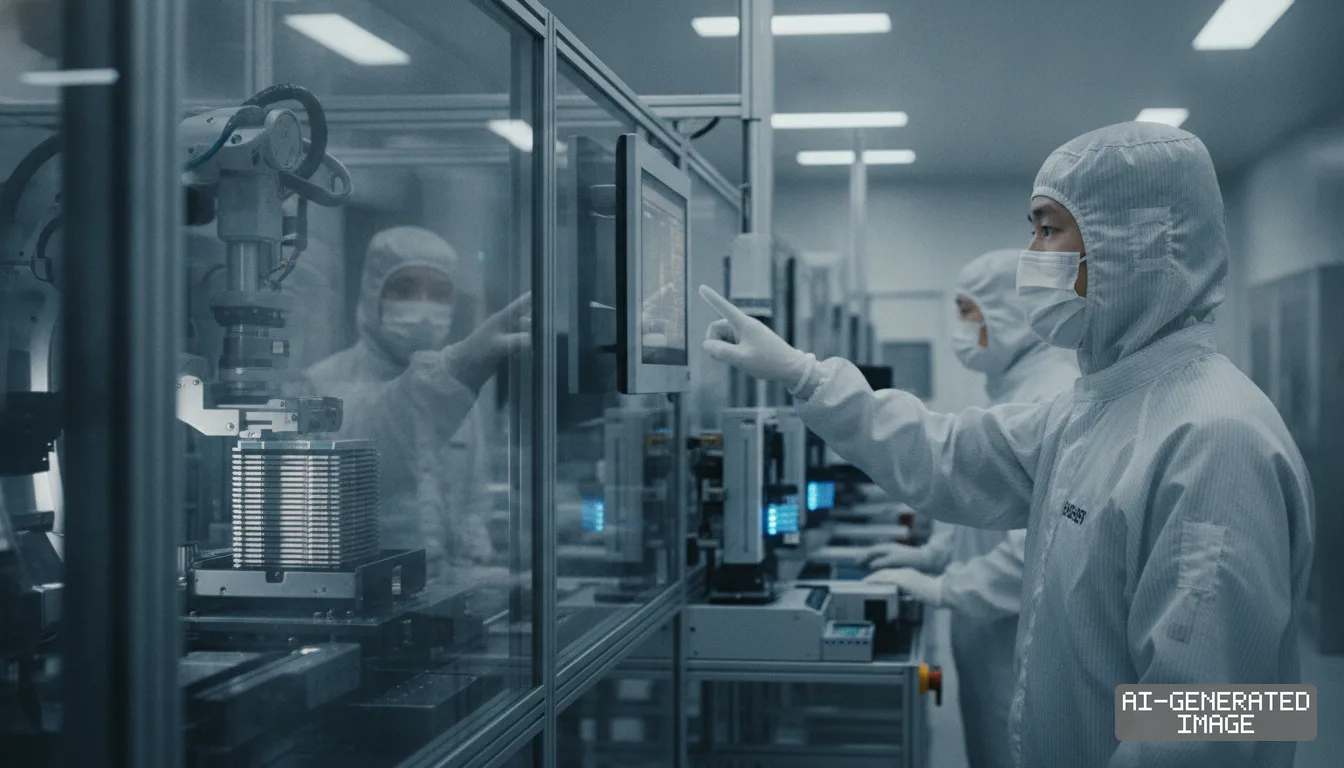
Taiwanese vendors gained ground primarily in specialized backend categories. Domestic suppliers now manufacture wet etching benches, wafer cleaning units, bake ovens and automated material handling systems used in packaging facilities.
Those tools perform essential chemical washing and wafer transport tasks between lithography steps. Local machinery shops can construct these units at lower capital expense than legacy overseas equipment vendors.
The progress in backend packaging contrasts sharply with front-end wafer fabrication. Taiwanese manufacturers supply less than 1% of the equipment used in TSMC's advanced wafer production cleanrooms, Hou said.
Front-end wafer fabrication requires extreme ultraviolet lithography scanners, complex ion implanters and atomic-layer deposition chambers. Those critical processing categories remain controlled by equipment conglomerates in the United States, Japan and the Netherlands.
Building front-end machinery requires decades of optical research and specialized materials patents. Taiwanese toolmakers chose instead to target backend packaging, where entry barriers were lower and customer production shortages were acute.
Although domestic builders have mastered structural hardware engineering, they face persistent software limitations. Taiwanese packaging machinery continues to lag in equipment automation software, digital interface integration and predictive maintenance algorithms, Hou said.
Modern packaging lines require artificial intelligence models to inspect micro-bump connections and detect microscopic die warpage in real time. Most domestic tools still depend on imported diagnostic software to manage that inspection data.
Buying one-quarter of packaging machinery from domestic vendors provides tangible cost advantages for TSMC. Local purchasing eliminates international shipping tariffs, reduces transport insurance fees and lowers initial capital outlays.
Proximity also accelerates tool commissioning and maintenance cycles. Engineers from domestic suppliers can reach TSMC packaging sites in Taichung, Tainan and Chiayi within two hours to resolve mechanical stoppages.
Rapid servicing helps TSMC keep packaging lines operating at peak capacity. Relying on overseas field engineers often introduced days of downtime during past component failures, slowing scheduled production ramps.
To correct software weaknesses, the Taiwan Semiconductor Industry Association is collaborating with the state-backed Industrial Technology Research Institute. Hou currently serves as chairman of the industry association.
The joint initiative pairs domestic software developers with precision machinery manufacturers. The partnership aims to build standardized software platforms that can link local packaging tools directly to factory automation networks.
The research institute is also assembling a dedicated verification testbed for domestic equipment. The platform allows toolmakers to test prototype machinery on production-grade silicon wafers without disrupting operational foundry lines.
TSMC has not published a breakdown of equipment procurement spending by specific toolmaker, and neither the company nor securities regulators have issued a formal regulatory filing confirming vendor-level contract values.
The industry association and the research institute plan to open their joint equipment verification platform to commercial machinery vendors in the first half of 2027, Hou said.
Impact map
How this development propagates across the region and out to global buyers.
| Event | Korea | China | Japan | Global impact |
|---|---|---|---|---|
| TSMC packaging tool localization | South Korean memory makers face shorter CoWoS assembly queues at TSMC | Chinese foundries stay restricted by packaging tool export curbs | Japanese wet processing vendors face rising competition in Taiwan packaging bays | Foundry packaging capex costs decline on local tool substitution |
In this story
- Companies
- TSMC
- Tickers
- 2330.TW
- Impact
- Supply ChainCapexCost Structure
Related briefings
- TSMC and Taiwan peers will require 15% of island power by 2030 Also on TSMC, Cost Structure
- GlobalFoundries signs $2B TSMC packaging deal for AI chips Also on TSMC, Cost Structure
- Tesla Retains Terafab Control, Limiting TSMC to Site Leases Also on TSMC, Cost Structure
- SK hynix and Samsung push 16-layer HBM4 as Nvidia caps Rubin at 12 dies Also on TSMC, Cost Structure
Sources
Reporting
Confidence: medium — how we grade this
The documents behind this briefing are linked above. East Asia Brief produces its English text with AI assistance under human editorial review, and does not translate or republish other outlets' articles. See our methodology and AI policy. Spotted an error? Tell us.
The Morning Brief
What changed in Korean, Chinese and Japanese industry overnight — and what it means for your supply chain. One email, weekday mornings, US time. Free.
The Morning Brief is in preparation. Leave your address and we will write to you once — when the first issue is ready. Nothing before that.