Japan chemical makers expand LiFSI electrolyte salt synthesis for fast-charging EVs
Nippon Shokubai revises its Kitakyushu plant budget to $295 million while scaling output in China to supply thermal-resistant salts for high-nickel cells.
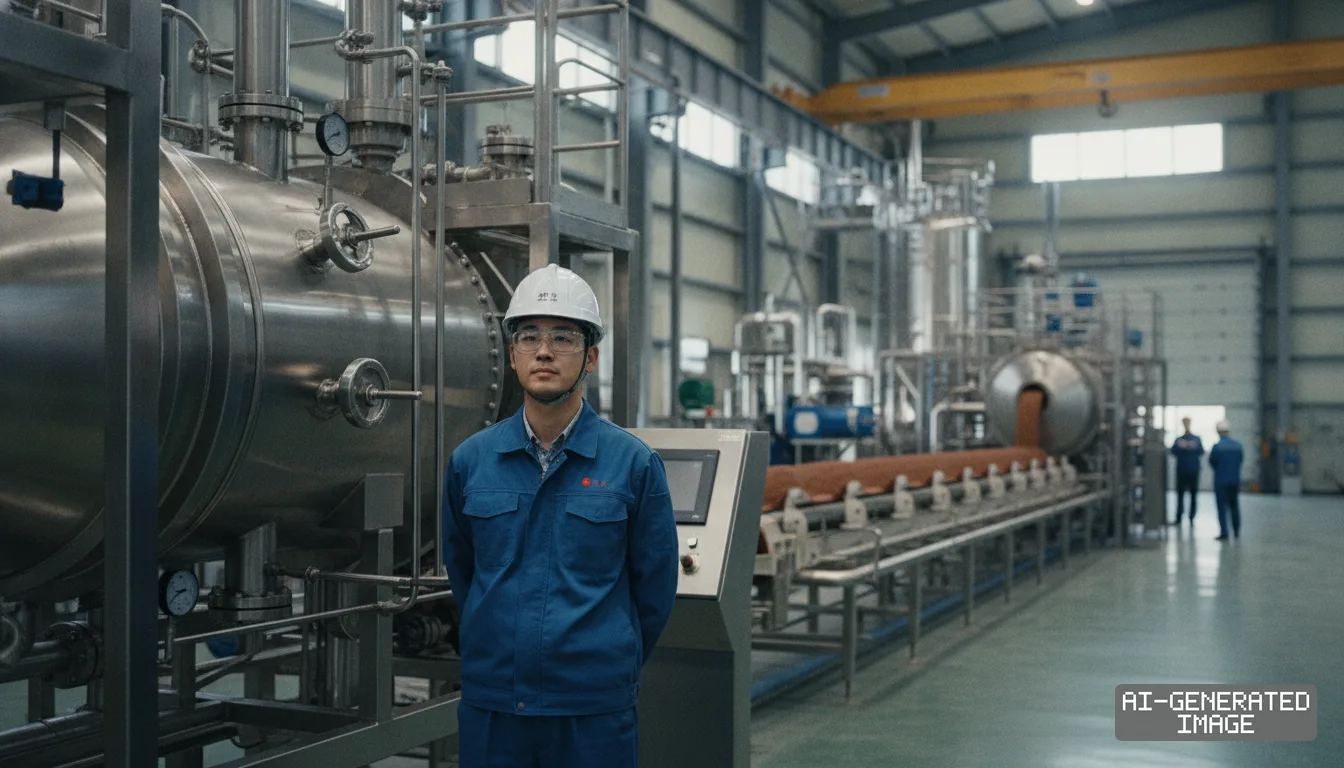
Nippon Shokubai Co., Ltd. has revised the capital expenditure budget and operational timeline for its greenfield lithium bis(fluorosulfonyl)imide synthesis plant in southwestern Japan, as specialty chemical manufacturers accelerate the commercial scaling of high-performance electrolyte salts for high-nickel, fast-charging electric vehicle batteries.
The Osaka-based chemical manufacturer raised the investment for the facility in the Hibikinada district of Kitakyushu, Fukuoka Prefecture, from 37.5 billion yen to approximately 43.0 billion yen ($295 million). Regulatory filings confirm that escalating procurement costs for specialty alloys and structural materials, combined with contractor availability constraints across western Japan, prompted the 5.5 billion yen revision. The company rescheduled commercial production to December 2028, moving from an earlier target of July 2028, while maintaining its planned domestic capacity of 3,000 metric tons per year under its IONEL brand.
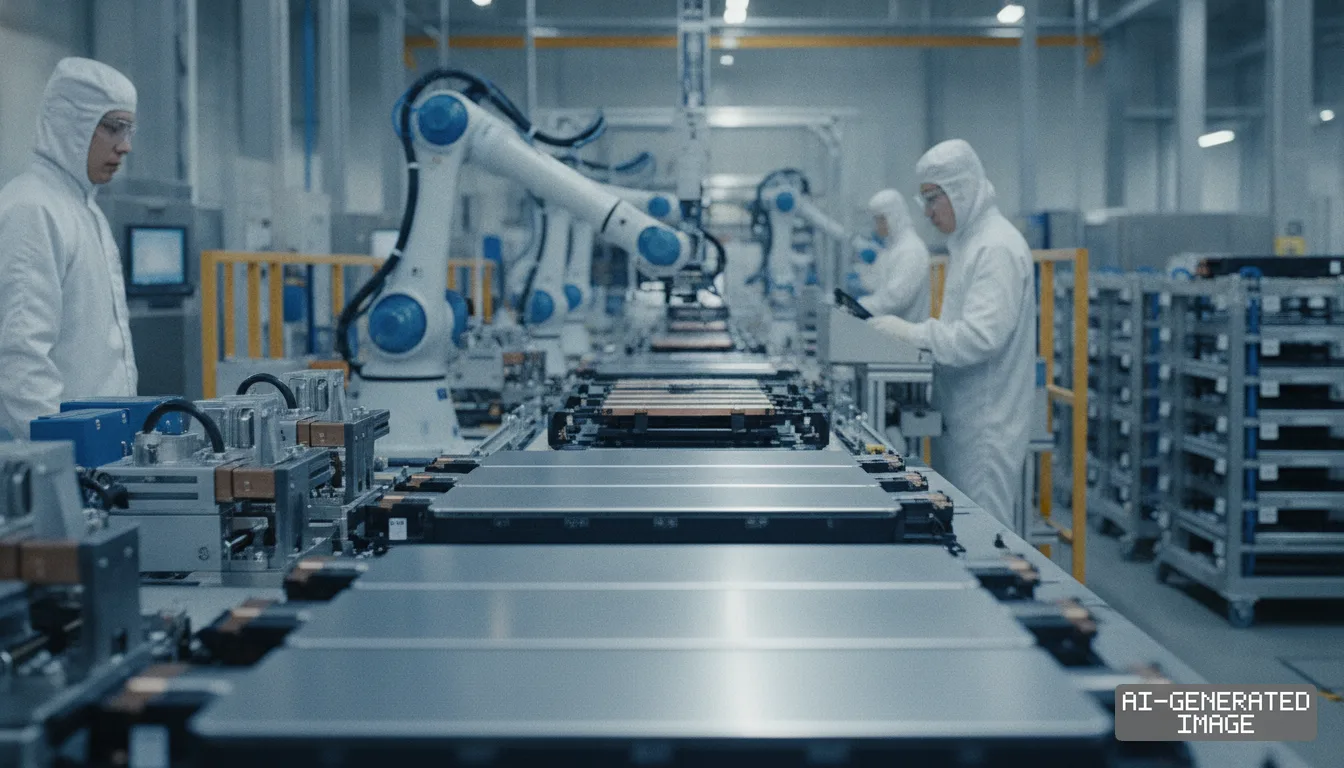
Japan's Ministry of Economy, Trade and Industry confirmed that its subsidy allocation of up to 12.5 billion yen ($86 million) under the Economic Security Promotion Act remains unchanged. METI certified the Kitakyushu project under Approval No. 2024 Storage Battery No. 5-2, designating high-purity electrolyte salts as a critical material required to insulate domestic cell manufacturing from supply shocks. The 3,000 metric tons of annual LiFSI capacity will supply enough conductive salt to produce approximately 21.4 gigawatt-hours of battery cells, equivalent to roughly 210,000 electric vehicles annually.
The commercial push toward LiFSI addresses chemical stability limits inherent in conventional lithium hexafluorophosphate, or LiPF6, which serves as the standard conductive salt in lithium-ion cells. Standard LiPF6 decomposes into corrosive hydrofluoric acid and phosphorus pentafluoride gas at operating temperatures above 55 degrees Celsius. In contrast, LiFSI remains stable above 200 degrees Celsius and delivers higher ionic conductivity across broad temperature ranges. Incorporating LiFSI into carbonate solvent blends lowers internal impedance and accelerates lithium-ion transport, enabling cells to support 4C and 5C ultra-fast charging protocols without inducing lithium plating on graphite anodes.
Battery formulators are deploying higher ratios of LiFSI to stabilize nickel-rich cathode chemistries, such as nickel-cobalt-manganese formulations with 80 percent or greater nickel content. High-nickel cathodes experience lattice strain, microcracking, and transition-metal dissolution during high-voltage cycling, which oxidizes conventional carbonate electrolytes. LiFSI promotes the formation of a dense, inorganic-rich passivation interphase on both cathode and silicon-doped anode particles. This protective layer mitigates electrolyte decomposition, reduces internal gas evolution in pouch and prismatic cells, and improves cycle retention under demanding thermal conditions.
Alongside its domestic investment in Kitakyushu, Nippon Shokubai is expanding synthesis operations in China through its manufacturing joint venture, Hunan Fluopont New Materials Co., Ltd., located in Hengyang, Hunan Province. The joint venture is owned 51.19 percent by Shenzhen Capchem Technology Co., Ltd., 38.0 percent by Nippon Shokubai, and 5.5 percent by Toyota Tsusho Shanghai. Hunan Fluopont is executing a phased 10,000-metric-ton annual capacity expansion program to meet rising battery demand across Asian markets.
Under the expansion schedule, the Hengyang facility will add 3,000 metric tons of annual capacity in fiscal 2026, followed by 7,000 metric tons in fiscal 2027. The project will expand total synthesis capacity at the Hunan site from 2,400 metric tons to 12,400 metric tons per year by late 2027. Capchem blends the synthesized salt directly into formulated electrolytes for commercial battery cell customers, while Nippon Shokubai provides synthesis process technology and quality assurance protocols to scale unit economics.
The dual-site manufacturing model establishes separate procurement channels for domestic Japanese requirements and international customer programs. Output from the Hunan facility supplies electrolyte manufacturing plants operating across mainland China and cost-sensitive regional markets. The Kitakyushu plant will serve as a dedicated domestic supply source for Japanese, North American, and European automakers that require supply chain traceability and compliance with regional content mandates under trade and security regulations.
Scaling commercial LiFSI synthesis has historically faced chemical purification hurdles, particularly in removing trace chloride, sulfate, and moisture contaminants. Residual chloride ions cause severe pitting corrosion on aluminum cathode current collectors at cell operating voltages above 3.8 volts. Proprietary continuous synthesis and purification processes allow producers to deliver battery-grade LiFSI while eliminating corrosion risks. Lower production costs are enabling electrolyte formulators to elevate LiFSI from a 1 to 3 percent additive to a major conductive salt used at 8 to 15 percent concentrations.
Construction of the Kitakyushu production facility commenced in January 2026 following site agreements with local municipal authorities in Fukuoka Prefecture. Structural installation work at the Hibikinada complex will continue through 2027 ahead of commissioning trials in 2028.
Impact map
How this development propagates across the region and out to global buyers.
| Event | Korea | China | Japan | Global impact |
|---|---|---|---|---|
| LiFSI capacity expansion | battery makers secure dual-source salt | electrolyte formulators expand output | domestic upstream capacity established | fast-charging high-nickel pack adoption |
In this story
- Companies
- Nippon ShokubaiShenzhen Capchem TechnologyToyota Tsusho
- Tickers
- 4114.T300037.SZ8015.T
- Policy
- Economic SecuritySubsidies
- Impact
- CapexSupply ChainPricing
Track every Economic Security development → Track every Subsidies development →
Related briefings
- CATL expands sodium storage supply in Europe for 2027 rollouts Also on Pricing
- BYD fully opens 16 GWh Xi'an battery plant to scale EV cells in 2026 Also on Pricing
- Foundry 2.0 Revenue Climbs 25% Also on Pricing
- TSMC adds five packaging fabs in Chiayi to ease AI crunch Also on Pricing
Sources
Primary documents
Reporting
Confidence: high — how we grade this
The documents behind this briefing are linked above. East Asia Brief produces its English text with AI assistance under human editorial review, and does not translate or republish other outlets' articles. See our methodology and AI policy. Spotted an error? Tell us.
The Morning Brief
What changed in Korean, Chinese and Japanese industry overnight — and what it means for your supply chain. One email, weekday mornings, US time. Free.
The Morning Brief is in preparation. Leave your address and we will write to you once — when the first issue is ready. Nothing before that.