Namibia rare earth project faces water shortfall, clouding JOGMEC plans
The Lofdal processing facility requires 1.5 million cubic meters of water annually, while local aquifers generate as little as 1.3 million cubic meters.
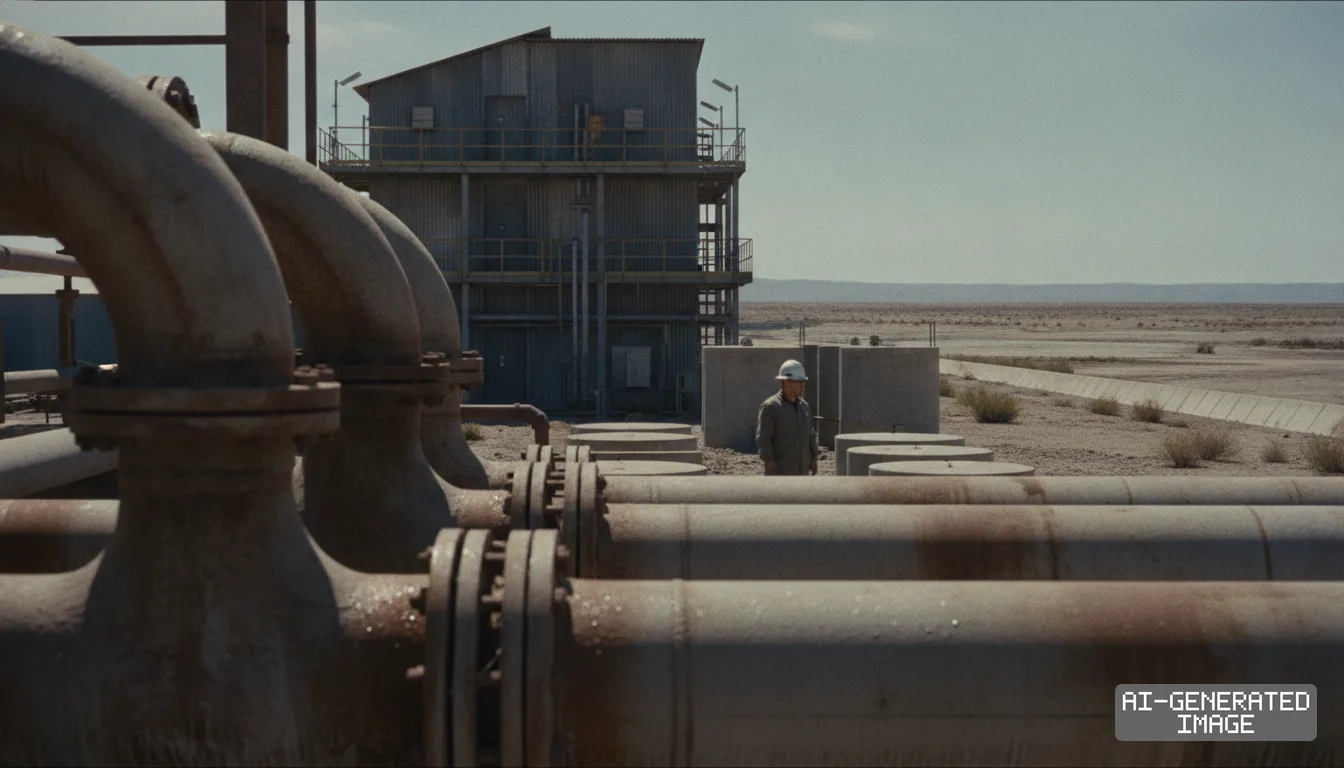
Japan Organization for Metals and Energy Security faced acute infrastructure constraints on Nov. 5, 2026, as hydrologic assessments revealed water shortfalls at the Lofdal heavy rare earth project in Namibia.
The processing plant requires 1.5 million cubic meters of water annually to treat mined ore. Local aquifers produce between 1.3 million and 1.7 million cubic meters, creating a 13% deficit against requirements at the lower bound.
State-backed JOGMEC holds a 50% interest in the venture alongside trading house Toyota Tsusho Corporation. JOGMEC committed up to 47.67 million Canadian dollars ($35.3 million) to finance project exploration and engineering studies.
The deposit is located within Mining License 200, roughly 25 kilometers northwest of Khorixas in the arid Kunene Region. The site represents Japan's primary government-backed critical mineral asset on the African continent.
Toyota Tsusho established special purpose entity TJ Namibia Rare Earths Corporation in July 2026 to manage the holding. JOGMEC disbursed its initial equity tranche on July 23, 2026, under the joint venture structure.
Canadian developer Namibia Critical Metals Inc. manages exploration and holds the remaining 50% stake in the asset. The partners reached that ownership split after the Japanese entities fulfilled a C$23 million cumulative expenditure requirement.
The mine plan targets annual production of 2,000 tonnes of total rare earth oxides over a 13-year operating life. That output includes 119 tonnes of dysprosium oxide and 18 tonnes of terbium oxide annually.
Dysprosium and terbium serve as vital metallurgical additives in neodymium permanent magnets. The elements maintain magnetic performance inside high-temperature electric vehicle drive motors and offshore wind turbine generators.
Japanese manufacturers face deep vulnerability to Chinese export restrictions on separated heavy rare earth compounds. Chinese refiners control over 90% of global industrial capacity for commercial heavy rare earth separation and refining.
Hydrometallurgical extraction of heavy rare earths requires intense chemical leaching and multi-stage solvent purification. Those mineral processing circuits consume vast amounts of fresh water to separate target oxides from gangue rock.
The Fransfontein aquifer system represents the single viable freshwater source within economic trucking or pumping distance. Municipal utilities in Khorixas also rely on the identical subterranean aquifer to supply domestic households and cattle ranchers.
Technical hydrologic data showed continuous extraction at industrial volumes risks lowering local water tables. Prolonged pumping during regional drought cycles would depress aquifer recharge rates and intensify resource competition with surrounding communities.
The project's pre-feasibility study, filed in January 2026, outlined a base-case capital expenditure requirement of $348 million. That engineering budget did not include capital allocations for regional water desalination pipelines.
Piping desalinated Atlantic seawater from the Namibian coast would require building more than 200 kilometers of overland pipeline infrastructure. Constructing dedicated pumping stations across arid desert elevations would add substantial capital expenses to project economics.
Namibia Critical Metals and JOGMEC approved an 11 million Canadian dollar budget expansion in mid-2026 to fund engineering work. Metallurgical consultant SGS Canada began laboratory flotation and pilot-scale hydrometallurgical extraction trials in Lakefield, Ontario.
Process engineers are testing dry tailings stacking and closed-loop filtration circuits to maximize internal water recycling. High-density thickening units and tailings dewatering presses can recover up to 80% of process water for plant reuse.
The Namibian Ministry of Environment, Forestry and Tourism renewed the environmental clearance certificate for the project in April 2025. That three-year statutory clearance obligates mine developers to safeguard community groundwater reserves from industrial contamination.
Commercial off-take rights give JOGMEC first refusal to purchase production volumes at prevailing global market prices. Toyota Tsusho plans to integrate Lofdal output directly into Japanese automotive magnet supply chains upon mine commissioning.
Heavy rare earth deposits outside China remain exceptionally scarce in global commercial mining portfolios. Most Western rare earth operations focus on light elements such as cerium, lanthanum, neodymium and praseodymium found in bastnasite minerals.
Lofdal contains xenotime mineralization, a phosphate crystal host rich in heavier lanthanide atoms like dysprosium, erbium and yttrium. Developing xenotime ores presents severe chemical processing hurdles that require tailored processing flowsheets and uninterrupted utility inputs.
Electricity requirements for the proposed processing plant total 94,361 megawatt-hours annually under the engineering design. The project partners intend to pair regional electrical grid interconnections with an on-site dedicated photovoltaic solar power array.
Shareholders and regulatory bodies in Windhoek extended final reviews of the joint venture restructuring through late 2026. Namibia Critical Metals maintains a 5% statutory allocation designated for historically disadvantaged Namibians within the concession company.
The project partners have not published notices indicating that aquifer constraints have delayed the engineering schedule, triggered permit reviews or altered the 25-year mining license.
The joint venture partners plan to conclude their definitive feasibility study in the second quarter of 2027. That milestone filing will determine final capital allocations before the consortium reaches a binding commercial investment decision.
Impact map
How this development propagates across the region and out to global buyers.
| Event | Korea | China | Japan | Global impact |
|---|---|---|---|---|
| Lofdal water constraint | no direct exposure, monitors non-Chinese dysprosium availability for EV magnet procurement | maintains near-total monopoly on commercial heavy rare earth separation capacity | JOGMEC and Toyota Tsusho face higher infrastructure capex to secure off-take | non-Chinese heavy rare earth magnet feedstocks remain constrained by processing utilities |
In this story
- Companies
- Namibia Critical MetalsToyota Tsusho
- Tickers
- TSXV:NMI8015.T
- Policy
- Procurement Rules
- Impact
- Supply ChainCapexCost Structure
Track every Procurement Rules development →
Related briefings
- Japan chemical makers expand LiFSI electrolyte salt synthesis for fast-charging EVs Also on Toyota Tsusho
- Korea Waives Power Grid Fees for ESS Operators to Revive Utility Batteries Also on Procurement Rules, Cost Structure
- Korea tests quadruped robots for $247 million state rollout Also on Procurement Rules, Cost Structure
- US samarium costs rise 346-fold under China export controls Also on Procurement Rules, Cost Structure
Sources
Primary documents
Reporting
Confidence: high — how we grade this
The documents behind this briefing are linked above. East Asia Brief produces its English text with AI assistance under human editorial review, and does not translate or republish other outlets' articles. See our methodology and AI policy. Spotted an error? Tell us.
The Morning Brief
What changed in Korean, Chinese and Japanese industry overnight — and what it means for your supply chain. One email, weekday mornings, US time. Free.
The Morning Brief is in preparation. Leave your address and we will write to you once — when the first issue is ready. Nothing before that.