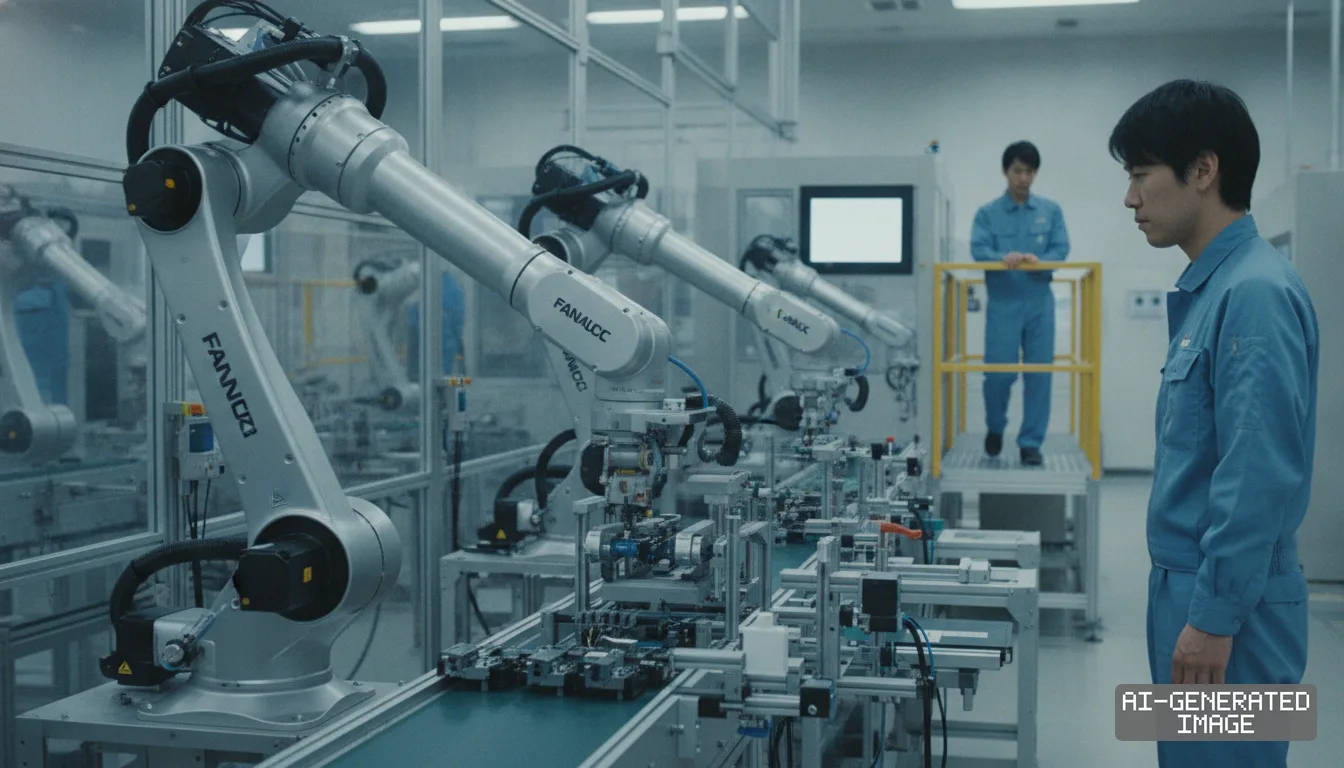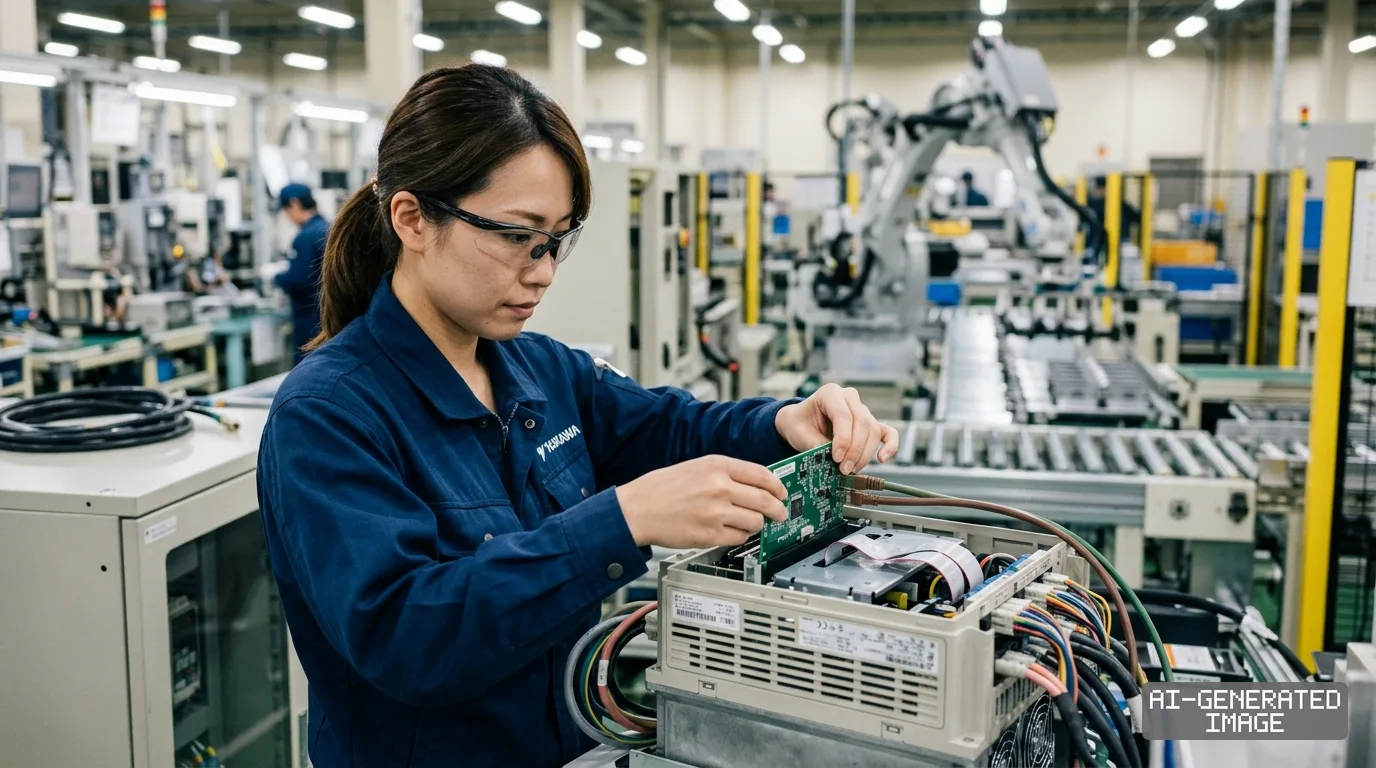
Yaskawa Electric orders hit record high on chip tool demand
The Japanese automation maker lifted full-year revenue guidance to 600 billion yen as motion control orders jumped 38% across North American and Asian markets.
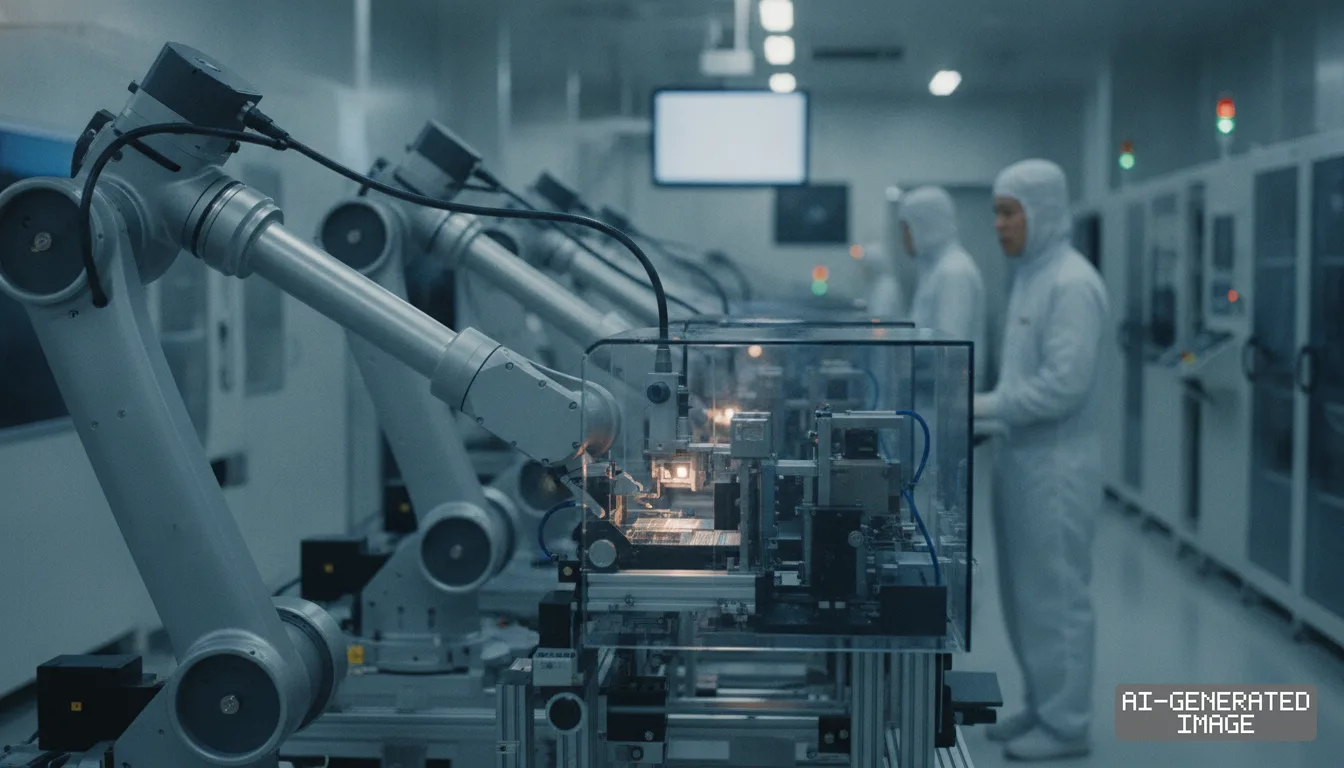
Yaskawa Electric reported Oct. 9 that quarterly orders reached an all-time record, driven by a 38% surge in demand for semiconductor equipment components and factory automation systems.
The Kitakyushu-based manufacturer serves as a global bellwether for factory capital spending. Its motion controllers and robotic arms supply major chip fabrication lines, electronics assemblers and automotive plants worldwide.
New orders for the second fiscal quarter running from June to August rose 38% from a year earlier. Bookings climbed 13% sequentially from the first quarter, setting a quarterly high for the company.
Consolidated revenue for the six-month period ended Aug. 31 reached 285.598 billion yen ($1.89 billion). That was an increase of 9.8% compared to the same period last year.
Operating profit for the six-month period fell 5.5% year over year to 22.058 billion yen ($146 million). Profit attributable to owners of the parent rose 4.1% to 18.988 billion yen ($126 million).
The acceleration in incoming orders reflected urgent procurement by artificial intelligence infrastructure operators and semiconductor equipment vendors. Data center construction drove heavy demand for specialized motion equipment and cooling inverters.
The motion control division posted the strongest performance across the group. Revenue in the segment expanded 21.7% year over year to 137.286 billion yen ($910 million) during the six months.
Segment operating profit in motion control climbed 32.8% to 15.973 billion yen ($106 million). Shipments of alternating-current servo motors used in advanced semiconductor packaging and electronic component assembly led the gains.
Data center operators also lifted orders for industrial inverters, the company said. These drives regulate power frequencies in high-capacity server cooling systems, creating an additional sales channel beyond traditional factory tools.
The robotics division experienced contrasting conditions during the six-month period. Segment revenue edged down 0.7% from a year earlier to 118.4 billion yen ($784 million).
Operating profit in robotics dropped 43.3% year over year to 5.970 billion yen ($40 million). Margin pressure stemmed from dual headwinds inside its regional distribution and logistics operations.
Order intake for industrial robots began recovering across the Americas and China, the company said. Chinese semiconductor fabricators increased purchases of clean-room wafer-handling robotic arms to support domestic manufacturing expansion.
Domestic robot shipments in Japan faced delivery delays following an internal transition to a new enterprise resource planning system. The logistical bottlenecks postponed product handovers to industrial customers.
Earnings in the robotics division were also weighed down by restructuring expenses in Europe. The company reorganized regional engineering and administrative sites to align with subdued regional automotive demand.
Based on the order rebound, Yaskawa revised its full-year revenue forecast upward. The manufacturer lifted its revenue target to 600 billion yen ($3.98 billion) from an earlier projection of 580 billion yen.
The revision represents a projected 10.7% top-line gain over the preceding fiscal year. Favorable currency movements from a weaker Japanese yen supported the increased revenue outlook.
Management lowered the full-year operating profit forecast by 4.2% to 57.5 billion yen ($381 million). The reduction from the previous 60 billion yen target incorporated lingering operational disruptions from the enterprise software migration.
The quarterly order surge points to a turn in global automation investment. Japanese component suppliers had absorbed several consecutive quarters of inventory adjustments across machine tool and industrial automation channels.
The divergence between orders and operating profit illustrates the operational drag of enterprise software overhauls. Hardware demand has rebounded faster than factory dispatch capacity can clear the backlog.
The recovery remains concentrated in high-end electronics and artificial intelligence hardware. Broader general-purpose machinery and automotive automation lines continue to exhibit a more gradual path of capital deployment.
Yaskawa plans to submit its statutory semi-annual securities report on Oct. 13. The company scheduled payment of its interim dividend of 36 yen per share for Nov. 10.
The financial release does not state the exact monetary backlog total for the quarterly order intake, and the company has not published the specific restructuring expenses incurred in its European robotics operations.
Impact map
How this development propagates across the region and out to global buyers.
| Event | Korea | China | Japan | Global impact |
|---|---|---|---|---|
| Automation component order rebound | Memory toolmakers secure servo supply as component lead times stabilize | Domestic chip fabs increase clean-room robot procurement | Yaskawa lifts sales goal to 600 billion yen while clearing factory delivery bottlenecks | AI data center buildouts lift power inverter and precision motor demand by double digits |
In this story
- Companies
- Yaskawa Electric
- Tickers
- 6506.T
- Impact
- Order BookCapexSupply Chain
Related briefings
- Kawasaki Heavy advances 2030 target for AI humanoid robots Also on Yaskawa Electric, Order Book
- Chip fab expansion drives cleanroom SCARA robot demand globally Also on Yaskawa Electric, Order Book
- Estun Automation completes buyout of robotics unit Codroid Also on Yaskawa Electric, Order Book
- Japan Motion Control Makers Accelerate Real-Time Ethernet on Next-Gen Servos Also on Yaskawa Electric, Order Book
Sources
Reporting
Confidence: medium — how we grade this
The documents behind this briefing are linked above. East Asia Brief produces its English text with AI assistance under human editorial review, and does not translate or republish other outlets' articles. See our methodology and AI policy. Spotted an error? Tell us.
The Morning Brief
What changed in Korean, Chinese and Japanese industry overnight — and what it means for your supply chain. One email, weekday mornings, US time. Free.
The Morning Brief is in preparation. Leave your address and we will write to you once — when the first issue is ready. Nothing before that.