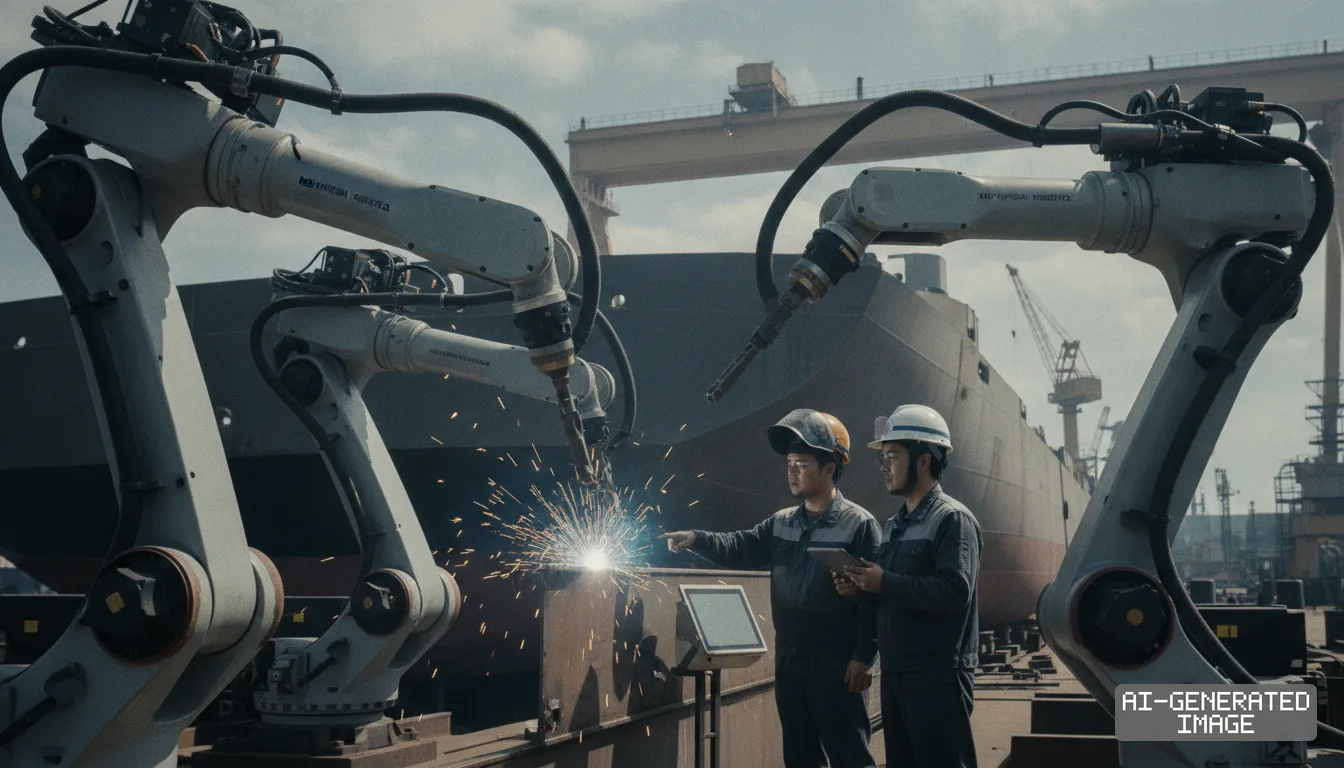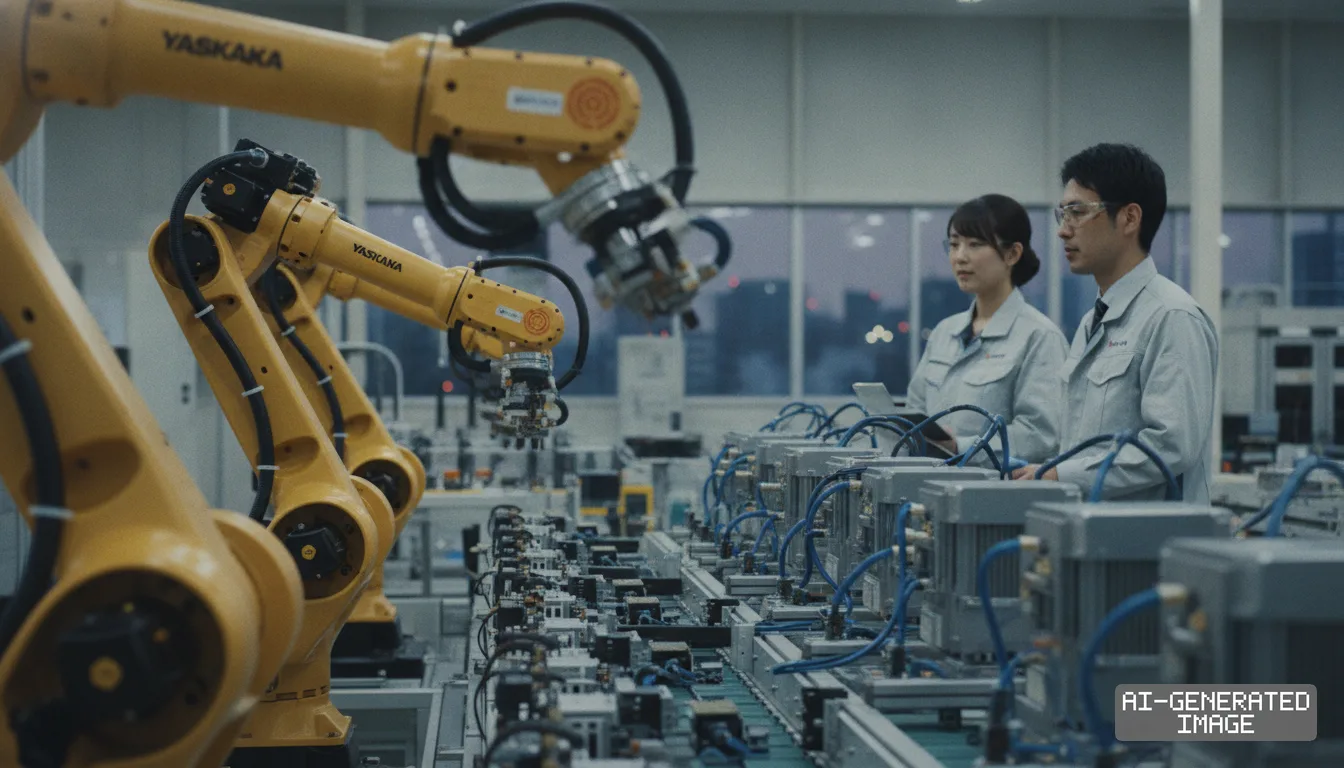
Japan Motion Control Makers Accelerate Real-Time Ethernet on Next-Gen Servos
Mitsubishi, Yaskawa, and Omron integrate microsecond-level TSN and multi-protocol architectures to eliminate latency in complex multi-axis robotics.
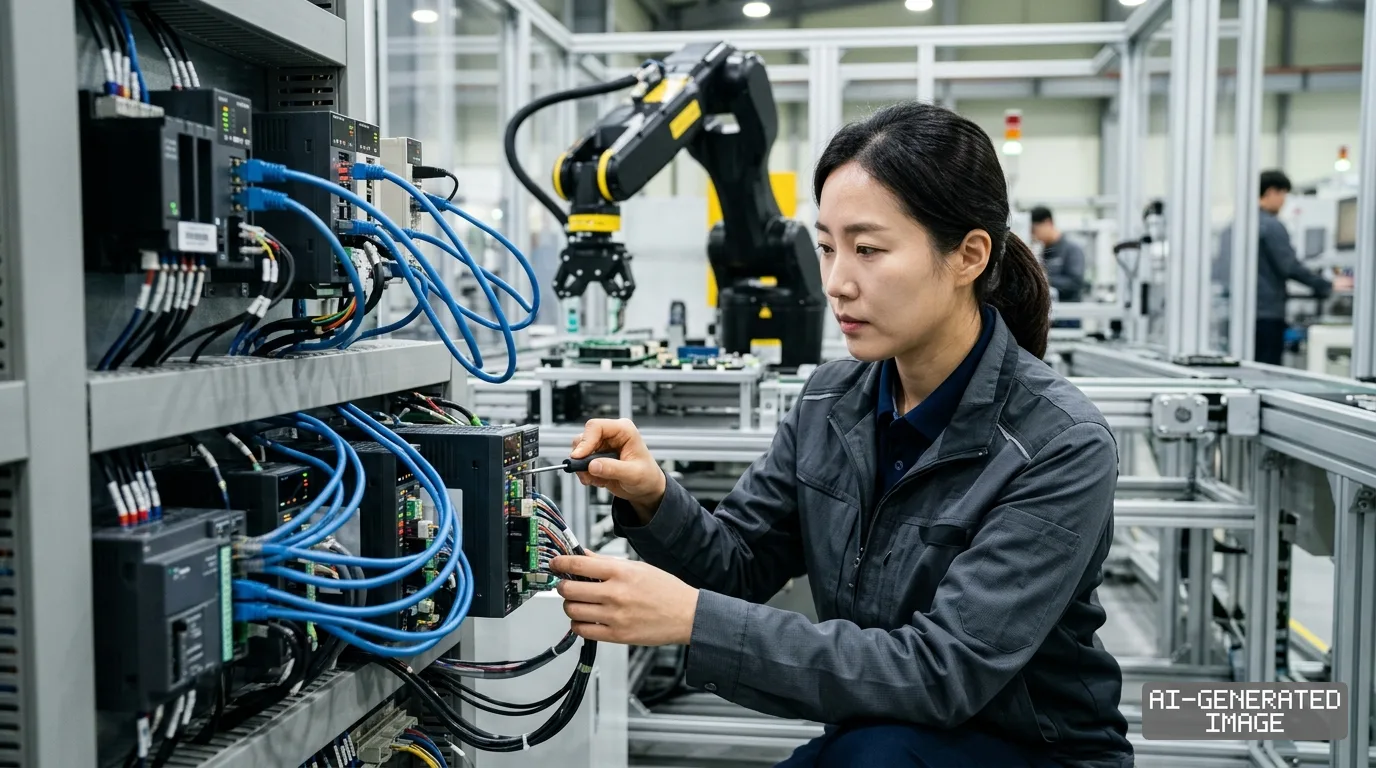
Japanese precision motion control manufacturers are accelerating the rollout of ultra-high-speed Industrial Ethernet and Time-Sensitive Networking (TSN) protocols across their next-generation servo drive lineups, aiming to eliminate microsecond-level synchronization lag in complex multi-axis robotic systems. The shift responds directly to demands from smart factory system integrators and automated line planners who require deterministic, real-time coordination across dozens of motorized axes without sacrificing diagnostic bandwidth. Rather than enforcing a single unified global standard, Japanese automation suppliers are advancing high-throughput proprietary ecosystems alongside open TSN bridges and multi-protocol soft-master controllers to achieve cross-vendor line interoperability.
Modern precision manufacturing in semiconductor packaging, battery cell stacking, and high-speed electronics assembly demands sub-millisecond tactile synchronization across articulated robot arms, gantry mechanisms, and machine vision inspection stations. Traditional fieldbus networks often forced engineers to isolate deterministic motion control loops from diagnostic and machine-to-cloud data streams, requiring duplicated cabling and specialized communication interface modules. The integration of deterministic Industrial Ethernet standards resolves this structural friction by combining time-critical motion commands and general TCP/IP information frames over a single physical wire.
Mitsubishi Electric Corporation and the CC-Link Partner Association (CLPA) have anchored their motion architecture on CC-Link IE TSN, an open industrial network protocol released in November 2018. The protocol incorporates the IEEE 802.1AS time-synchronization standard and the IEEE 802.1Qbv time-aware shaper mechanism, allowing the network to achieve time synchronization accuracy within plus or minus 1 microsecond. When deployed with Mitsubishi Electric's MELSEC iQ-R series quad-core motion module (RD78GH) and MELSERVO-J5 series servo amplifiers, the system achieves a minimum command communication cycle time of 31.25 microseconds across linked stations. The MELSERVO-J5 lineup pairs this communication loop with a 3.5 kHz speed frequency response and 26-bit batteryless absolute encoders, enabling machine controllers to execute synchronized multi-axis electronic camming and trajectory interpolation with negligible following error.
The operational benefit of this TSN architecture lies in its time-sharing mechanism, which splits communication intervals into dedicated slots for deterministic cyclic motion data and non-real-time informational packets. Production lines can run high-frequency servo position updates alongside high-resolution vision inspection data and condition-monitoring telemetry on identical network lines without jitter. For system integrators, this eliminates the need for separate diagnostic Ethernet drops to every drive station, reducing cabinet wiring volume and physical fieldbus hubs.
Simultaneously, Yaskawa Electric Corporation and the MECHATROLINK Members Association (MMA) have expanded the deployment of MECHATROLINK-4 and the complementary Σ-LINK II sensor-actuator bus. Officially recognized under the IEC 61158 and IEC 61784 international standards, MECHATROLINK-4 improves transmission efficiency fourfold compared to its predecessor, MECHATROLINK-III. The protocol is embedded into Yaskawa's Σ-X (Sigma-X) series servo drives and supported by the JL-L000A dedicated communications application-specific integrated circuit (ASIC). The JL-L000A chip enables third-party controller and drive manufacturers to switch between MECHATROLINK-III and MECHATROLINK-4 modes, lowering hardware development hurdles for equipment builders seeking to adopt 31.25-microsecond update cycles.
Yaskawa's complementary Σ-LINK II technology extends this deterministic time base directly to peripheral sensors, encoders, and safety devices connected to the servo amplifier. By acquiring tactile force sensor readings, mechanical vibration data, and temperature logs synchronously on the exact same time axis as encoder feedback, the drive controller can compensate for dynamic load fluctuations and detect mechanical degradation before motor failure occurs. This integrated sensor-motion loop reduces settling time in high-inertia robotic tool changes and maintains path precision during multi-robot collaborative machining.
Omron Corporation continues to anchor its flagship Sysmac automation platform on EtherCAT while broadening its peripheral compatibility with open TSN and cloud-native standards. Omron provides CC-Link IE TSN-compatible IO-Link master units, including its GD series modules, which allow machine builders to interface diverse smart sensors and pneumatic actuators directly into TSN-managed cells. In parallel, Omron is integrating OPC UA over TSN specifications to streamline horizontal communication between discrete robot cells and plant-level manufacturing execution systems (MES) without requiring custom protocol gateways.
To navigate the coexistence of CC-Link IE TSN, MECHATROLINK-4, and EtherCAT on identical factory floors, automation engineering is increasingly adopting software-based motion controllers and multi-protocol interface hardware. Soft-master platforms, such as Movensys Inc.'s WMX3 motion control software, execute real-time multi-axis trajectory calculations on standard industrial PC (IPC) architectures while driving heterogeneous servo networks simultaneously through separate software communication stacks. This software-centric layer allows automation planners to specify Mitsubishi, Yaskawa, and third-party EtherCAT servo drives within a single modular assembly machine without adding dedicated hardware motion controller racks.
For smart factory planners, the practical consequence of these high-speed protocol rollouts is a direct reduction in production cycle times and machine commissioning footprints. Robotic workcells executing high-speed pick-and-place or laser welding operations can synchronize 64 or more motion axes per controller unit while continuously streaming real-time torque profiles to predictive maintenance databases. Japanese motion hardware suppliers are currently delivering these TSN-capable and multi-protocol servo drives across Asian and North American manufacturing lines, with firmware updates and ASIC sample kits expanding third-party device compatibility across major machine tool and packaging sectors.
Impact map
How this development propagates across the region and out to global buyers.
| Event | Korea | China | Japan | Global impact |
|---|---|---|---|---|
| Industrial Ethernet standard upgrade | SI line adoption | factory automation retrofits | servo drive export growth | machine tact-time reduction |
In this story
- Companies
- Mitsubishi ElectricYaskawa ElectricOmron
- Tickers
- 6503.T6506.T6645.T
- Exposed
- Movensys
- Policy
- Economic Security
- Impact
- Supply ChainCapexOrder BookCost Structure
Track every Economic Security development →
Related briefings
- Bigwave Robotics partners with automation suppliers to scale US physical AI Also on Omron, Order Book
- Omron agrees to acquire US industrial computer maker OnLogic for $675M Also on Omron
- Japan accelerates grants for rare-earth-reduced robot motor magnets under economic security act Also on Mitsubishi Electric, Yaskawa Electric, Cost Structure
- China servo motor makers squeeze foreign rivals on cost and delivery Also on Mitsubishi Electric, Yaskawa Electric, Cost Structure
Sources
Reporting
Confidence: medium — how we grade this
The documents behind this briefing are linked above. East Asia Brief produces its English text with AI assistance under human editorial review, and does not translate or republish other outlets' articles. See our methodology and AI policy. Spotted an error? Tell us.
The Morning Brief
What changed in Korean, Chinese and Japanese industry overnight — and what it means for your supply chain. One email, weekday mornings, US time. Free.
The Morning Brief is in preparation. Leave your address and we will write to you once — when the first issue is ready. Nothing before that.