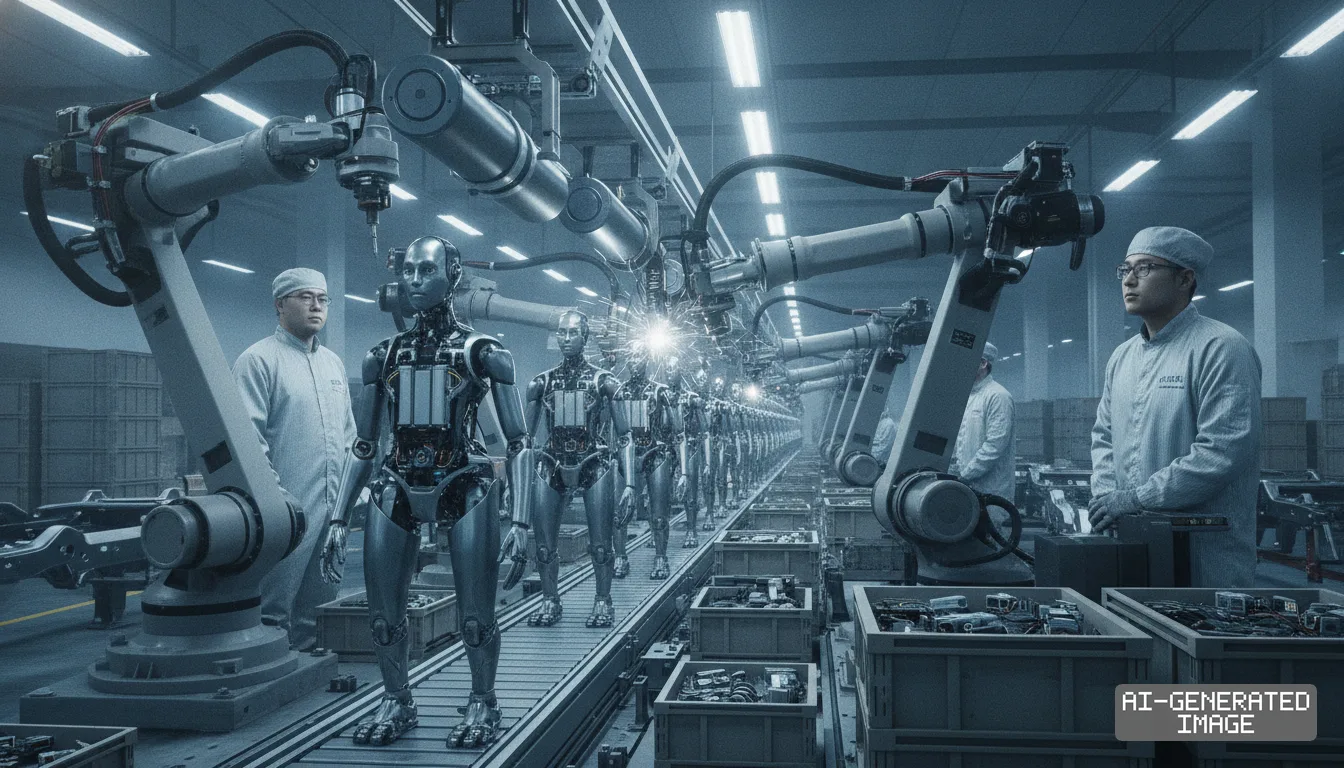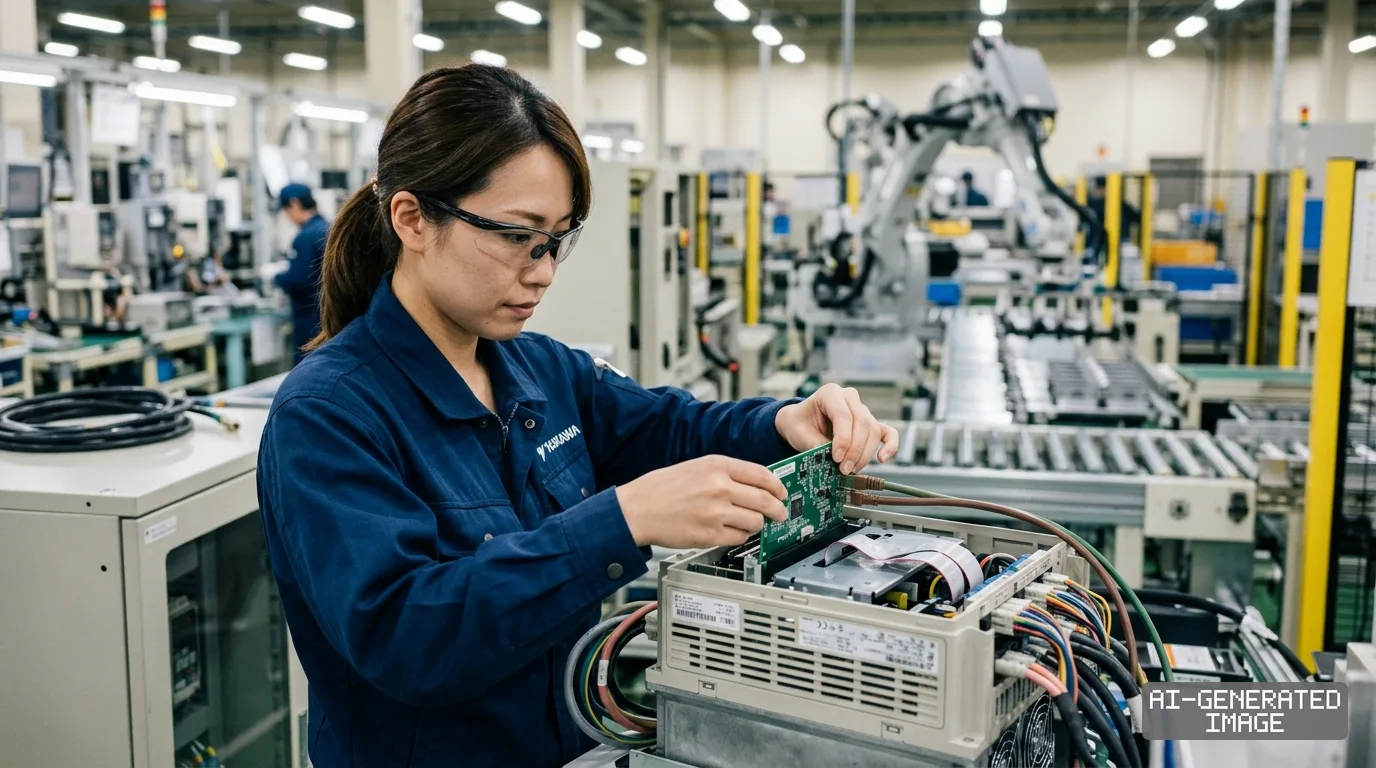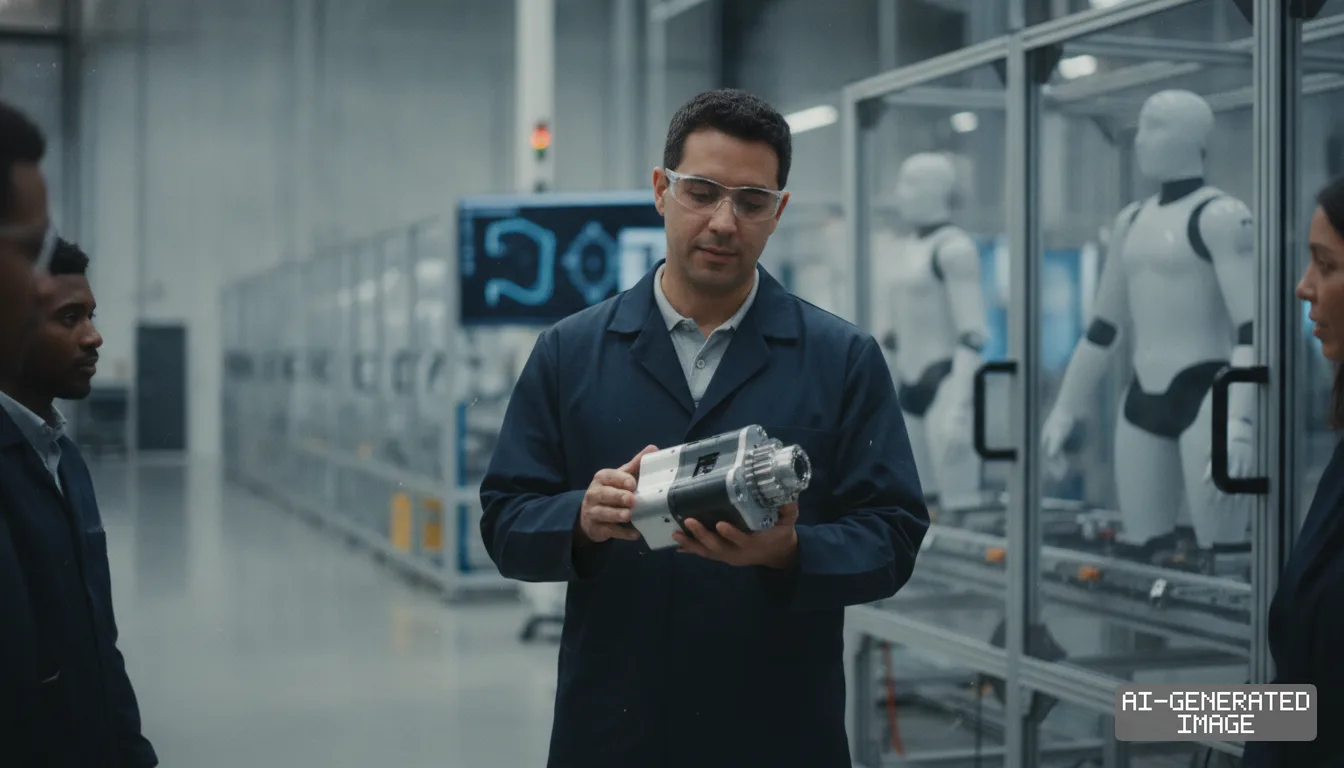
Hitachi and FANUC partner to deploy physical AI in factories
The Japanese industrial giants will combine HMAX Industry software with autonomous robot arms, scheduling global commercial rollout across manufacturing sites for fiscal 2027.
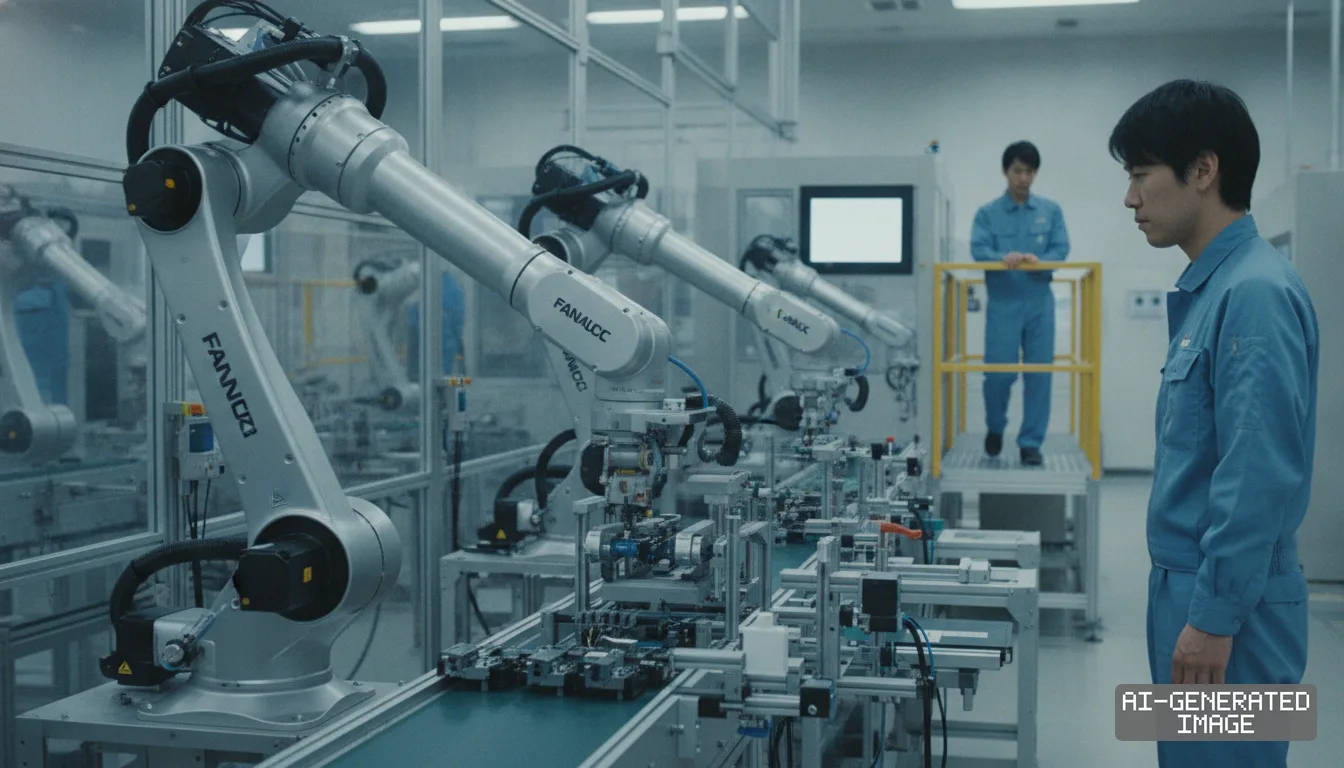
Hitachi and FANUC advanced plans on Oct. 8 to commercialize physical artificial intelligence across factory floors, building on an alliance agreement signed on Sept. 30.
The partnership combines Hitachi's HMAX Industry digital software suite with FANUC's industrial robot arms. The initiative focuses on automating complicated production steps that still rely on skilled shop-floor personnel.
The companies did not disclose financial terms, capital investments or equity transfers for the commercial alliance. Hitachi employs roughly 280,000 workers worldwide, while FANUC holds an installed base of over 1 million industrial robots.
Under the deployment schedule, Hitachi designated its manufacturing facilities in Ibaraki Prefecture as Customer Zero. Engineers will train the physical AI systems on active production lines rather than inside laboratory testbenches.
The on-site learning methodology gathers sensory information directly from machinery in motion. Digital simulations and software twins cannot fully reproduce subtle mechanical friction, thermal expansion or material discrepancies encountered during factory shifts, the companies said.
Hitachi supplies the computational platform through HMAX Industry and proprietary edge AI semiconductor processing. Edge microchips process high-speed sensor feeds on local equipment, avoiding latency and keeping operational records on the factory floor.
FANUC provides the mechanical manipulation systems through its industrial robot arms and computerized controllers. The machinery incorporates specialized machine vision to track shifting assembly parts and execute precise grip adjustments without operator intervention.
The two Japanese industrial suppliers plan to deliver the integrated system to external customers in fiscal 2027. Target industrial segments include semiconductor production, automotive assembly, pharmaceutical packaging, food manufacturing, chemical materials, logistics and shipbuilding.
The alliance arrives as Japanese factories navigate sharp demographic pressures and an aging technical workforce. Retiring craftspeople leave skill deficits in precision machining and equipment calibration that conventional automated systems cannot easily duplicate.
Hitachi framed the collaboration within its broader initiative to position physical AI as the core driver of Lumada business software. Corporate management overhauled internal operating groups in April to accelerate frontline artificial intelligence adoption.
FANUC has pursued similar technical integrations to defend its position against global robotics manufacturers. The automation group partnered with software developers earlier this year to embed adaptive machine-learning models into heavy arc-welding robots.
Executive leadership from both firms endorsed the joint deployment program. Hitachi President and Chief Executive Toshiaki Tokunaga met with FANUC President and Chief Executive Kenji Yamaguchi to coordinate joint field trials across selected business units.
The Customer Zero testing model forces Hitachi to validate software stability internally before starting customer shipments. The companies said running trials on operating production lines prevents unexpected line stoppages when third-party factories adopt the toolset.
Automotive assembly lines and semiconductor cleanrooms represent primary sales targets for the joint offering. Auto parts suppliers often spend weeks reprogramming traditional robotic arms when vehicle manufacturers change stamping specifications or part dimensions.
Physical AI systems adjust tool paths automatically by interpreting real-time optical feedback and torque readings. That dynamic recalculation reduces downtime during factory line changeovers, lowering tooling overhead for high-mix, low-volume component manufacturers.
Data governance remains a critical selling point for the joint edge platform. Industrial clients frequently reject public cloud connections because unencrypted factory data could reveal manufacturing yields, proprietary tooling designs or production volumes.
Local edge semiconductor hardware processes machine feedback entirely inside client firewall perimeters. The architecture prevents production parameters from leaving the physical facility while still allowing AI models to update movement routines continuously.
The official partnership notice does not state software licensing prices, projected annual sales volumes or long-term profit-sharing arrangements. The release also leaves unconfirmed whether Hitachi will integrate its HMAX platform with competing robotics brands.
Engineering teams will conduct physical testing in Ibaraki facilities before expanding trials across additional factories next year. Joint commercial sales to global manufacturing clients will begin in fiscal 2027, the companies said.
Impact map
How this development propagates across the region and out to global buyers.
| Event | Korea | China | Japan | Global impact |
|---|---|---|---|---|
| Physical AI manufacturing alliance | Hyundai Motor and Samsung Electronics face competing autonomous assembly tools from Japanese rivals | Domestic robot builders like Estun face heightened technology pressure in high-end automotive cells | Hitachi and FANUC set national benchmark for edge AI automation to offset aging factory workforce | Automotive and chip packaging lines can reduce line changeover downtime from fiscal 2027 |
In this story
- Companies
- HitachiFANUC
- Tickers
- 6501.T6954.T
- Policy
- Economic Security
- Impact
- Supply ChainCapexOrder Book
Track every Economic Security development →
Related briefings
- Hitachi and FANUC Launch Physical AI Pact to Automate Plants Also on Hitachi, FANUC, Order Book
- Hitachi and Fanuc form physical AI alliance to run factories Also on Hitachi, FANUC, Order Book
- Kawasaki Heavy advances 2030 target for AI humanoid robots Also on Fanuc, Order Book
- Fanuc previews 11-kg welding cobots for shipyards at Fabtech 2026 Also on Fanuc, Order Book
Sources
Reporting
Confidence: medium — how we grade this
The documents behind this briefing are linked above. East Asia Brief produces its English text with AI assistance under human editorial review, and does not translate or republish other outlets' articles. See our methodology and AI policy. Spotted an error? Tell us.
The Morning Brief
What changed in Korean, Chinese and Japanese industry overnight — and what it means for your supply chain. One email, weekday mornings, US time. Free.
The Morning Brief is in preparation. Leave your address and we will write to you once — when the first issue is ready. Nothing before that.