Chip fab expansion drives cleanroom SCARA robot demand globally
Global industrial robotics revenue will reach $88.66 billion by 2030 as electronics makers and semiconductor fabs deploy high-speed arms to offset soaring labor costs.
Industry consultancy Next Move Strategy Consulting reported Sept. 28 that expanding semiconductor fab construction and electronics reshoring are accelerating global demand for selective compliance articulated robot arm systems.
The consultancy's findings follow data from the International Federation of Robotics showing annual installations rose 11.2% to a record 603,307 units in 2025. Total operational robot stock reached 5,079,000 units globally, doubling over seven years.
Selective compliance articulated robot arm (SCARA) systems — horizontal-reach mechanical arms engineered for high-speed lateral assembly — represent approximately 15% of all industrial robot arms shipped globally. Deployments in the electronics sector grew 10% in 2025.
Next Move Strategy Consulting projected the industrial robotics market will grow from $48.75 billion in 2025 to $88.66 billion by 2030. That forecast represents a 12.7% compound annual revenue growth rate, the report said.
Annual physical shipments will increase at a 14.5% annual rate, climbing from 653,000 units in 2025 to 1,287,000 units by 2030. Falling component costs and automated assembly needs are expanding installations across secondary manufacturing lines, the report said.
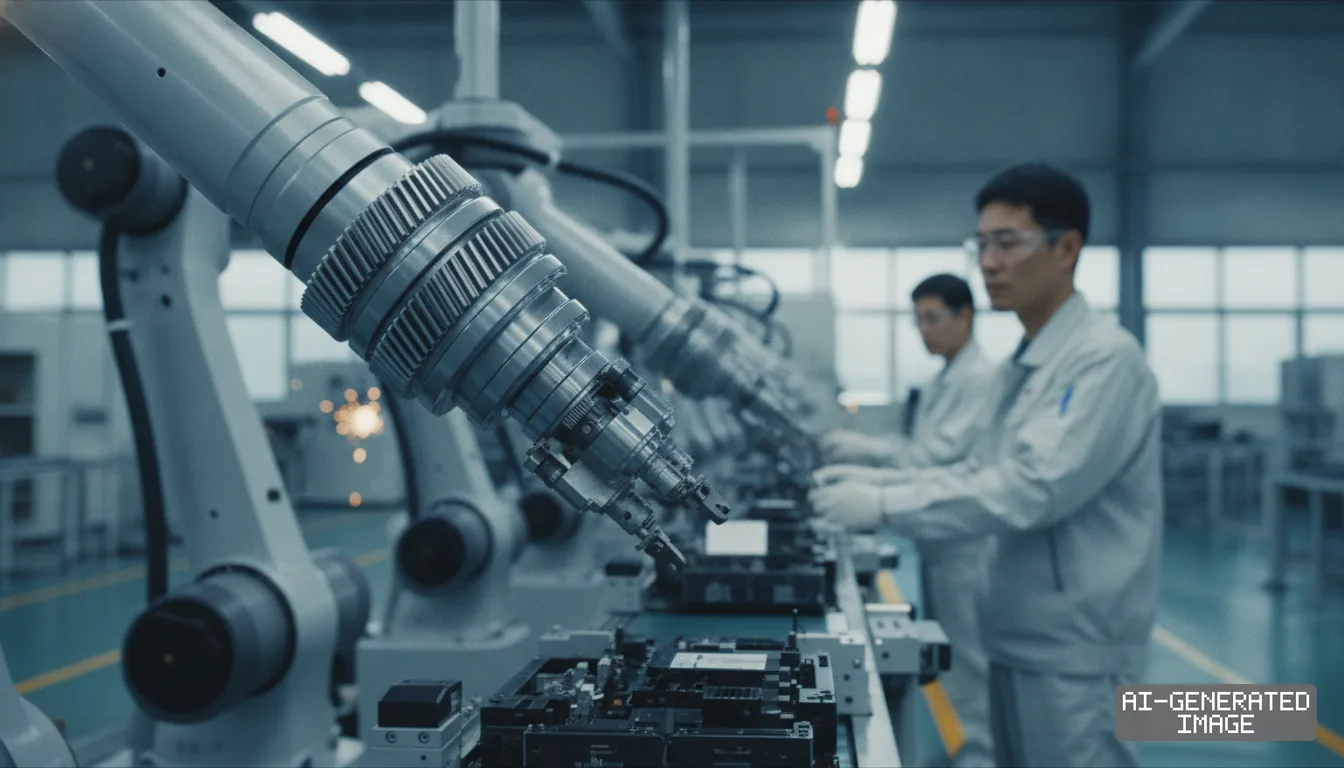
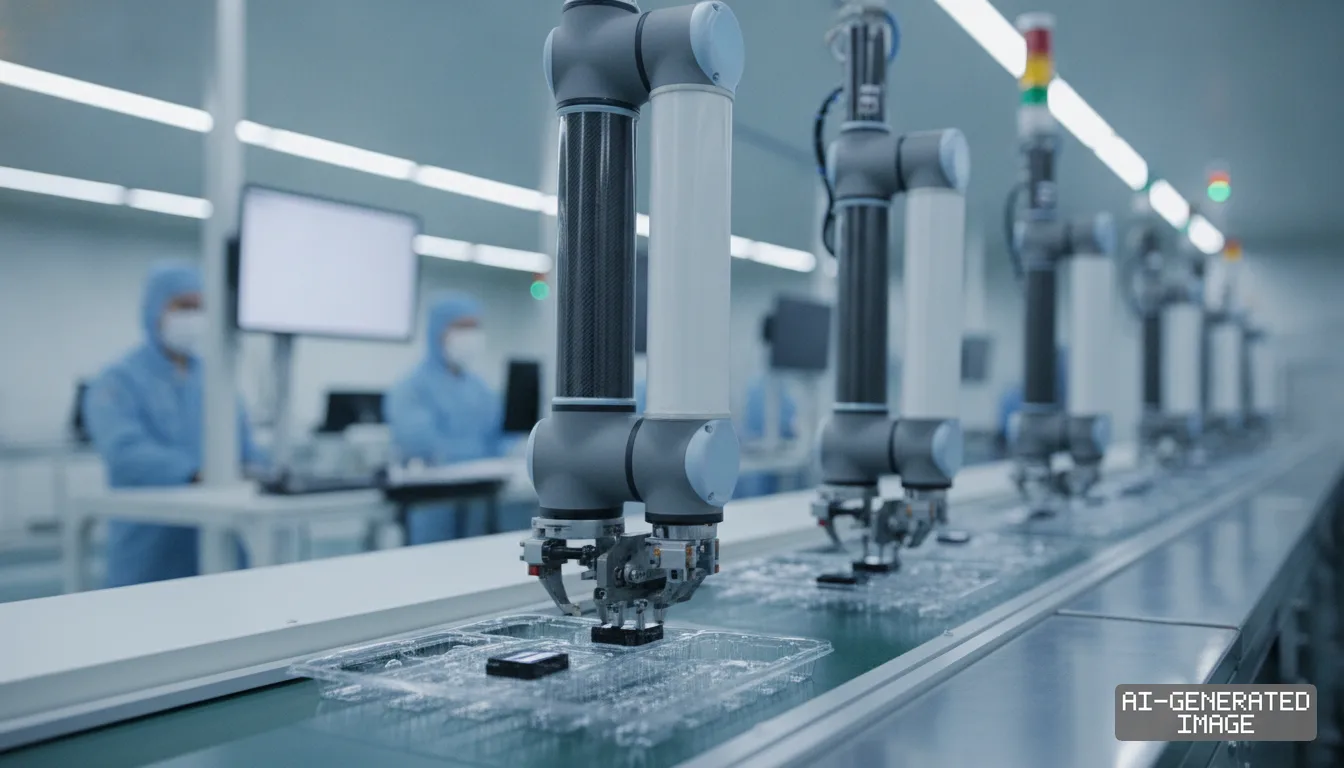
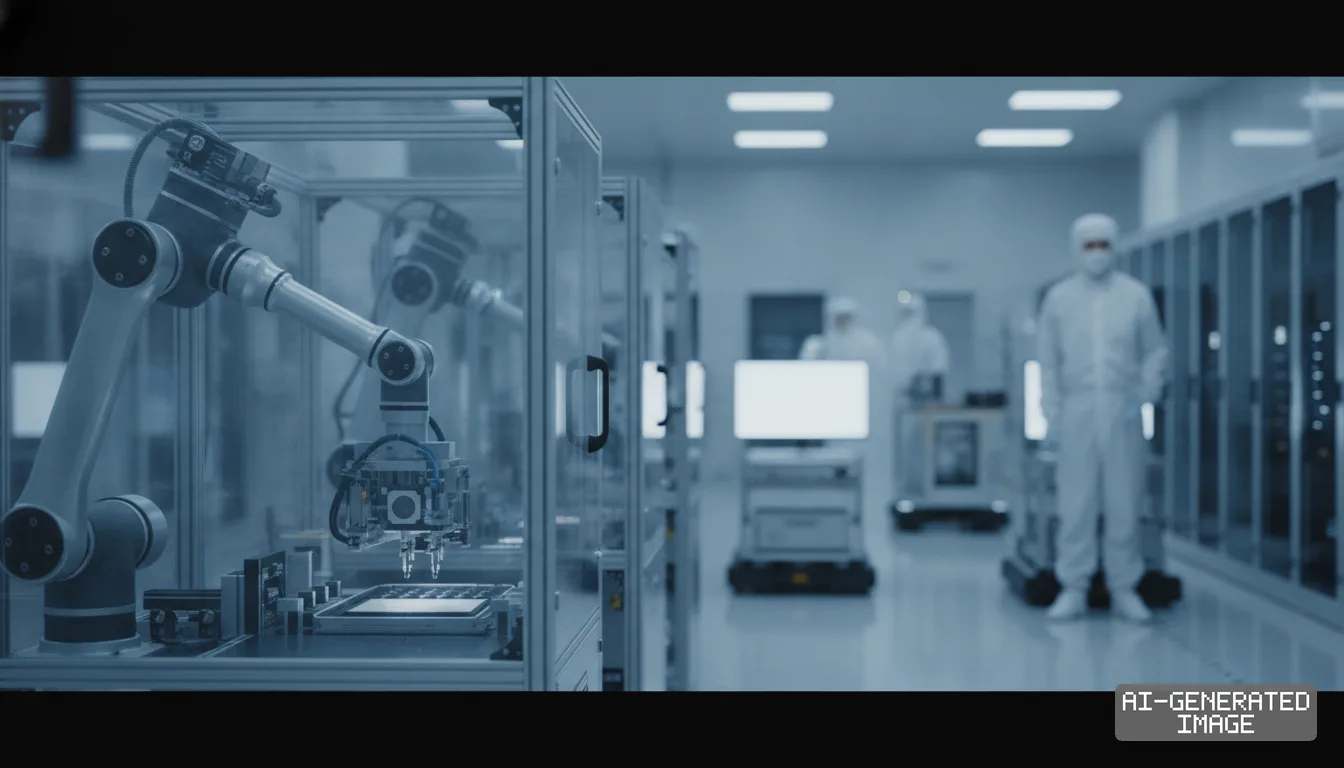
Cleanroom-compatible SCARA manipulators operate inside controlled environments graded under ISO Class 1 to Class 5 standards, where airborne particulate counts are strictly limited. Semiconductor fabs deploy these four-axis units for wafer transfer, chemical dispensing and automated component inspection.
ISO Class 1 environments permit no more than 10 particles of 0.1 microns per cubic meter of air. Robot builders equip these arms with sealed joints, brushless motors and low-outgassing lubricants to prevent contamination during silicon processing.
Parallel fab construction projects across the United States, Europe, Japan and India have shortened tool procurement cycles for cleanroom equipment. Front-end wafer processing and advanced packaging facilities require continuous mechanical handling to preserve microscopic defect thresholds.
Japanese automation supplier Yaskawa Electric Corporation is responding by establishing manufacturing capacity directly within the North American market. The company is investing $180 million over eight to 10 years to build an 800,000-square-foot headquarters campus in Franklin, Wisconsin.
The Franklin site consolidates Yaskawa's Midwestern operations and will add production lines for robotics, motion controllers and semiconductor equipment. The facility will create 700 jobs and double Yaskawa America's business volume over the coming decade, the company said.
Yaskawa America plans to assemble robot manipulators locally in Wisconsin and deliver them to integration facilities in Ohio within two days. Domestic assembly reduces exposure to transpacific shipping bottlenecks, Yaskawa America chief executive Mike Knapek said.
Federal subsidies under the US CHIPS and Science Act and high domestic wages have accelerated robotic automation across North America. US industrial robot installations grew 12% to approximately 38,500 units in 2025, overtaking Japan as the world's second-largest robotics market.
China remains the largest market by total volume, recording 354,000 installations in 2025, or 59% of global deployments. Chinese domestic robot builders captured a 55% share of their home market, delivering 195,000 units to electronics, battery and automotive plants.
South Korea maintains the highest concentration of electronics robotics, with semiconductor and display facilities accounting for 64% of total domestic robot deployments. Fabs operated by Samsung Electronics and SK hynix account for the vast majority of those high-precision cleanroom units.
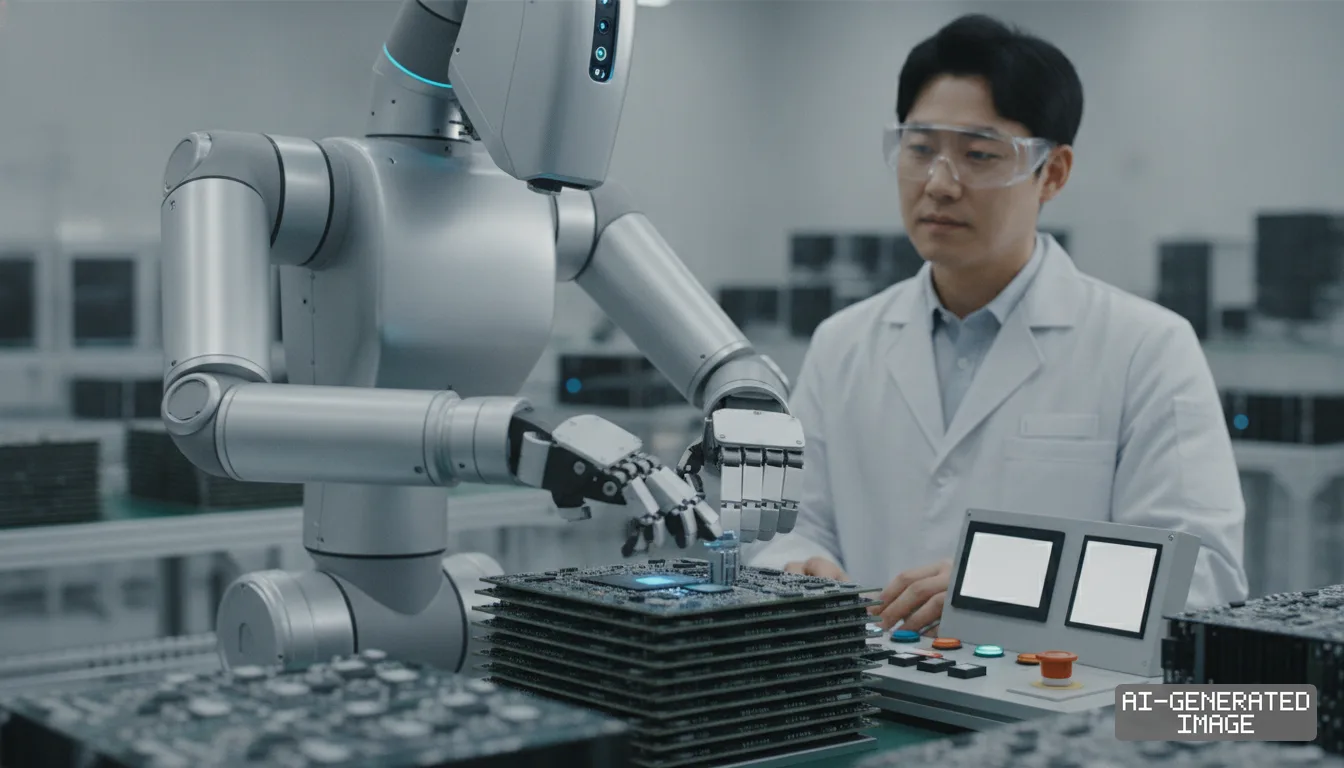
High-bandwidth memory packaging lines in South Korea require sub-millimeter placement accuracy that manual labor cannot sustain across 24-hour shifts. The transition to multi-layer chip stacking has expanded cleanroom arm installations inside domestic packaging suites.
Capital expenditure programs from merchant foundries are pulling mechanical handling deliveries forward into early fab buildout phases. Substrate handling tools and wafer transfer arms must be anchored before vacuum processing chambers can begin chemical calibration.
The International Federation of Robotics highlighted this electronics pivot during its leadership transition in July. Jane Heffner of Teradyne Robotics succeeded Takayuki Ito of Fanuc Corporation as federation president, reflecting the sector's rising influence over industrial automation standards.
The NextMSC report does not state specific order lead times for ISO Class 1 SCARA manipulators, and industrial robot builders have not published fab-specific order backlogs.
The International Federation of Robotics will begin collecting full-year 2026 installation data in early 2027 to assess whether cleanroom tool procurement sustained its double-digit expansion.
Impact map
How this development propagates across the region and out to global buyers.
| Event | Korea | China | Japan | Global impact |
|---|---|---|---|---|
| Cleanroom robot demand acceleration | Samsung Electronics and SK hynix account for 64% of domestic robotics in chip lines | Domestic suppliers capture 55% of home market, delivering 195,000 units | Yaskawa invests $180 million in US plant to supply localized cleanroom robotics | Robotics revenue heads to $88.66 billion by 2030 on semiconductor automation capex |
| Cleanroom robot demand acceleration | Samsung Electronics and SK hynix account for 64% of domestic robotics in chip lines | Domestic suppliers capture 55% of home market, delivering 195,000 units | Yaskawa invests | — |
| Cleanroom robot demand acceleration | Samsung Electronics and SK hynix account for 64% of domestic robotics in chip lines | Domestic suppliers capture 55% of home market, delivering 195,000 units | Yaskawa invests $180 million in US plant to supply localized cleanroom robotics | Robotics revenue heads to $88.66 billion by 2030 on semiconductor automation capex |
In this story
- Companies
- Yaskawa ElectricSamsung ElectronicsSK hynixFanuc CorporationTeradyne
- Tickers
- 6506.T005930.KS000660.KS6954.TTER
- Policy
- SubsidiesEconomic Security
- Impact
- Supply ChainCapexOrder Book
Track every Subsidies development → Track every Economic Security development →
Related briefings
- FANUC America links factory robots to Palladyne AI platform Also on FANUC Corporation, Yaskawa Electric
- FANUC UK restructures sales leadership to target aerospace and defense Also on FANUC Corporation, Order Book
- Fanuc and Yaskawa Expand China Motion Control Plants to Meet Local Content Rules Also on Fanuc Corporation
- IndexBox projects delta robot market will double by 2035 Also on Fanuc Corporation
Sources
Reporting
Confidence: medium — how we grade this
The documents behind this briefing are linked above. East Asia Brief produces its English text with AI assistance under human editorial review, and does not translate or republish other outlets' articles. See our methodology and AI policy. Spotted an error? Tell us.
The Morning Brief
What changed in Korean, Chinese and Japanese industry overnight — and what it means for your supply chain. One email, weekday mornings, US time. Free.
The Morning Brief is in preparation. Leave your address and we will write to you once — when the first issue is ready. Nothing before that.