Rainbow Robotics files US waiver to bypass robot import ban
The South Korean firm sought conditional approval after the FCC blocked equipment authorisations, halting American deliveries of its RB-Y1 humanoid machine.
Rainbow Robotics filed for a conditional regulatory waiver in the United States, industry records confirmed Oct. 12, 2026, making it South Korea's first manufacturer to challenge new federal restrictions on foreign-built robots.
The application responds to a July 28, 2026 public notice from the Federal Communications Commission. Under docket DA 26-786, the agency added foreign-produced advanced robotic devices to its Covered List.
The designation bars foreign mobile robots from receiving equipment authorizations. Without that radio clearance, manufacturers cannot lawfully import, market or deploy new commercial platforms inside the United States.
The rule applies a strict domestic content threshold. Machines must clear a 65% domestic component cost requirement under federal procurement guidelines (48 CFR §25.101(a)) to avoid classification as foreign products.
Trade restrictions disrupted commercial operations immediately. Rainbow Robotics halted shipments of its RB-Y1 mobile humanoid robot scheduled for August and September, delaying initial deliveries to American enterprise customers.
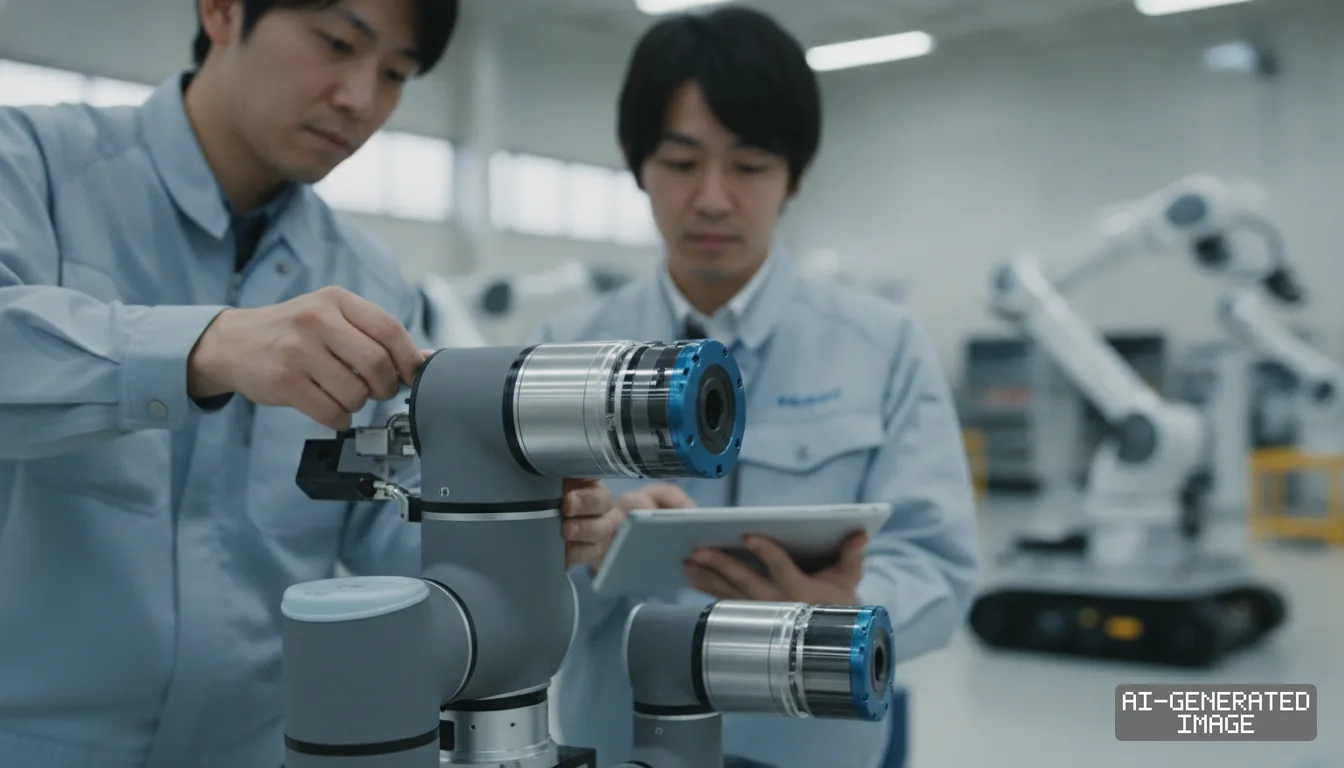
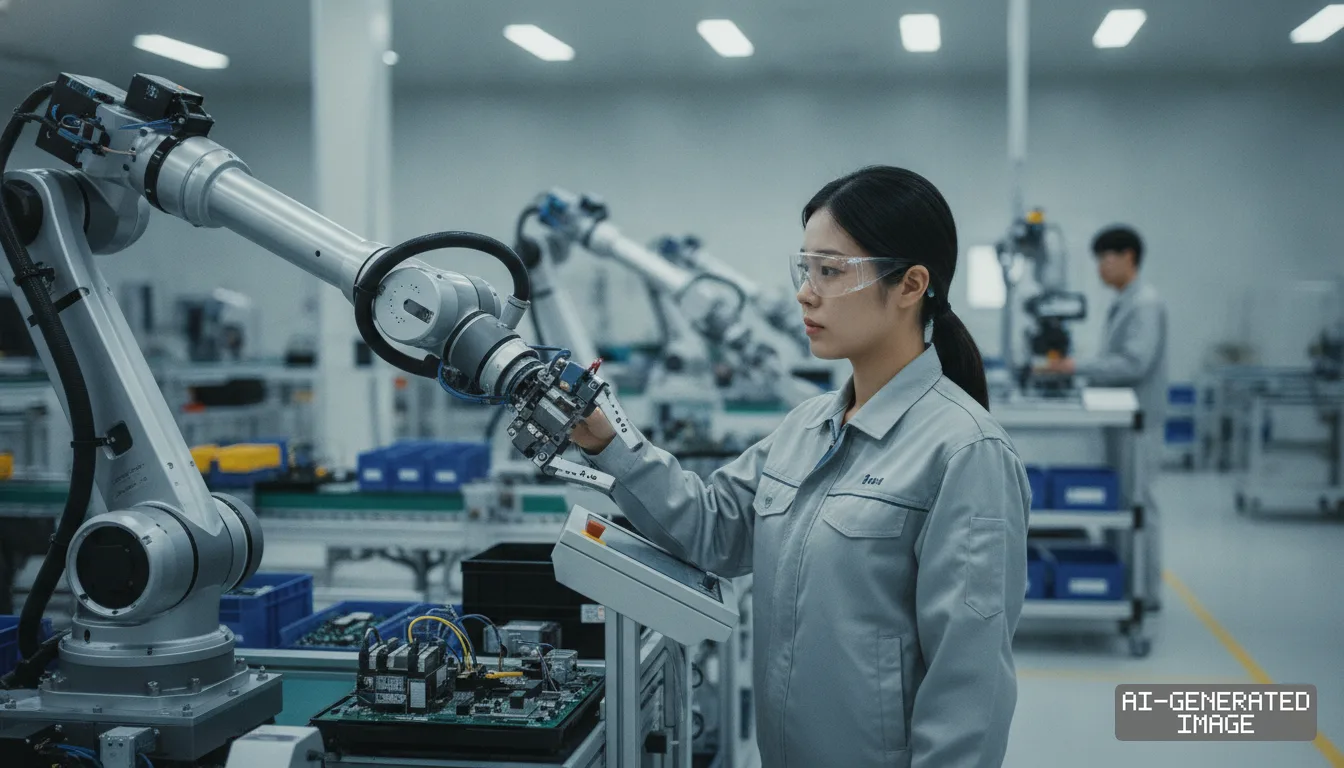
The RB-Y1 platform combines a wheeled mobile base with dual dexterous arms. The model targets factory automation research and logistics handling, where autonomous navigation across shared floor space remains critical.
Regulatory restrictions apply to ground platforms meeting specific physical criteria. The rule covers mobile machines operating autonomously or at a distance that weigh more than 2.0 kilograms (4.4 pounds).
Platforms must also incorporate environmental sensors, network connectivity above 200 kilobits per second, and software for navigation or remote control. Most commercial autonomous mobile robots fulfill all four technical conditions.
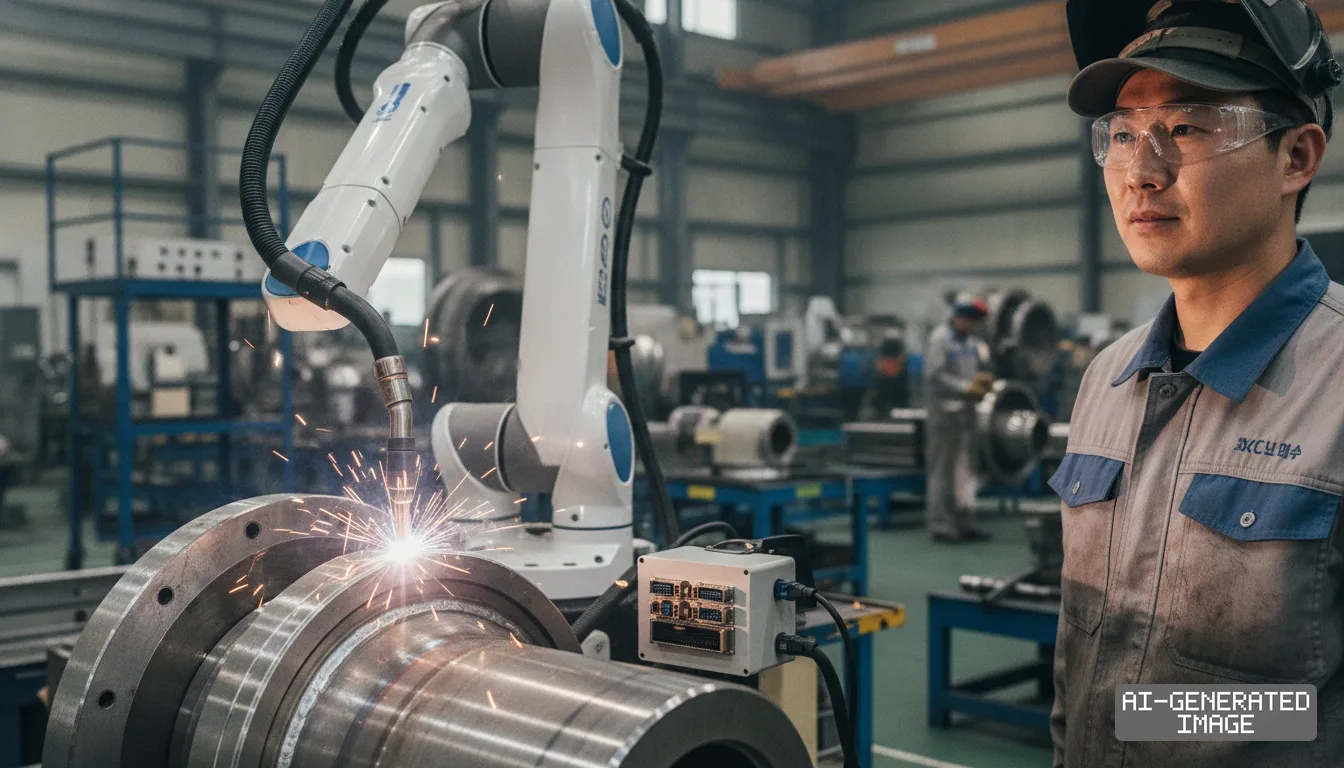
Fixed industrial robot arms remain exempt from the prohibition. The federal exclusion applies exclusively to stationary manipulators, such as articulated, delta, gantry or selective compliance assembly units bolted to factory floors.
Foreign manufacturers must obtain Conditional Approval from the Department of War to bypass the ban. That defense-reviewed waiver serves as the only administrative path to secure standard equipment authorization.
Regulatory authorities have already cleared initial foreign platforms under the mechanism. United States officials granted Conditional Approval on Sept. 9 to four robotic ground systems produced by Sweden's Husqvarna.
Rainbow Robotics submitted its regulatory filings in late September. The Korean manufacturer designed its application to resume RB-Y1 shipments without altering base system designs.
Domestic industry peers face comparable supply barriers. T-Robotics is preparing a separate waiver filing to protect an ongoing American delivery contract.
The T-Robotics agreement involves a 15 billion won ($11 million) contract. That supply deal provides automated mobile platforms to Ford Motor's BlueOval SK battery plant in Kentucky.
The Korea Association of AI and Robotics launched a dedicated support task force on Sept. 16, 2026. The industry group provides joint legal and certification guidance for domestic exporters.
The rule does not penalize existing hardware. Machines that obtained equipment authorization before July 28, 2026, remain legal to import, operate and maintain inside the United States.
Grandfathered platforms also retain remote support privileges. A separate regulatory allowance permits manufacturers to distribute security patches and firmware updates through Jan. 1, 2029.
Rainbow Robotics is reviewing future assembly strategies to mitigate geopolitical exposure. The company is considering contract manufacturing partnerships in North America, but has not approved plans to construct a standalone plant.
The company has not published a formal regulatory disclosure on Korea's DART repository, and Rainbow Robotics has not released a statement on its corporate newsroom.
Exporters must clear pending waiver reviews well before Jan. 1, 2028, when the primary application window for conditional market exceptions expires.
Impact map
How this development propagates across the region and out to global buyers.
| Event | Korea | China | Japan | Global impact |
|---|---|---|---|---|
| FCC Covered List robotics restriction | Rainbow Robotics and T-Robotics file waivers to protect North American order books | Unitree grandfathered on pre-July platforms while new export authorizations remain blocked | Fixed industrial arm builders retain full market access under stationary equipment exemptions | Advanced mobile robotics supply chains face a 65% domestic parts cost threshold under US procurement rules |
| FCC Covered List robotics restriction | Rainbow Robotics and T-Robotics file waivers to protect North American order books | Unitree grandfathered on pre-July platforms while new export authorizations remain blocked | Fixed industrial arm builders retain full market access under stationary equipment exemptions | Advanced mobile robotics supply chains face a 65% domestic parts cost threshold under US procurement rules |
In this story
- Companies
- Rainbow Robotics
- Tickers
- 277810.KQ
- Exposed
- T-RoboticsHusqvarna
- Policy
- Export ControlsEconomic Security
- Impact
- Supply ChainOrder BookCompliance
Track every Export Controls development → Track every Economic Security development →
Related briefings
- Bigwave Robotics partners with automation suppliers to scale US physical AI Also on Rainbow Robotics, Compliance, Order Book
- Fanuc previews 11-kg welding cobots for shipyards at Fabtech 2026 Also on Rainbow Robotics, Order Book
- SFA targets 95% unmanned logistics as chip gear sales double Also on Rainbow Robotics, Order Book
- Rainbow Robotics taps E Tech Group to expand US cobot fleet Also on Rainbow Robotics, Order Book
Sources
Primary documents
Reporting
Confidence: high — how we grade this
The documents behind this briefing are linked above. East Asia Brief produces its English text with AI assistance under human editorial review, and does not translate or republish other outlets' articles. See our methodology and AI policy. Spotted an error? Tell us.
The Morning Brief
What changed in Korean, Chinese and Japanese industry overnight — and what it means for your supply chain. One email, weekday mornings, US time. Free.
The Morning Brief is in preparation. Leave your address and we will write to you once — when the first issue is ready. Nothing before that.