Chinese private yards expand dual-fuel bulker berths as European owners accelerate green fleet renewal
Capital spending on mega drydocks and dual-fuel propulsion lines in Jiangsu and Liaoning secures high-capacity Newcastlemax orderbooks through 2029.
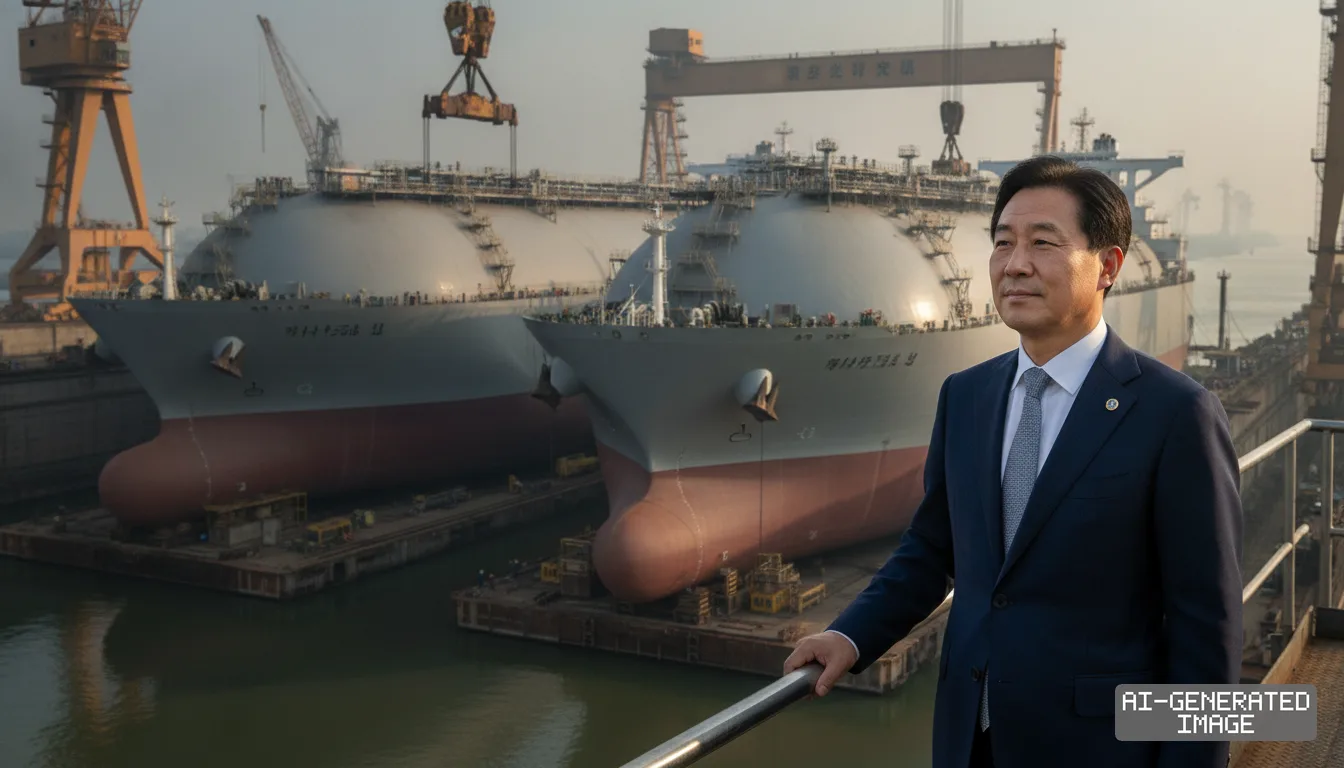
Private Chinese shipbuilders are accelerating the conversion and expansion of standard drydock berths into dedicated dual-fuel liquefied natural gas construction lines, capturing an influx of large dry bulk carrier orders from European shipowners navigating maritime decarbonization mandates. The structural pivot reflects a deliberate strategy by private yards to lock in multi-year orderbooks for 210,000-deadweight-ton Newcastlemax bulk carriers, a vessel class critical to long-haul iron ore and bauxite trade routes. As the European Union Emissions Trading System phases in compliance obligations for maritime transport and FuelEU Maritime imposes tightening greenhouse gas intensity targets on marine fuels, commercial fleet operators are shifting capital toward alternative-fuel tonnage. Chinese private yards have stepped into this demand vacuum by expanding mega drydocks, securing proprietary engine-building licenses, and offering delivery positions through 2029 that South Korean yards, occupied with high-margin membrane LNG carriers and ultra-large container ships, have largely vacated.
Jiangsu New Times Shipbuilding Co., Ltd. has led the capital deployment among private builders along the Yangtze River corridor. According to the company's official Environmental Impact Assessment filing for its New Energy Ship Smart Project (Phase I) in the Jingjiang Economic and Technological Development Zone, the yard committed an investment of 5 billion yuan ($690 million) to expand its green vessel manufacturing footprint. The project adds an intelligent manufacturing workshop, advanced block-assembly facilities, and an expansive fourth drydock measuring up to 700 meters in length. The physical dimensions allow the yard to build two large vessels or assemble multiple hull sections concurrently, directly targeting dual-fuel bulkers, tankers, and container vessels. Regulatory filings submitted to the U.S. Securities and Exchange Commission by Bermuda-based Himalaya Shipping Ltd. confirm the operational track record of this infrastructure, documenting the completion and delivery of 12 dual-fuel LNG Newcastlemax bulk carriers of 210,000 deadweight tons built by New Times Shipbuilding, all powered by high-pressure dual-fuel propulsion systems.
The expansion into dual-fuel Newcastlemax tonnage has also drawn non-traditional Chinese marine engineering companies into mainstream merchant shipbuilding. In an official regulatory disclosure filed with the Shenzhen Stock Exchange on April 23, 2026, Dajin Heavy Industry Co., Ltd. confirmed contracts totaling approximately $591 million for eight 210,000-deadweight-ton Newcastlemax bulk carriers. The transactions comprise four vessels for a Norwegian shipowner valued at approximately $294 million and four vessels for Greek operator Danaos Corp. valued at approximately $297 million, with deliveries scheduled across 2028 and 2029. Dajin Heavy Industry, historically focused on offshore wind foundations and project cargo transport, restructured shipyard fabrication space at its subsidiary Panjin Dajin Offshore Engineering to accommodate large commercial hull erection. The move demonstrates how private heavy industrial groups in northern China are repurposing heavy fabrication quays to capture overflow demand for alternative-fuel bulkers.
Industrial capacity additions in Liaoning Province reflect a parallel consolidation of yard and propulsion infrastructure. Following its acquisition and restructuring of the former STX Dalian shipbuilding facility in Changxing Island, Hengli Heavy Industry Group scaled its capital base through transactions verified in regulatory notices from its listed affiliate Guangdong Songfa Ceramics Co., Ltd., which recorded capital injections exceeding 3.9 billion yuan ($544 million) into the shipbuilding business. Hengli put its No. 1 Dry Dock measuring 741 meters in length and 135 meters in width into full serial production, enabling the concurrent assembly of multiple large-tonnage hulls. To remove propulsion delivery bottlenecks, Hengli brought its in-house marine engine manufacturing subsidiary online, producing low-speed two-stroke engines under international licenses capable of operating on LNG, liquefied petroleum gas, and ammonia. Integrating in-house marine engine assembly directly adjacent to hull erection docks reduces logistics lead times for cryogenic fuel equipment and mechanical installation.
Regional shipyard capacity has expanded further downstream in Jiangsu Province through targeted corporate investments. Yangzijiang Shipbuilding established Jiangsu Yangzi Hongda Ship Repairing & Manufacturing Co., Ltd. in Tongzhou Bay with a registered capital of $100 million, adding specialized engineering and dock capacity to support green high-tech ship construction, retrofits, and clean-fuel system integration. By deploying localized supply chains for Type C cryogenic fuel storage tanks, fuel gas supply systems, and shaft generators with power take-off solutions, private shipbuilders in Jiangsu have established predictable fabrication schedules for LNG-fueled dry bulk carriers.
For global shipowners, European charterers, and commodities traders, the operational consequence is a concentration of dual-fuel Newcastlemax manufacturing capacity inside private Chinese shipyards. While state-owned conglomerates under China State Shipbuilding Corporation maintain backlogs across naval programs, large gas carriers, and specialized merchant hulls, private yards have established modular, high-throughput assembly lines dedicated to 210,000-deadweight-ton dual-fuel bulkers. Shipowners contracting these vessels secure early compliance with international decarbonization regulations while locking in shipyard berths through the late 2020s. Fabrication schedules at Jingjiang, Panjin, and Dalian are set to commence initial steel cutting for the contracted 2028 delivery series in the first half of 2027.
Impact map
How this development propagates across the region and out to global buyers.
| Event | Korea | China | Japan | Global impact |
|---|---|---|---|---|
| Dual-fuel bulker berth expansion | berths reserved for LNG/boxships | private yards scale mega drydocks | niche high-efficiency bulkers | European owners secure green fleet slots |
In this story
- Companies
- Jiangsu New Times Shipbuilding Co.Ltd.Dajin Heavy Industry Co.Ltd.Hengli Heavy Industry GroupYangzijiang Shipbuilding Holdings Ltd.
- Tickers
- 002484.SZ603268.SSBS6.SI
- Exposed
- Himalaya Shipping Ltd.Danaos CorporationChina State Shipbuilding Corporation
- Policy
- Economic SecuritySubsidies
- Impact
- CapexOrder BookSupply Chain
Track every Economic Security development → Track every Subsidies development →
Related briefings
- Daifuku expands cleanroom transport backlogs as Asian chipmakers accelerate fab builds Also on Ltd., Order Book
- Japan Linear Guide Makers Expand Ultra-Clean Units for 2nm Fab Robotics Also on Ltd., Order Book
- Chinese heavy machinery plants install automated ultrasonic gantries to verify welds Also on Ltd.
- China State Shipyards Reconfigure Dry Docks for Dual-Fuel Mega-Boxships Also on China State Shipbuilding Corporation, Order Book
Sources
Primary documents
Reporting
Confidence: high — how we grade this
The documents behind this briefing are linked above. East Asia Brief produces its English text with AI assistance under human editorial review, and does not translate or republish other outlets' articles. See our methodology and AI policy. Spotted an error? Tell us.
The Morning Brief
What changed in Korean, Chinese and Japanese industry overnight — and what it means for your supply chain. One email, weekday mornings, US time. Free.
The Morning Brief is in preparation. Leave your address and we will write to you once — when the first issue is ready. Nothing before that.