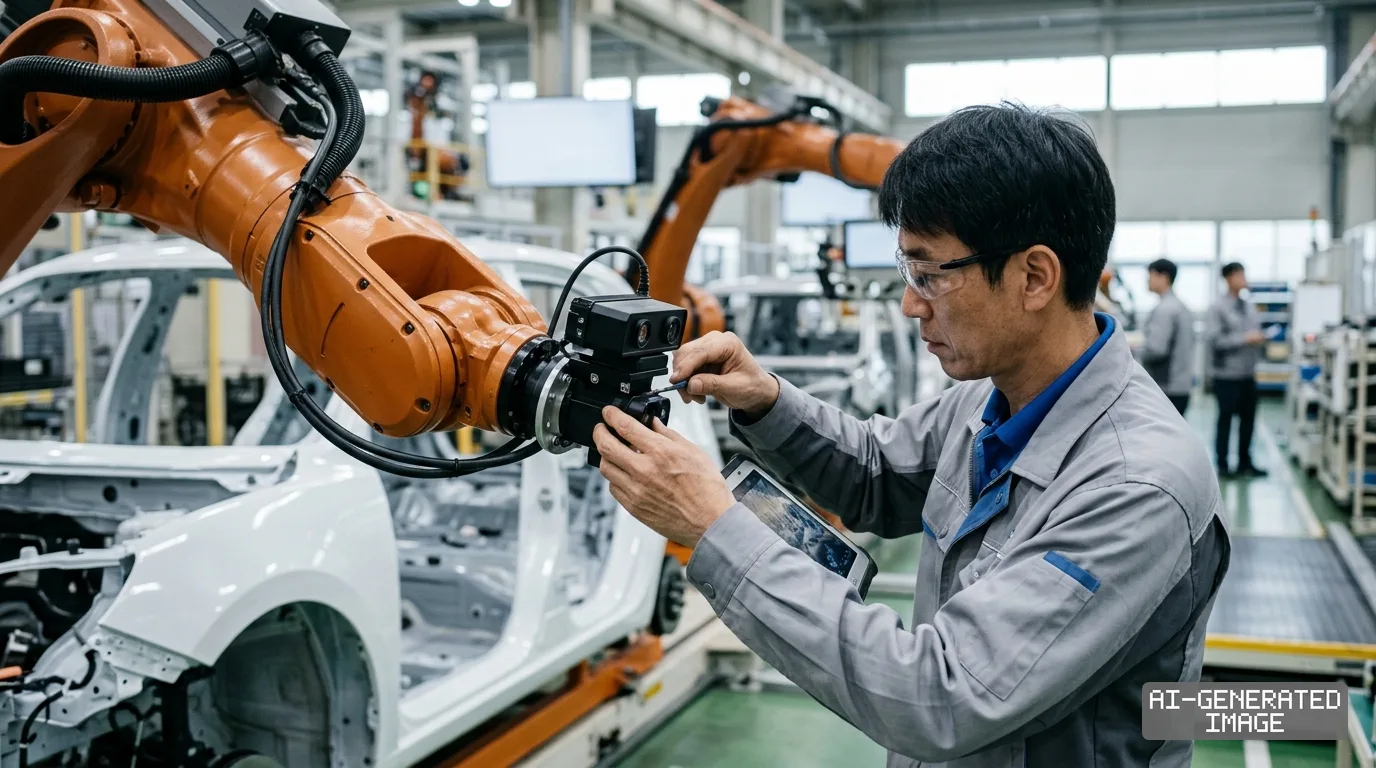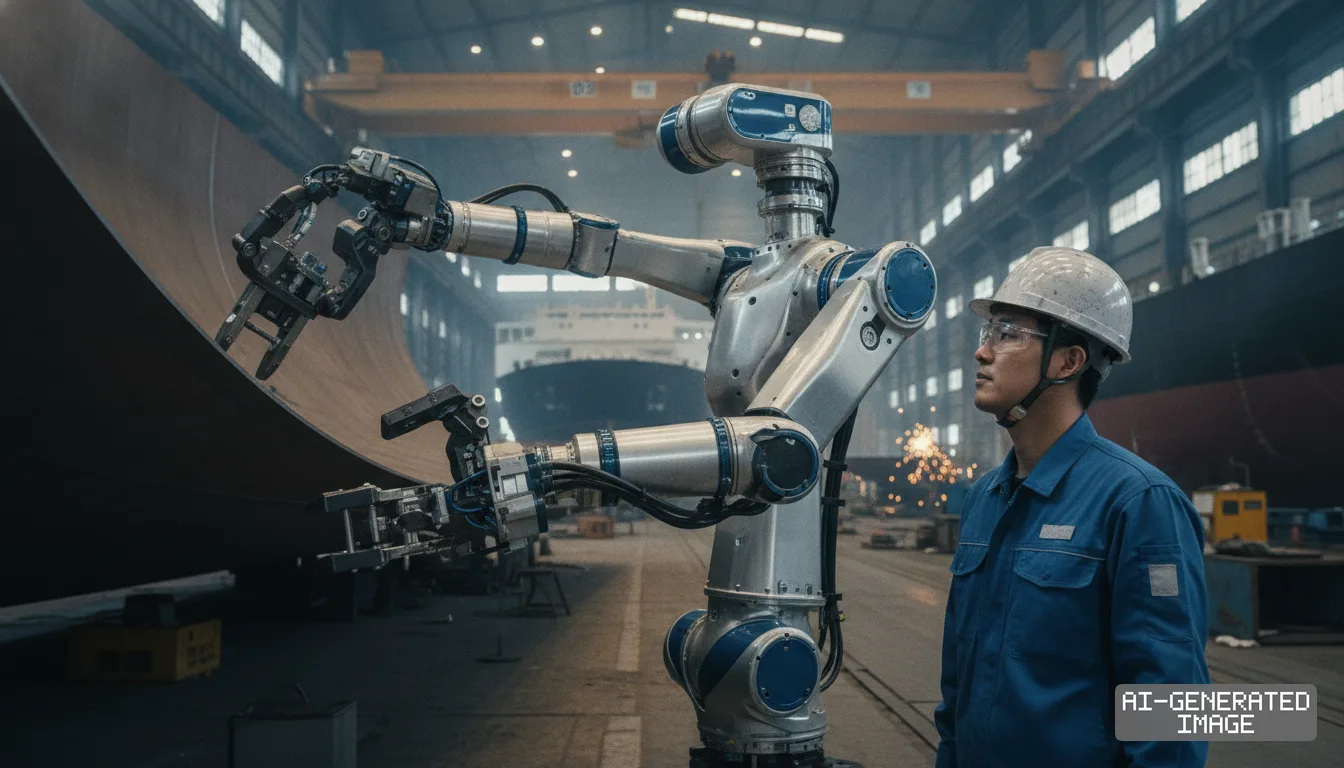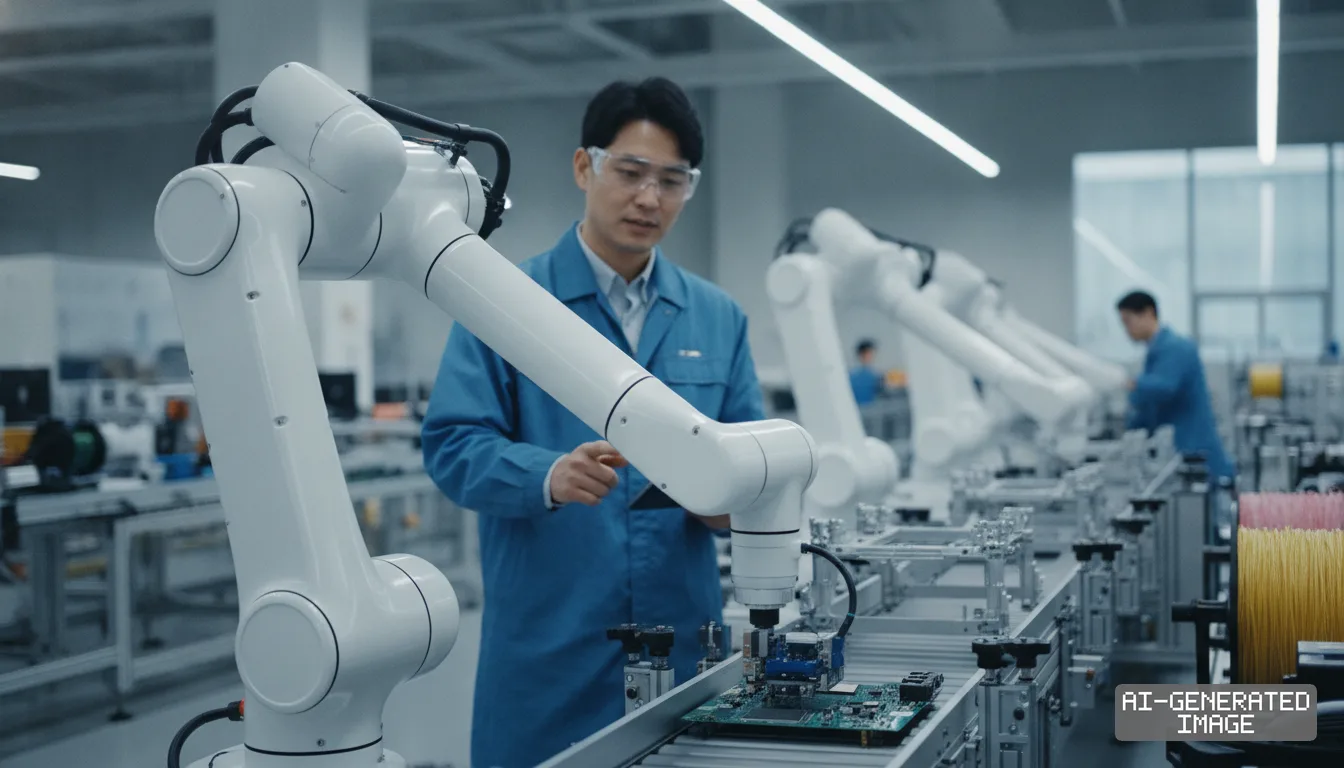
Hitachi and Fanuc form physical AI alliance to run factories
The partnership pairs HMAX Industry software with industrial robots across Hitachi plants before commercial deployment to automotive and chip makers in fiscal 2027.
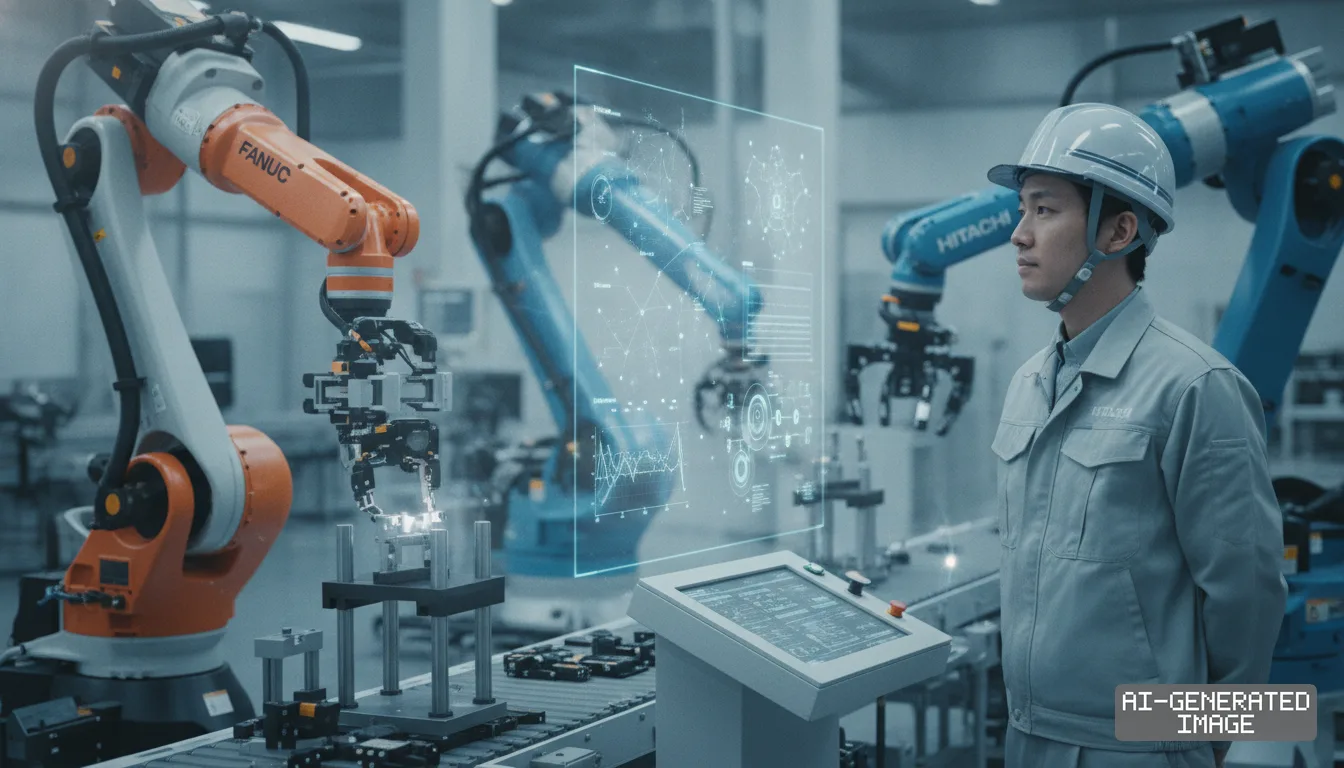
Hitachi and FANUC entered a strategic partnership on Oct. 1, 2026, to jointly develop and commercialize physical artificial intelligence systems for automated factory assembly lines across global industrial markets.
Physical AI refers to software models that perceive dynamic shop-floor conditions, make real-time operational judgments and execute mechanical tasks through industrial machines without pre-programmed movement scripts.
The companies disclosed no capital commitment or transaction value for the project, which aims to commercialize autonomous systems across nine manufacturing sectors starting in fiscal 2027.
The agreement combines Hitachi's HMAX Industry platform and custom edge semiconductors with FANUC's industrial robot fleet, connecting advanced digital reasoning directly to factory motion control hardware.
Hitachi President and Chief Executive Toshiaki Tokunaga and FANUC President and Chief Executive Kenji Yamaguchi finalized the partnership in Tokyo to address rising factory automation demands.
Manufacturers in North America and Western Europe face acute skilled labor shortages as reshoring policies push companies to build regional semiconductor, battery and automotive manufacturing plants.
Traditional automation systems rely on fixed routines that break down when component shapes vary, lighting shifts or production lines require immediate reconfiguration, engineers from both companies said.
Conventional simulations in virtual environments and imitation learning models fail to capture messy operational edge cases that occur during daily shop-floor manufacturing runs, the companies said.
Hitachi will turn several of its own factories in Japan's Ibaraki Prefecture into a live testbed under an internal validation program designated as Customer Zero.
The Ibaraki plants will run physical AI algorithms on production lines to measure component bin picking, parts manipulation and automated machinery setup changes, known in manufacturing as dandori.
Engineers will evaluate recognition precision, process defect counts and takt time — the calculated production pace needed to match buyer demand — across repetitive assembly cycles during the trials.
Hitachi's proprietary edge artificial intelligence processors will execute computational workloads locally on machine controllers, eliminating the network latency and bandwidth costs associated with off-site cloud computing.
FANUC builds automated machinery supported by more than 260 service hubs across more than 100 countries, giving the joint architecture immediate access to global factory floors.
Hitachi brings extensive operational technology contracts from its industrial machinery divisions, where corporate clients run legacy production systems that require automated software upgrades.
The initial joint deployments will target nine industrial markets: semiconductors, automotive, pharmaceuticals, healthcare, advanced materials, logistics, food production, shipbuilding and agriculture.
Automotive assembly plants require rapid tooling changes between vehicle models, an operation that currently demands hours of manual calibration by senior toolmakers.
Semiconductor packaging facilities require cleanroom robotic handling that can adjust grip tension and alignment instantaneously when delicate wafer substrates shift inside vacuum chambers.
Pharmaceutical packagers must verify vial seals and label positioning under varying line speeds, making autonomous visual inspection and mechanical sorting critical to preventing batch recalls.
Hitachi and FANUC aim to turn experienced factory worker know-how into autonomous software algorithms before Japan's aging demographic base forces skilled technicians into retirement.
The technical collaboration links software logic to robot arms but maintains distinct commercial boundaries between each company's broader digital product catalogs.
The companies did not state whether the partnership involves a separate joint venture entity, and neither company disclosed whether FANUC's FIELD system platform will integrate directly into Hitachi's Lumada architecture.
Hitachi and FANUC will conclude on-site validation across Hitachi Group plants by the end of fiscal 2026, ahead of commercial customer delivery scheduled for fiscal 2027.
The joint commercial rollout in fiscal 2027 will determine whether physical AI models can operate standard industrial robots on variable shop floors without specialized human programmers.
Impact map
How this development propagates across the region and out to global buyers.
| Event | Korea | China | Japan | Global impact |
|---|---|---|---|---|
| Factory physical AI alliance | domestic robot integrators face higher software standards in export markets | domestic industrial robot makers lose edge against self-adjusting assembly lines | Hitachi and FANUC establish proprietary hardware-software integration for 2027 export | Western reshoring plants gain autonomous robotics reducing skilled technician bottlenecks |
In this story
- Companies
- HitachiFANUC
- Tickers
- 6501.T6954.T
- Policy
- Economic Security
- Impact
- Supply ChainOrder Book
Track every Economic Security development →
Related briefings
- Fanuc and Google launch AI welding robot to read blueprints Also on Fanuc, Order Book
- Estun Automation completes buyout of robotics unit Codroid Also on Fanuc, Order Book
- FANUC widens CRX cobot palletizing to 40 kg as food plants automate heavy cases Also on FANUC, Order Book
- Bigwave Robotics partners with automation suppliers to scale US physical AI Also on FANUC, Order Book
Sources
Reporting
Confidence: medium — how we grade this
The documents behind this briefing are linked above. East Asia Brief produces its English text with AI assistance under human editorial review, and does not translate or republish other outlets' articles. See our methodology and AI policy. Spotted an error? Tell us.
The Morning Brief
What changed in Korean, Chinese and Japanese industry overnight — and what it means for your supply chain. One email, weekday mornings, US time. Free.
The Morning Brief is in preparation. Leave your address and we will write to you once — when the first issue is ready. Nothing before that.