Hitachi and FANUC Launch Physical AI Pact to Automate Plants
The partnership integrates Hitachi's HMAX Industry platform and custom edge chips into FANUC robots, targeting commercial rollouts across nine industrial sectors in fiscal 2027.
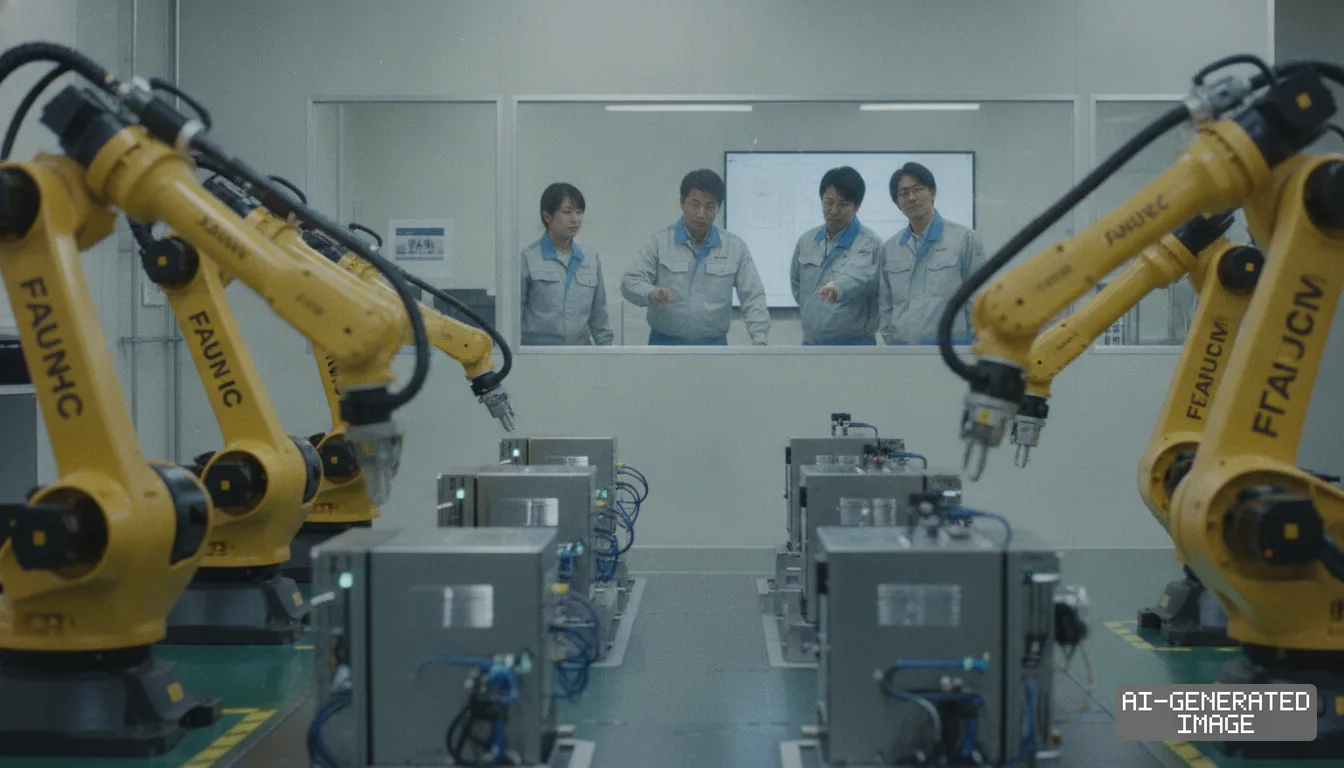
Hitachi and FANUC formally activated their physical AI joint development partnership on Oct. 5, 2026, combining edge semiconductors with industrial robots across live factory lines to automate high-variance assembly.
The alliance links Hitachi's industrial software with FANUC's hardware base, which includes over 1.1 million robots worldwide and accounts for roughly 20% of global industrial robot shipments.
The companies disclosed no capital commitment or transaction value for the project, which targets a commercial rollout across nine discrete manufacturing and process sectors in fiscal 2027, according to company releases.
Hitachi President and Chief Executive Toshiaki Tokunaga and FANUC President and Chief Executive Kenji Yamaguchi finalized the partnership in Tokyo following strategic pact documents signed Sept. 30.
Under the agreement, the two Japanese manufacturers will integrate Hitachi's HMAX Industry artificial intelligence software platform and proprietary edge semiconductors directly into FANUC's programmable industrial robots and motion controllers.
Physical artificial intelligence refers to software models that perceive dynamic shop-floor conditions, make real-time operational judgments and execute mechanical tasks through robotic hardware without pre-programmed movement scripts.
Standard industrial robotics rely on deterministic routines and rigid tooling fixtures that break down when component dimensions vary, ambient lighting shifts or production lines require immediate retooling between product batches.
Conventional imitation learning models and digital-twin simulations in virtual environments fail to capture the messy physical deviations that occur during daily shop-floor manufacturing runs, the companies said.
Hitachi designated its manufacturing facilities in Japan's Ibaraki Prefecture as the primary operational testbed under an internal validation program known as Customer Zero, the group said.
The Ibaraki production lines will feed empirical shop-floor telemetry directly into the neural models, allowing algorithms to continuously learn site-specific manufacturing rules from actual operating conditions.
Engineering teams will test physical AI performance on unstructured bin picking, where multi-axis robotic arms identify, grip and sort randomly oriented parts featuring irregular dimensions and inconsistent surface contours.
The live validation also targets automated line changeovers, enabling robotic systems to reconfigure tooling attachments and calibrate grip trajectories automatically when factories switch between different product models.
Technicians will measure four operational parameters across the test cells: part recognition accuracy, robot motion efficiency, takt time—the required production tempo per unit—and overall component defect rates.
The trials will evaluate Hitachi's custom edge AI semiconductor chips installed on robot controllers to execute on-device inference, bypassing cloud computing networks and eliminating external transmission lag.
Local edge processing allows robotic manipulators to adjust motion paths within milliseconds when detecting unexpected mechanical resistance or misaligned workpieces, preventing costly assembly line shutdowns, engineers said.
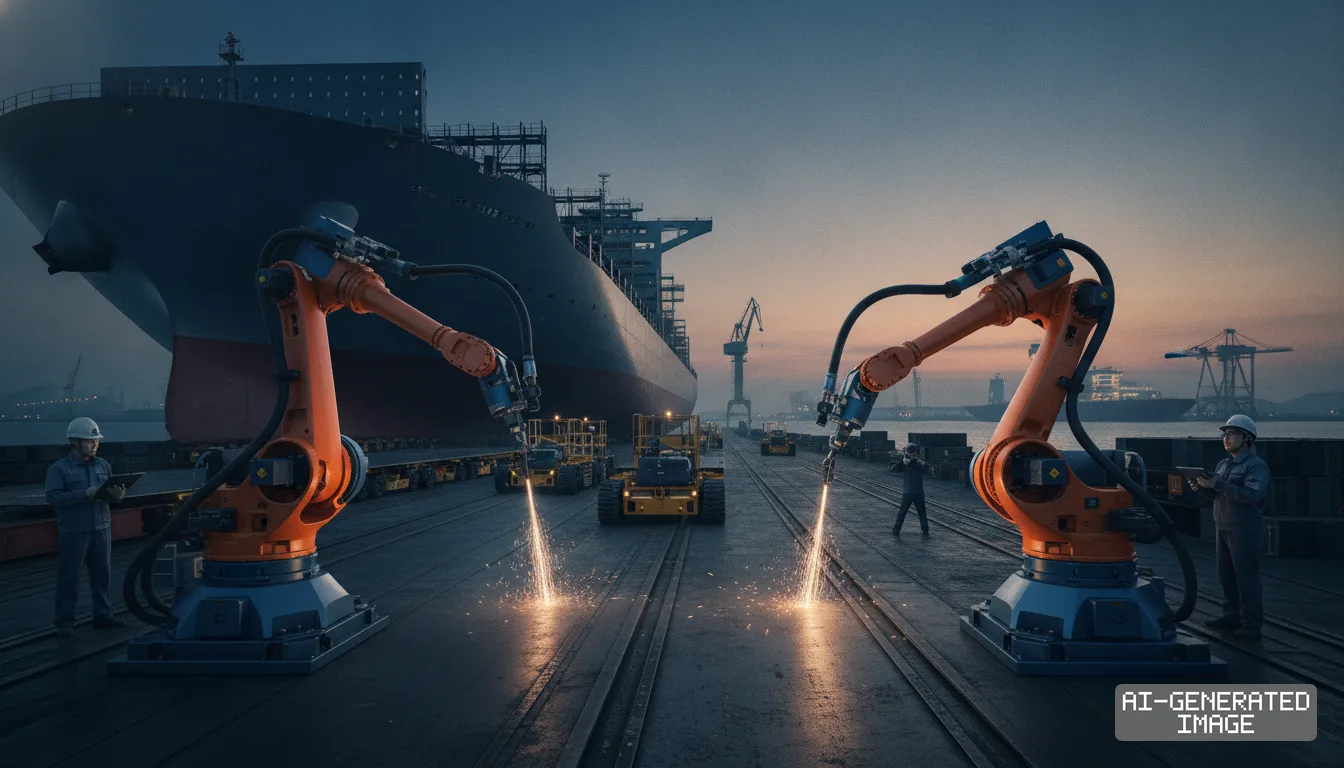
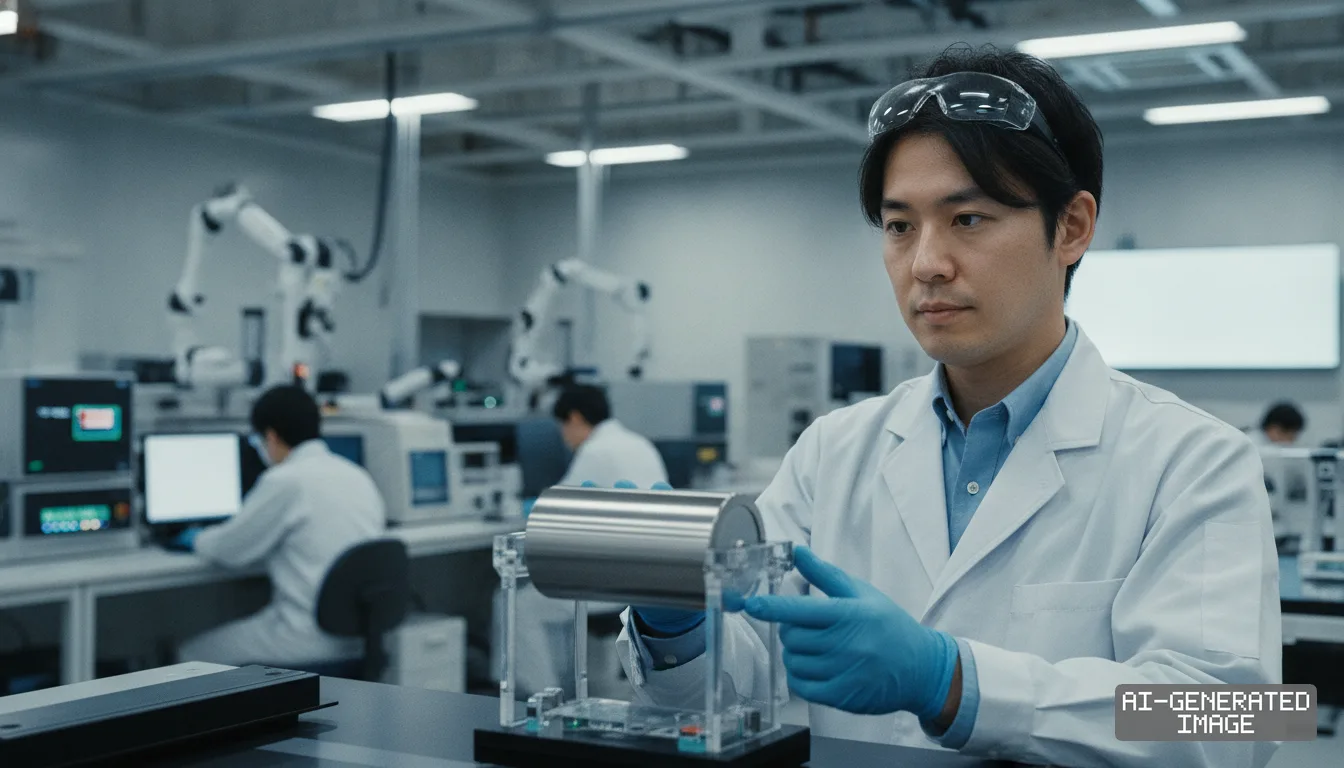
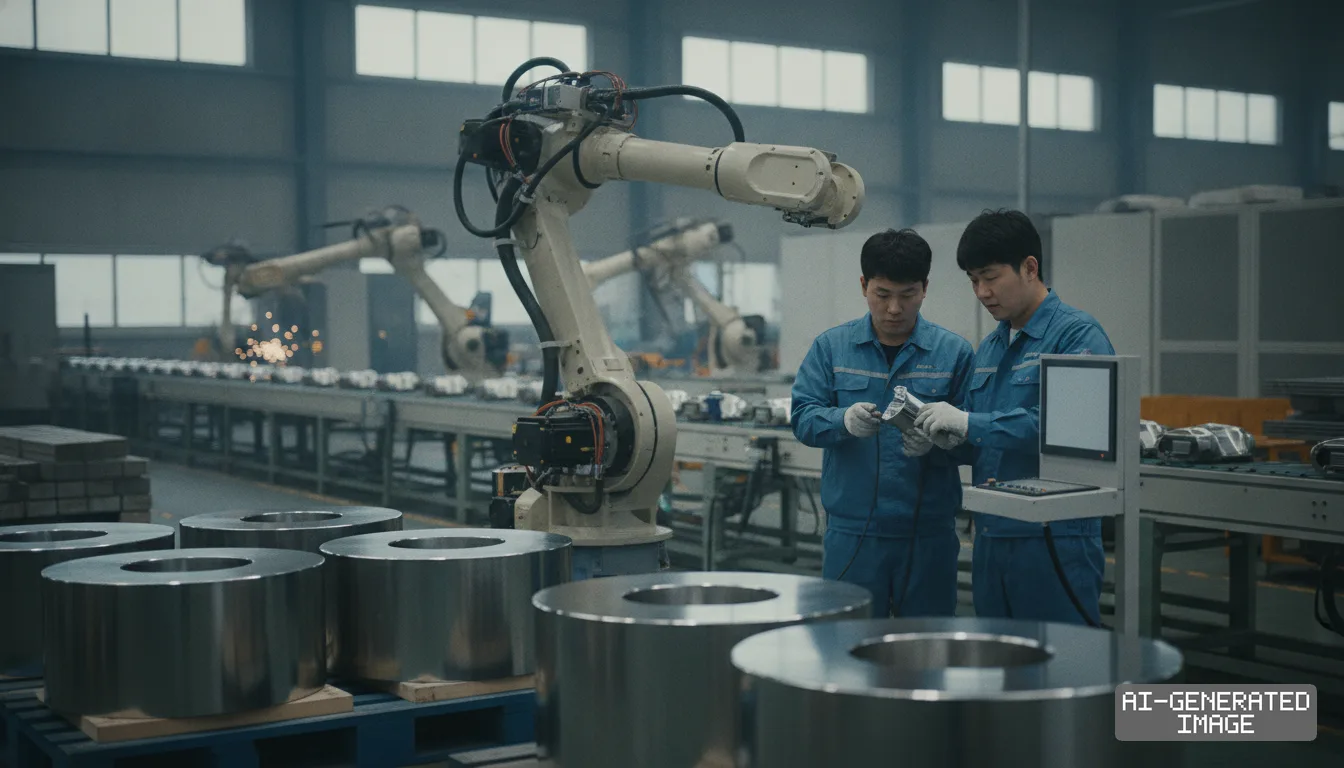
Hitachi and FANUC plan to market the commercialized systems to global manufacturers in semiconductors, pharmaceuticals, healthcare, advanced materials, automotive assembly, logistics, food processing, commercial shipbuilding and agriculture.
FANUC generated consolidated net sales of 857.8 billion yen ($5.8 billion) in the fiscal year ended March 31, 2026, supported by 10,040 employees across worldwide factory automation operations.
The company controls roughly 50% of the global computer numerical control software market, giving the joint venture direct hardware access to machine tool builders across North America, Europe and Asia.
Hitachi operates extensive industrial systems and power infrastructure units, positioning its HMAX Industry software suite to generate recurring digital revenue from automated factory retrofits and plant modernizations.
The automation initiative responds to severe industrial labor shortages in Japan and Western markets, where demographic aging and technician retirements threaten production capacity across precision engineering plants.
Encoding the tacit judgment of veteran craftsmen into algorithmic control loops allows plant operators to automate delicate assembly tasks that previously required years of manual worker apprenticeship.
Tokunaga said combining FANUC's robotic engineering with Hitachi's digital systems and operational technology domain knowledge would accelerate the deployment of autonomous systems across critical manufacturing sectors.
Yamaguchi said integrating physical AI capabilities directly into industrial robot controllers provides the mechanical adaptability required for next-generation flexible production lines across international customer facilities.
The joint announcement does not state whether Hitachi and FANUC plan to exchange equity stakes, and neither company has published a dedicated development capital expenditure budget.
Technical validation across the Ibaraki facilities will continue through the end of fiscal 2026, before joint commercial deployments to external industrial clients commence on April 1, 2027.
Impact map
How this development propagates across the region and out to global buyers.
| Event | Korea | China | Japan | Global impact |
|---|---|---|---|---|
| Factory physical AI commercialization | Domestic robotics developers face integrated Japanese hardware and software competition | Industrial robot suppliers encounter Japanese edge AI integration in high-precision lines | Hitachi and FANUC deploy Ibaraki testbed ahead of FY2027 commercial rollout | Factory operators across nine sectors gain autonomous changeovers to curb labor shortages |
In this story
- Companies
- HitachiFANUC
- Tickers
- 6501.T6954.T
- Policy
- Economic Security
- Impact
- Supply ChainCapexOrder Book
Track every Economic Security development →
Related briefings
- Hitachi and Fanuc form physical AI alliance to run factories Also on Hitachi, FANUC, Order Book
- Kawasaki Heavy advances 2030 target for AI humanoid robots Also on Fanuc, Order Book
- Fanuc previews 11-kg welding cobots for shipyards at Fabtech 2026 Also on Fanuc, Order Book
- Estun Automation completes buyout of robotics unit Codroid Also on Fanuc, Order Book
Sources
Reporting
Confidence: medium — how we grade this
The documents behind this briefing are linked above. East Asia Brief produces its English text with AI assistance under human editorial review, and does not translate or republish other outlets' articles. See our methodology and AI policy. Spotted an error? Tell us.
The Morning Brief
What changed in Korean, Chinese and Japanese industry overnight — and what it means for your supply chain. One email, weekday mornings, US time. Free.
The Morning Brief is in preparation. Leave your address and we will write to you once — when the first issue is ready. Nothing before that.