Panasonic develops humanoid robot batteries at Osaka lab
The Japanese electronics group is directing cylindrical cell research and factory AI toward bipedal machines, while confirming no commercial assembly contract is yet signed.
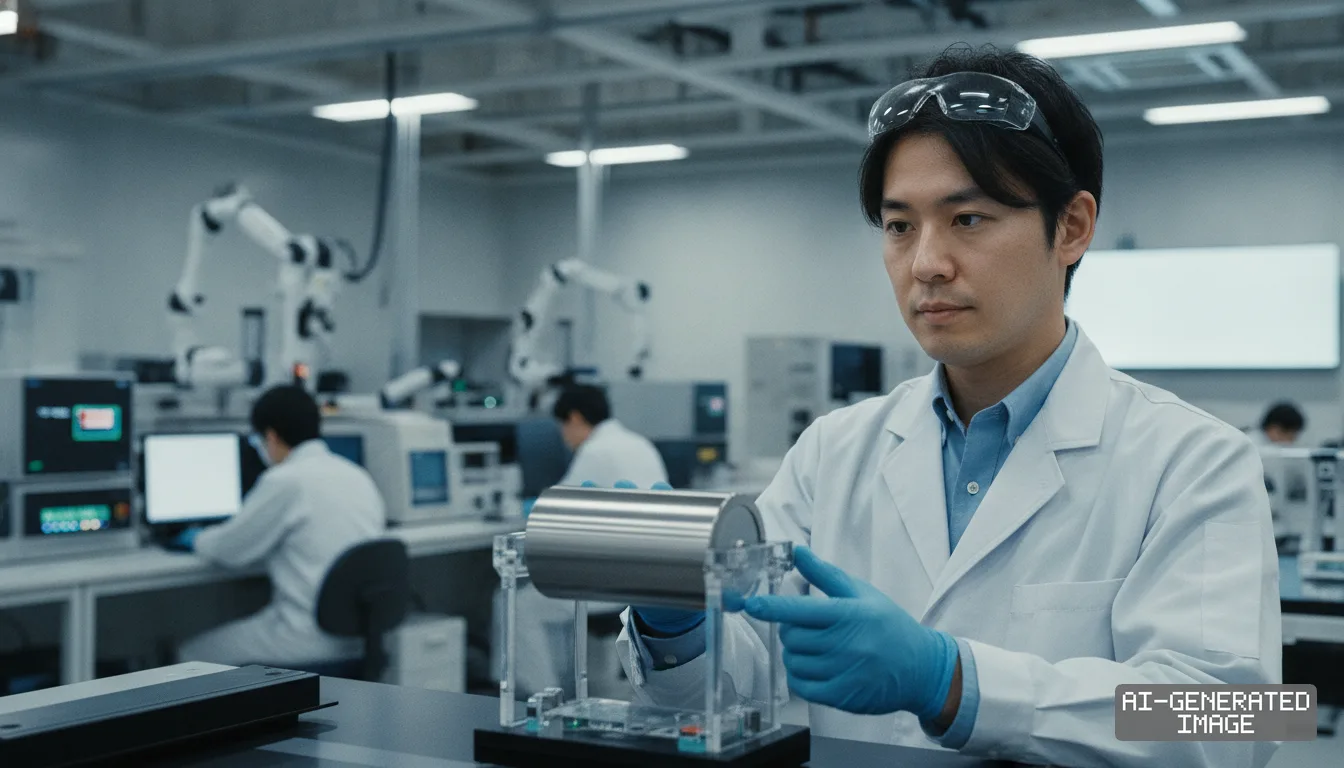
Panasonic Holdings anchored its humanoid robotics roadmap to specialized cylindrical battery cells on Oct. 5, 2026, while disclaiming near-term mass-production plans for finished bipedal machines.
The 24,500-square-meter Energy Innovation Square in Kadoma consolidates roughly 800 development personnel, representing the group’s primary domestic electrochemical research base.
Panasonic Energy designated humanoid robotics alongside electric vehicles as target applications for next-generation cells, seeking commercial traction over the next two to three years.
Industrial bipedal robots demand power sources that withstand mechanical shock while fitting narrow physical envelopes. Cylindrical cells provide structural rigidity that pouch and prismatic cells often lack.
Panasonic Energy Chief Technology Officer Shoichiro Watanabe said cylindrical formats allow flexible packaging inside the rounded limb contours and confined torso cavities of humanoid frames.
Watanabe said the company is accelerating cylindrical cell development specifically for robotics customers, expecting commercial business-to-business demand to mature between 2028 and 2029.
The battery unit is also preparing sample shipments of heat-resistant solid-state cells between October and December, targeting industrial sensors and robotic machinery operating up to 150 degrees Celsius.
Mass production of those solid-state cells will begin one to two years after customer sampling concludes, according to Watanabe.
Speculation regarding a fully integrated Panasonic humanoid robot intensified following statements from Panasonic Holdings Chief AI Officer Akira Sakakibara.
Sakakibara said the company aims to manufacture humanoid robots for factory and warehouse logistics by 2029, having initiated fundamental artificial intelligence model research.
Sakakibara emphasized that the company possesses no physical robot prototype ready for commercial disclosure, describing the project as an early exploratory initiative.
The distinction separates Panasonic’s component business from finished robot assemblers. Panasonic remains an industrial supplier rather than a consumer robotics vendor.
Panasonic Energy supplies roughly 10% of global electric vehicle battery capacity, primarily serving Tesla from plants in Japan and the United States.
Tesla builds its Optimus bipedal robot using proprietary actuators and internal software, relying on cylindrical cell architectures familiar to Panasonic’s manufacturing lines.
A shift toward robotics power packs offers Panasonic an outlet for high-nickel cylindrical production lines as electric vehicle sales growth moderates in North America.
Beyond electrochemical cells, Panasonic produces industrial servo motors, optical sensors and programmable logic controllers through its factory automation division.
Integrating those drive units with dedicated battery packs creates a modular subsystem that humanoid developers can buy off the shelf.
Chinese humanoid developers currently rely on domestic pouch cells and lithium iron phosphate packs to lower bill-of-materials costs for warehouse trials.
Those chemistries offer lower energy density than Japanese cylindrical nickel-cobalt-aluminum cells, limiting operational runtime between charging intervals to under three hours.
South Korean rivals LG Energy Solution and Samsung SDI have not announced dedicated humanoid battery cells, keeping capital expenditure focused on automotive supply contracts.
Panasonic’s Kadoma facility links with the Suminoe production development site in Osaka to build prototype cells on pilot manufacturing equipment.
The company has not published a capital expenditure figure, customer contract or technical specification sheet for a finished humanoid machine.
Sample shipments of Panasonic’s high-temperature cells conclude in December 2026, providing the first performance data to third-party robotics engineers.
Impact map
How this development propagates across the region and out to global buyers.
| Event | Korea | China | Japan | Global impact |
|---|---|---|---|---|
| Panasonic humanoid push | LG Energy Solution and Samsung SDI keep capex focused on automotive contracts without dedicated robotics cell lines | Domestic robot makers rely on lower-density LFP pouch cells while monitoring Japanese cylindrical pack integration | Panasonic Holdings aligns 800 Osaka researchers and factory servo components toward 2028 robotics demand | Industrial humanoid developers gain high-density cylindrical cell options as sample testing opens through December 2026 |
In this story
- Companies
- Panasonic HoldingsPanasonic Energy
- Tickers
- 6752.T
- Exposed
- Tesla
- Policy
- Economic Security
- Impact
- Supply ChainCapexOrder Book
Track every Economic Security development →
Related briefings
- Panasonic Energy opens Osaka battery hub for advanced cells Also on Panasonic Holdings, Panasonic Energy, Tesla
- Panasonic Energy unveils 150 C solid-state prismatic battery Also on Panasonic Holdings, Panasonic Energy, Tesla
- Panasonic Optimizes 4680 Battery Cell Yields at Wakayama Plant in Japan Also on Panasonic Holdings, Panasonic Energy, Tesla
- Japan certifies $2.4 billion in battery subsidies to lock in solid-state cell capacity Also on Panasonic Holdings, Order Book
Sources
Reporting
Confidence: medium — how we grade this
The documents behind this briefing are linked above. East Asia Brief produces its English text with AI assistance under human editorial review, and does not translate or republish other outlets' articles. See our methodology and AI policy. Spotted an error? Tell us.
The Morning Brief
What changed in Korean, Chinese and Japanese industry overnight — and what it means for your supply chain. One email, weekday mornings, US time. Free.
The Morning Brief is in preparation. Leave your address and we will write to you once — when the first issue is ready. Nothing before that.