LS Cable Backs Magnet Unit as China Curbs Hit Robot Motors
Regulatory reviews exceeding 45 business days for Chinese neodymium magnets stall articulated robot actuator lines, prompting Korean manufacturers to build alternative domestic supply chains.
LS Cable & System committed 150 billion won ($107 million) on Sept. 30, 2026 to build permanent magnet manufacturing capacity as Chinese export licensing delays snarled servomotor supplies for industrial robots.
The South Korean wire and materials manufacturer said in a regulatory filing that it will acquire 150 million shares of subsidiary Korea Motion Works. The transaction secures a 100% stake to build a finished permanent magnet factory in Gumi.
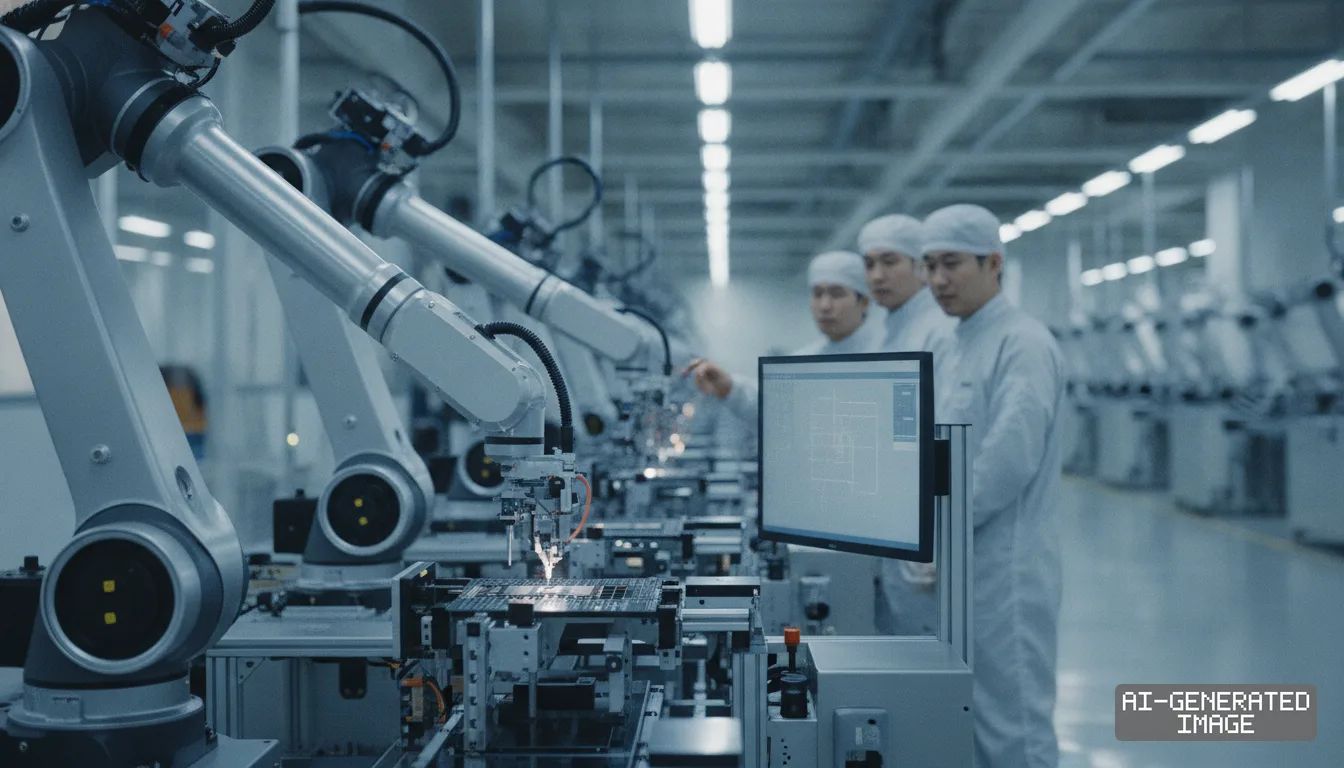
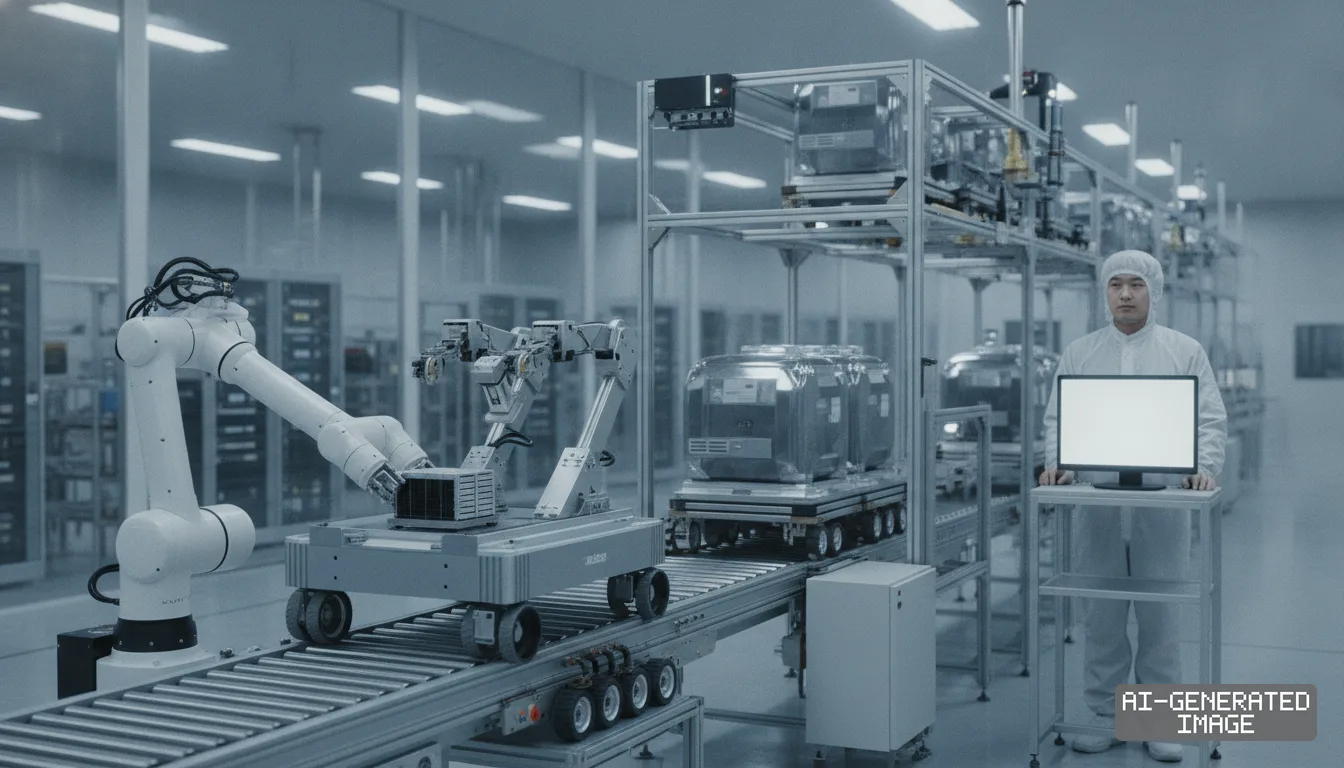
High-precision articulated robots require between 300 and 500 grams of heavy-rare-earth-doped neodymium-iron-boron (NdFeB) magnets inside each joint servomotor. Without those magnetic cores, robot actuators lose the torque density needed for high-speed manufacturing lines.
Global component makers are seeing shipments stall because review windows under China's dual-use export licensing regime now routinely exceed 45 business days per order. Nominal clearance took fewer than 15 days before recent administrative tightenings took hold.
China's Ministry of Commerce and the General Administration of Customs established the current controls in Announcement No. 18 of 2025, issued April 4, 2025. That decree mandated individual export permits for magnets containing dysprosium and terbium.
Dysprosium and terbium allow permanent magnets to resist demagnetization at temperatures above 150 degrees Celsius. Industrial robots generating continuous torque inside automotive assembly and semiconductor cleanrooms cannot operate without those heavy-rare-earth additives.
Chinese authorities expanded administrative scrutiny on Jan. 6, 2026 by publishing the 2026 Dual-Use Items and Technologies Import and Export Licensing Catalogue. That registry codified specific customs tariff codes for NdFeB alloys and tightened port-of-exit inspections.
The administrative choke point has driven up delivery lead times across the robotics hardware chain. Industrial servomotor suppliers have had to push back customer delivery schedules by two to three months, raising carrying costs for automated factory builders.
To counter the procurement logjam, LS Cable & System will disburse its 150 billion won capital injection to Korea Motion Works in installments through Dec. 31, 2026. The plant will supply finished magnets directly to domestic industrial motor makers.
Affiliate LS Eco Energy unveiled a parallel upstream investment on Sept. 30, 2026. The cable maker said it will spend 11.6 billion won ($8.3 million) to construct a rare-earth metal processing facility in Vietnam.
The plant at the LSCV manufacturing complex in Ho Chi Minh City will produce 240 metric tons of samarium metal annually. That volume supports production of approximately 700 to 1,000 tons of samarium-cobalt (SmCo) permanent magnets.
Samarium-cobalt magnets retain stability at extreme temperatures in defense and precision industrial motors where standard magnets degrade. Trial production at the Ho Chi Minh City plant is scheduled to begin in Dec. 2026, the company said.
Feedstock will arrive from Australia's Lynas Rare Earths, the only commercial rare-earth separator operating outside China. LS Eco Energy and Lynas deepened that procurement link in July 2026 by mutually acquiring 30 billion won of convertible bonds.
LS Eco Energy also plans to broaden Vietnamese processing lines to produce dysprosium, terbium and neodymium-praseodymium metals. The structure establishes a non-China chain running from Lynas extraction to Vietnamese metallization and Korean magnet sintering.
Downstream equipment makers face compounding pressure from Beijing's secondary trade directives. China's Ministry of Commerce issued Announcement No. 61 and Announcement No. 62 on Oct. 9, 2025 to curb outbound technology and offshore rare-earth utilization.
Announcement No. 62 prohibited the transfer of permanent magnet fabrication and sintering technologies outside China. Announcement No. 61 introduced extraterritorial licensing requirements for foreign products that contain more than 0.1% Chinese rare-earth content by value.
Enforcement of the 0.1% extraterritorial value threshold remains temporarily suspended under a grace agreement that expires Nov. 10, 2026. Motor manufacturers face immediate export compliance reviews once that waiver period ends.
Western defense procurement rules are accelerating the separation of commercial and military magnet supply chains. The United States Department of Defense will prohibit Chinese-origin rare earths in samarium-cobalt magnets down to the raw-material stage starting in Jan. 2027.
China's Ministry of Commerce published no new standalone export control notice on Sept. 30, and Chinese authorities have not documented fresh administrative changes specifically targeting servomotor parts. The current bottleneck reflects cumulative enforcement delays under existing rules.
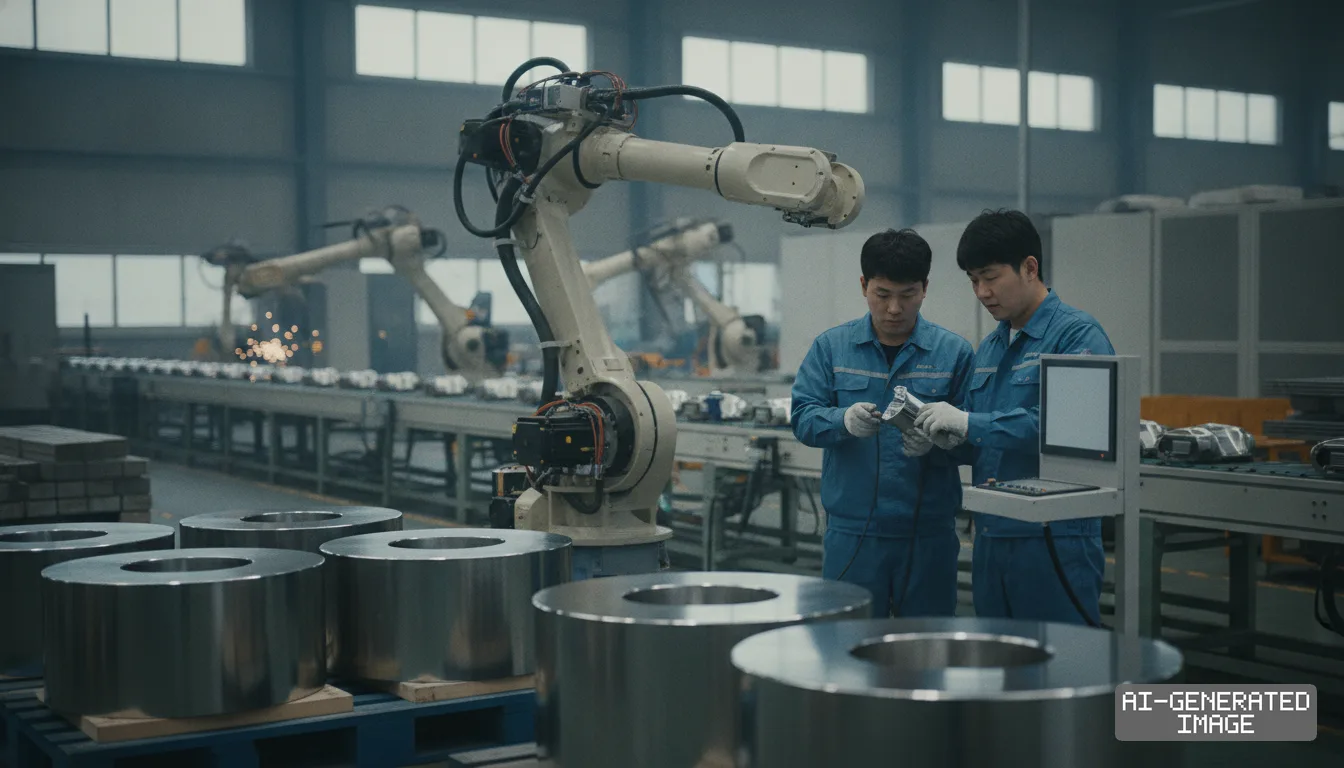
Articulated robot arms require six or more servomotors each, leaving automated production systems exposed to single-component delivery delays. Component buyers are monitoring domestic pilot production in Gumi and Ho Chi Minh City ahead of commercial line commissioning.
In this story
- Companies
- LS Cable & SystemLS Eco Energy
- Tickers
- 229640.KS
- Exposed
- Lynas Rare Earths
Related briefings
- LS Eco Energy builds Vietnam samarium line as US rules loom Also on LS Cable & System, LS Eco Energy, Lynas Rare Earths
- Dysprosium prices jump outside China as buyers split supply Also on Lynas Rare Earths
- China yttrium export curbs squeeze Western chip toolmakers Also on Lynas Rare Earths
- Lynas buys Meteoric for $672M to control Brazil rare earths Also on Lynas Rare Earths
Sources
Primary documents
Reporting
Confidence: high — how we grade this
The documents behind this briefing are linked above. East Asia Brief produces its English text with AI assistance under human editorial review, and does not translate or republish other outlets' articles. See our methodology and AI policy. Spotted an error? Tell us.
The Morning Brief
What changed in Korean, Chinese and Japanese industry overnight — and what it means for your supply chain. One email, weekday mornings, US time. Free.
The Morning Brief is in preparation. Leave your address and we will write to you once — when the first issue is ready. Nothing before that.