China yttrium export curbs squeeze Western chip toolmakers
Ultra-high purity yttrium oxide surged 140-fold to $850 a kilogram as plasma etch chamber coating shortages delay wafer fab tool deliveries.
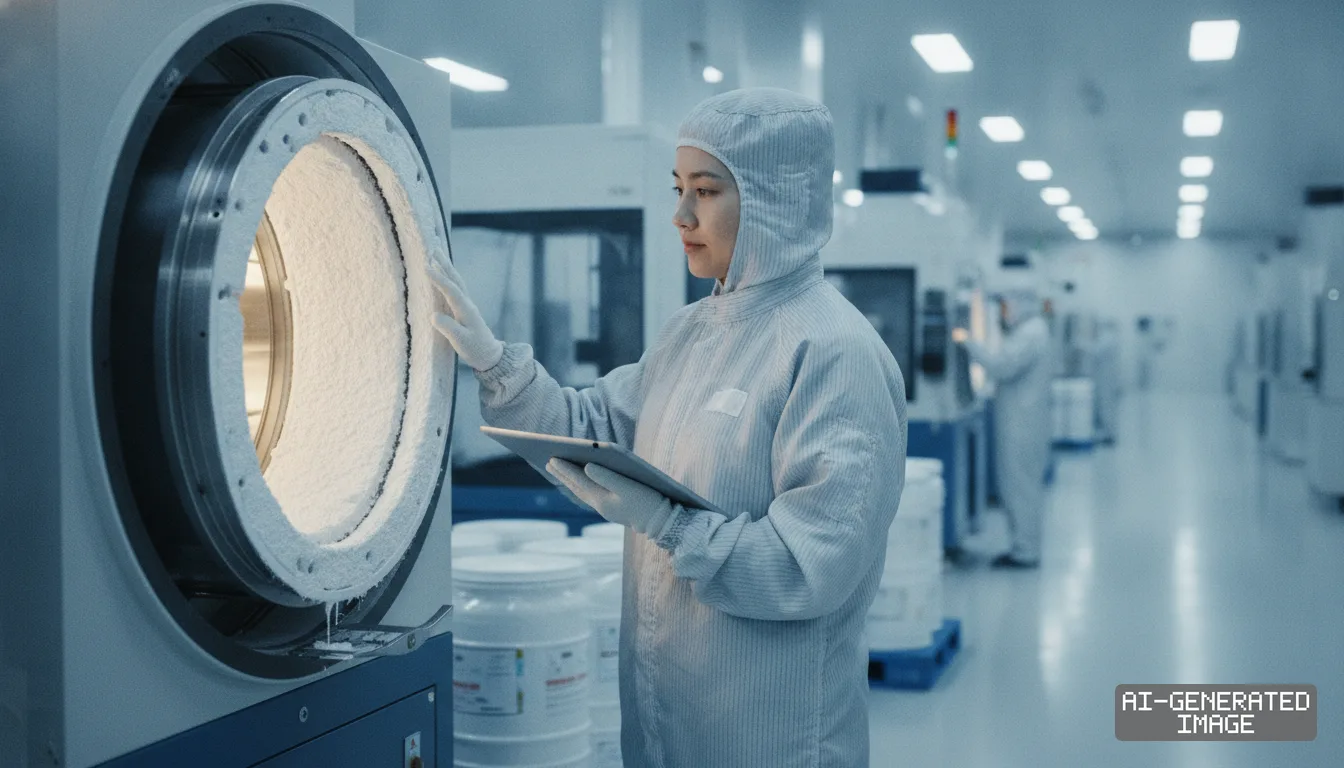
Western semiconductor equipment makers faced acute delivery bottlenecks on Oct. 3, 2026, as Chinese export licensing curbed shipments of high-purity yttrium oxide required for plasma etch reaction chambers.
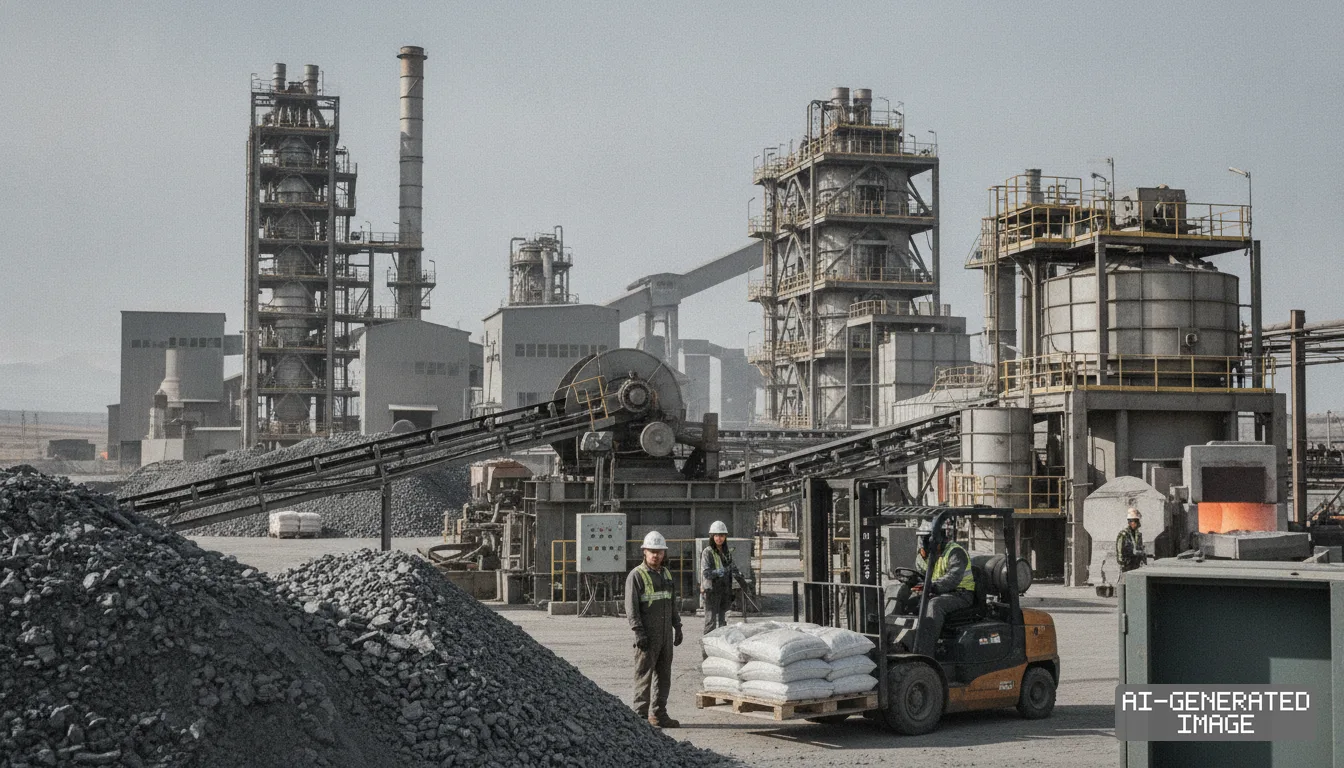
Yttrium is a heavy rare earth element used to spray corrosion-resistant ceramic shields inside wafer etch tools. China controls roughly 99% of global separation and refining capacity for the material.
Spot prices for five-nines and six-nines ultra-high purity yttrium oxide reached $850 a kilogram in 2026. The price represents a 140-fold surge from $6 a kilogram before export controls took effect.
China's Ministry of Commerce and the General Administration of Customs enacted the curbs under Announcement No. 18 on April 4, 2025. The decree mandated dual-use export licenses for yttrium metal, oxides and sputtering targets.
Beijing tightened those restrictions on Oct. 9, 2025, under Announcement No. 62. That directive prohibited the transfer of proprietary solvent extraction and separation technologies used to process heavy rare earths.
The United States maintains 100% net import reliance on foreign yttrium, according to the U.S. Geological Survey. Direct shipments from China represent 70% of American consumption, and indirect flows lift total exposure to 93%.
Japan's yttrium oxide imports plunged 74% year-on-year to 204 metric tons in the first half of 2026. Trade data from Japan's Ministry of Finance recorded zero inbound shipments from China in June.
In wafer fabrication, dry etch systems inject reactive halogen gases such as chlorine and fluorine to carve nanoscale patterns on silicon. Those corrosive chemistries rapidly erode bare metal and quartz chamber surfaces.
Toolmakers coat reaction chamber walls with yttrium oxide and yttrium oxyfluoride ceramics. The thermal barrier coatings prevent micro-particle shedding that causes fatal circuit defects during advanced logic and high-bandwidth memory production.
Applied Materials Inc. uses yttrium ceramic coatings on internal chambers across its Centura etch product line. Replacement components now face extended procurement lead times, raising operating costs across the company's semiconductor systems unit.
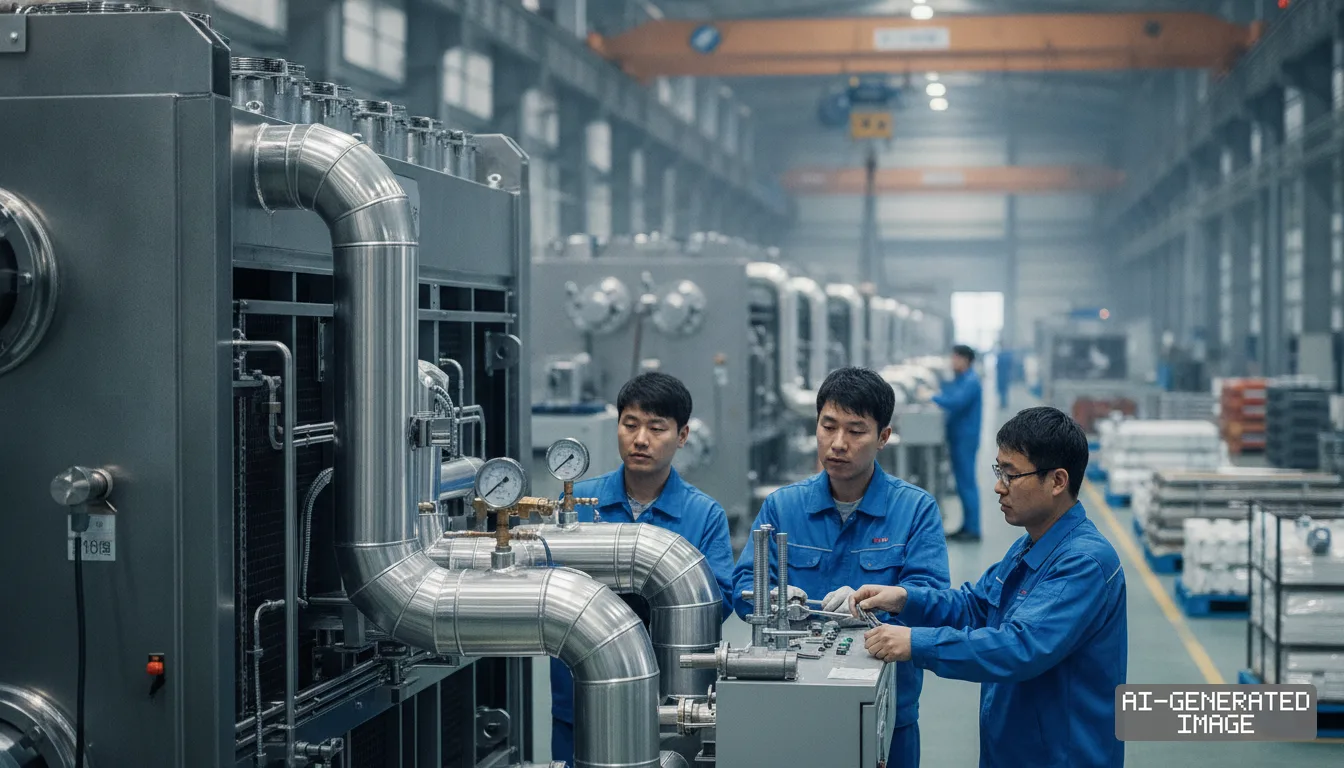
Lam Research Corp. relies on high-purity yttrium oxyfluoride coatings for its dielectric and conductor etch systems. Chamber maintenance intervals shorten without fresh coatings, reducing cleanroom tool availability for leading-edge chip fabricators.
Domestic Chinese buyers purchase yttrium oxide at roughly $7.70 a kilogram, trade records show. Western equipment vendors pay more than 100 times that amount in Rotterdam and Singapore bonded warehouses.
Drop-in chemical substitutes do not exist for high-density etch environments, materials engineers at Western toolmakers said. Zirconia and alumina coatings degrade four times faster when exposed to fluorine plasma bombardment.
Japan's Ministry of Economy, Trade and Industry committed a 17.5 billion yen ($120 million) grant to Shin-Etsu Chemical Co. The subsidy covers half of a 35 billion yen rare earth separation facility in Fukui Prefecture.
Shin-Etsu plans to refine heavy rare earths at the Fukui site to insulate domestic component makers from external supply shocks. Commercial shipments from the new separation lines are not scheduled to ramp before 2028.
The U.S. Department of Energy and METI convened bilateral consultations on Sept. 25 to establish non-Chinese refining partnerships. Officials evaluated joint recycling facilities and strategic buffer stocks to shield allied supply lines.
Commercial separation projects outside China face multi-year construction and qualification timelines. Australia's Lynas Rare Earths will not supply qualified yttrium oxide before 2028, leaving equipment makers dependent on existing Western inventories.
Semiconductor-grade coatings require five-nines purity thresholds that take component fabricators 12 to 18 months to certify. Toolmakers cannot swap suppliers without running exhaustive qualification trials on live wafer lines.
Chinese trade authorities process export permits on a discretionary case-by-case basis. Review periods regularly extend beyond the nominal 45-day statutory window to more than 90 days, international trading firms said.
The Chinese commerce ministry has not published approval rates, average review timelines or rejected volume figures for export license applications submitted by Western semiconductor equipment makers.
Export licenses issued under China's dual-use quota system face administrative review on Nov. 10, 2026. Bilateral critical mineral delegates from Washington and Tokyo meet Nov. 12 to assess emergency reserve levels.
Impact map
How this development propagates across the region and out to global buyers.
| Event | Korea | China | Japan | Global impact |
|---|---|---|---|---|
| yttrium export controls | Samsung and SK hynix monitor etch tool deliveries from US equipment suppliers | Domestic refiners retain $7.70 per kg yttrium oxide, withholding 99% of global capacity | Shin-Etsu builds 35 billion yen Fukui refinery backed by 17.5 billion yen METI grant | Western etch tool lead times double as 5N yttrium oxide trades at 140 times pre-control levels |
In this story
- Companies
- Applied MaterialsLam ResearchShin-Etsu Chemical
- Tickers
- AMATLRCX4063.T
- Exposed
- Lynas Rare Earths
- Policy
- Export ControlsSubsidies
- Impact
- Supply ChainCost StructureCompliance
Track every Export Controls development → Track every Subsidies development →
Related briefings
- Samsung denies Chinese tool testing as US tightens fab controls Also on Applied Materials, Lam Research, Export Controls
- ASML expands Japan workforce to 700 to support Rapidus 2nm and TSMC fabs Also on Applied Materials, Lam Research, Cost Structure
- Skytech opens TSMC-backed advanced process lab to speed chip tool verification Also on Applied Materials, Lam Research, Compliance
- Japan Linear Guide Makers Expand Ultra-Clean Units for 2nm Fab Robotics Also on Applied Materials, Lam Research
Sources
Primary documents
Reporting
Confidence: high — how we grade this
The documents behind this briefing are linked above. East Asia Brief produces its English text with AI assistance under human editorial review, and does not translate or republish other outlets' articles. See our methodology and AI policy. Spotted an error? Tell us.
The Morning Brief
What changed in Korean, Chinese and Japanese industry overnight — and what it means for your supply chain. One email, weekday mornings, US time. Free.
The Morning Brief is in preparation. Leave your address and we will write to you once — when the first issue is ready. Nothing before that.