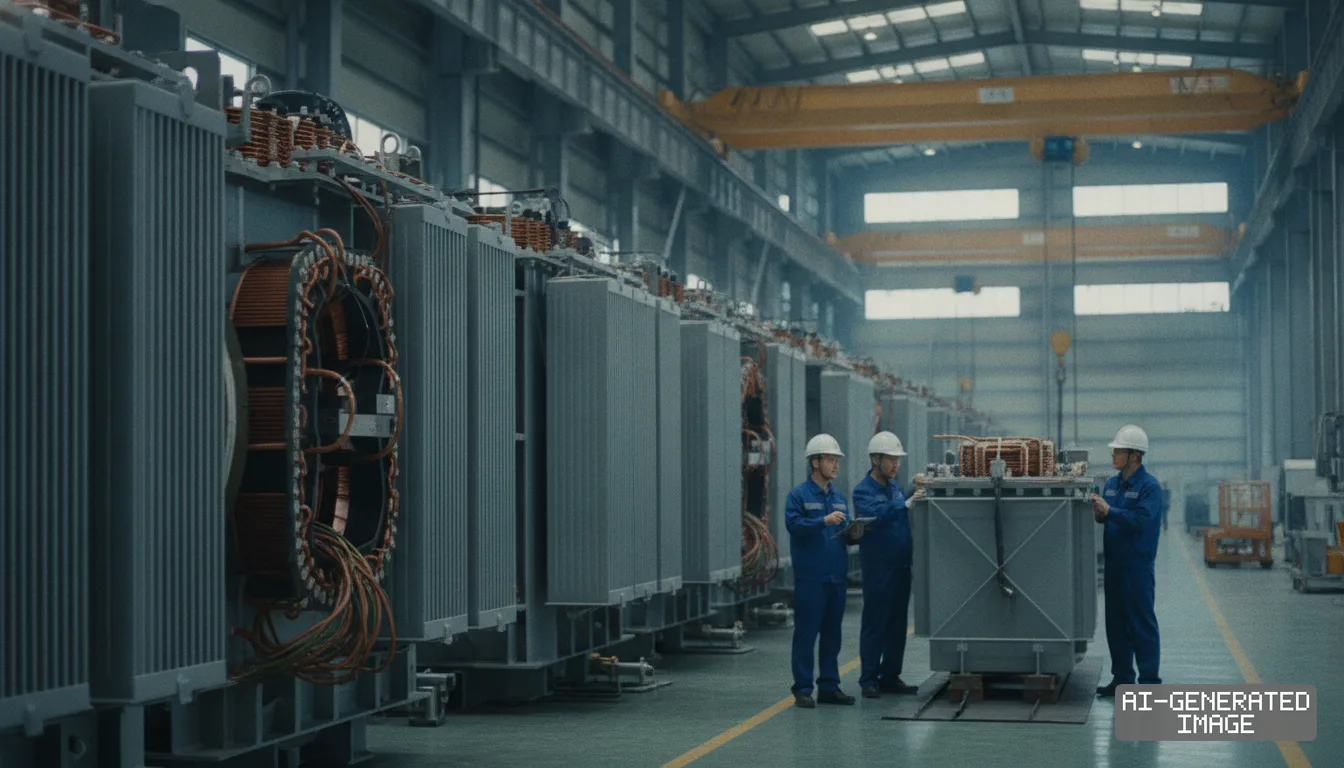
LG Electronics adds chiller plants in US and Korea for AI cooling
A 150 billion won investment in Virginia and domestic sites targets thermal bottlenecks as data center power requirements climb toward 420 gigawatts.
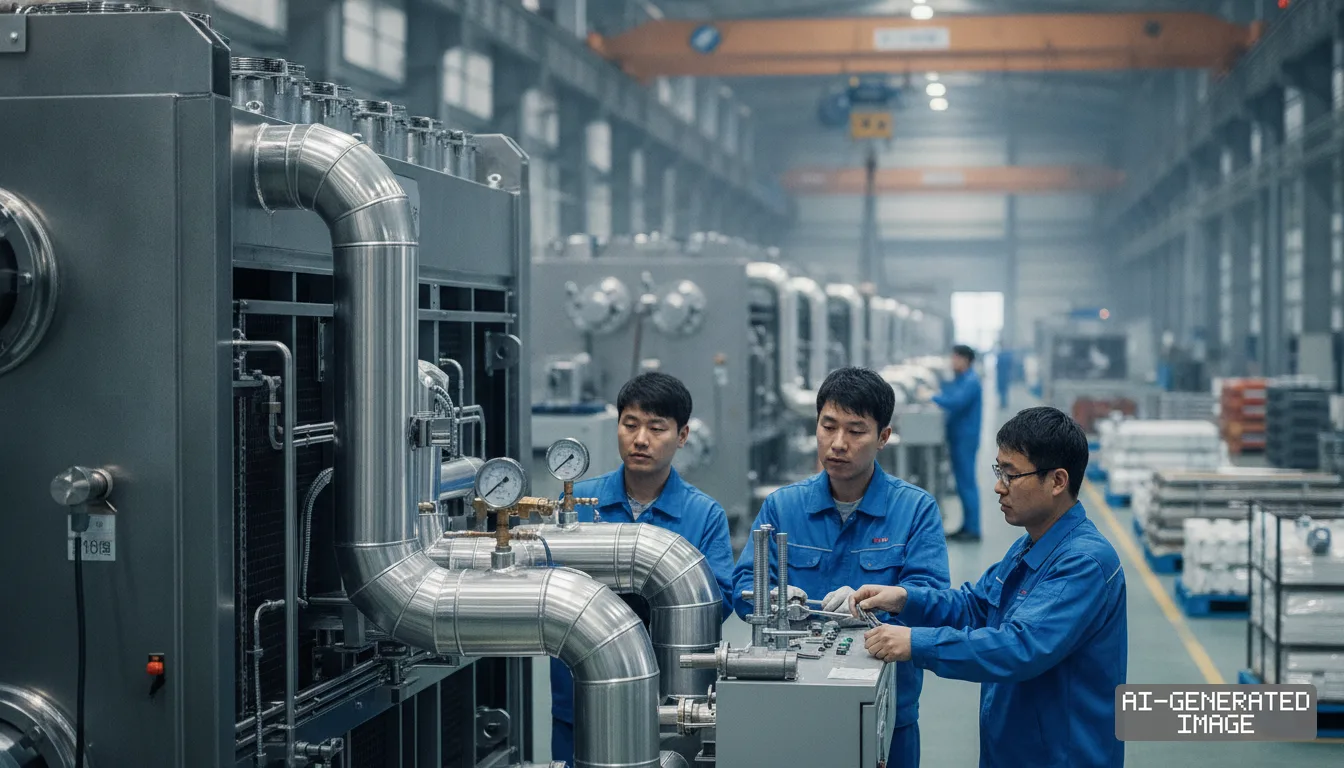
LG Electronics announced Oct. 2 that it will spend 150 billion won ($110 million) to expand industrial chiller production across South Korea and the United States, targeting thermal bottlenecks in artificial intelligence data centers.
The capital expenditure addresses rising cooling requirements in high-density computing clusters. Data centers worldwide are projected to consume 420 gigawatts of power by 2030, with North America accounting for roughly 60% of that total, according to research firm Omdia.
Chillers produce high volumes of chilled water circulated through heat exchangers to dissipate heat from computing hardware. Modern artificial intelligence server racks generate thermal densities that exceed conventional air conditioning limits, turning industrial chillers into critical utility equipment.
LG Electronics plans to build an air-cooled chiller manufacturing plant in Windsor, Virginia. The facility will sit on a 170,000-square-meter site and provide 32,000 square meters of gross floor area.
The Virginia site will manufacture air-cooled chillers designed specifically for data centers. Siting assembly lines in Virginia places manufacturing near Northern Virginia, the largest concentration of hyperscale data centers in North America.
LG Electronics aims to start commercial production at the Windsor facility in the first half of 2027. Localizing manufacturing cuts logistics lead times for North American operators and complies with domestic supply preferences.
In South Korea, LG Electronics is expanding and upgrading assembly lines at its factories in Pyeongtaek and Changwon. The two plants manufacture both domestic units and export-grade industrial heating, ventilation and air conditioning equipment.
The domestic upgrades introduce a single-conveyor flow-line manufacturing setup. This continuous process handles chiller assembly from component feeding to final inspection on one line, eliminating transfer delays between discrete assembly stations.
LG Electronics expects to complete the Korean line installations by the end of 2026. Once complete, both Pyeongtaek and Changwon will operate multiple assembly lines concurrently to meet delivery schedules.
Air-cooled chillers dissipate absorbed heat directly into outdoor air through condenser coils rather than relying on evaporative cooling towers. This closed architecture eliminates external water consumption, a significant operational factor for operators facing municipal water permits.
Beyond primary chillers, LG Electronics is marketing what it terms a chip-to-chiller thermal architecture. The portfolio links building-level chillers to intermediate coolant distribution units and direct-to-chip cold plates that touch processor surfaces.
Coolant distribution units pump liquid coolant through server racks, while cold plates absorb heat directly from high-thermal-design-power silicon. Chillers then reject that accumulated heat outside the building envelope.
LG Electronics combines this cooling hardware with related units within the broader LG corporate group. Under this structure, LG Energy Solution supplies lithium-ion battery energy storage systems for backup power, while LG CNS provides data center engineering, procurement and operational services.
The conglomerate deployed this cross-affiliate package at a hyperscale artificial intelligence data center under development by Sinar Mas Group in Jakarta, Indonesia. In that project, LG provided integrated cooling, energy storage and design oversight under a single commercial offering.
LG Electronics faces established competitors in North American chiller procurement, including Trane Technologies, Carrier Global and Johnson Controls International. Those domestic incumbents hold deep service networks across American utility and commercial real estate channels.
Supplying cooling hardware to artificial intelligence facilities requires rigorous reliability certifications and long continuous run times under peak loads. Facility operators typically require redundant pumping systems and uninterrupted operation during ambient temperature spikes.
LG Electronics will deploy proprietary oil-free magnetic bearing compressors within its chiller systems. These compressors eliminate mechanical friction, reducing maintenance intervals and improving seasonal power efficiency ratios for large installations.
The shift toward accelerated computing silicon has increased average rack power densities from 10 kilowatts toward 40 to 100 kilowatts per cabinet. Traditional raised-floor air systems cannot transfer heat away from server nodes at those thermal concentrations without liquid-assist loops.
Air-cooled chillers remain the primary external heat rejection loop even when servers use direct liquid cooling inside the rack. The internal coolant loop transfers thermal energy to a secondary heat exchanger, which depends on chiller fluid to exhaust heat outdoors.
The company did not disclose the capital expenditure split between the Windsor plant and the Korean lines, nor did it release specific unit production volume targets for either geography. Regulatory disclosure filings were not required on the Korea Exchange because the 150 billion won outlay fell below mandatory equity reporting thresholds.
The Korean production lines in Pyeongtaek and Changwon will enter full multi-line commercial operation by Dec. 31, 2026, while the Windsor plant in Virginia is scheduled to begin deliveries during the first half of 2027.
Impact map
How this development propagates across the region and out to global buyers.
| Event | Korea | China | Japan | Global impact |
|---|---|---|---|---|
| AI chiller manufacturing expansion | Pyeongtaek and Changwon complete flow-line upgrades by end of 2026 for export output | No mainland manufacturing footprint involved; competing against local commercial HVAC vendors | Chiller component suppliers face increased procurement orders for electrical and valve subassemblies | Hyperscale operators secure dedicated air-cooled chiller manufacturing capacity ahead of 2027 North American buildouts |
| AI chiller manufacturing expansion | Pyeongtaek and Changwon complete flow-line upgrades by end of 2026 for export output | No mainland manufacturing footprint involved; competing against local commercial HVAC vendors | Chiller component suppliers face increased procurement orders for electrical and valve subassemblies | Hyperscale operators secure dedicated air-cooled chiller manufacturing capacity ahead of 2027 North American buildouts |
In this story
- Companies
- LG Electronics
- Tickers
- 066570.KS
- Exposed
- LG Energy SolutionLG CNSSinar Mas Group
- Policy
- Economic Security
- Impact
- CapexSupply ChainOrder Book
Track every Economic Security development →
Related briefings
- LG Energy Solution wins NVIDIA DSX Ready status for AI power backup Also on LG Electronics, LG Energy Solution, Order Book
- South Korean toolmakers advance glass substrate TGV laser drillers to volume lines Also on LG Electronics, Order Book
- EcoPro targets humanoid robot batteries for 2027 production Also on LG Electronics, Order Book
- LG taps Samsung Foundry for appliance AI chips under Korean state project Also on LG Electronics, Order Book
Sources
Reporting
Confidence: medium — how we grade this
The documents behind this briefing are linked above. East Asia Brief produces its English text with AI assistance under human editorial review, and does not translate or republish other outlets' articles. See our methodology and AI policy. Spotted an error? Tell us.
The Morning Brief
What changed in Korean, Chinese and Japanese industry overnight — and what it means for your supply chain. One email, weekday mornings, US time. Free.
The Morning Brief is in preparation. Leave your address and we will write to you once — when the first issue is ready. Nothing before that.