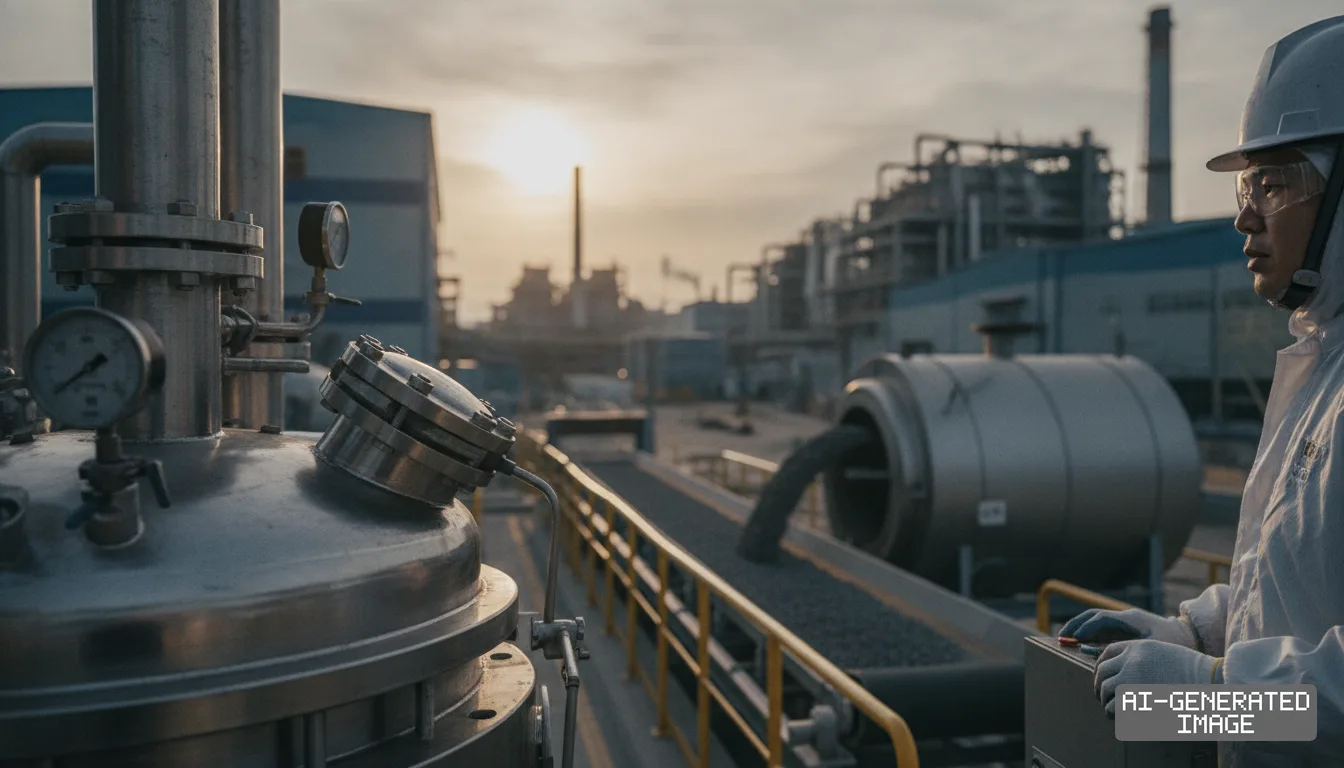
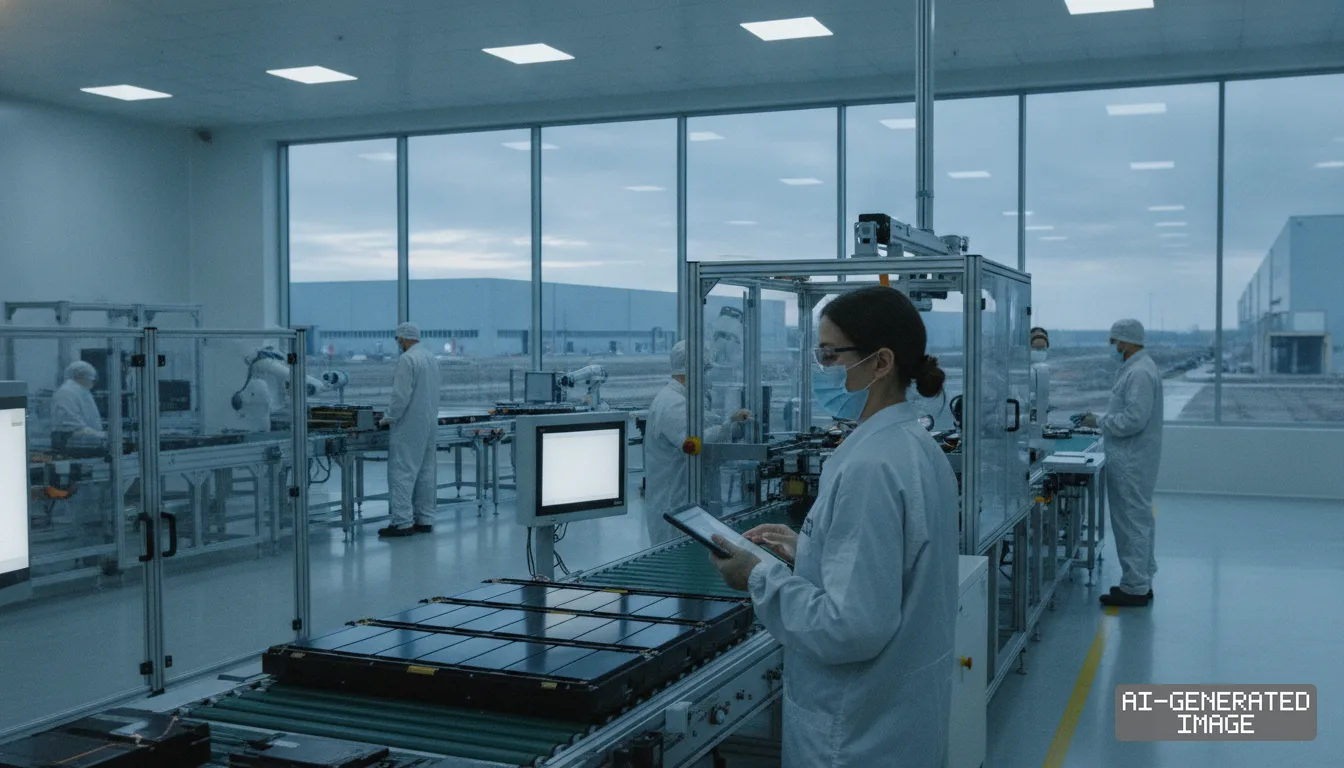
Korean battery rivals debut AI data center storage ahead of RE+
LG Energy Solution and Samsung SDI unveiled utility-scale battery systems on Nov. 15 to secure power backup contracts from North American data centers.
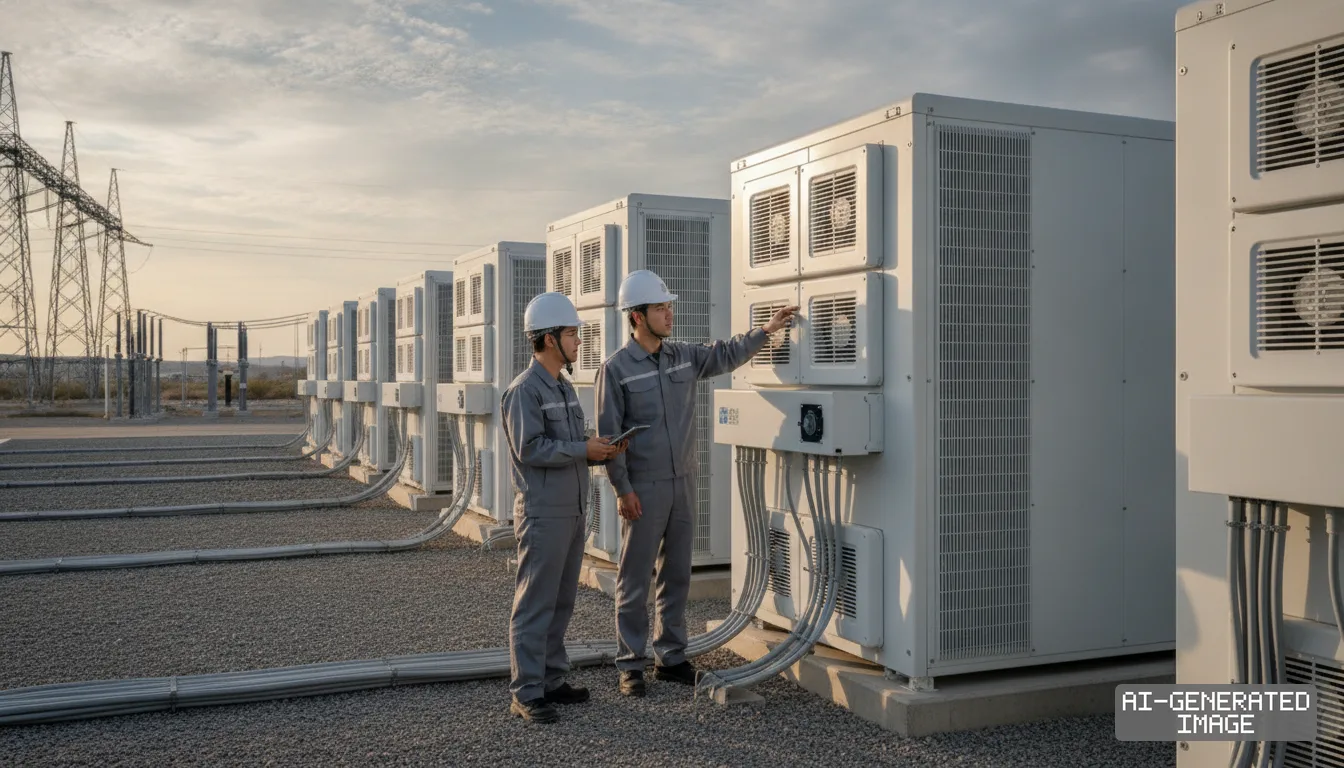
Samsung SDI and LG Energy Solution launched competing backup battery systems on Nov. 15, 2026, targeting power-hungry North American artificial intelligence data centers ahead of the RE+ 2026 trade show.
Surging power consumption from artificial intelligence compute clusters has strained regional transmission networks across North America. Hyperscale operators require multi-megawatt battery energy storage systems to buffer rapid load swings and guarantee uninterrupted data processing.
LG Energy Solution unveiled its JF3 AC LINK storage unit, which lifts energy density per site by roughly 26% over previous grid batteries. The hardware relies entirely on lithium iron phosphate cells assembled in North America.
LG Energy Solution secured a 279-square-meter exhibition hall at the Las Vegas Convention Center, expanding its floor space by about 20% compared to 2025. It represents the largest exhibition footprint booked by a South Korean battery manufacturer this year.
The company centered its showcase on an integrated power infrastructure combining battery storage, uninterruptible power supplies, battery backup units and energy management software. LG Energy Solution highlighted its selection as a certified partner in Nvidia's DSX Ready BESS program.
The JF3 AC LINK incorporates digital twin modeling and automated stabilization algorithms to balance rapid variations in power demand. LG Energy Solution Vertech, the company's US systems integration arm, will manage field deployment and long-term site maintenance.
For emergency server continuity, LG Energy Solution presented its next-generation JP6 rack system alongside battery backup units using cylindrical 2170 cells. The design stabilizes direct-current distribution when compute clusters trigger instantaneous power draws.
The company also displayed experimental utility equipment combining sodium-ion cells with solid-state power semiconductor transformers. The architecture aims to endure frequent charging cycles without thermal degradation under severe power swings, the company said.
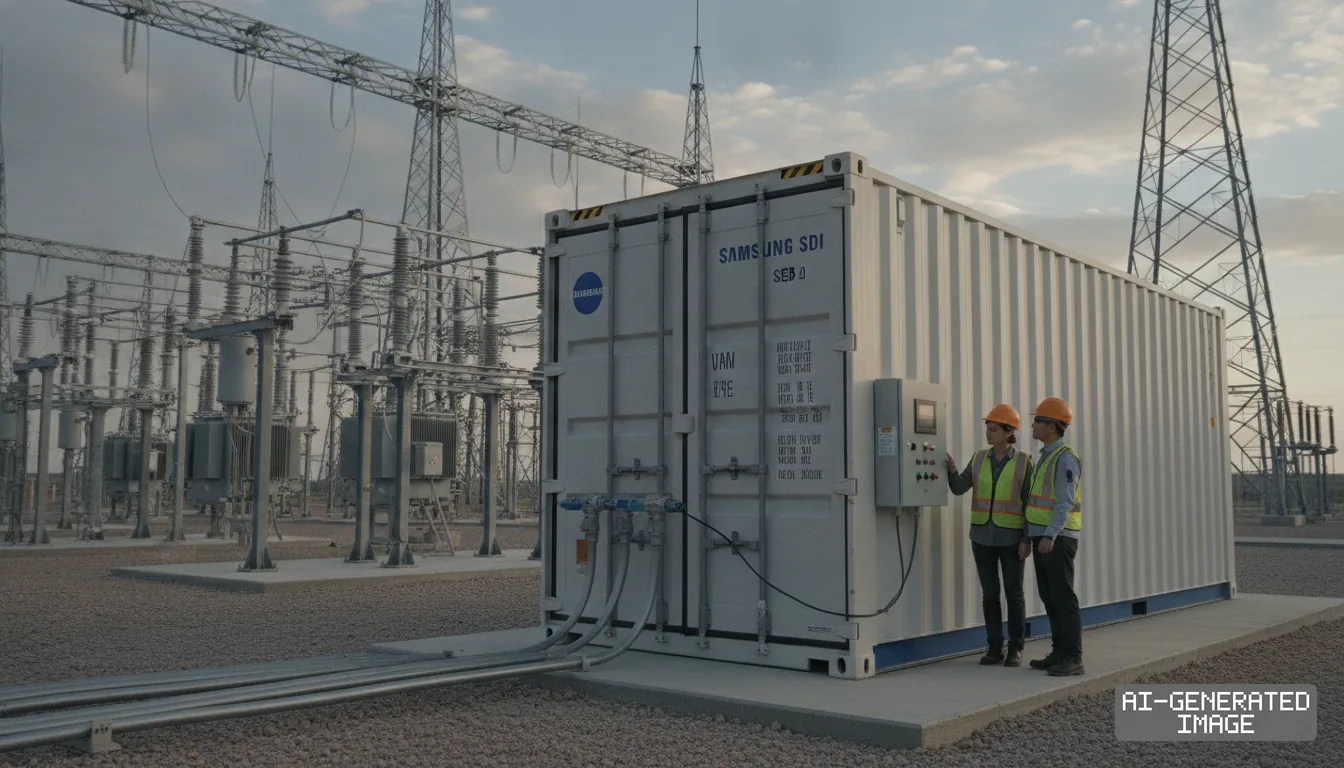
Samsung SDI responded by launching its containerized battery systems under the commercial banner "AI Thinks, Battery Enables." The manufacturer recently finished establishing local production lines in the United States to supply its flagship SBB 2.0 platform.
The SBB 2.0 integrates prismatic lithium iron phosphate cells and automated safety gear into a standard 20-foot shipping container. The pre-assembled architecture connects directly to regional transmission lines without extensive on-site module installation.
Samsung SDI applied proprietary electrode coatings and structural venting to its prismatic cell casing. The mechanical modifications extend operating life and reduce heat propagation risk during deep discharge cycles, the company said.
Samsung SDI also staged the North American debut of its U8A3 uninterruptible power supply platform. The solution uses lithium manganese oxide prismatic cells engineered to absorb extreme load fluctuations within milliseconds of grid instability.
The U8A3 platform became the first commercial system to satisfy all evaluation criteria of UL Solutions' Large-Scale Fire Test for indoor installations. The testing validates multi-layered fire containment across individual cells, modules and standing racks.
To address compute rack backup, Samsung SDI displayed high-output cylindrical cells configured for server backup power. These compact units sustain immediate voltage while centralized container storage spools up to full output.
The concurrent product rollouts mark a strategic shift for South Korean battery manufacturers from pure cell fabrication toward full systems integration. Both companies now supply turnkey container housings, liquid cooling circuits, power conversion units and grid control software.
North American hyperscalers are developing cluster facilities requiring more than 100 megawatts of dedicated capacity. Regional utilities frequently impose multi-year interconnection waits, forcing campus developers to build dedicated substation storage to smooth local consumption.
The Las Vegas exhibition pits contrasting cell form factors against each other in the mission-critical backup sector. Samsung SDI champions heavy prismatic architecture, whereas LG Energy Solution promotes high-density lithium iron phosphate units backed by software integration.
Both manufacturers stressed domestic US manufacturing to insulate procurement lines from potential trade tariffs. Sourcing cells within North America also allows data center builders to capture federal clean energy tax credits under prevailing statutes.
The trade show brings together roughly 1,300 international exhibitors and 40,000 corporate attendees across renewable power and storage industries. The gathering serves as the principal procurement clearinghouse for North American utility planners and commercial project sponsors.
The releases do not state contract volumes or dollar commitments with specific North American hyperscale data center operators.
Commercial supply discussions open Nov. 17 at RE+ 2026 in Las Vegas, where utility planners and data center engineers evaluate both system lineups before the exhibition closes Nov. 19.
Impact map
How this development propagates across the region and out to global buyers.
| Event | Korea | China | Japan | Global impact |
|---|---|---|---|---|
| AI data center ESS launch | Samsung SDI and LG Energy Solution shift cell capacity toward higher-margin US utility and data center BESS lines | Domestic LFP vendors face US market barriers as Korean rivals scale US-built container systems | Inverter and component suppliers see delivery schedules tied to North American utility interconnection queues | AI data center operators gain multi-megawatt backup options offering up to 26% higher footprint density |
In this story
- Companies
- Samsung SDILG Energy Solution
- Tickers
- 006400.KS373220.KS
- Exposed
- Nvidia
- Policy
- Standards
- Impact
- Supply ChainOrder BookCost Structure
Track every Standards development →
Related briefings
- LG Energy Solution details AI data center backup batteries Also on Standards, Nvidia, Samsung SDI
- Samsung SDI wins Boston Dynamics deal to power electric Atlas robot Also on Standards, Samsung SDI, LG Energy Solution
- Korea Waives Power Grid Fees for ESS Operators to Revive Utility Batteries Also on Standards, Samsung SDI, LG Energy Solution
- CATL details Tener Sodium grid battery specs for 1 GWh 2026 rollout Also on Standards, Samsung SDI, LG Energy Solution
Sources
Reporting
Confidence: medium — how we grade this
The documents behind this briefing are linked above. East Asia Brief produces its English text with AI assistance under human editorial review, and does not translate or republish other outlets' articles. See our methodology and AI policy. Spotted an error? Tell us.
The Morning Brief
What changed in Korean, Chinese and Japanese industry overnight — and what it means for your supply chain. One email, weekday mornings, US time. Free.
The Morning Brief is in preparation. Leave your address and we will write to you once — when the first issue is ready. Nothing before that.