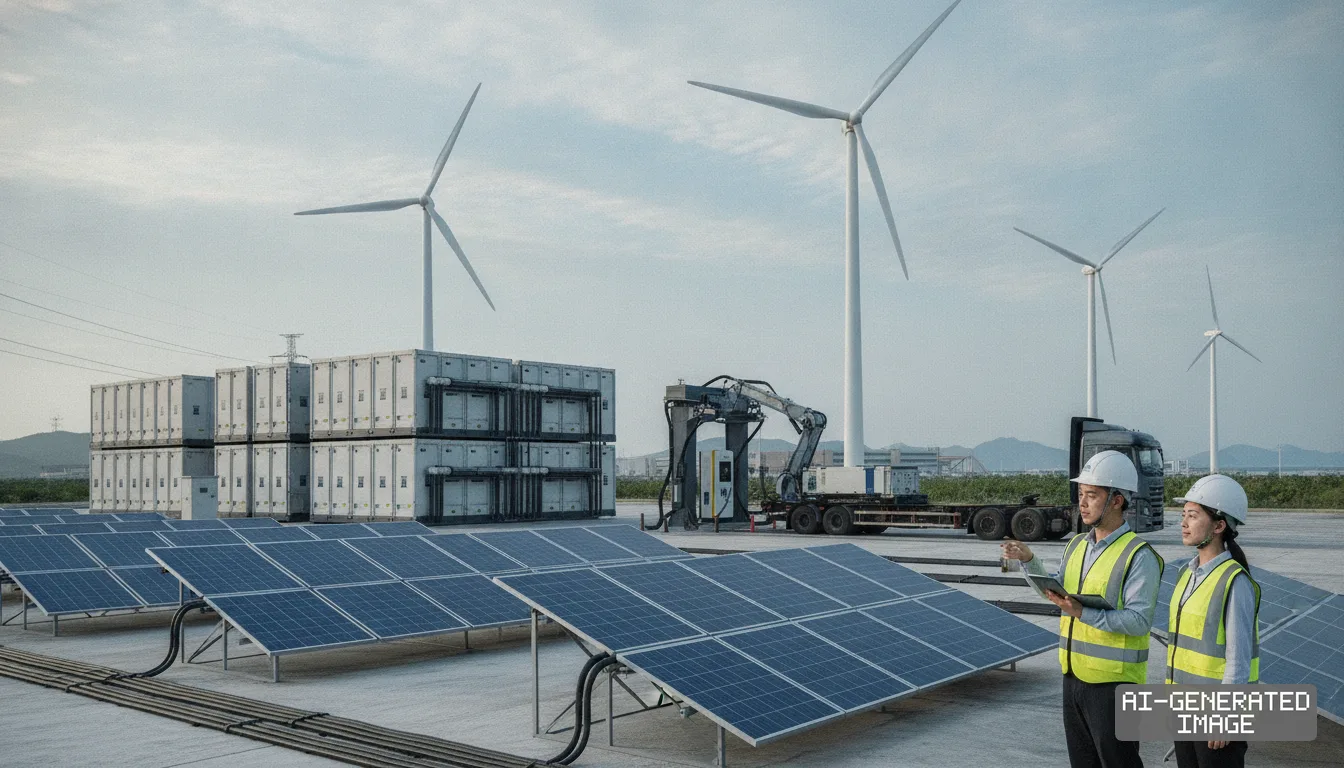
CATL details Tener Sodium grid battery specs for 1 GWh 2026 rollout
Each block delivers over 30 megawatt-hours with a 7.5-megawatt continuous output across four hours, bypassing volatile lithium carbonate supply chains.
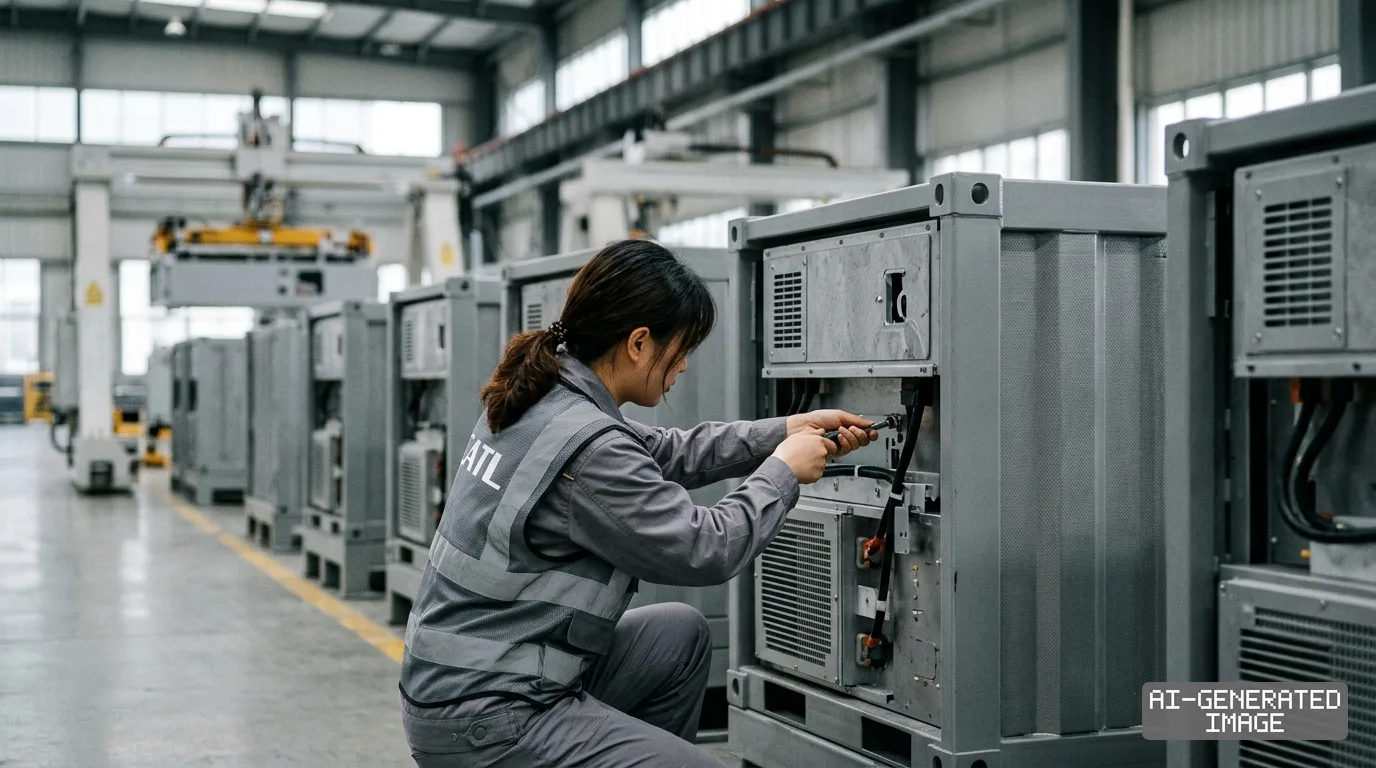
Contemporary Amperex Technology Co. Limited clarified the technical specifications and delivery schedule for its Tener Sodium grid battery on Nov. 13, 2026, targeting commercial shipments of 1 GWh this year.
The system delivers over 30 MWh of storage capacity per block, which accounts for roughly 3% of the world's planned utility-scale sodium deployments scheduled through 2027. Each block provides 7.5 MW of continuous output across a four-hour discharge window.
The battery relies on sodium chemistry rather than lithium iron phosphate, shielding utility buyers from volatile lithium carbonate prices that historically doubled cell costs during supply crunches. Sodium abundance also avoids nickel and cobalt refining bottlenecks.
CATL designed the hardware across eight interconnected cabinets arranged in two back-to-back rows of four. The physical structure measures 18.2 meters wide, 7 meters deep and 3.5 meters high.
Each individual cabinet measures approximately 15 feet in length and weighs between 44 and 45 metric tons. That configuration stores roughly 4 MWh of electricity per cabinet within the complete eight-cabinet unit.
The manufacturer originally estimated individual module weights at 42 metric tons during preliminary briefings in Munich. The finalized weight reflects reinforced casing and integrated liquid-cooling circuits engineered for outdoor substations.
Operating characteristics include a nominal direct-current voltage of 1,166.88 volts, with an operational span running from 612 volts to 1,387.2 volts. The broader voltage band requires CATL's proprietary bidirectional DC voltage regulation architecture.
The system achieves a 95% round-trip efficiency at 25 degrees Celsius under a 0.25P power rating. Auxiliary power draw consumes 1% of system throughput, roughly half the 2% average seen in competing containerized platforms.
Operational acoustic emissions register at 65 decibels, 10 decibels below standard industrial container baselines. That reduction allows developers to site projects within urban substations and near commercial load centers without building costly sound barriers.
Degradation models indicate the sodium cells retain 71.3% of their original capacity after 20 years of operation under a single daily charge-discharge cycle. Under a more intensive two-cycle daily regimen, capacity retention reaches 65.2% after 19 years.
Those field curves revise early promotional projections of a 30-year operational life across 15,000 cycles down to bankable utility standards. CATL said newer cycling data from operating test benches continues to show lower loss rates as chemistries mature.
European storage integrator INTILION is exposed to the platform through an October agreement to procure 3 GWh of Tener systems over five years. The contract represents approximately 40% of INTILION's planned deployment pipeline across Germany, Austria and Switzerland.
South Korea's leading cell manufacturers LG Energy Solution and Samsung SDI face direct competition in overseas utility storage tenders. Neither Korean supplier has commercialized sodium-ion grid systems, relying entirely on lithium iron phosphate and nickel-based chemistries.
CATL also engineered the mechanical enclosure to accept lithium iron phosphate packs without structural modification. An equivalent eight-cabinet block loaded with lithium cells provides 50 MWh of storage capacity, giving developers interchangeability during project design.
Domestic customer handovers began in China in September, with initial units serving regional grid peak-shaving facilities in northern provinces. The company expects cumulative domestic shipments to surpass 1 GWh before the close of 2026.
Commercial shipments to international developers are scheduled to begin in June 2027 once regional grid certifications conclude. The company is prioritizing sodium safety certifications under IEC, UL and CE frameworks over its companion lithium variants.
The company has not published cell-level pricing or international marine freight surcharges, leaving balance-of-system installation budgets unconfirmed for overseas developers. Port handling requirements for the 45-ton enclosures also remain subject to local crane approvals.
The European Union is scheduled to review grid storage battery standards under its revised Battery Regulation in March 2027. That timeline establishes the final regulatory window for CATL before its first European maritime deliveries arrive.
Impact map
How this development propagates across the region and out to global buyers.
| Event | Korea | China | Japan | Global impact |
|---|---|---|---|---|
| Tener Sodium commercialization | LG Energy Solution and Samsung SDI face sodium pricing pressure in export bids | CATL secures domestic grid baseload without lithium commodity exposure | Japanese inverter suppliers adapt DC conversion gear to wider operating voltages | Utility storage developers gain non-lithium alternative for 4-hour duration tenders |
In this story
- Companies
- Contemporary Amperex Technology Co. LimitedINTILION
- Tickers
- 300750.SZ
- Exposed
- LG Energy SolutionSamsung SDI
- Policy
- Standards
- Impact
- Supply ChainPricingCost Structure
Track every Standards development →
Related briefings
- CATL lifts overseas battery volume 46.7% to 143.7 gigawatt-hours Also on INTILION, Samsung SDI, LG Energy Solution
- CATL expands sodium storage supply in Europe for 2027 rollouts Also on Intilion, Pricing
- CATL, Intilion Target 3 GWh Sodium-Ion Storage in Europe Also on Intilion
- CATL warns solid-state battery costs block 2030 vehicle scale Also on Contemporary Amperex Technology Co. Limited, Standards, Samsung SDI
Sources
Reporting
Confidence: medium — how we grade this
The documents behind this briefing are linked above. East Asia Brief produces its English text with AI assistance under human editorial review, and does not translate or republish other outlets' articles. See our methodology and AI policy. Spotted an error? Tell us.
The Morning Brief
What changed in Korean, Chinese and Japanese industry overnight — and what it means for your supply chain. One email, weekday mornings, US time. Free.
The Morning Brief is in preparation. Leave your address and we will write to you once — when the first issue is ready. Nothing before that.