LG Energy Solution details AI data center backup batteries
The South Korean battery maker outlined a multi-tier power architecture on Oct. 25, deploying cylindrical server backups, 1-megawatt UPS racks and 5-megawatthour grid containers for AI sites.
LG Energy Solution detailed an integrated backup power architecture for artificial intelligence data centers on Oct. 25, 2026, spanning server racks, facility uninterruptible power systems and grid-scale storage.
The South Korean battery manufacturer is targeting computing sites where power spikes strain municipal electric grids. The portfolio organizes cells into three separate tiers across the data center power chain.
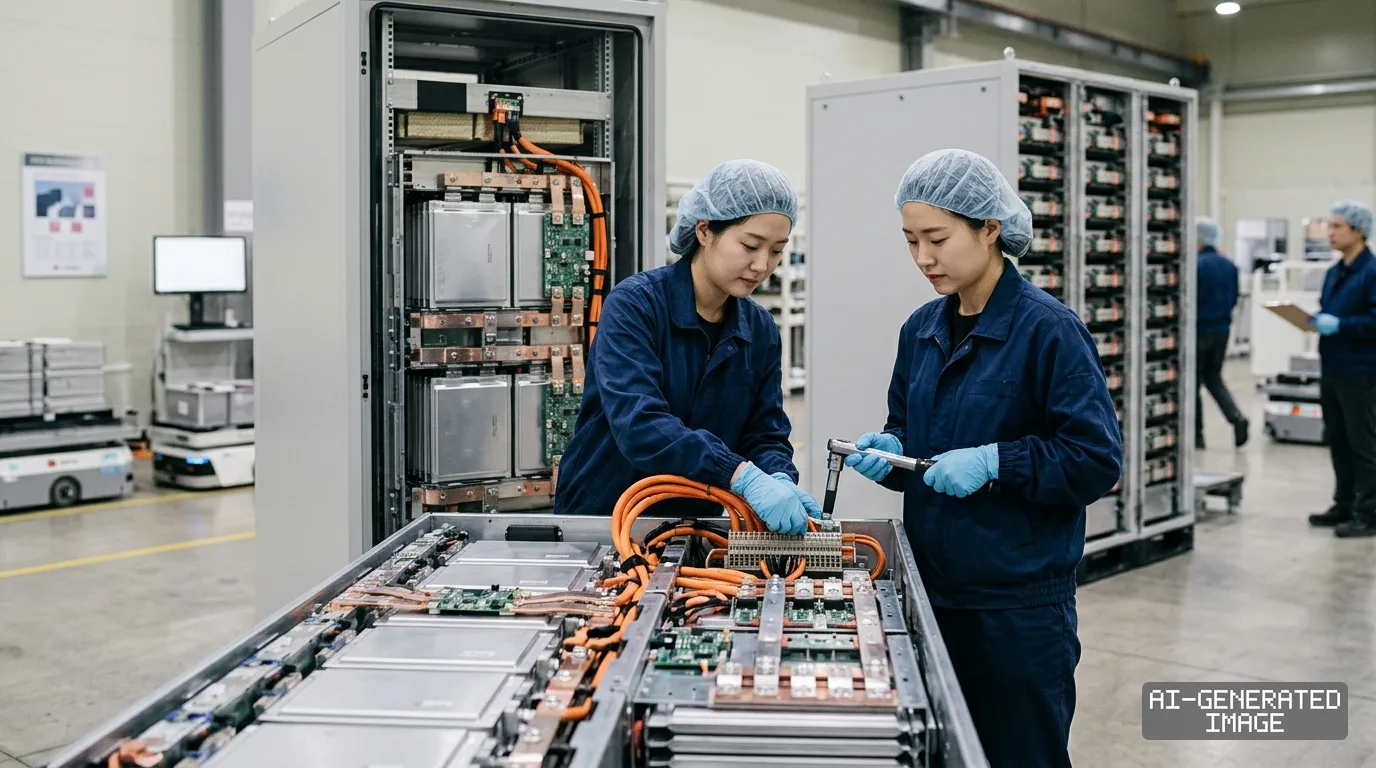
At the facility level, the JP5 uninterruptible power supply delivers 1 megawatt of emergency discharge within a 1-square-meter footprint. That density reduces the physical plant required for backup gear in dense urban server facilities.
At the grid interconnection point, the company deployed the JF2 DC Link, a containerized battery energy storage system. The unit packs 5.0 megawatt-hours of lithium iron phosphate capacity into a 22.1-foot enclosure.
Power consumption inside high-density computing clusters has grown rapidly alongside the adoption of graphic processing clusters. Server racks draw sudden surges of direct current that can trigger voltage drops across local networks.
The technical report synthesizes systems demonstrated at commercial technology events in Singapore and Germany earlier this year. The company is seeking to commercialize hardware tested during those regional industry demonstrations.
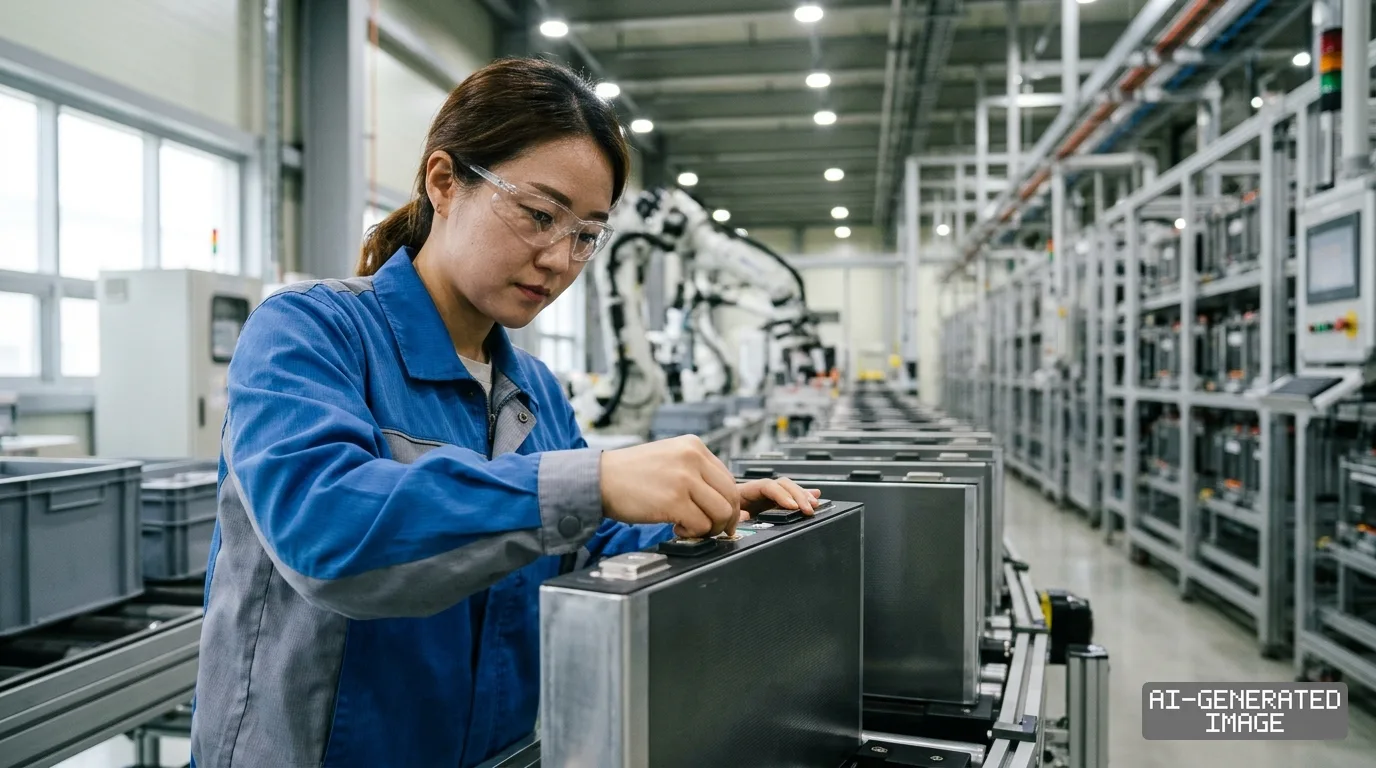
For server-level continuity, LG Energy Solution configured battery backup units using high-output 2170 cylindrical cells. These units sit directly inside the computer rack alongside processing modules.
The rack units supply instantaneous direct current to server hardware when line electricity drops. Direct current delivery avoids alternating-current conversion steps, preventing brief millisecond disruptions from crashing machine-learning training runs.
Nickel cobalt manganese chemistry powers the facility-scale JP5 cabinet. The system uses pouch cells arranged to maximize volumetric efficiency where land and real estate costs remain elevated.
Each JP5 installation incorporates an autonomous switched-mode power supply. The component powers the onboard battery management system and protective circuit units without drawing electricity from an external utility feed.
The isolated control system keeps monitoring circuits operational if incoming power fails entirely. The entire JP5 assembly holds UL9540A certification, a benchmark thermal runaway test mandated by American data center operators.
LG Energy Solution also developed an alternate facility rack, the JP6, using lithium iron phosphate chemistry. The chemistry offers longer cycle durability and greater structural tolerance against thermal stress.
At the substation perimeter, the JF2 DC Link stabilizes the external substation feed against intermittency. Liquid cooling plates regulate cell temperatures inside the container during deep charge and discharge cycles.
The grid unit incorporates software that tracks cell charge states without requiring periodic complete discharge calibrations. That automated tracking reduces offline service hours for substation operations.
A companion grid product, the JF2 AC Link, integrates power conversion systems inside the enclosure. The configuration meets design criteria for Nvidia Corporation's DSX Ready partner specifications.
Hardware qualification under computing architecture standards allows project developers to include the storage system directly in standardized blueprints. That certification simplifies utility approvals for site operators building out compute clusters.
The commercial push relies on coordination across sister companies within the LG Group. LG Energy Solution is pairing its cells with mechanical cooling systems and engineering services.
LG Electronics supplies industrial chillers, liquid distribution units and fan walls under the arrangement. LG CNS contributes facility layout engineering, electrical construction and operational monitoring software.
The trio markets the combined offering under the One LG AI Factory label. The structure allows corporate customers to negotiate thermal cooling, backup batteries and substation construction under one vendor group.
Domestic rival Samsung SDI is pursuing a similar trajectory across East Asian and North American markets. Samsung SDI introduced cylindrical lithium iron phosphate cells for server-rack backup modules in Singapore last month.
SK On has focused its commercial development on utility-scale storage systems for substation tie-ins. The three Korean producers are competing to capture capital spending as cloud providers construct dedicated computing hubs.
LG Energy Solution has repositioned European assembly lines in Wroclaw, Poland, to manufacture containerized energy storage cells. Producing storage packs in Europe supports regional delivery timelines and satisfies European Union traceability rules.
The company operates North American storage manufacturing facilities that supply utility customers under federal tax credit programs. System assembly near deployment sites shields buyers from transpacific freight tariffs and maritime shipping delays.
Thermal containment remains the central technical hurdle for indoor battery installations. Data center operators restrict energy storage densities inside multi-story buildings unless systems prove that cell failures cannot propagate between neighboring racks.
The company addresses municipal fire codes by pairing ceramic-coated cell separators with liquid cold plates. Internal compartmentalization isolates damaged cells before escaping gas can elevate adjacent module temperatures.
The technical report does not disclose signed supply contracts, committed production volumes or commercial delivery schedules. Public financial filings do not break out current quarterly revenue generated from data center battery sales.
Equipment trials and commercial evaluations for the rack systems continue with data center operators through Nov. 30, 2026. Global hyperscale operators will conduct standard infrastructure procurement reviews throughout the coming quarter.
Impact map
How this development propagates across the region and out to global buyers.
| Event | Korea | China | Japan | Global impact |
|---|---|---|---|---|
| AI data center power portfolio launch | LG Energy Solution, LG Electronics and LG CNS coordinate One LG modular package | Competing LFP container suppliers face UL9540A and Nvidia DSX qualification hurdles | Component suppliers see steady demand for SMPS chips and high-power circuit protectors | Data center operators cut footprint by deploying 1MW per square meter backup systems |
In this story
- Companies
- LG Energy Solution
- Tickers
- 373220.KS
- Exposed
- LG ElectronicsLG CNSNvidiaSamsung SDISK On
- Policy
- Standards
- Impact
- Supply ChainOrder BookCapex
Track every Standards development →
Related briefings
- LG Electronics adds chiller plants in US and Korea for AI cooling Also on LG CNS, LG Electronics, LG Energy Solution
- LG Energy Solution wins NVIDIA DSX Ready status for AI power backup Also on LG Electronics, NVIDIA, LG Energy Solution
- LG hires Hyundai robotics lead to direct physical AI push Also on LG Electronics, Nvidia, Order Book
- Mobilint tests robot AI chips with Doosan to curb Nvidia costs Also on LG Electronics, Nvidia
Sources
Reporting
Confidence: medium — how we grade this
The documents behind this briefing are linked above. East Asia Brief produces its English text with AI assistance under human editorial review, and does not translate or republish other outlets' articles. See our methodology and AI policy. Spotted an error? Tell us.
The Morning Brief
What changed in Korean, Chinese and Japanese industry overnight — and what it means for your supply chain. One email, weekday mornings, US time. Free.
The Morning Brief is in preparation. Leave your address and we will write to you once — when the first issue is ready. Nothing before that.