Hyundai taps CATL lithium iron phosphate cells for 2027 EREV
Chinese regulatory filings reveal Beijing Hyundai paired a 70-kilowatt generator with CATL batteries for the midsize sedan to lower electrified powertrain costs.
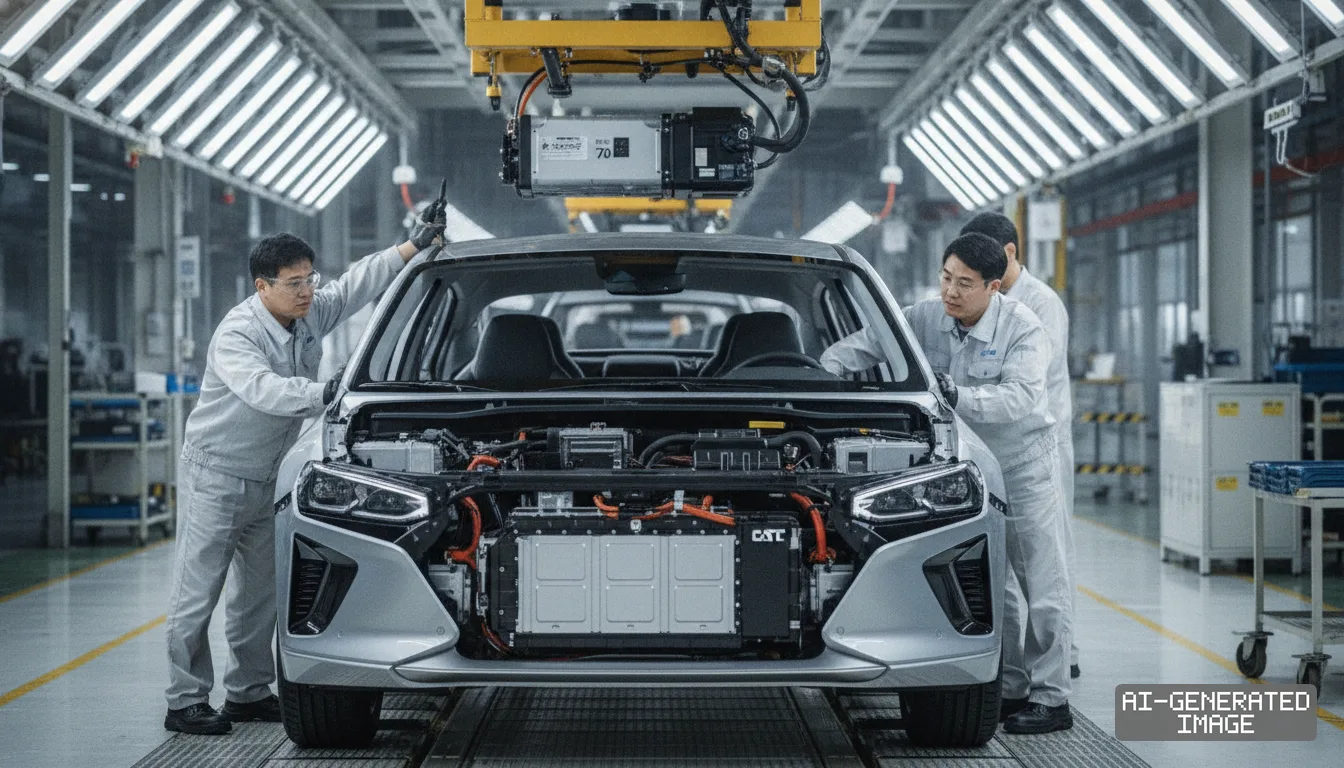
Hyundai Motor confirmed on Nov. 27 that it will produce the Ioniq V extended-range electric vehicle in 2027, pairing a 70-kilowatt generator with lithium iron phosphate batteries from CATL.
The midsize sedan represents the company's first extended-range electric vehicle, a configuration known as an EREV that relies entirely on electric motors while using an internal combustion engine solely to recharge the battery.
Technical specifications for the model emerged on Nov. 26 in regulatory approval filings published by China's Ministry of Industry and Information Technology under vehicle declaration number BH7151SHEVDCAS.
Beijing Hyundai, a 50-50 joint venture between Hyundai Motor and Beijing Automotive Group, submitted the filing as part of the 414th batch of newly approved motor vehicle products.
The vehicle measures 4,900 millimeters in length, 1,890 millimeters in width and up to 1,481 millimeters in height, built across a 2,900-millimeter wheelbase with a curb weight between 1,760 and 1,790 kilograms.
Power reaches the road exclusively through a rear-mounted single electric motor delivering peak output of 151 kilowatts, or roughly 202 horsepower, supporting a governed top speed of 170 kilometers per hour.
Electricity generation comes from a 1.5-liter naturally aspirated gasoline engine produced by BAIC Powertrain, cataloged under engine model code A156A1.
The engine operates strictly as an on-board generator and delivers 70 kilowatts of peak power without mechanical coupling to the drive wheels.
By turning the gasoline motor into a stationary charging unit, Hyundai eliminates mechanical transmission gearboxes and reduces thermal strain compared with conventional plug-in hybrid architectures.
Cell supply rests entirely with Contemporary Amperex Technology Co., Ltd., the world's largest traction battery manufacturer, which provides lithium iron phosphate chemistry for the model.
The selection of CATL highlights Hyundai's shift toward local Chinese mineral and pack supply chains to lower bill-of-materials expenses during an industry-wide slowdown in pure electric vehicle sales.
Lithium iron phosphate packs cost roughly 20% to 30% less than nickel-rich ternary chemistries because they omit expensive cobalt and nickel inputs.
The battery chemistry also provides greater cycle life and chemical stability, which suits the frequent shallow charging cycles typical of extended-range drivetrains.
The automaker announced its commercialization schedule at the 24th Guangzhou International Automobile Exhibition, which opened Nov. 27 at the China Import and Export Fair Complex.
Hyundai confirmed during the exhibition that volume production of the Ioniq V EREV will start in 2027 at Beijing Hyundai assembly facilities.
The joint venture aims to produce and sell 500,000 vehicles annually across domestic Chinese and overseas export channels by 2030, the company said.
The electrified sedan forms the initial step in a planned rollout of 20 new models over the next five years, covering both battery-electric and extended-range powertrains.
Beijing Hyundai is also developing autonomous driving software with Momenta and digital cockpit hardware with Qualcomm to tailor vehicles to local buyer expectations.
The regulatory filing and the company release did not disclose the battery pack capacity in kilowatt-hours, the pure electric range, or the retail pricing.
Beijing Hyundai plans to complete final pre-production validation during 2026 before opening commercial order books ahead of customer deliveries in 2027.
Impact map
How this development propagates across the region and out to global buyers.
| Event | Korea | China | Japan | Global impact |
|---|---|---|---|---|
| Hyundai Ioniq V EREV rollout | Hyundai Motor cuts cell procurement costs by sourcing CATL LFP instead of domestic ternary packs | CATL expands joint-venture vehicle supply; BAIC Powertrain supplies 1.5-liter generators | Japanese hybrid leaders face direct extended-range competition in the midsize sedan class | Global automakers evaluate EREV powertrains as a bridge against slowing pure-EV sales |
In this story
- Companies
- Hyundai Motor CompanyCATL
- Tickers
- 005380.KS300750.SZ
- Exposed
- BAIC MotorMomenta
- Impact
- Supply ChainCost StructureCapex
Related briefings
- BAIC Motor puts 112 battery swap stations up for public auction Also on BAIC Motor, CATL
- CATL expands EV battery swap grid to 3,000 stations in China Also on BAIC Motor, Cost Structure
- Mercedes-Benz centralizes China parts purchasing in new 70-30 JV Also on BAIC Motor, Cost Structure
- CATL plans 6,000 EV battery swap stations across 297 Chinese cities Also on BAIC Motor
Sources
Reporting
Confidence: high — how we grade this
The documents behind this briefing are linked above. East Asia Brief produces its English text with AI assistance under human editorial review, and does not translate or republish other outlets' articles. See our methodology and AI policy. Spotted an error? Tell us.
The Morning Brief
What changed in Korean, Chinese and Japanese industry overnight — and what it means for your supply chain. One email, weekday mornings, US time. Free.
The Morning Brief is in preparation. Leave your address and we will write to you once — when the first issue is ready. Nothing before that.