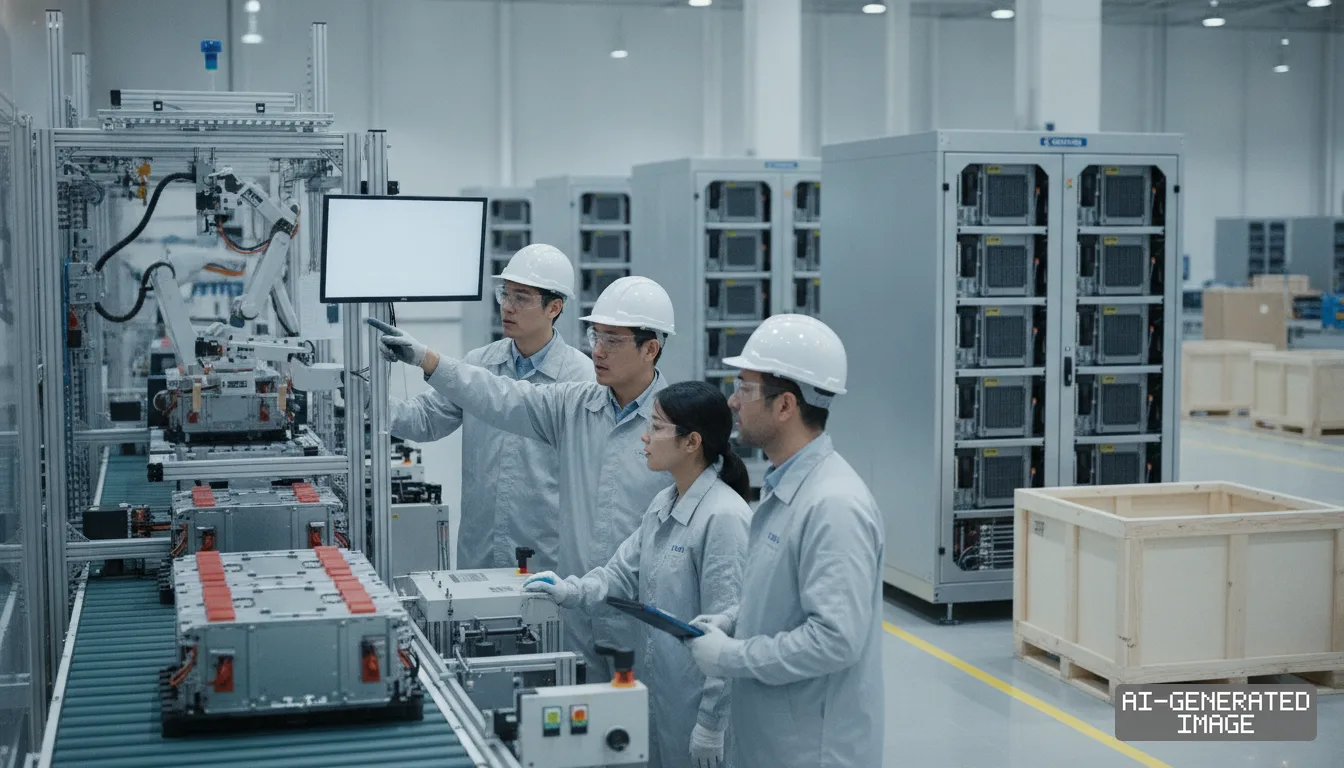
CATL plans 6,000 EV battery swap stations across 297 Chinese cities
The rollout adds 5,000 urban stations and 1,000 highway points by 2027, more than doubling the 2,520 sites operated across 200 cities as of September 2026.
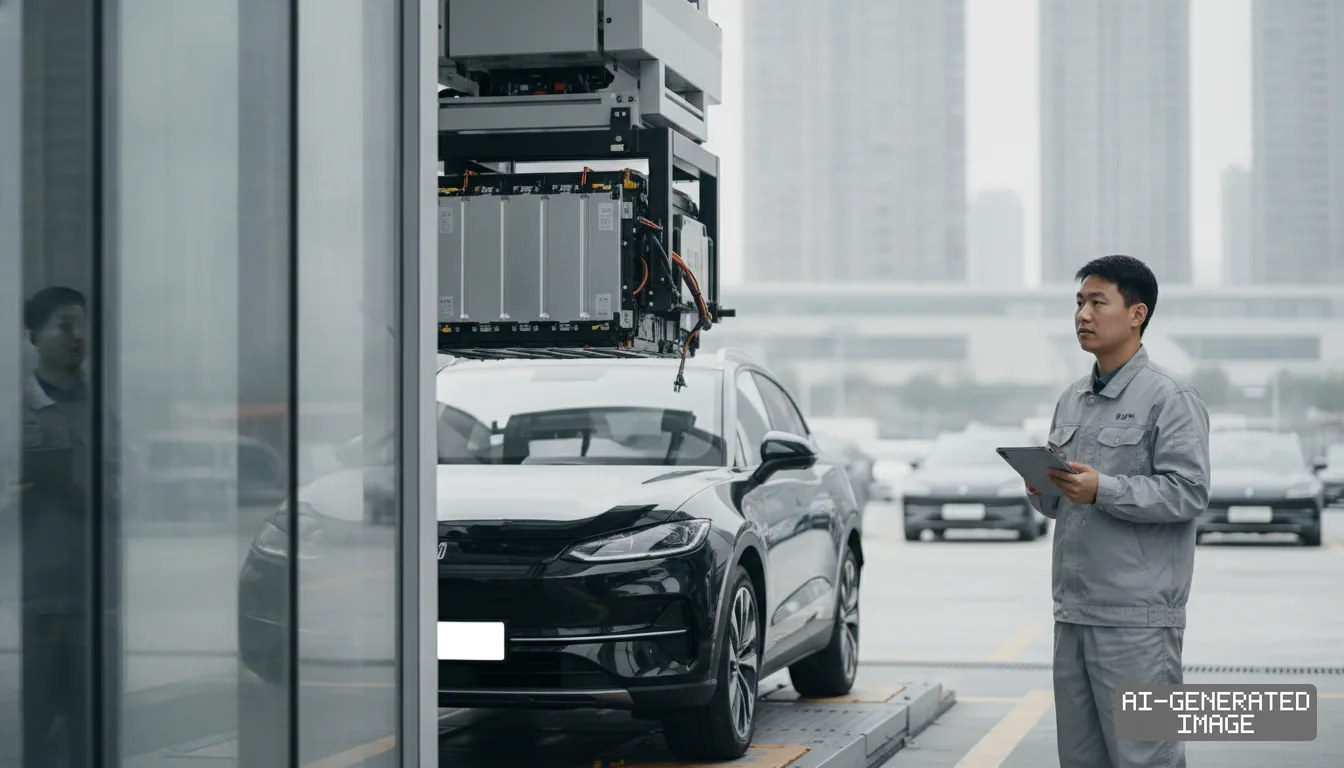
Contemporary Amperex Technology Co. Ltd. unveiled plans on Nov. 13, 2026, to expand its passenger electric vehicle battery swap network to 6,000 stations across 297 Chinese cities by 2027.
The installation roadmap will more than double the company's swap footprint from the 2,520 stations it operated across 200 cities as of Sept. 29, 2026, accelerating an industry-wide standardization initiative.
Under the capital deployment plan, CATL will construct 5,000 urban swapping stations to establish a 10-minute service radius in metropolitan cores, alongside 1,000 dedicated highway stations along intercity transit corridors.
The intercity expressway stations will follow China's national highway grid, spanning 11 north-south and nine east-west trunk expressways to support long-distance electric mobility without extended high-voltage charging halts.
The municipal distribution schedule covers every prefecture-level city and directly administered municipality across mainland China, excluding only the remote island administrative district of Sansha in southern Hainan province.
The rapid construction program positions CATL to surpass EV manufacturer Nio Inc., which operated 4,254 battery swap stations in China as of Nov. 13, 2026, according to official Nio Power real-time registry filings.
Nio's network currently includes 1,081 expressway installations and has added roughly 1,000 stations annually over the past two years, meaning CATL would claim China's largest passenger swap footprint in 2027.
While Nio initially developed its swapping network as a closed infrastructure platform for its own premium electric cars, CATL is establishing an open multi-brand ecosystem designed to absorb independent passenger vehicle manufacturers.
CATL operates the swap business through its wholly owned infrastructure subsidiary, Contemporary Amperex Energy Service Technology, under the consumer-facing Choco-Swap brand, using modular packs designed for universal vehicle installation.
The company relies on two standardized battery modules, designated #20 and #25, which mirror commercial fuel grades to simplify factory pack assembly, warehouse inventory management and automated station replenishment routines.
The entry #20 module provides 42 kilowatt-hours in lithium iron phosphate chemistry and 52 kilowatt-hours in nickel-manganese-cobalt chemistry, while the larger #25 module delivers 56 kilowatt-hours and 70 kilowatt-hours respectively.
Automakers engineering vehicles around the Choco-Swap format must match their underbody platform hardpoints to CATL's mounting dimensions, effectively standardizing structural skateboard chassis architecture across competing Chinese brands.
State-owned automaker BAIC Motor launched battery-swappable editions of its Arcfox Beta T1 hatchback and Beta S3 sedan on Nov. 13, 2026, demonstrating commercial integration with CATL's automated battery swap infrastructure.
Under a vehicle-battery separation model, BAIC priced the entry Arcfox Beta T1 swap edition at 52,000 yuan ($7,200), undercutting its conventional plug-in equivalent by 16,800 yuan ($2,330) at retail.
BAIC sold 163,000 Arcfox electric vehicles over the past year, and announced it would open its nationwide retail dealership network to host CATL battery swapping bays on vehicle sales lots.
The commercial expansion builds upon existing manufacturing pacts signed with Changan Automobile for the Auchan 520, alongside an intelligent battery-swapping partnership agreed in October 2026 with Huawei Technologies unit Yinwang.
Standard Choco-Swap stations occupy an installation footprint equal to three conventional vehicle parking bays, house up to 48 swappable battery blocks internally, and execute complete automated pack exchanges in 99 seconds.
CATL operated 1,020 swap stations by the close of 2025 before surpassing 2,000 stations in July 2026, reflecting accelerated operational installation velocity across provincial economic centers over the past four quarters.
Alongside physical station goals, CATL rolled out its Choco Battery Butler service on Nov. 13, 2026, integrating real-time telemetry, continuous remote health evaluations and automated hardware maintenance onto the swapping platform.
The diagnostic platform executes 53 continuous on-board software checks during vehicle operation and performs 66 physical inspections during each swap, screening cell insulation resistance, temperature anomalies and terminal voltage differences.
CATL committed to permanent operational health monitoring, lifetime warranty protection and cost-free battery pack replacements for all participating battery units as long as they stay enrolled in the swapping grid.
By retaining direct corporate ownership of the circulating battery packs, CATL assumes underlying cell degradation risks and eases long-term residual value concerns for electric vehicle buyers and commercial fleet operators.
For vehicle manufacturers, integrating CATL's standardized modules reduces internal capital allocation for proprietary pack engineering and testing, but surrenders battery housing standards and downstream energy services to the component supplier.
The vertical consolidation strategy secures an enduring customer base for CATL's battery plants, creating significant switching costs that discourage partnering automakers from procuring cells from domestic rivals like BYD or CALB.
CATL plans to surpass 3,000 operational swap stations by Dec. 31, 2026, before deploying the remaining 3,000 installations across secondary and tertiary regional highway routes through 2027.
The company did not disclose the total capital expenditure required to fabricate and install the 6,000 stations, and has not published the financing and revenue-sharing formulas agreed with partner automakers.
Impact map
How this development propagates across the region and out to global buyers.
| Event | Korea | China | Japan | Global impact |
|---|---|---|---|---|
| CATL 6,000 swap station expansion | LG Energy Solution and Samsung SDI face deeper platform lock-in barriers among Chinese mass-market EV assemblers | BAIC cuts EV retail entry price by 16,800 yuan via battery leasing while Nio faces direct swap station competition | Toyota and Honda China joint ventures face rising cost pressure to adopt modular swappable pack geometry | Automotive supply chains divide between integrated cell-to-chassis designs and standardized swappable battery formats |
In this story
- Companies
- Contemporary Amperex TechnologyBAIC MotorNio
- Tickers
- 300750.SZ1958.HKNIO
- Exposed
- Changan AutomobileHuawei Technologies
- Policy
- Standards
- Impact
- CapexSupply ChainPricing
Track every Standards development →
Related briefings
- CATL expands EV battery swap grid to 3,000 stations in China Also on BAIC Motor, Nio, Contemporary Amperex Technology
- CATL adds sodium-ion batteries to swap stations across 200 cities Also on Changan Automobile, NIO, Standards
- CATL acquires Geely battery plant after antitrust clearance Also on Changan Automobile, Contemporary Amperex Technology, Pricing
- CATL tops 15 Chinese automakers combined in first-half profits Also on Changan Automobile, Contemporary Amperex Technology, Pricing
Sources
Reporting
Confidence: medium — how we grade this
The documents behind this briefing are linked above. East Asia Brief produces its English text with AI assistance under human editorial review, and does not translate or republish other outlets' articles. See our methodology and AI policy. Spotted an error? Tell us.
The Morning Brief
What changed in Korean, Chinese and Japanese industry overnight — and what it means for your supply chain. One email, weekday mornings, US time. Free.
The Morning Brief is in preparation. Leave your address and we will write to you once — when the first issue is ready. Nothing before that.