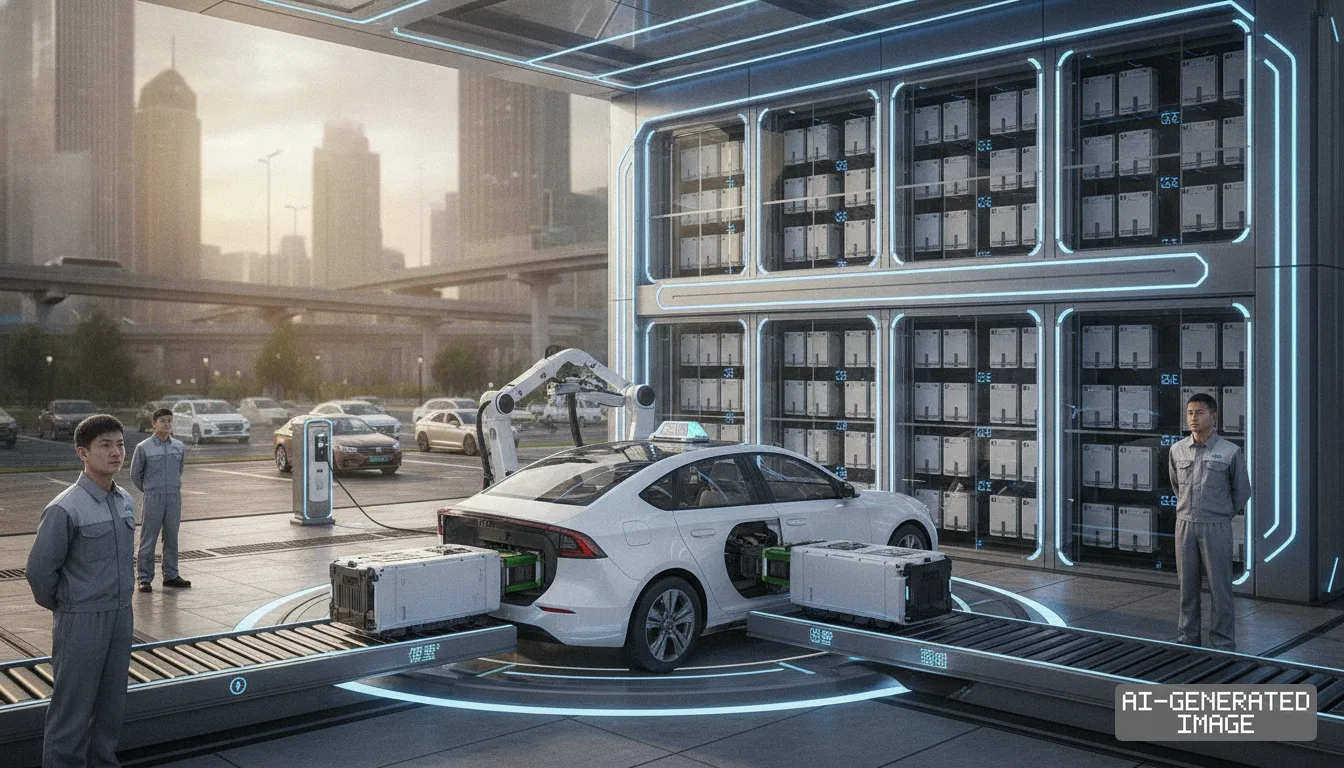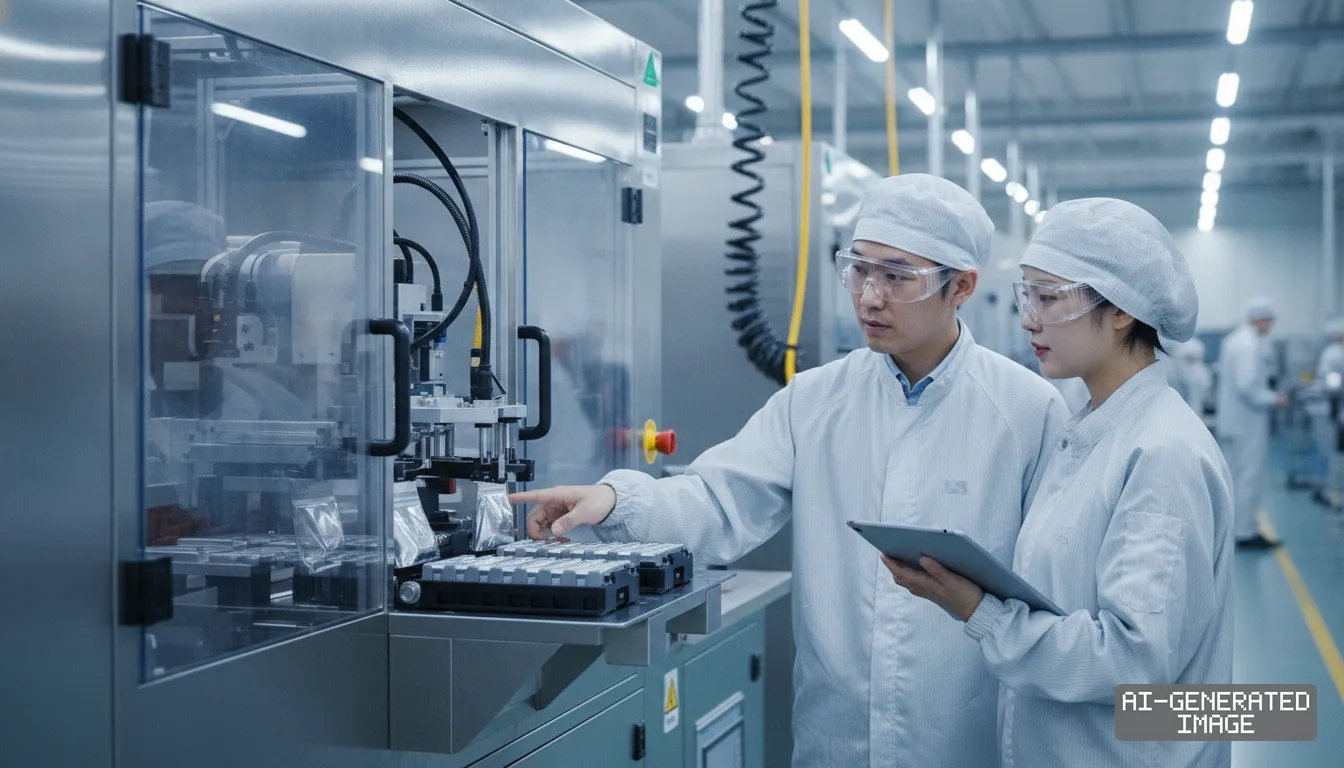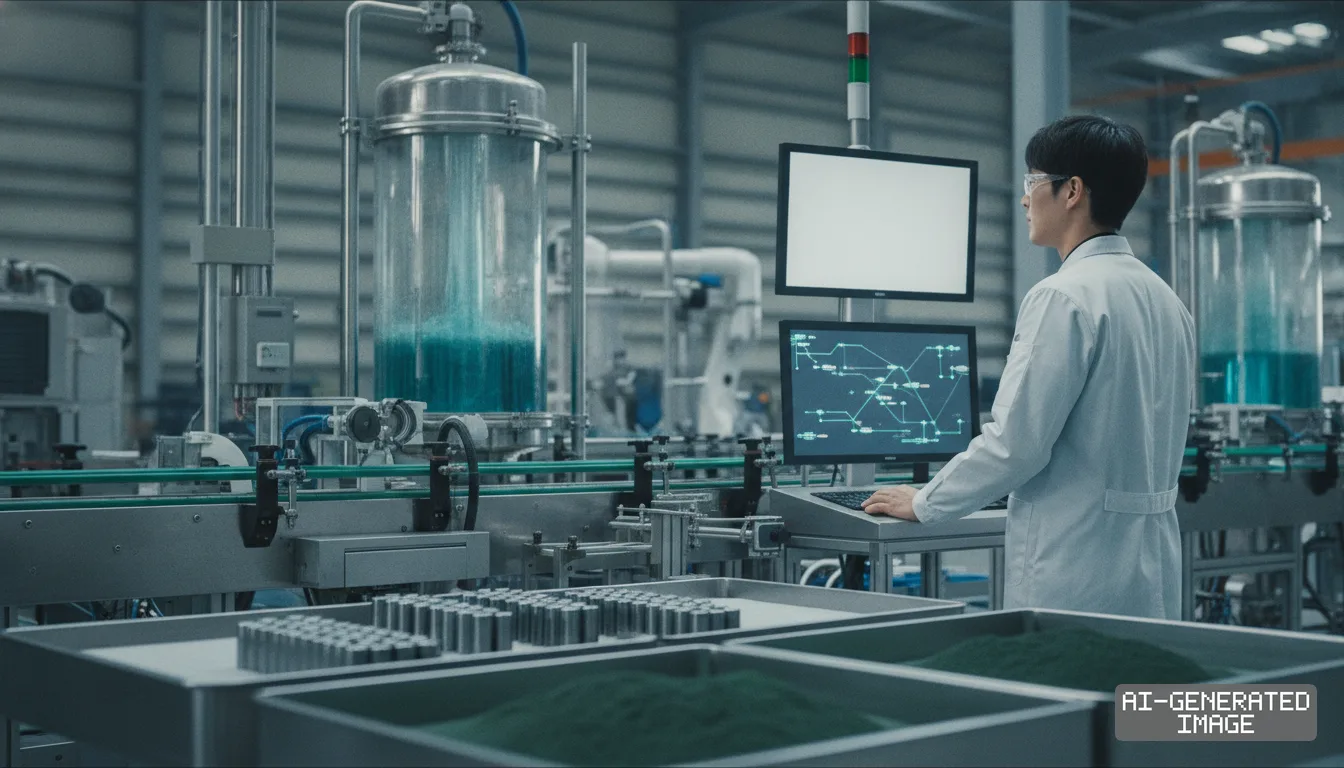
BYD launches 130 kWh LFP pack in Denza SUV with 960 km range
The 3.1-ton N8L EV brings high-capacity blade cells into luxury three-row SUVs, challenging the range monopoly held by nickel-cobalt chemistries.
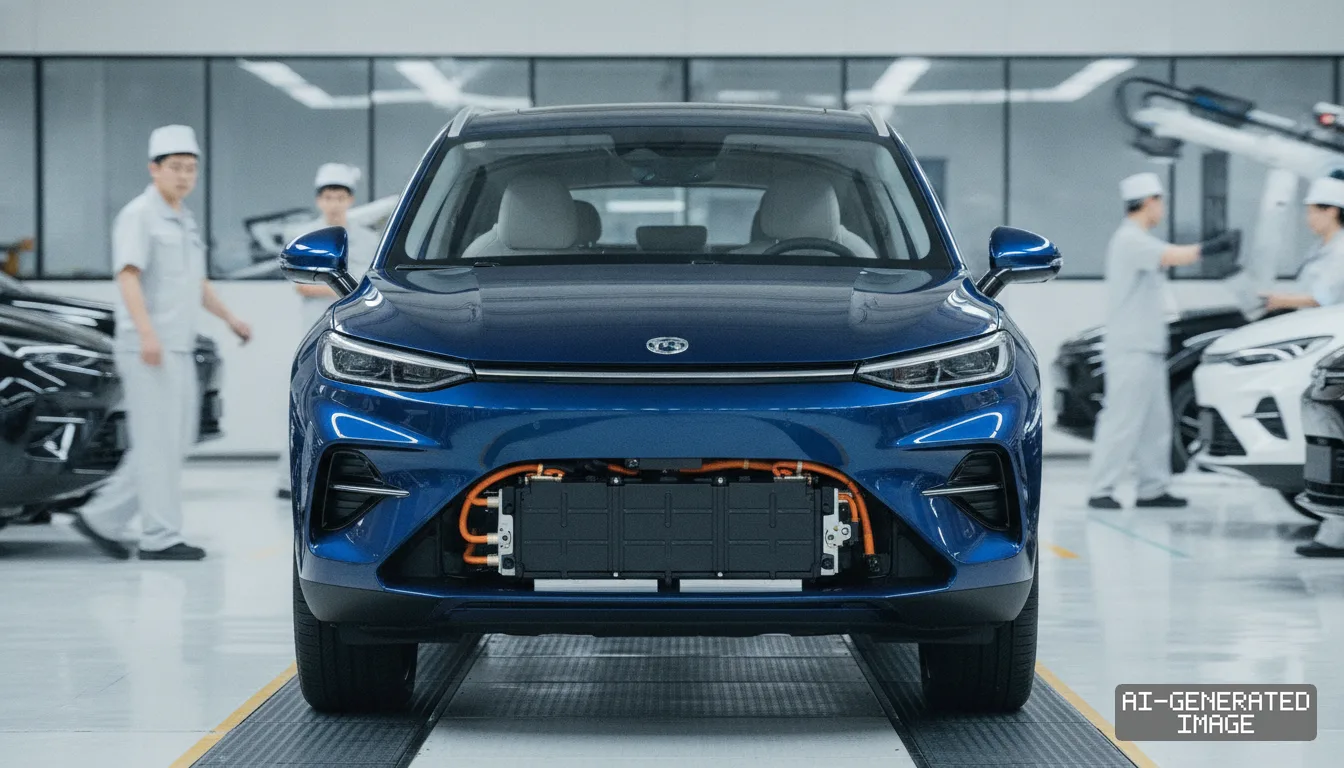
BYD's premium brand Denza said Sept. 5 it would launch its all-electric N8L SUV on Sept. 14, pairing a 130.15-kilowatt-hour lithium-iron-phosphate battery with 960 kilometers of driving range.
The vehicle represents the largest passenger battery pack deployed by BYD to date. The move extends cheaper lithium-iron-phosphate chemistry into full-size luxury vehicles, a segment long dominated by nickel-rich batteries from South Korean cell manufacturers.
China's Ministry of Industry and Information Technology published the vehicle's regulatory filing in August. The type-approval notice confirmed the 130.15-kilowatt-hour pack size and certified the sport utility vehicle for 960 kilometers under China Light-Duty Vehicle Test Cycle standards.
That certification equates to roughly 785 kilometers under the Worldwide Harmonized Light Vehicles Test Procedure used in Europe. Denza general manager Li Hui released official vehicle previews on Aug. 31 before confirming the launch date.
FinDreams Battery, the wholly owned battery-manufacturing subsidiary of BYD, supplies the cells. The pack relies on lithium iron phosphate, a cathode chemistry made from iron and phosphorus rather than costlier metals like nickel, cobalt or manganese.
FinDreams uses a second-generation Blade Battery architecture. The design packs long, thin prismatic cells directly into the vehicle chassis without intermediate modules, a technique known as cell-to-pack integration that raises structural volume utilization above 50%.
The regulatory approval documents list the curb weight of the six-seat vehicle at 3,110 kilograms. A single rear-mounted permanent-magnet synchronous motor drives the vehicle with a maximum output of 370 kilowatts, delivering roughly 503 horsepower.
The sport utility vehicle reaches a top speed of 240 kilometers per hour, according to regulatory filings. Earlier regulatory disclosures included a triple-motor all-wheel-drive system, but the initial production model uses the single-motor layout.
The electric model measures 5,200 millimeters in length, 1,999 millimeters in width and 1,820 millimeters in height. The chassis sits on a 3,075-millimeter wheelbase, matching the dimensions of the plug-in hybrid version launched in 2025.
Eliminating the front internal combustion engine allowed engineers to install a 208-liter powered front storage compartment. The compartment includes a drainage plug with a protective cover so users can hose it clean after storing muddy gear, Li said.
Denza fitted the chassis with dual-chamber air suspension to manage the 3.1-ton operating mass. The suspension system works alongside active rear-wheel steering that can turn the rear wheels by up to 10 degrees in either direction.
The rear-steering geometry reduces the vehicle's turning radius to 4.58 meters, the company said. That tight turning circle enables the 5.2-meter SUV to maneuver through compact urban intersections and parking garages.
Denza first introduced the N8L nameplate in October 2025 as a plug-in hybrid starting at 299,800 yuan ($42,270). A refreshed hybrid variant featuring faster charging and a 75.26-kilowatt-hour battery joined the lineup in June at 319,800 yuan.
Deploying a 130-kilowatt-hour pack marks a critical turning point for global battery supply chains. Nickel-cobalt-manganese chemistry historically owned large vehicle platforms because its higher gravimetric energy density allowed long driving range without imposing excessive pack volume or intolerable vehicle mass.
South Korean battery makers LG Energy Solution, Samsung SDI and SK On built their premium businesses around high-nickel cathode formulations. Those chemistries deliver 250 to 300 watt-hours per kilogram at the cell level, surpassing traditional iron-based cells.
Traditional iron-phosphate cells yield between 140 and 160 watt-hours per kilogram. BYD compensates for that lower gravimetric energy density by combining space-saving blade form factors with high-voltage architectures, fitting larger total capacity into passenger subframes.
The practical consequence for automakers is raw material cost. Iron-phosphate cathodes eliminate refined nickel and cobalt, shielding cell producers from volatile metal trading prices and reducing pack-level cell manufacturing costs by an estimated 20% to 30% against nickel alternatives.
The engineering trade-off appears in total vehicle weight. At 3,110 kilograms, the N8L EV carries hundreds of kilograms more mass than comparable three-row electric SUVs using nickel batteries, increasing tire wear and chassis load.
To support the large battery, Denza integrated high-rate flash charging. The system charges the pack from 10% to 97% capacity in roughly nine minutes when connected to compatible high-voltage charging terminals, the company said.
The technical milestone arrives as BYD expands Denza outside China. The premium brand launched sales in European markets with the Z9 GT shooting brake, aiming to establish higher average selling prices in export destinations despite European Union import tariffs.
Denza will reveal final retail pricing and delivery schedules for the N8L EV during its formal launch event on Sept. 14. Series assembly will take place across BYD's domestic passenger vehicle factories.
Impact map
How this development propagates across the region and out to global buyers.
| Event | Korea | China | Japan | Global impact |
|---|---|---|---|---|
| Denza 130kWh LFP pack | ternary cell makers face cost pressure | LFP moves into luxury SUVs | materials suppliers adjust mix | large EV battery cost falls |
In this story
- Companies
- BYDDenza
- Tickers
- 002594.SZ1211.HK
- Exposed
- LG Energy SolutionSamsung SDISK On
- Policy
- SubsidiesTariffs
- Impact
- Supply ChainPricingCost Structure
Track every Subsidies development → Track every Tariffs development →
Related briefings
- CATL widens global EV battery lead to 39.4% as Korean share slips Also on SK On, BYD, Samsung SDI
- Chinese EVs capture 35% Korea market share under 8% tariff Also on SK On, BYD, Samsung SDI
- CATL Surpasses Korean Battery Trio in Markets Outside China Also on SK On, BYD, Samsung SDI
- Chinese EV Makers Build 26 EU Plants to Bypass 27% Tariffs Also on SK On, BYD, Samsung SDI
Sources
Reporting
Confidence: medium — how we grade this
The documents behind this briefing are linked above. East Asia Brief produces its English text with AI assistance under human editorial review, and does not translate or republish other outlets' articles. See our methodology and AI policy. Spotted an error? Tell us.
The Morning Brief
What changed in Korean, Chinese and Japanese industry overnight — and what it means for your supply chain. One email, weekday mornings, US time. Free.
The Morning Brief is in preparation. Leave your address and we will write to you once — when the first issue is ready. Nothing before that.