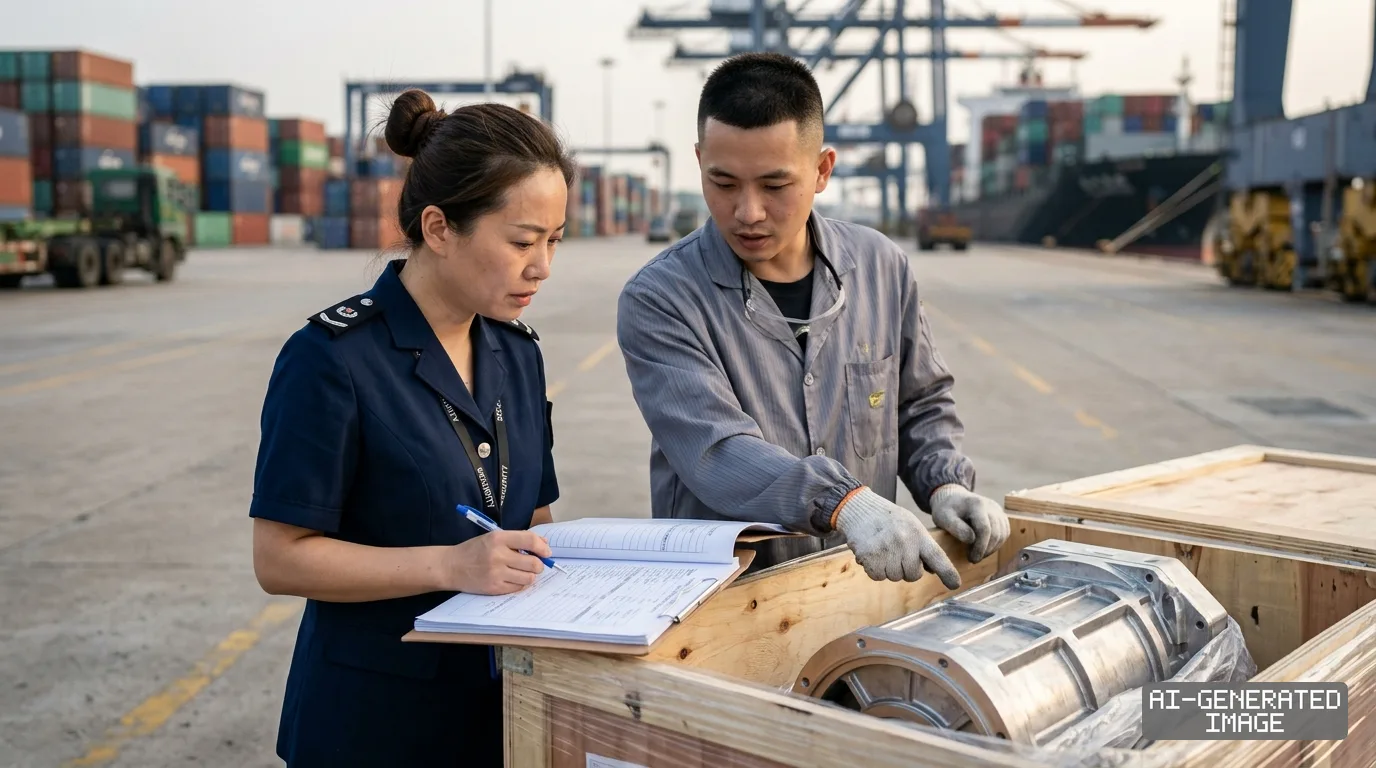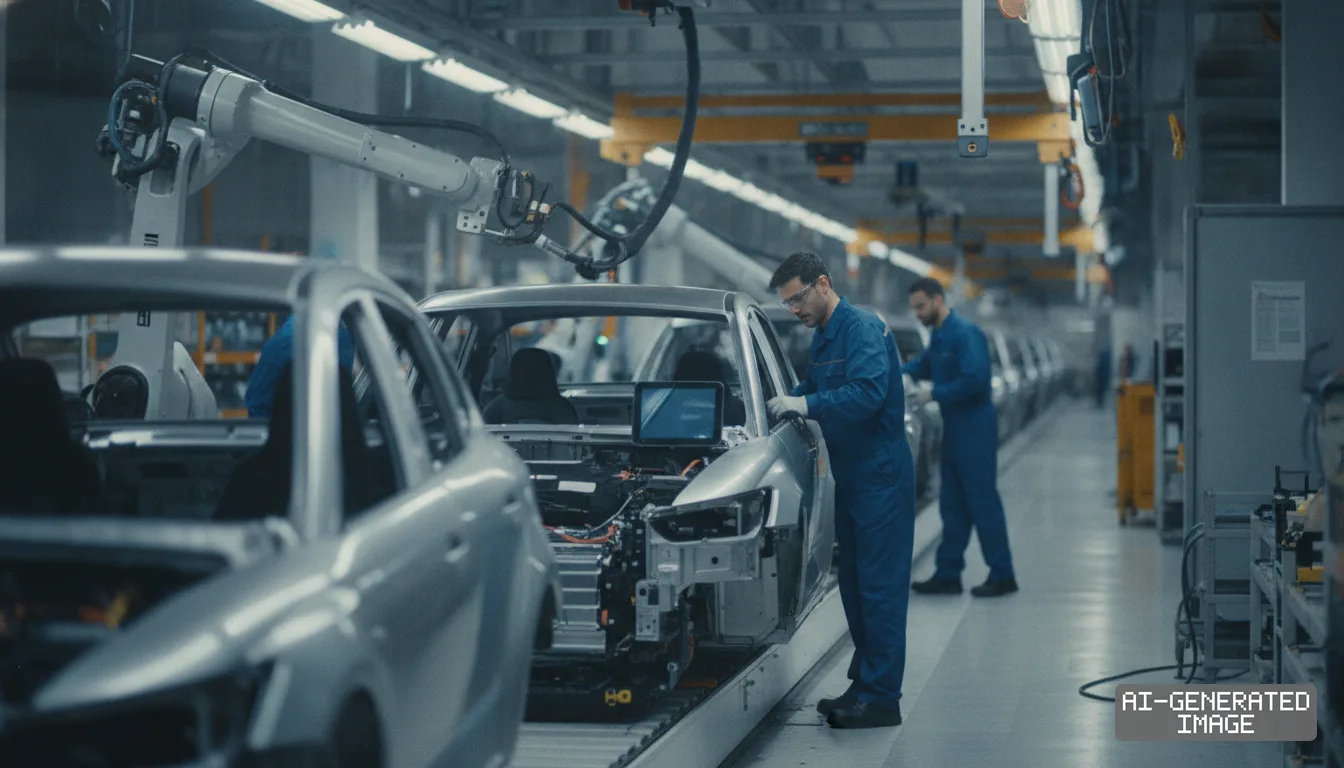
Chinese EVs capture 35% Korea market share under 8% tariff
Automakers urged lawmakers at a National Assembly forum to enact domestic production tax credits after shipments from Shanghai plants jumped 149% through July.
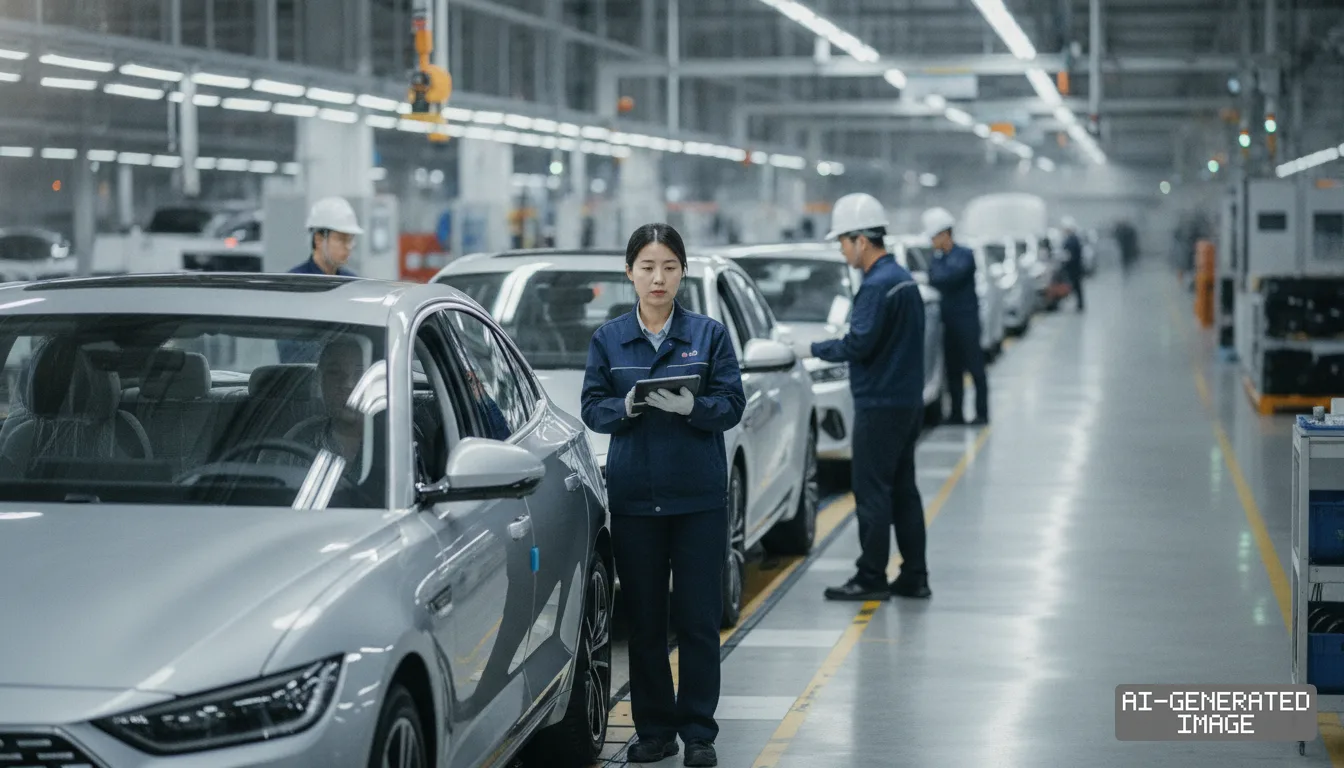
The Korea Automobile and Mobility Association said Sept. 18, 2026 that Chinese-made electric vehicles captured a record 35.3% share of South Korea's EV market during the first seven months of the year.
Registrations of Chinese-built battery electric cars surged 148.9% year-on-year to 83,000 units between January and July. Total domestic electric vehicle sales reached 235,000 units over the same period, the trade association said.
The import volume marks a rapid shift from 2023, when vehicles assembled in China accounted for 12.6% of domestic sales. Most shipments originated from Tesla's Shanghai plant alongside rising commercial and passenger deliveries from BYD.
South Korea maintains an 8% basic tariff on imported Chinese passenger cars. The two countries excluded finished passenger automobiles from duty reductions when their bilateral free trade agreement took effect in December 2015.
China imposes a 15% tariff on South Korean vehicle imports, creating an asymmetric border barrier. The tariff difference leaves South Korea open to lower-priced Chinese factory shipments without reciprocal tariff treatment for South Korean brands.
South Korea's border duties contrast with policies adopted across other major automotive manufacturing nations. The United States enforces tariffs reaching 127.5% on Chinese electric cars, while the European Union applies countervailing duties of up to 45.3%.
Japan provides direct manufacturing support rather than relying solely on border measures. Tokyo funds one-third of qualifying equipment costs through an economic security reserve and allocated 671.1 billion yen ($4.6 billion) for domestic supply chains.
Global automotive executives warned that open markets experience fast import saturation. Jose Muñoz, president and chief operating officer of Hyundai Motor, said Sept. 17 at a forum in California that Chinese brands quickly dominate markets without barriers.
Muñoz pointed to the United Kingdom, where Chinese brands secured lead sales positions in open vehicle segments. Unconditional market access would create similar pressures across other developed auto markets, Muñoz said.
Chinese manufacturers accounted for more than 60% of global electric vehicle sales in the first half of 2026, according to KAMA data. Chinese auto brands have combined cost scale at home with foreign market expansion.
In South Korea, BYD advanced to fourth place in domestic electric vehicle sales rankings through July, KAMA said. Other Chinese groups including Geely, Xpeng and Chery are also expanding component and vehicle operations in the country.
Automotive experts warned that import penetration threatens South Korea's domestic component manufacturing. Domestic automakers risk losing volume to lower-cost foreign manufacturing hubs, said Park Jung-kyu, a guest professor at the Korea Advanced Institute of Science and Technology.
Park cited Italy's automotive output, which contracted from 2 million units annually to 238,000 units last year. A collapse in domestic vehicle assembly inevitably dismantles local parts suppliers and precision machining networks, Park said.
Domestic battery manufacturers also face structural shifts as imported vehicles enter the market. Chinese electric models rely on Chinese battery supply chains, reducing potential local demand for cells produced by LG Energy Solution, Samsung SDI and SK On.
Consumer purchase subsidies alone cannot offset widening production cost advantages held by Chinese producers, said KAMA Executive Director Yoon Kyung-sun. Yoon urged policymakers to adopt manufacturing tax credits tied directly to domestic assembly volume.
Lawmakers from the parliamentary Mobility Forum have initiated tax legislation to protect domestic manufacturing bases. Rep. Yoon Han-hong sponsored an amendment to the Restriction of Special Taxation Act in August 2026 to add electric vehicles.
The pending bill broadens an existing production credit program that previously covered six strategic categories. Yoon's proposal incorporates electric vehicles and small modular reactors into the credit framework, extending tax relief to domestic export production.
Co-chair Rep. Yoon Hoo-duk said domestic production credits provide direct incentives to preserve automotive factory jobs. Yoon called the policy necessary to maintain regional employment across specialized tier-one and tier-two automotive component suppliers.
Ministry of Trade, Industry and Energy officials endorsed the introduction of vehicle production credits during the Sept. 18 forum. Ministry representatives said consumer purchase rebates fail to compensate for the manufacturing cost gap with Chinese factories.
The Ministry of Economy and Finance expressed caution during the panel discussions. Finance ministry officials said the government is examining whether vehicle market share losses stem from price disparities before determining tax expenditure commitments.
KAMA has not published its full seminar presentation slide deck or detailed vehicle-by-vehicle import registrations. The finance ministry has also not released an official gazette confirming the industry market share calculation or endorsing the amendment.
The National Assembly plans to consider the pending tax credit amendment during regular legislative committee hearings this autumn. The 8% customs tariff on imported passenger vehicles remains in effect under current South Korean schedules.
Impact map
How this development propagates across the region and out to global buyers.
| Event | Korea | China | Japan | Global impact |
|---|---|---|---|---|
| Korea EV import tariff gap | Hyundai and Kia lose domestic share as Chinese EV imports hit 35.3% | BYD and Tesla Shanghai use 8% tariff to expand sales volume | METI counters Chinese pricing with 671.1 billion yen in supply chain funds | Western tariffs divert lower-cost Chinese EV output into lower-tariff markets |
In this story
- Companies
- TeslaBYDHyundai MotorKia
- Tickers
- TSLA002594.SZ005380.KS000270.KS
- Exposed
- LG Energy SolutionSamsung SDISK OnGeely Automobile
- Policy
- TariffsTax CreditsSubsidies
- Impact
- PricingOrder BookCost Structure
Track every Tariffs development → Track every Tax Credits development → Track every Subsidies development →
Related briefings
- Korea Links Commercial Electric Van Grants to Battery Recyclability Also on Kia, Hyundai Motor, BYD
- UBTECH opens humanoid robot plant with 10,000-unit capacity Also on Geely Automobile, Cost Structure
- Hyundai, LG Energy launch used battery storage pilot for EVs Also on Kia, Hyundai Motor, LG Energy Solution
- South Korea Expands Advanced Battery Tax Credits to Rebalance Domestic Fabs Also on Hyundai Motor, Tax Credits, SK On
Sources
Primary documents
Reporting
Confidence: high — how we grade this
The documents behind this briefing are linked above. East Asia Brief produces its English text with AI assistance under human editorial review, and does not translate or republish other outlets' articles. See our methodology and AI policy. Spotted an error? Tell us.
The Morning Brief
What changed in Korean, Chinese and Japanese industry overnight — and what it means for your supply chain. One email, weekday mornings, US time. Free.
The first issue goes out shortly. Sign up now and you will not miss it.