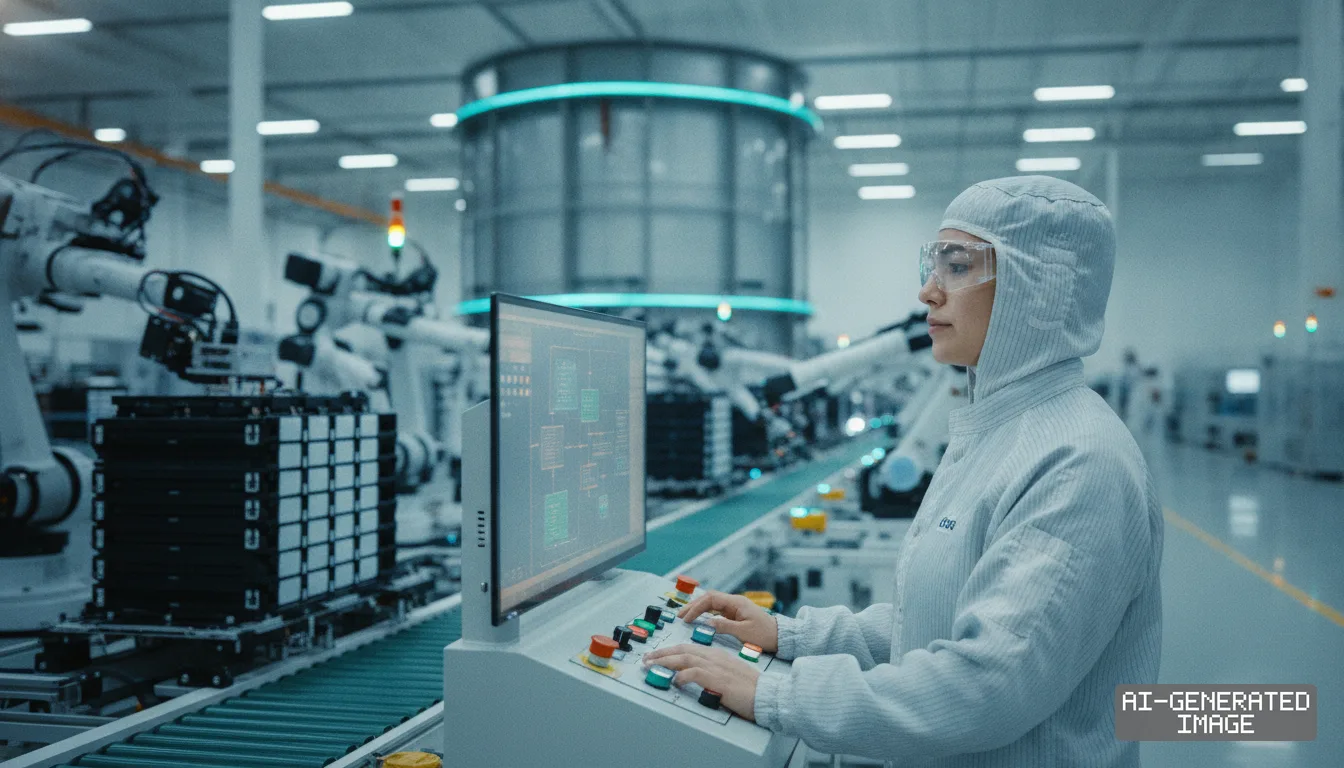
POSCO Future M deploys Palantir AI to improve factory yields
The South Korean supplier will roll out data analytics across sales and cathode manufacturing, targeting a 30% productivity rise and faster contract delivery.
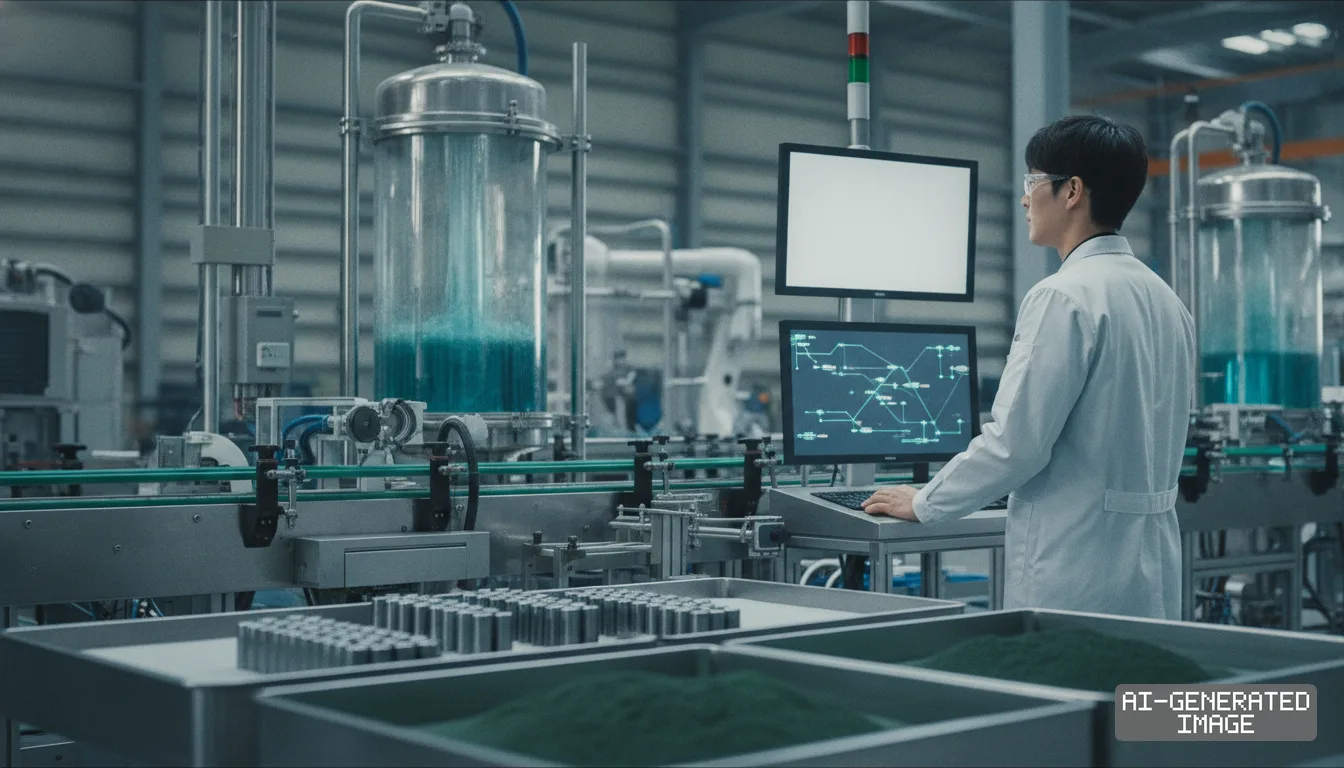
POSCO Future M said Oct. 22 it signed an agreement to deploy software from Palantir Technologies across its battery materials business, targeting a 30% gain in manufacturing productivity.
The contract covers Palantir's Foundry data operations system and its Artificial Intelligence Platform, known as AIP. The enterprise tools combine disparate factory datasets to automate operational planning, the company said.
The battery materials supplier aims to lift sales responsiveness by more than 60% and halve development time for new products. POSCO Future M did not disclose the financial value or the duration of the software licensing agreement.
Under the rollout schedule, POSCO Future M will deploy the software first within its commercial and marketing divisions. The tools will organize customer communication and contract workflows before moving to factory operations, the company said.
Subsequent phases will introduce the platforms to production floors that manufacture cathode and anode active materials. Those lines supply lithium-ion battery cells to automakers across North America, Europe and South Korea.
The software deployment links into an operational model where software agents carry out daily analysis and execution. Human staff will retain final approval authority over production scheduling and commercial decisions, POSCO Future M said.
Cathode manufacturing requires tight control over temperature, precursor mixing and calcination — the high-heat furnace stage that forms cathode crystal structures. Small variations in thermal profiles alter particle sizes and reduce cell energy density.
By connecting sensor feeds from furnaces directly to analytics models, POSCO Future M intends to cut batch failures. Battery materials makers face margin pressure as benchmark lithium carbonate prices hover near cyclical lows.
Cathode production lines in Pohang and Gwangyang run high fixed operating costs. Improving process stability allows POSCO Future M to extract higher output without committing additional capital expenditure to physical plant expansions.
The software vendor, Palantir Technologies, supplies data infrastructure to defense agencies, aerospace manufacturers and financial institutions. Its software builds an operational data map — termed an ontology — that connects sensor logs with inventory tracking.
POSCO Future M outlined its broader digital strategy in July under an initiative called the Battery of Things Ecosystem Game Changer. The company launched an enterprise-wide process innovation drive in August to prepare workflows for automation.
Internal preparations included an internal technical festival held earlier in October. The program trained 87 operational specialists to build internal software workflows and detect process bottlenecks across business units.
The 87 internal specialists developed field applications that POSCO Future M plans to roll out across operations through the first half of 2027. That timeline matches the scheduled progression toward plant-floor deployment.
Battery cell manufacturers have tightened specifications for cathode batches as electric vehicle makers demand longer driving ranges. Cell partners such as LG Energy Solution and Ultium Cells require exhaustive quality documentation for raw materials.
Handling customer inquiries manually has slowed contract finalization during periods of volatile metal prices. POSCO Future M expects the initial commercial deployment to automate pricing formulas and technical document generation for automotive clients.
The software platform will centralize data from supply chain partners, mining affiliates and quality inspection labs. Centralized tracking helps verify domestic and regional sourcing rules required under United States and European clean energy regulations.
Upstream precursor and graphite supply chains involve multiple overseas facilities. Consolidating transport, customs clearance and testing logs into a single data layer reduces inventory holding requirements across production hubs.
The parent group, POSCO Holdings, has pushed digital transformation across its steelmaking and industrial materials subsidiaries. Sister steel units already operate automated blast furnaces using internal process models developed over the past decade.
Applying external software to battery chemistry reflects the growing complexity of cathode recipes, including high-nickel single-crystal formulations. These advanced chemistries demand real-time adjustments to raw material feed rates during chemical synthesis.
POSCO Future M did not state whether the software platform will connect to its Canadian joint venture with General Motors. The company has not published the specific licensing fees paid to Palantir Technologies.
The initial rollout in the commercial division takes effect immediately, with operational evaluations running into early next year. Plant-floor deployment across domestic cathode and anode lines will proceed in phases through the first half of 2027.
Impact map
How this development propagates across the region and out to global buyers.
| Event | Korea | China | Japan | Global impact |
|---|---|---|---|---|
| Enterprise AI platform contract | POSCO Future M targets 30% plant productivity lift across cathode lines | Domestic cathode suppliers face wider operational efficiency gap on high-nickel lines | Panasonic and component buyers see faster material certification turnaround | Battery cell supply chain tightens material compliance and traceability standards |
In this story
- Companies
- POSCO Future MPalantir Technologies
- Tickers
- 003670.KSPLTR
- Exposed
- LG Energy SolutionGeneral Motors
- Policy
- Standards
- Impact
- Cost StructureSupply ChainPricing
Track every Standards development →
Related briefings
- HD Hyundai will automate shipyards with digital twins by 2030 Also on Palantir Technologies, Cost Structure
- GM vets Korean suppliers for prismatic LMR battery lines Also on POSCO Future M, General Motors, LG Energy Solution
- Korean cathode makers automate single-crystal calcination lines to secure yields Also on POSCO Future M, General Motors, LG Energy Solution
- Posco Holdings starts direct lithium extraction test runs for Korean cathode lines Also on Posco Future M, General Motors, LG Energy Solution
Sources
Primary documents
Reporting
Confidence: high — how we grade this
The documents behind this briefing are linked above. East Asia Brief produces its English text with AI assistance under human editorial review, and does not translate or republish other outlets' articles. See our methodology and AI policy. Spotted an error? Tell us.
The Morning Brief
What changed in Korean, Chinese and Japanese industry overnight — and what it means for your supply chain. One email, weekday mornings, US time. Free.
The Morning Brief is in preparation. Leave your address and we will write to you once — when the first issue is ready. Nothing before that.