US limits aircraft part licenses to China to counter mineral limits
The Commerce Department has restricted deliveries to COMAC and weighed curbs on landing gear as negotiators contest rare earth supplies ahead of a Jan. 10 trade deadline.
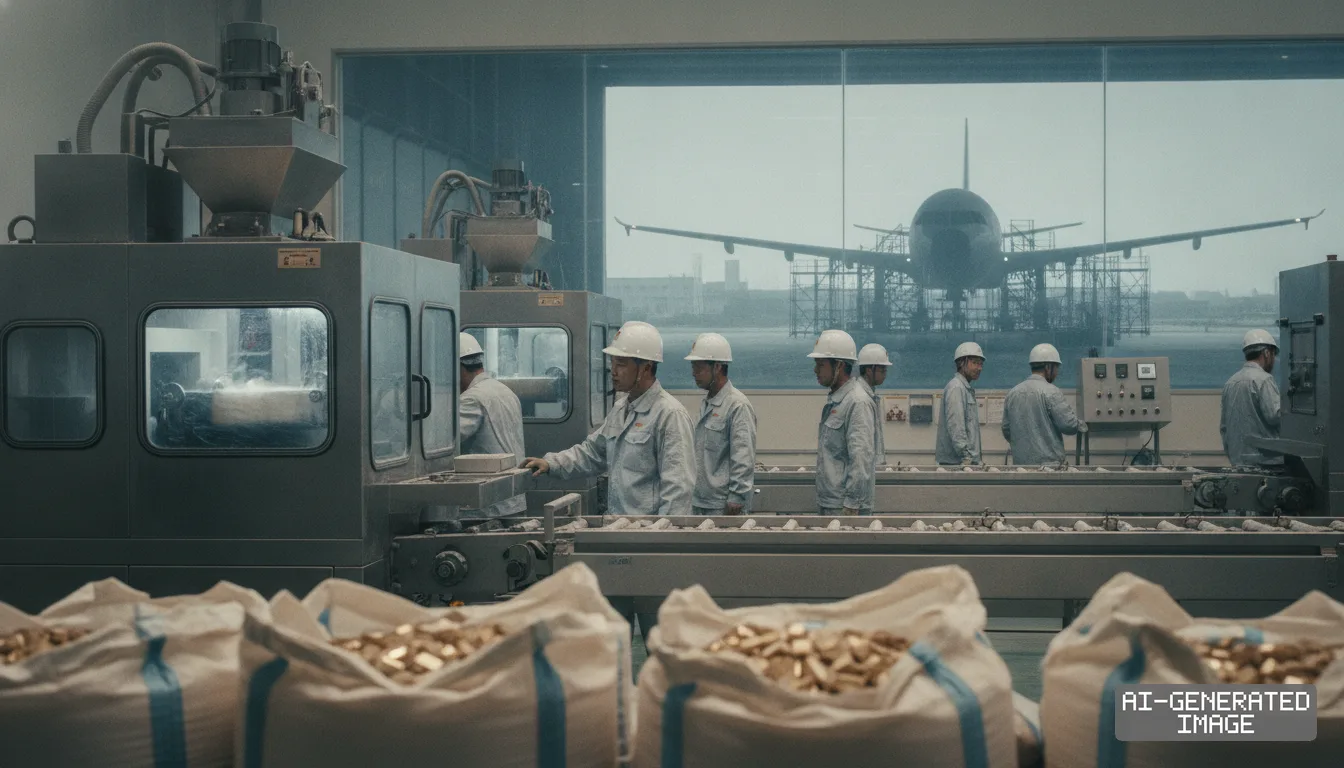
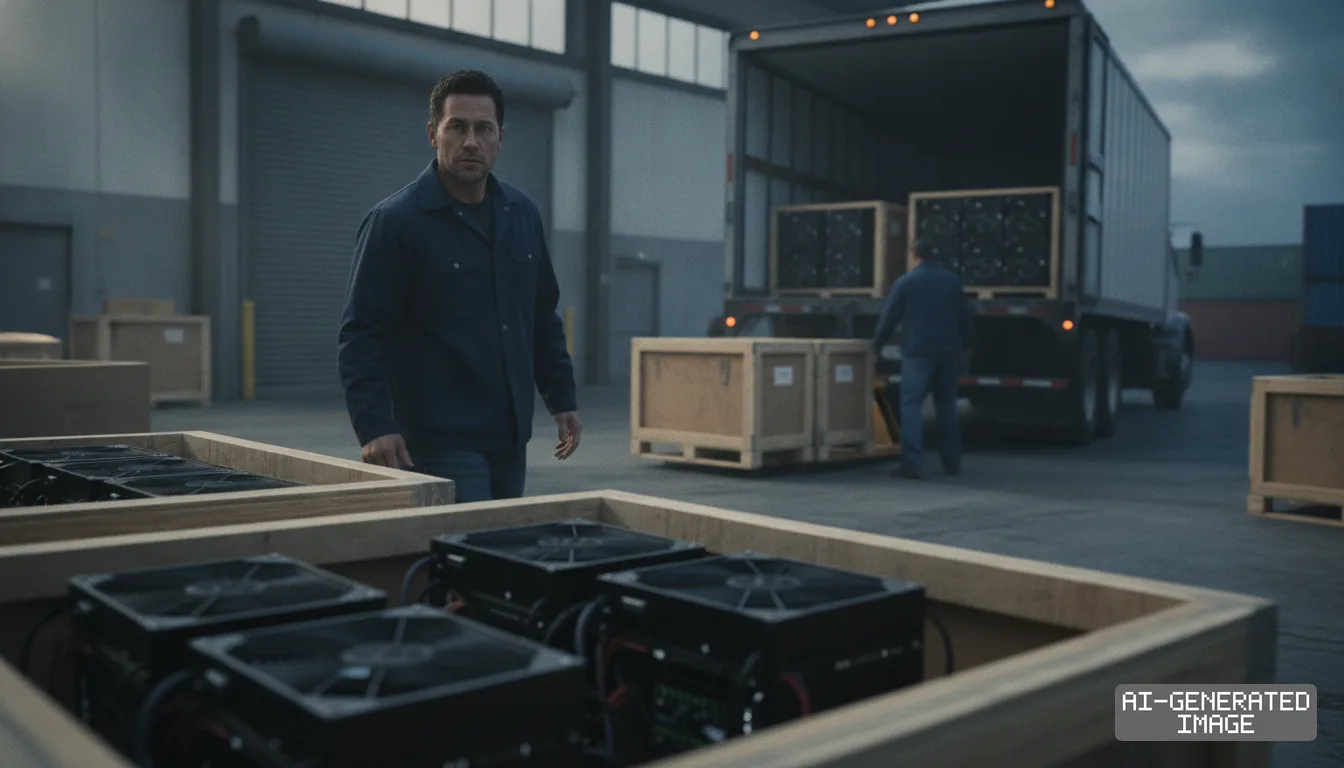
The U.S. Department of Commerce placed volume caps on civil aircraft component export licenses bound for China on Oct. 6, 2026, restricting parts deliveries to prevent stockpiling by Commercial Aircraft Corporation of China.
The measure targets narrow-body jet assembly as Washington leverages aerospace component access against Beijing's control over critical minerals. China processes roughly 70% of the world's rare earth supplies, maintaining an export choke point over materials required in defense systems, magnets and microchips.
China has sought multi-year spare-parts guarantees for roughly 200 Boeing aircraft agreed to earlier this year. The parts package represents the main operational pipeline for expanding Chinese civil airline fleets, according to trade records.
Bureau of Industry and Security officials delayed processing export permits for Chinese carriers over recent weeks, people familiar with the matter said. The agency slowed approvals while reviewing wider restrictions on specialized aviation hardware.
Commerce officials also prepared a draft rule to ease restrictions on landing gear and flight-control assemblies, people familiar with the matter said. The proposal would bring landing equipment under tighter administrative licensing thresholds.
The draft measure also introduces export licensing requirements for aviation hydraulic fluid, according to people familiar with the matter. American energy producer ExxonMobil supplies the specialized synthetic fluid to Chinese commercial aviation maintenance operators.
The licensing caps focus directly on state-owned planemaker Commercial Aircraft Corporation of China, known as COMAC. Regulators designed the quotas to prevent the manufacturer from amassing inventories of American avionics, sensors and mechanical actuators.
COMAC builds the C919 narrow-body passenger aircraft to challenge Western short-haul jetliners. The C919 relies on Western aerospace equipment for its propulsion systems, mechanical linkages and cockpit displays, according to manufacturer specifications.
CFM International, a joint venture between GE Aerospace and France's Safran, supplies LEAP-1C turbofan engines for the C919 jet. Regulators temporarily halted license approvals for those engines during trade disputes last year before resuming shipments.
Honeywell Aerospace supplies flight-control computers, auxiliary power units and navigation hardware for the C919 airframe. Those component categories faced review during previous licensing pauses before agencies issued temporary authorizations, trade records show.
The aerospace licensing slowdown follows a bilateral summit that produced a temporary tariff agreement covering $60 billion in traded goods. Presidents Donald Trump and Xi Jinping agreed during those talks to lower selected import levies.
Negotiators extended their formal trade truce deadline to Jan. 10, 2027, according to official summit announcements. That extension gave working groups three additional months to address unresolved mineral quotas and industrial component shipments.
The White House is using China's reliance on American aviation suppliers as a counterweight against Beijing's rare earth restrictions, analysts said. Chinese customs authorities tightened export licensing for heavy rare earths, gallium and antimony earlier this year.
American manufacturers depend on Chinese processing plants for dysprosium, terbium and neodymium used in permanent magnets. Washington has struggled to replace Chinese refining capacity, creating supply risks for automakers and defense contractors, industry groups said.
Beijing countered U.S. technology controls by restricting mineral export volumes, prompting Washington to test alternative choke points. The Commerce Department positioned aircraft spare parts as an immediate retaliatory lever, trade specialists said.
Boeing maintains a large commercial exposure to Chinese airline purchasing decisions. Chinese carriers operated roughly 1,200 Boeing passenger planes entering 2026, requiring steady maintenance parts and overhaul components from American logistics depots.
Chinese carriers conditioned the completion of their 200-jet order on secured delivery schedules for replacement turbines and structural parts. The licensing slowdown directly clouds that commercial arrangement, aviation consultants said.
COMAC has sought to accelerate domestic substitution programs for core flight systems. However, Chinese avionics suppliers lack international airworthiness certifications, leaving COMAC dependent on certified Western subcontractors for active passenger service, industry analysts said.
A complete cutoff of American components would delay commercial deliveries of the C919 program by several years, industry executives said. The quota regime forces COMAC to operate on minimal component cushions rather than building stockpiles.
The Department of Commerce has not published a formal regulatory notice in the Federal Register, and officials have not disclosed numerical volume limits for the component licenses.
The White House and the Department of Commerce declined to comment on internal licensing processing times or quota guidelines. China's Ministry of Commerce did not issue a public response regarding the aircraft component delays.
Negotiations over the aircraft component quotas and mineral licenses will resume before the bilateral trade truce expires on Jan. 10, 2027. Both governments plan technical consultations next month in Washington.
Impact map
How this development propagates across the region and out to global buyers.
| Event | Korea | China | Japan | Global impact |
|---|---|---|---|---|
| Aircraft parts export licensing caps | Korean aerospace parts makers monitor supply shifts, no direct quota impact | COMAC faces component caps on C919 jet, spare parts for 200 Boeing jets delayed | Japanese tier-one aerostructures suppliers face compliance checks on joint parts | Commercial aerospace supply chain tightens as U.S. and China trade mineral and aviation levers |
In this story
- Companies
- Commercial Aircraft Corporation of ChinaBoeingExxonMobilGE AerospaceHoneywell Aerospace
- Tickers
- BAXOMGEHON
- Exposed
- Safran
- Policy
- Export Controls
- Impact
- Supply ChainOrder BookCompliance
Track every Export Controls development →
Related briefings
- Aerospace suppliers test rare-earth-free turbine coatings Also on Safran, GE Aerospace, Export Controls
- China tightens dual-use export screening on aerospace titanium powders and tooling Also on GE Aerospace, Export Controls, Compliance
- Chinese rare earth suppliers halt shipments to US customers Also on Boeing, Export Controls, Compliance
- Xi Jinping plans business delegation for Donald Trump summit Also on Boeing, Export Controls, Compliance
Sources
Reporting
Confidence: medium — how we grade this
The documents behind this briefing are linked above. East Asia Brief produces its English text with AI assistance under human editorial review, and does not translate or republish other outlets' articles. See our methodology and AI policy. Spotted an error? Tell us.
The Morning Brief
What changed in Korean, Chinese and Japanese industry overnight — and what it means for your supply chain. One email, weekday mornings, US time. Free.
The Morning Brief is in preparation. Leave your address and we will write to you once — when the first issue is ready. Nothing before that.