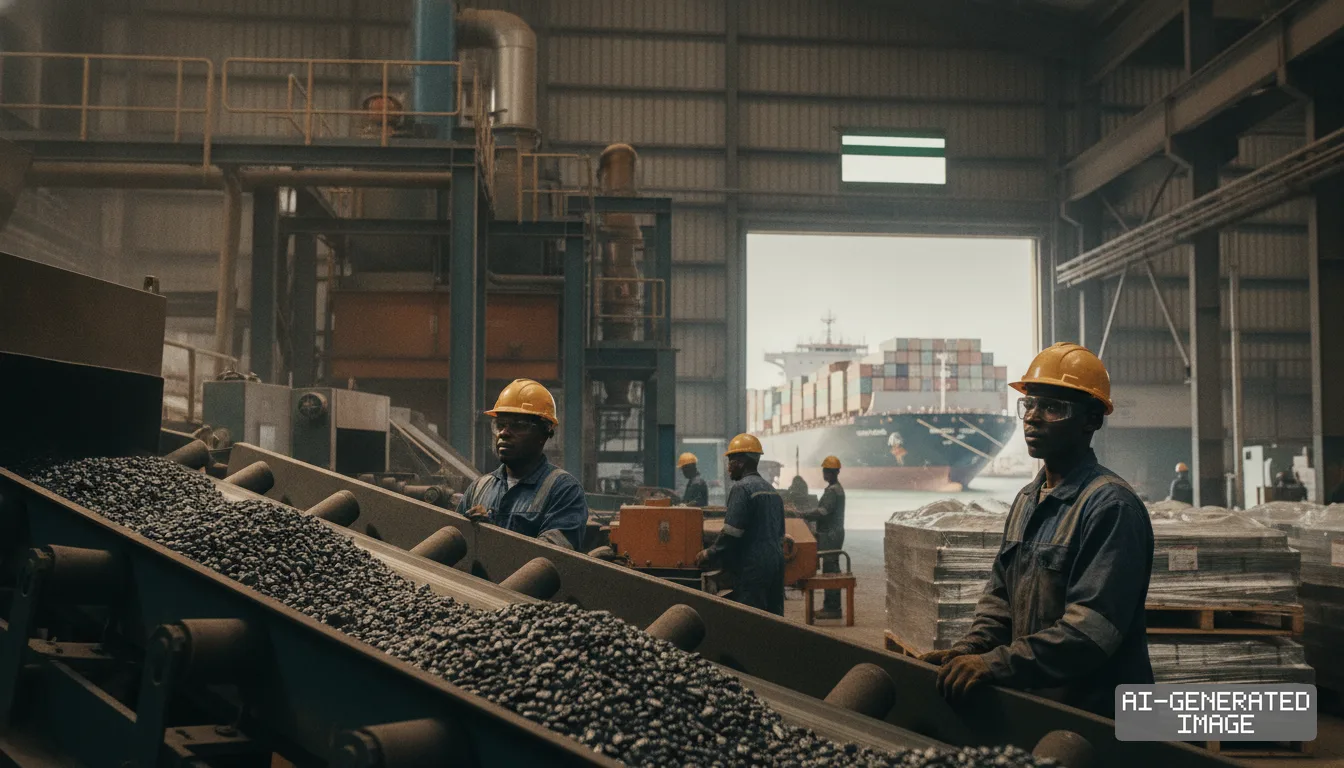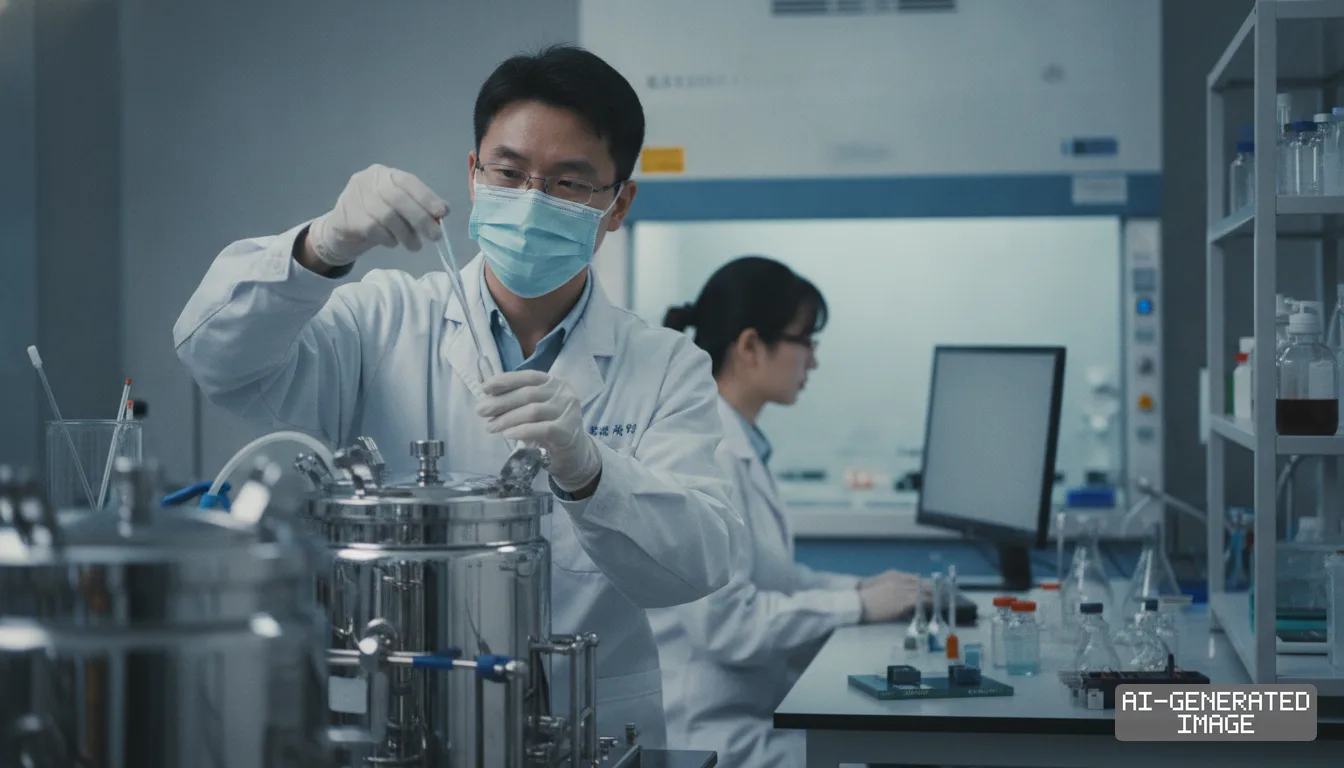
China tightens dual-use export screening on aerospace titanium powders and tooling
Prior licensing rules covering spherical alloy powders and bonding equipment force Western aerospace contractors to audit Tier 2 supply chains.
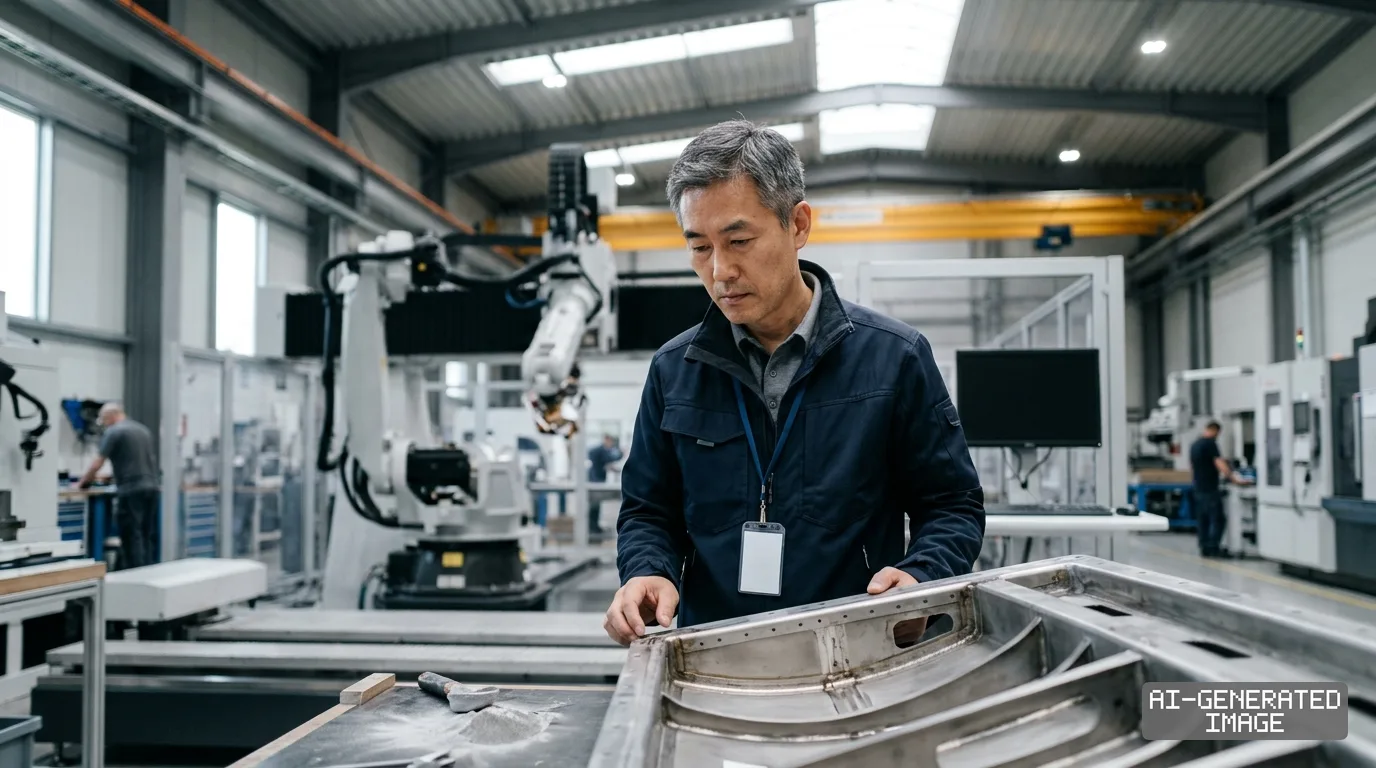
China's Ministry of Commerce enforced mandatory export licensing on specialized aerospace tooling, titanium bonding equipment and additive manufacturing inputs on July 1, 2024.
The measure, issued jointly with the General Administration of Customs and the Central Military Commission's Equipment Development Department as Announcement No. 21 of 2024 on May 30, 2024, targets production technologies for advanced structural airframes and engines.
The State Council reinforced this system on Dec. 1, 2024, by enacting the comprehensive Regulations on Export Control of Dual-Use Items. That statutory framework consolidated metal 3D printing equipment, spherical titanium alloy powders, and military computer-aided design data under a unified pre-approval licensing catalogue.
For international aerospace procurement officers and trade compliance attorneys, the regulatory framework alters procurement lead times. The rules establish individual export licensing requirements rather than an outright trade embargo.
Western commercial airframe builders rely on precision additive manufacturing to cut weight in structural brackets, nacelle hinges and fuel nozzle housings. Spherical titanium powder, produced via electrode induction melting gas atomization or plasma rotating electrode processes, serves as the primary feedstock for these selective laser melting systems.
Under the dual-use control list implemented on Dec. 1, 2024, exporters of high-purity spherical powders based on TC4 and TA15 titanium alloys must obtain prior approval from the Bureau of Industry, Security, Import and Export Control. Exporters must submit certified end-user certificates and technical specifications verifying non-military applications before customs clearance.
The tooling restrictions published in Announcement No. 21 of 2024 apply specifically to process equipment designed for superplastic forming and diffusion bonding of titanium and aluminum alloys. Those manufacturing techniques allow airframe fabricators to shape complex hollow titanium structures, including wide-chord fan blades and wing box panels, without mechanical fasteners.
The policy framework differs structurally from the direct export bans that the Ministry of Commerce enacted on Dec. 3, 2024, against the United States for gallium, germanium and superhard materials. Dual-use titanium powders and forming tools remain eligible for commercial export, provided applicants navigate end-user audits.
Chinese industrial producers have aligned their corporate capital allocation with the tightened regulatory perimeter. Xi'an Bright Laser Technologies Co., Ltd., China's largest metal additive manufacturing equipment maker, disclosed a 1.00 billion yuan ($140 million) capital expenditure plan in a Shanghai Stock Exchange filing on Sept. 23, 2024.
The company allocated the capital to expand automated atomization production lines dedicated to aerospace-grade TC4 and TA15 spherical titanium powders in Shaanxi province. The board filing confirmed that the producer established compliance procedures to track end-use documentation and meet global export clearance rules.
Procurement attorneys operating across North America and Europe face expanded diligence requirements under the extraterritorial clauses of the Dec. 1, 2024 regulations. Article 49 of the dual-use decree permits Chinese trade authorities to penalize foreign intermediaries that transfer controlled Chinese-origin alloys to military entities or unverified third parties.
The practical consequence for tier-one aerostructures suppliers is an extended procurement timeline. Standard customs processing for uncontrolled industrial powders historically cleared within days. Individual dual-use export license reviews under the Ministry of Commerce take between 30 and 45 business days.
Supply chain managers must structure multi-tiered audit trails covering alloy melt origins, particle size distributions and machine calibration profiles. Re-exporting finished components that incorporate Chinese-origin controlled spherical titanium powder requires contractual declarations to avoid Chinese administrative sanctions.
Aerospace component manufacturers in Europe and the United States have accelerated qualification procedures for alternative atomization facilities in North America, Japan and Western Europe. Producing spherical powders with uniform sphericity and low oxygen pickup requires specialized vacuum inert gas atomization towers, where delivery lead times for new capital machinery exceed 14 months.
The licensing mechanism also grants Chinese authorities visibility into overseas manufacturing capacity. When foreign prime contractors submit license applications with civil aircraft certification numbers, regulatory reviewers gain granular insight into commercial build rates and material consumption schedules.
Trade compliance departments must monitor the dual-use watch lists published periodically by the Ministry of Commerce. Foreign entities unable to verify their commercial end uses face heightened administrative scrutiny or placement on restricted lists, which halts dual-use deliveries.
The Ministry of Commerce and the General Administration of Customs maintain quarterly review windows to update technical threshold metrics for dual-use alloy powders and additive tooling. The next scheduled review of the dual-use export control catalogue takes effect on Jan. 1, 2027.
Impact map
How this development propagates across the region and out to global buyers.
| Event | Korea | China | Japan | Global impact |
|---|---|---|---|---|
| Titanium powder export screening | additive parts verification | atomization line capex | raw sponge demand | aerospace tier-two audit lead times |
In this story
- Companies
- Xi'an Bright Laser Technologies Co Ltd
- Tickers
- 688333.SH
- Exposed
- GE Aerospace
- Policy
- Export ControlsEconomic Security
- Impact
- Supply ChainComplianceCost Structure
Track every Export Controls development → Track every Economic Security development →
Related briefings
- Aerospace suppliers test rare-earth-free turbine coatings Also on GE Aerospace, Export Controls, Compliance
- US limits aircraft part licenses to China to counter mineral limits Also on GE Aerospace, Export Controls, Compliance
- Tanzania nears graphite pacts as battery makers bypass China Also on Export Controls, Compliance, Cost Structure
- China curbs drone tech exports to US defense contractors in 2026 Also on Export Controls, Compliance, Cost Structure
Sources
Primary documents
Reporting
Confidence: high — how we grade this
The documents behind this briefing are linked above. East Asia Brief produces its English text with AI assistance under human editorial review, and does not translate or republish other outlets' articles. See our methodology and AI policy. Spotted an error? Tell us.
The Morning Brief
What changed in Korean, Chinese and Japanese industry overnight — and what it means for your supply chain. One email, weekday mornings, US time. Free.
The Morning Brief is in preparation. Leave your address and we will write to you once — when the first issue is ready. Nothing before that.