
US charges tech firm over $300M Nvidia chip exports to China
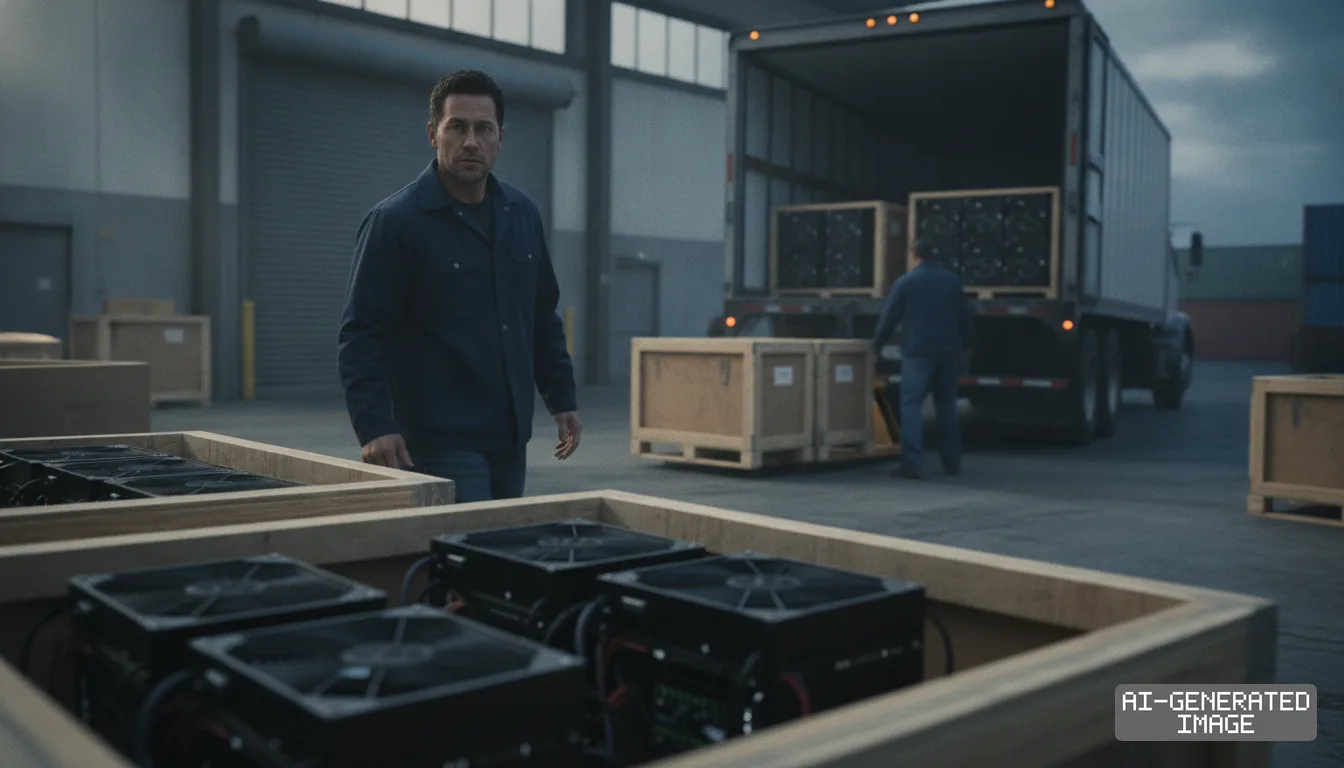
Earthmade Computer routed advanced A100 and H100 servers through Malaysia and Singapore before sending them to Hangzhou, exposing transshipment risks across Asian tech corridors.
The U.S. Department of Justice unsealed details on Oct. 3, 2026, of an indictment charging a California executive with smuggling more than $300 million in restricted Nvidia AI servers to China.
A federal grand jury returned the three-count indictment on Sept. 29 in Los Angeles against 38-year-old Greg Lui and his firm, Earthmade Computer Inc.. FBI agents arrested Lui two days later.
The $300 million scheme diverted high-density servers configured with Nvidia A100 and H100 computing chips. Those processors represent roughly four-fifths of the enterprise accelerator hardware targeted by U.S. technology sanctions.
Earthmade Computer allegedly used shell entities and intermediate shipping addresses to bypass the Export Control Reform Act. The Commerce Department requires specific export licences for cutting-edge computing hardware sent to Chinese entities.
Federal filings show Earthmade purchased server units directly from American distributors. Lui then submitted false regulatory paperwork claiming the computing clusters were bound for verified end users in Malaysia and Singapore.
Neither Malaysia nor Singapore requires individual Commerce Department licences for that tier of hardware. That regulatory gap allowed the shipments to clear customs inspections on the U.S. West Coast without interdiction.
The hardware did not remain in Southeast Asia. Logistics intermediaries immediately re-exported the server racks to mainland buyers, including an industrial equipment enterprise headquartered in Hangzhou.
Financial records cited in the indictment track massive capital flows funding the purchases. Between January and October 2024, Earthmade received more than $176 million in wire transfers from two Malaysian shipping agencies.
In one documented transaction, Lui submitted a purchase order for 27 high-density servers carrying Nvidia H100 processors. The order carried a commercial invoice value of roughly $7.6 million.
Those units flew from Los Angeles International Airport to Kuala Lumpur. A co-conspirator later confirmed in writing to Malaysian authorities that the hardware had been delivered to a Chinese buyer.
The shipments breached the Export Administration Regulations, which restrict compute density and interconnect bandwidth to China. Washington introduced those caps to hinder foreign development of frontier artificial intelligence and defense software.
The indictment charges Lui with export conspiracy, outbound smuggling and money laundering conspiracy. Each conspiracy charge carries a 20-year statutory maximum penalty, while the smuggling count carries up to 10 years.
If convicted on all three counts, Lui faces a cumulative statutory maximum sentence of 50 years in federal prison. The court has not yet scheduled a date for his formal criminal trial.
Assistant Attorney General John A. Eisenberg said the Justice Department intends to protect advanced computing advantages developed through American research and development from illicit diversion by strategic competitors.
The Bureau of Industry and Security, the Defense Criminal Investigative Service and the Federal Bureau of Investigation coordinated the cross-agency tracking effort over multiple months.
Nvidia was not named as a defendant and does not face criminal exposure in the filing. The semiconductor designer stated that it prohibits unauthorized diversions and refuses software patches to illicit systems.
The case nonetheless highlights the operational burden facing hardware designers. Nvidia generated more than $30 billion in data center revenue last quarter, but secondary distribution networks remain vulnerable to straw purchasers.
Transshipment rings exploit the fact that global supply chains rely on regional logistics hubs. Intermediaries in Southeast Asia can alter manifests, strip tracing labels and swap freight documentation within bonded zones.
For enterprise buyers across Asia, the indictment signals tighter scrutiny on end-use verification. Export compliance officers expect the Commerce Department to expand license requirements for regional data centers hosting foreign-owned hardware.
That expansion could slow delivery schedules for legitimate data center projects in Southeast Asia. Cloud builders in Johor and Singapore already face longer compliance reviews on imported high-bandwidth accelerator clusters.
The indictment also cited illicit movements involving consumer-grade hardware. Unlicensed export attempts included servers containing Nvidia GeForce RTX 4090 and RTX 5090 cards, which contain enough raw computing throughput to trigger restrictions.
Prosecutors said illicit procurement rings routinely re-solder consumer graphics chips onto bespoke enterprise motherboards. That secondary fabrication process creates makeshift processing clusters for domestic artificial intelligence model training inside China.
The Justice Department has not published the specific trial schedule or the corporate identities of the Hangzhou-based buyers and Malaysian freight intermediaries named in court filings.
Lui remains in federal custody following his initial arraignment in the U.S. District Court for the Central District of California. Prosecutors are scheduled to file pretrial discovery motions later this month.
Impact map
How this development propagates across the region and out to global buyers.
| Event | Korea | China | Japan | Global impact |
|---|---|---|---|---|
| DOJ Nvidia server indictment | Samsung and SK hynix audit third-party packaging and HBM supply chains | Hangzhou buyers lose $300M illicit hardware pipeline, turning to local Ascend chips | Japanese distributors increase end-user screening for Southeast Asian server exports | Cloud providers face 4-to-6 week delays in Southeast Asian GPU import verification |
| DOJ Nvidia server indictment | Samsung and SK hynix audit third-party packaging and HBM supply chains | Hangzhou buyers lose $300M illicit hardware pipeline, turning to local Ascend chips | Japanese distributors increase end-user screening for Southeast Asian server exports | Cloud providers face 4-to-6 week delays in Southeast Asian GPU import verification |
In this story
- Companies
- NvidiaEarthmade Computer
- Tickers
- NVDA
- Policy
- Export ControlsEconomic Security
- Impact
- ComplianceSupply Chain
Track every Export Controls development → Track every Economic Security development →
Related briefings
- Xi Jinping plans business delegation for Donald Trump summit Also on Nvidia, Export Controls, Compliance
- China Tightens Connected Vehicle Data Rules With Mandatory Local Sensor Scrubbing Also on Nvidia, Export Controls, Compliance
- TSMC captures 72.5% foundry share as gap with Samsung widens Also on Nvidia, Export Controls
- TSMC revenue rises 53% on AI demand to record NT$514 billion Also on Nvidia, Export Controls
Sources
Primary documents
Reporting
Confidence: high — how we grade this
The documents behind this briefing are linked above. East Asia Brief produces its English text with AI assistance under human editorial review, and does not translate or republish other outlets' articles. See our methodology and AI policy. Spotted an error? Tell us.
The Morning Brief
What changed in Korean, Chinese and Japanese industry overnight — and what it means for your supply chain. One email, weekday mornings, US time. Free.
The Morning Brief is in preparation. Leave your address and we will write to you once — when the first issue is ready. Nothing before that.