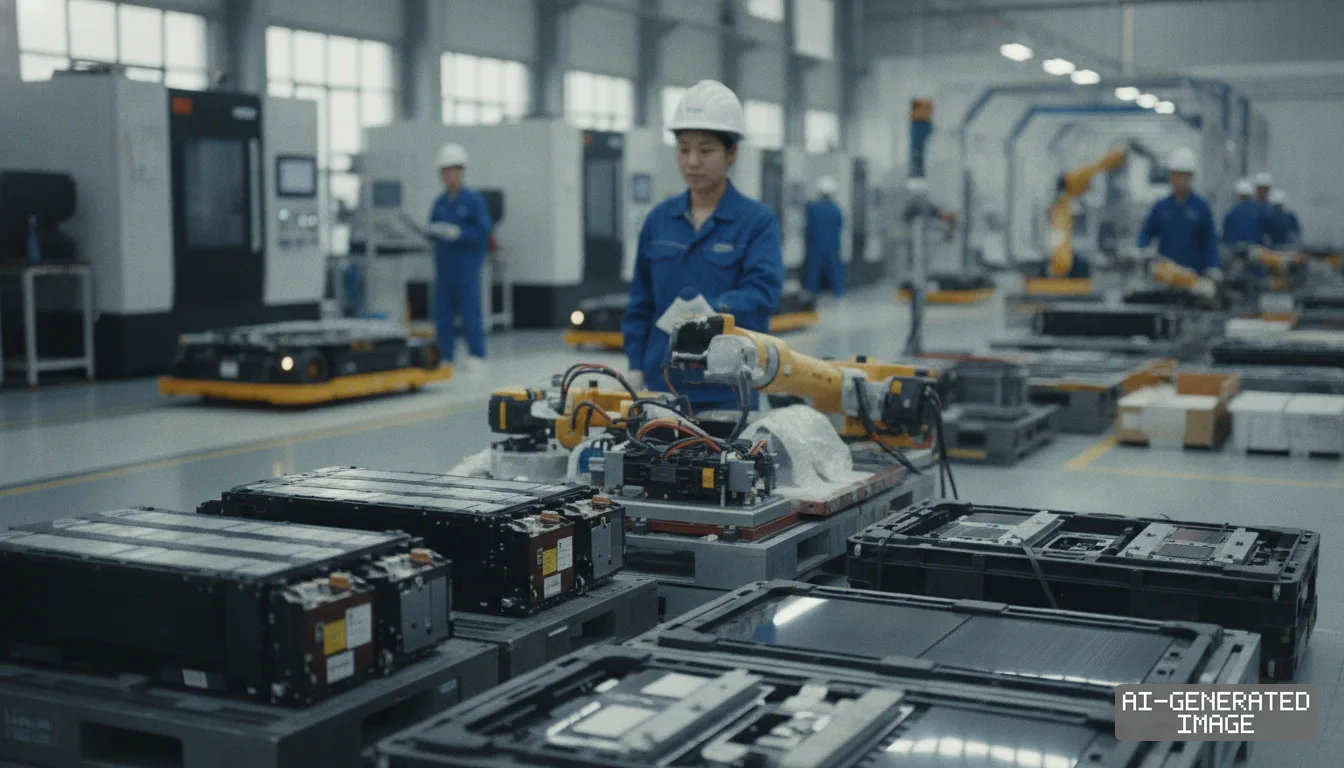
EU and UK enforce 2027 EV origin rules, risking 10% battery tariffs
The post-Brexit trade requirements expose 426,000 passenger vehicles to duties totaling 1.47 billion euros starting Jan. 1, 2027.
The European Commission and the UK government maintained Nov. 11, 2026, that post-Brexit electric vehicle origin rules will take effect without further delay, imposing a 10% reciprocal tariff on non-compliant batteries.
Under the EU-UK Trade and Cooperation Agreement, electric passenger cars traded across the English Channel must contain at least 55% regional value starting Jan. 1, 2027, to qualify for zero-tariff treatment.
The requirement exposes 426,000 electric vehicles—representing 82% of projected European Union shipments to Britain in 2027—to duties totaling €1.47 billion ($1.59 billion), according to European Automobile Manufacturers Association regulatory filings.
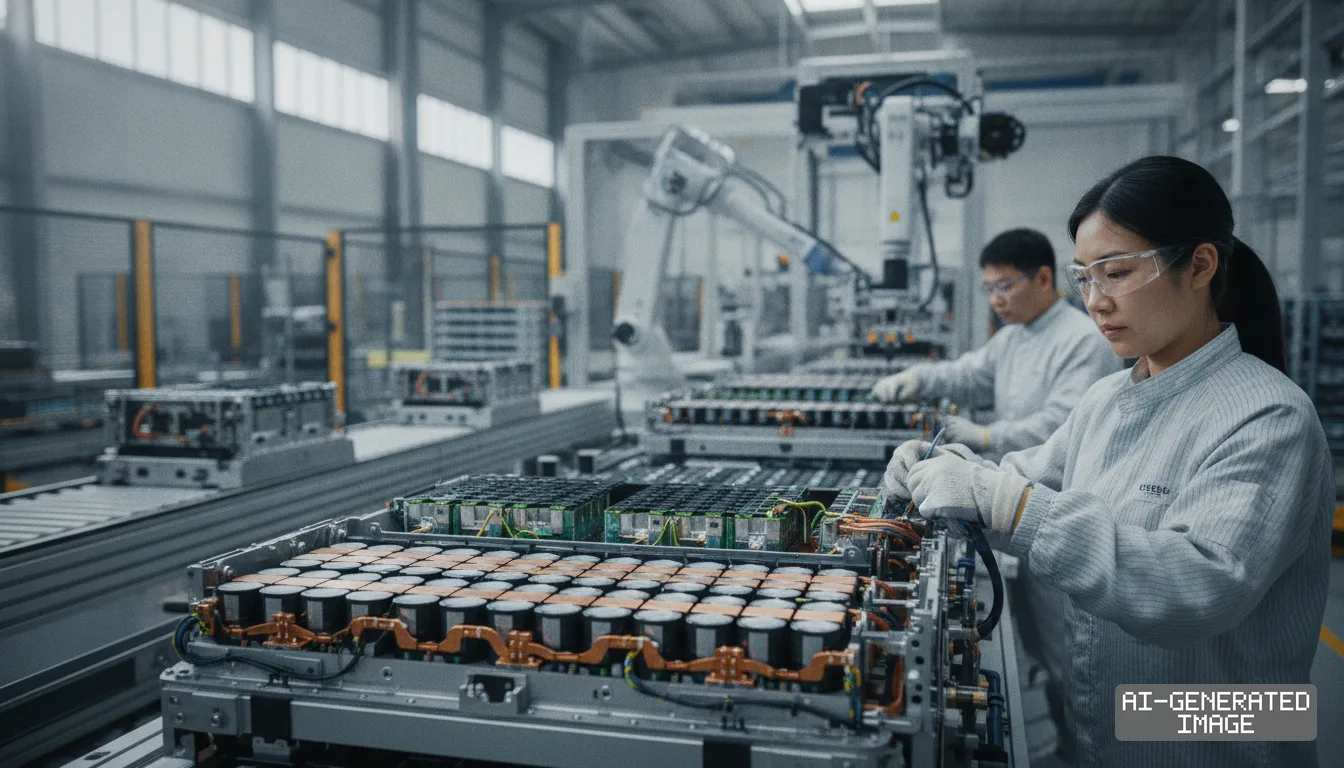
Accumulator rules will tighten simultaneously. Battery packs must reach 70% regional content, while individual battery cells must achieve 65% originating value generated inside European Union or British manufacturing plants.
The EU-UK Partnership Council adopted Decision No 1/2023 on Dec. 21, 2023, granting a three-year grace period. That legal text explicitly prohibited any further extension or modification of battery origin rules until Jan. 1, 2032.
European automakers still source most of their cells from Asian battery suppliers. Imported lithium-ion battery cells accounted for roughly two-thirds of European Union consumption this year, according to London School of Economics researchers.
Vehicles assembled in Britain or the European Union with imported Chinese battery cells fail both the 65% cell rule and the 55% vehicle value rule, triggering the full 10% import duty.
South Korean battery producers hold an immediate operational advantage over Chinese rivals. LG Energy Solution operates an 86-gigawatt-hour cell manufacturing facility in Wrocław, Poland, providing compliant European cells directly to regional assembly lines.
Samsung SDI produces approximately 40 gigawatt-hours of cell capacity at its plant in Göd, Hungary. SK On operates two plants in Komárom and a 30-gigawatt-hour site in Iváncsa, Hungary.
Qualifying as regional origin remains challenging for Korean makers as well. Most cathode active materials and refined lithium carbonate still arrive from processing facilities in China and South Korea, depressing total European value add.
Cathode active materials represent about 40% of the manufacturing cost of a lithium-ion cell. Importing those powders directly prevents several cell formats from comfortably clearing the 65% originating value ceiling.
Korean cathode producers are responding by moving chemical synthesis to European soil. EcoPro is constructing a 108,000-ton cathode active material facility in Debrecen, Hungary, to supply local cell lines directly.
Chinese battery manufacturers are accelerating direct factory investments across Europe to circumvent the border levies. Contemporary Amperex Technology Co. Limited (CATL) is building a 100-gigawatt-hour battery plant in Debrecen, Hungary.
CATL already operates a 14-gigawatt-hour manufacturing facility in Erfurt, Germany. The company signed long-term supply agreements with BMW and Mercedes-Benz, which require local cell deliveries to satisfy European trade regulations.
Gotion High-Tech holds a 25% equity stake in Slovak battery developer InoBat and plans a 20-gigawatt-hour plant in Šurany, Slovakia. EVE Energy is investing €1 billion in a cell plant in Debrecen.
Envision AESC operates a 15.8-gigawatt-hour battery cell facility in Sunderland, England, supplying Nissan Motor. The company is completing a 12-gigawatt-hour manufacturing line in Douai, France, to supply electric platforms for Renault.
Tata Group is constructing a 40-gigawatt-hour battery cell facility in Somerset, England, through its subsidiary Agratas. The plant will supply Jaguar Land Rover, anchoring domestic British origin compliance from 2026 onward.
European automakers urged regulators on Sept. 21, 2026, to postpone the 65% cell rule until 2030. The carmakers proposed allowing pack assembly with foreign cells to confer origin through 2029 to avoid tariff penalties.
A 10% tariff would add roughly €3,400 to the import price of an average European electric vehicle sold in the United Kingdom, eroding profit margins already strained by softening consumer demand.
Carmakers cannot easily swap cell chemistries before the 2027 threshold arrives. Requalifying a new battery supplier requires between two and three years of safety validation and platform testing, industry engineers said.
The incoming origin thresholds compound existing trade friction. The European Union imposed definitive countervailing duties of up to 35.3% on electric vehicles imported directly from China in late 2024.
Western automakers are responding by forming joint ventures with Chinese battery firms within European borders. Stellantis established a joint production agreement with CATL to build lithium-iron-phosphate battery cells in Zaragoza, Spain.
The British government faces identical origin pressures. Without domestic gigafactory scale, British vehicle exports to continental Europe face exclusion unless they secure cells certified as originating under the strict 2027 parameters.
The European Commission has not stated whether it will consider reopening negotiations under the Partnership Council, and neither authority has published a draft mechanism to bypass the 2032 lock-in clause.
Existing transitional flexibilities expire on Dec. 31, 2026. Unless the Partnership Council issues an unprecedented legal amendment, the full 65% cell and 70% pack rules take effect on Jan. 1, 2027.
Impact map
How this development propagates across the region and out to global buyers.
| Event | Korea | China | Japan | Global impact |
|---|---|---|---|---|
| 2027 EU-UK EV origin rules | LG Energy Solution and Samsung SDI shield clients via Polish and Hungarian plants but face cathode local-content deficits | CATL Debrecen buildout accelerates to escape 10% tariffs, bypassing direct vehicle import duties | Nissan Motor protects British output via Envision AESC Sunderland supply | Cross-Channel EV trade faces €1.47 billion in annual tariffs, accelerating local supply-chain onshoring |
In this story
- Companies
- LG Energy SolutionSamsung SDISK OnContemporary Amperex Technology
- Tickers
- 373220.KS006400.KS096770.KS300750.SZ
- Exposed
- RenaultStellantisBMWNissan MotorEcoPro
- Policy
- TariffsLocal Content Rules
- Impact
- Supply ChainPricingCost Structure
Track every Tariffs development → Track every Local Content Rules development →
Related briefings
- BYD plans three European car plants to counter EU tariffs Also on Renault, Stellantis, Tariffs
- EcoPro BM negotiates cathode sales to Chinese battery firms in Europe Also on EcoPro, BMW, Local Content Rules
- EcoPro Innovation invests $40 million in Argentine lithium site Also on EcoPro, Local Content Rules, SK On
- EcoPro Bets on Ternary Cathodes as Mid-Nickel Counters LFP Also on EcoPro, SK On, Samsung SDI
Sources
Primary documents
Confidence: high — how we grade this
The documents behind this briefing are linked above. East Asia Brief produces its English text with AI assistance under human editorial review, and does not translate or republish other outlets' articles. See our methodology and AI policy. Spotted an error? Tell us.
The Morning Brief
What changed in Korean, Chinese and Japanese industry overnight — and what it means for your supply chain. One email, weekday mornings, US time. Free.
The Morning Brief is in preparation. Leave your address and we will write to you once — when the first issue is ready. Nothing before that.