TSMC denies order cancellations under expanded US chip export curbs
Senior Vice President Cliff Hou confirmed wafer allocations remain stable while Taiwan forecasts full-year semiconductor output of NT$9.19 trillion in 2026.
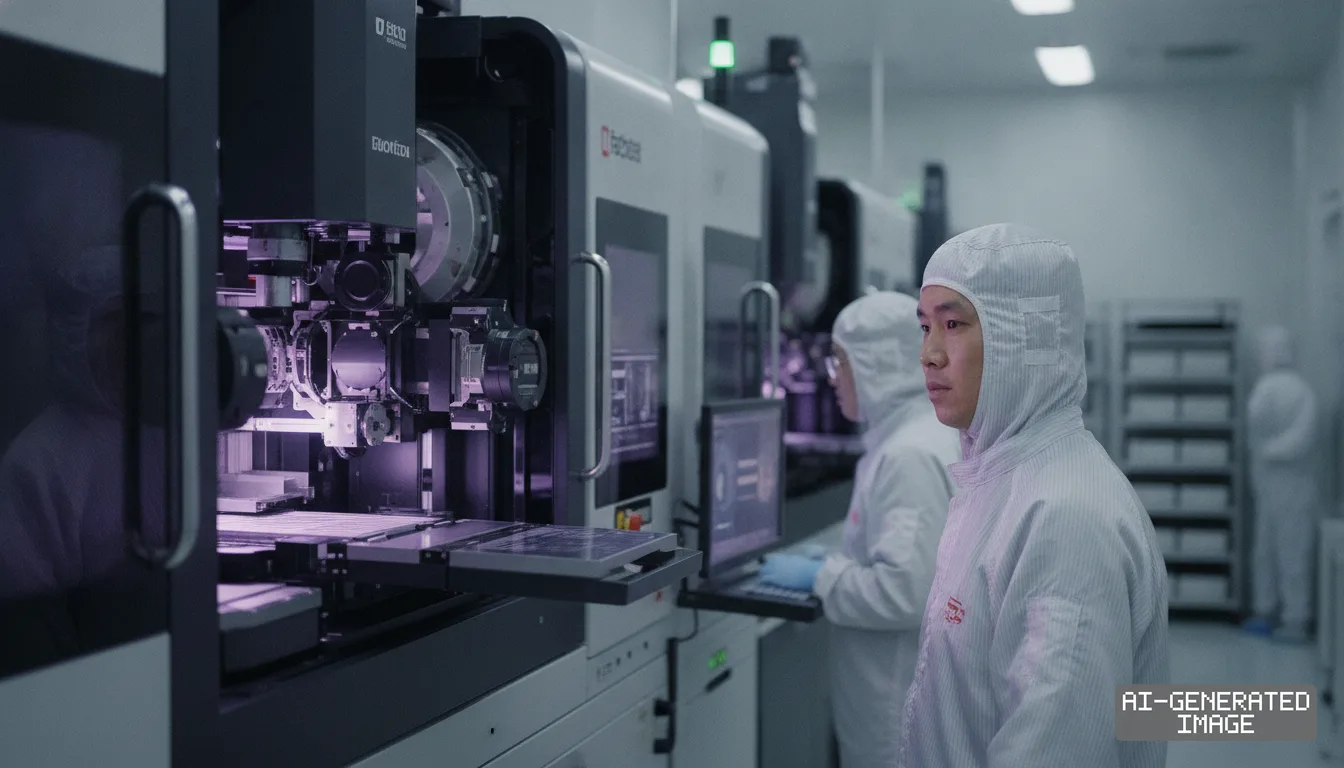
Taiwan Semiconductor Manufacturing Company Senior Vice President Cliff Hou said Nov. 23, 2026, that global customers have made no cancellations or order adjustments despite widening United States export controls on advanced chipmaking.
Speaking after an industrial seminar held by Taiwan's Executive Yuan, Hou confirmed that long-term foundry wafer allocations remain stable across all leading nodes. Recent policy shifts had caused short-term market friction, he said.
Hou, who also serves as chairman of the Taiwan Semiconductor Industry Association, reaffirmed that Taiwan's semiconductor production value will reach NT$9.19 trillion ($280 billion) in 2026. That figure represents an increase of more than 40% over 2025 output of NT$6.5 trillion.
The projected output equivalent to roughly a quarter of Taiwan's gross domestic product reflects sustained capital expenditure across advanced packaging and foundry lines. Surging global deployments of artificial intelligence hardware continue to drive wafer volume.
The reassurances follow regulatory changes enacted by the US Department of Commerce's Bureau of Industry and Security. Washington published an interim final rule amending the Export Administration Regulations on Nov. 16, 2026.
The revised federal export rule took effect Nov. 19, 2026. It mandates that foundries using American software and manufacturing equipment obtain individual export licences before supplying logic chips built at 16nm or smaller nodes to Chinese customers.
The mandate applies to front-end wafer fabricators and outsourced assembly and test facilities worldwide. Any integrated circuit incorporating 16nm or 14nm architectures is now classified as an advanced computing item subject to strict presumption of denial.
Following the rule's implementation, TSMC and Samsung Electronics issued notifications around Nov. 19 to Chinese design houses suspending shipments of processors manufactured at 16nm and below until US authorities grant specific licences.
Chinese tech companies including Baidu's chip design subsidiary Kunlunxin, ByteDance, Xiaomi and Oppo received shipment suspension notices. Those firms had relied on contract foundries in Taiwan and South Korea to produce proprietary acceleration and application processors.
The interim final rule closed an operating arrangement that previously allowed Chinese fabless firms to contract advanced foundry runs. Designers had used third-party packaging test reports to attest that their dies complied with computing thresholds without individual government approvals.
Under the current rules, Chinese chip designers cannot access commercial foundry capacity below the 16nm threshold without explicit clearance. Affected clients are restricted to mature 28nm and 40nm processes that cannot accommodate high-bandwidth memory stacks.
Despite the freeze on Chinese logic shipments, TSMC experienced no drop in total wafer starts, Hou said. Capacity freed up by suspended Chinese designs was absorbed immediately by North American technology companies expanding their data center accelerator orders.
TSMC simultaneously updated its risk controls, enforcing stricter credit reviews for custom application-specific integrated circuit customers between Nov. 18 and Nov. 20, 2026. The scrutiny targets smaller fabless startups operating with thin operating reserves.
The foundry now requires cash prepayments from chip design clients seeking wafer allocations that exceed assigned corporate credit limits. Upfront financing requirements prevent speculative over-ordering while protecting manufacturing revenue against customer liquidity stress.
TSMC held NT$234 billion ($7.1 billion) in customer prepayments heading into the second half, giving the manufacturer deep balance-sheet protection against regional order cancellations. Leading cloud providers have prepaid to lock down 3nm and 2nm production capacity through 2027.
Samsung Electronics faces an identical compliance environment across its foundry division. The South Korean manufacturer has put sub-16nm shipments to Chinese customers on hold while submitting formal licence queries to the US Commerce Department.
Mainland Chinese fabricators such as SMIC cannot substitute for lost overseas capacity at scale. Domestic facilities remain constrained by US export restrictions on advanced extreme ultraviolet and deep ultraviolet lithography systems, preventing high-yield production below 14nm.
The compliance crackdown also restricts remote computing access. Chinese developers can no longer lease advanced compute clusters hosted in third-country cloud facilities without triggering US regulatory scrutiny under the expanded interim final rule.
TSMC has not published the exact number of export licence applications submitted to the US Bureau of Industry and Security, nor the specific volume of wafers held back from Chinese clients. The company has also not disclosed whether Chinese orders were excluded when calculating Hou's assessment of demand stability.
The interim final rule remains in active effect following its Nov. 19 enforcement date, and contract foundries must maintain delivery freezes until the Bureau of Industry and Security completes case-by-case licence reviews.
Impact map
How this development propagates across the region and out to global buyers.
| Event | Korea | China | Japan | Global impact |
|---|---|---|---|---|
| US sub-16nm export control rule | Samsung halts sub-16nm China shipments pending BIS licence | Baidu and ByteDance lose overseas sub-16nm foundry channel | no direct tool impact, advanced fab capex remains intact | AI server foundries operate at full capacity on Western demand |
In this story
- Companies
- Taiwan Semiconductor Manufacturing CompanySamsung Electronics
- Tickers
- 2330.TW005930.KS
- Exposed
- BaiduByteDanceXiaomiOppo
- Policy
- Export Controls
- Impact
- ComplianceOrder BookSupply Chain
Track every Export Controls development →
Related briefings
- MediaTek debuts first 2nm mobile AP built on TSMC N2P node Also on OPPO
- TSMC and Samsung freeze sub-16nm chip shipments to Chinese clients Also on Baidu, ByteDance, Xiaomi
- CXMT beats SK hynix and Micron in DRAM margin at 87.59% gross rate Also on ByteDance, Xiaomi, Samsung Electronics
- China exempts overseas AI model APIs from draft export rules Also on Baidu, Export Controls, Compliance
Sources
Primary documents
Confidence: high — how we grade this
The documents behind this briefing are linked above. East Asia Brief produces its English text with AI assistance under human editorial review, and does not translate or republish other outlets' articles. See our methodology and AI policy. Spotted an error? Tell us.
The Morning Brief
What changed in Korean, Chinese and Japanese industry overnight — and what it means for your supply chain. One email, weekday mornings, US time. Free.
The Morning Brief is in preparation. Leave your address and we will write to you once — when the first issue is ready. Nothing before that.