US presses Nvidia over diverted AI chip shipments ahead of Nov. 25
Regulators are probing whether third-party distribution channels across Southeast Asia routed restricted processors to Chinese buyers, reviewing compliance ahead of a Nov. 25 deadline.
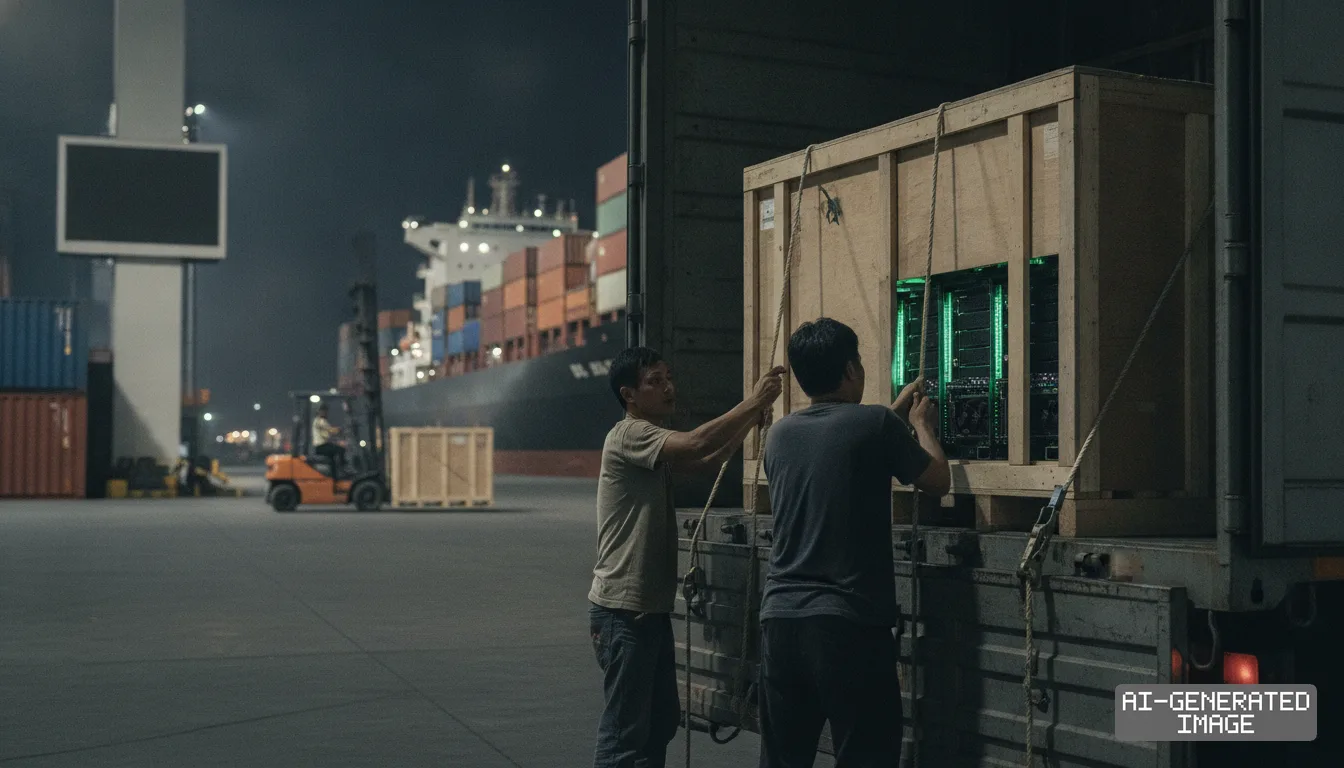
The U.S. government stepped up enforcement demands against Nvidia on Nov. 23, 2026, pressing the chipmaker for answers on whether its artificial-intelligence processors were diverted to China through offshore intermediaries.
The inquiry targets Nvidia's oversight of third-party distribution channels and customer vetting practices across Southeast Asia. Regulators want to determine if compliance officers knowingly permitted restricted hardware to reach Chinese buyers.
Federal licensing documents released Nov. 19 show the Commerce Department approved 879,868 advanced processors from Nvidia and Advanced Micro Devices across 21 licenses through May 2026. Those approvals covered about 25% of the 3.4 million chips requested.
The scrutiny centers on whether additional shipments bypassed trade barriers entirely. Investigators are examining Singapore and Middle Eastern data hub networks that lease computing power or resell hardware to Chinese technology firms.
Treasury Secretary Scott Bessent established a 10-day deadline expiring Nov. 25 for Nvidia to submit internal compliance records. The administration is demanding detailed reporting lines and names of personnel responsible for export screening.
Federal officials contacted Nvidia's interim management, lead independent directors and outside legal counsel to verify internal controls, Bessent said in a Nov. 22 interview on CBS. The inquiry aims to establish whether compliance failures reached senior executive ranks.
Investigators are reviewing physical bills of lading and cross-border bank transfers tied to offshore sales, Bessent said. Large hardware transactions generate clear documentation trails that cannot remain hidden behind informal agreements, he added.
Nvidia Chief Financial Officer Colette Kress is serving as interim chief executive while the board searches for permanent leadership. The board named former Synopsys executive Harvey Jones as independent chairman to oversee corporate governance during the federal inquiries.
The Department of Commerce initiated an investigation in 2024 into Singapore-based Megaspeed International for potential export violations, according to a joint statement with the Department of Justice issued Nov. 16.
Commerce Department investigators requested records from Nvidia in May 2025 regarding direct and indirect hardware sales to Megaspeed. Nvidia placed Megaspeed on its internal no-sell list in June 2025 following the federal request.
Agents from the Bureau of Industry and Security conducted an on-site check at Megaspeed in Singapore in June 2025. Agents interviewed former executive Alice Huang before the Justice Department opened a formal criminal probe into the distributor.
Megaspeed operated cloud infrastructure that allowed Chinese clients, including Alibaba Group, to access computing clusters located in Southeast Asia. Singapore law enforcement barred Huang from re-entering the country after questioning her in late 2025.
The federal inquiry broadened across multiple agencies during mid-November. The Securities and Exchange Commission opened an investigation on Nov. 20 into Nvidia's accounting practices and transaction processing related to offshore sales channels.
California Attorney General Rob Bonta issued subpoenas on Nov. 19 targeting the potential diversion of advanced chips to China. The state inquiry focuses on whether company disclosures misled investors regarding export compliance risks.
The Commerce Department approved limited sales to Middle Eastern buyers under strict verification rules, authorizing up to 35,000 advanced chip equivalents to United Arab Emirates and Saudi Arabian entities in late 2025. Those permits required continuous end-use tracking.
The Commerce Department has not published a formal penalty order against Nvidia as of Nov. 23, 2026, and federal authorities have not disclosed the complete list of offshore entities receiving regulatory subpoenas.
Megaspeed commissioned an independent audit through an American law firm to account for its graphics processor inventory, though findings have not been released. Singapore prosecutors filed criminal charges against five individuals linked to related server shipments.
Nvidia's board of directors is scheduled to deliver its compliance findings to the Treasury Department on Nov. 25, when the federal response window closes.
Impact map
How this development propagates across the region and out to global buyers.
| Event | Korea | China | Japan | Global impact |
|---|---|---|---|---|
| U.S. AI chip export enforcement | Samsung Electronics and SK hynix face tightened end-use verification for HBM shipments bundled into offshore AI server assemblies | Domestic cloud operators lose indirect GPU access through Southeast Asian leasing hubs as KYC rules tighten | Semiconductor inspection tool vendors face extended audit schedules for equipment bound for Southeast Asian packaging sites | Enterprise server distributors and hyperscalers face higher administrative compliance overhead and mandatory KYC disclosures |
In this story
- Companies
- Nvidia
- Tickers
- NVDA
- Exposed
- Advanced Micro Devices
- Policy
- Export Controls
- Impact
- ComplianceSupply Chain
Track every Export Controls development →
Related briefings
- AMD slides 7.7% as short report claims firmware reached China firm Also on Advanced Micro Devices, Export Controls, Compliance
- TSMC secures record $5.1B in overseas fab subsidies during 2026 Also on Advanced Micro Devices, Nvidia
- Google turns to Samsung and SK hynix HBM as custom TPU fleet grows Also on Advanced Micro Devices, Nvidia
- Nvidia reviews TSMC advanced CoWoS packaging allocation queues Also on Advanced Micro Devices, Nvidia
Sources
Primary documents
Reporting
Confidence: high — how we grade this
The documents behind this briefing are linked above. East Asia Brief produces its English text with AI assistance under human editorial review, and does not translate or republish other outlets' articles. See our methodology and AI policy. Spotted an error? Tell us.
The Morning Brief
What changed in Korean, Chinese and Japanese industry overnight — and what it means for your supply chain. One email, weekday mornings, US time. Free.
The Morning Brief is in preparation. Leave your address and we will write to you once — when the first issue is ready. Nothing before that.