Netherlands rejects US chip curbs, protecting ASML servicing in China
The foreign ministry rebuffed Washington's MATCH Act push to halt DUV tool servicing, citing national sovereignty over export controls.
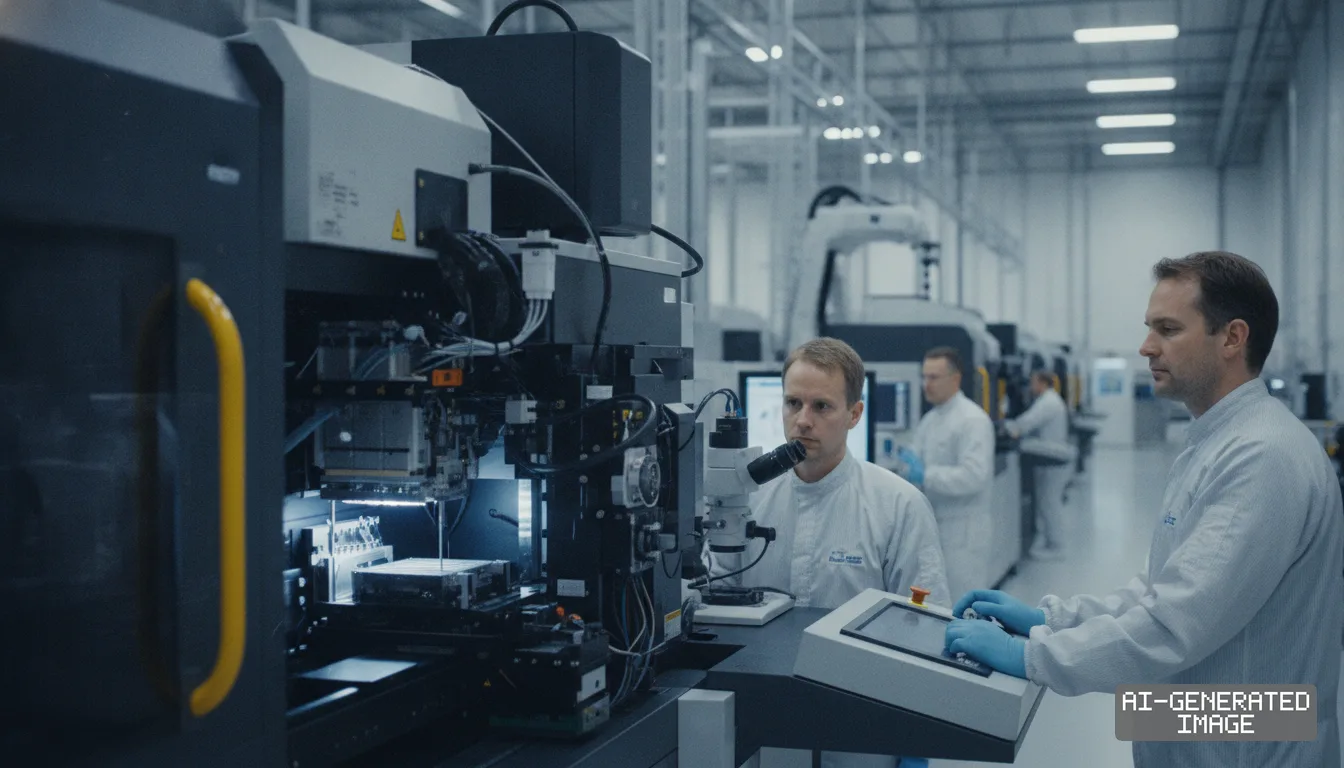
The Dutch Ministry of Foreign Affairs on Nov. 18, 2026 rejected US demands to unilaterally curb deep ultraviolet lithography tool shipments and maintenance contracts to China.
The ministry stated that national export controls remain a sovereign security prerogative. It added that the cabinet cannot accept extraterritorial enforcement measures imposed on European allies.
China generated roughly 33% of total revenue for ASML Holding NV in 2025. That geographical share has been normalizing toward roughly 20% during 2026 under earlier bilateral licensing agreements.
The diplomatic confrontation centers on the Multilateral Alignment of Technology Controls on Hardware Act. US lawmakers introduced the MATCH Act draft to mandate that allied nations harmonize their chip tool export restrictions with Washington within 150 days.
Under that proposal, the US Department of Commerce would apply the Foreign Direct Product Rule extraterritorially if allied governments fail to implement equivalent export bans. The draft rule targets both machinery deliveries and ongoing maintenance services.
The Dutch government decided to defend the commercial baseline of ASML. The Veldhoven-based manufacturer holds an effective global monopoly on extreme ultraviolet lithography systems and dominates the immersion deep ultraviolet market.
Foreign Trade and Development Cooperation Minister Sjoerd Sjoerdsma had already signaled formal resistance in written submissions to the Tweede Kamer. The parliamentary filings date to May 12 and June 15, 2026.
Sjoerdsma told lawmakers that the Dutch government directly registered objections with members of the US Congress and the executive branch. The communications criticized the extraterritorial mechanism of the MATCH Act.
Dutch officials noted that an outright ban on servicing operational machines would expose ASML to immediate contract-breach litigation. Chinese semiconductor fabricators hold valid commercial agreements for systems delivered prior to earlier licensing shifts.
Existing Dutch regulations already subject advanced immersion lithography systems to case-by-case national screening. The national export control order took effect on Sept. 1, 2023, establishing national security reviews for sensitive equipment.
The Dutch government later expanded statutory licensing coverage on Sept. 7, 2024, followed by an administrative update on April 1, 2025. Those domestic orders brought advanced immersion DUV tools under national jurisdiction without yielding authority to foreign statutes.
US trade officials have argued that mature-node immersion tools still allow Chinese fabricators to manufacture semiconductors with military utility. Washington has pushed for full prohibition of advanced Twinscan immersion models alongside complete post-sale technical support bans.
Servicing agreements generate high-margin recurring income across ASML's installed base. Withdrawing field engineers and spare parts would paralyze client production lines across mainland wafer fabrication plants.
Such an operational cutoff would accelerate Chinese domestic substitution programs. Chinese equipment developers have been testing pilot immersion lithography tools to circumvent foreign supply vulnerabilities.
The Dutch foreign ministry maintains that export controls must remain targeted, proportional and grounded in domestic legal frameworks. Unilateral pressure undermines international technology pacts and damages European industrial competitiveness, Dutch officials stated.
Dutch trade diplomacy also reflects coordination with partners in Tokyo. Japanese equipment suppliers such as Nikon and Canon face similar US pressure regarding lithography tooling and parts distribution.
The Dutch stance sets a precedent for European strategic autonomy in semiconductor supply chains. European policymakers have become reluctant to let US legislative timelines dictate sovereign industrial and trade governance.
ASML executives have repeatedly stressed that unilateral restrictions fail to halt technological development in China while penalizing Western equipment providers. Cutting legitimate maintenance contracts would cause unmanageable customer liabilities, the company warned.
The ministry has not published a formal royal decree or gazette notice, confirming that the Nov. 18 position was delivered as an official diplomatic and public statement rather than new statutory text.
Congressional committees in Washington will review the MATCH Act timeline and foreign direct product provisions when the legislative session convenes in December.
Impact map
How this development propagates across the region and out to global buyers.
| Event | Korea | China | Japan | Global impact |
|---|---|---|---|---|
| Dutch MATCH Act rejection | Samsung and SK hynix maintain supply chain predictability for legacy fabrication lines in Wuxi and Xi'an | Domestic fabs avoid immediate DUV servicing cutoff while local toolmakers build replacement parts | Tokyo Electron and Nikon secure diplomatic precedent against immediate extraterritorial FDPR enforcement | Semiconductor equipment makers retain recurring services revenue across previously installed Chinese fab lines |
In this story
- Companies
- ASML
- Tickers
- ASML.AS
- Policy
- Export Controls
- Impact
- Supply ChainCompliance
Track every Export Controls development →
Related briefings
- TSMC tests rare-earth-free motors as China magnet curbs loom Also on ASML, Export Controls, Compliance
- Bruegel says EU-China trade deal fails to resolve subsidies in 2026 Also on ASML, Export Controls, Compliance
- White House keeps chip export controls after Xi-Trump summit Also on ASML, Export Controls, Compliance
- ASML and tool makers see China sales share plunge in third quarter Also on ASML, Export Controls
Sources
Reporting
Confidence: medium — how we grade this
The documents behind this briefing are linked above. East Asia Brief produces its English text with AI assistance under human editorial review, and does not translate or republish other outlets' articles. See our methodology and AI policy. Spotted an error? Tell us.
The Morning Brief
What changed in Korean, Chinese and Japanese industry overnight — and what it means for your supply chain. One email, weekday mornings, US time. Free.
The Morning Brief is in preparation. Leave your address and we will write to you once — when the first issue is ready. Nothing before that.