KITA opens Brussels office to shield $4.8B in metals from EU tariff
The trade body established a direct liaison channel with European Commission regulators to protect $4.3 billion in steel and $500 million in aluminum shipments facing carbon penalties.
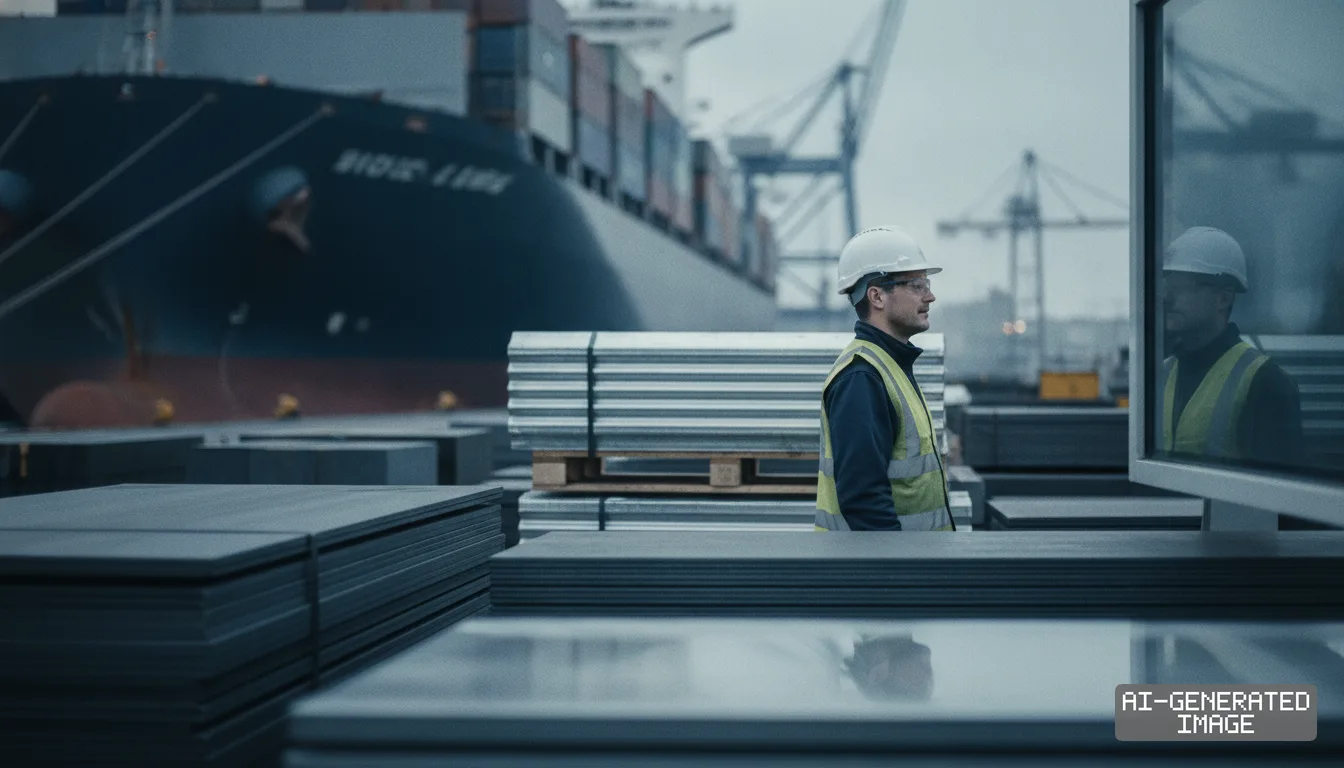
The Korea International Trade Association launched a regulatory liaison channel in Brussels on Nov. 20 to protect domestic exporters from European Union carbon border penalties.
The initiative focuses on roughly $4.8 billion in annual trade, including $4.3 billion of steel shipments and $500 million of aluminum products entering European ports under the carbon mechanism.
Those two categories represent the bulk of South Korea's direct exposure under the European Union Carbon Border Adjustment Mechanism (CBAM). The policy functions as an import tariff linked to factory emissions.
KITA said it convened the 2026 Korea-EU Policy Partnership Forum on Nov. 19 in Brussels alongside the Korean Business Association Europe and the Centre for European Policy Studies.
The assembly brought together 150 industrial representatives, including Kerstin Jorna, director-general of the European Commission Directorate-General for Internal Market, Industry, Entrepreneurship and SMEs, and OECD Deputy Secretary-General František Ružička.
Former trade diplomats and academic specialists evaluated compliance friction created by CBAM and the proposed Industrial Acceleration Act (IAA), KITA said. Both frameworks impose stricter operating standards on external suppliers.
KITA Chairman Yoon Jin-sik also met with César Luena, chair of the European Parliament Delegation for Relations with the Korean Peninsula, on Nov. 19 in Brussels.
Yoon petitioned lawmakers to ensure European Union environmental directives do not place foreign component manufacturers at a structural disadvantage against domestic European mills, the association said.
Under CBAM, foreign manufacturers must calculate embedded emissions — the volume of carbon dioxide released during raw material refinement and fabrication — for every ton of covered freight.
The initial monitoring period, which required reporting quarterly data without fiscal surcharges, concluded Dec. 31, 2025. Importers must surrender purchased financial certificates starting with shipments processed in 2026.
Steelmaker POSCO faces immediate exposure across its European client network, where its hot-rolled and cold-rolled steel feeds automotive press lines and equipment builders.
POSCO has operated an internal task force since 2022 to calculate blast-furnace emissions, but executive teams remain exposed to variable monthly certificate prices determined by the European carbon market.
Foreign exporters must secure validation from European-accredited third-party auditors before lodging emissions declarations with customs authorities. Scarcities of certified auditors threaten to stall container processing at continental ports, Yoon said.
KITA requested that the European Commission recognize verification reports produced by certified inspection agencies based in South Korea. That concession would eliminate the requirement to retain European auditors for factory inspections.
Delegates also assessed the Industrial Acceleration Act, a pending regulatory framework drafted to expedite clean-technology permitting and establish European content preferences for state-supported capital programs.
Hyundai Motor Company, which operates an automobile assembly complex with an annual capacity of 350,000 vehicles in Nošovice, Czech Republic, sent managers to track whether regional sourcing rules will penalize imported battery assemblies.
The automaker examined operational obligations under the Packaging and Packaging Waste Regulation. The regulation enforces recycled content minimums and reusable logistics container quotas on automotive subassemblies arriving from abroad.
Belgian materials producer Umicore, which maintains cathode precursor manufacturing plants in Cheonan, South Korea, reviewed secondary raw material trade guidelines and recycling protocols with European commissioners during the forum panels.
The notice does not state whether KITA established a newly incorporated stand-alone administrative desk in Brussels, and the association has not published a separate budget allocation beyond its existing branch.
KITA and KBA Europe will coordinate the regulatory channel through their joint liaison office near European Union administrative buildings to submit corporate feedback directly to European Commission desk officers.
Mandatory certificate purchasing takes effect across all European Union maritime and land customs posts on Jan. 1, 2026. The European Commission is scheduled to release final sectoral default value benchmarks ahead of the border implementation deadline.
Impact map
How this development propagates across the region and out to global buyers.
| Event | Korea | China | Japan | Global impact |
|---|---|---|---|---|
| EU CBAM and IAA compliance | POSCO and metals exporters absorb emissions audits on $4.8B in shipments | steel mills face higher default carbon penalty rates on EU cargoes | Nippon Steel and JFE confront identical certificate clearance rules | European automotive supply chains absorb added documentation overhead |
In this story
- Companies
- POSCO HoldingsHyundai Motor CompanyUmicore
- Tickers
- 005490.KS005380.KSUMI.BR
- Policy
- TariffsStandards
- Impact
- ComplianceSupply ChainCost Structure
Track every Tariffs development → Track every Standards development →
Related briefings
- KITA Urges EU to Cut Carbon Border Burden on Seoul Exporters Also on Umicore, Standards, Tariffs
- CATL chairman calls EU battery recycling rules commercially unworkable Also on Umicore, Standards, Compliance
- Chalmers maps automotive gallium recovery under China curbs Also on Umicore, Compliance, Cost Structure
- China Ministry of Commerce nears critical mineral export ban deadline Also on Umicore, Cost Structure
Sources
Primary documents
Reporting
Confidence: high — how we grade this
The documents behind this briefing are linked above. East Asia Brief produces its English text with AI assistance under human editorial review, and does not translate or republish other outlets' articles. See our methodology and AI policy. Spotted an error? Tell us.
The Morning Brief
What changed in Korean, Chinese and Japanese industry overnight — and what it means for your supply chain. One email, weekday mornings, US time. Free.
The Morning Brief is in preparation. Leave your address and we will write to you once — when the first issue is ready. Nothing before that.