Traders reroute 100,000 tons of US copper to China as premiums surge
The arbitrage cargo flow reverses a two-year accumulation cycle after Shanghai exchange inventories dropped to 27,642 tons.
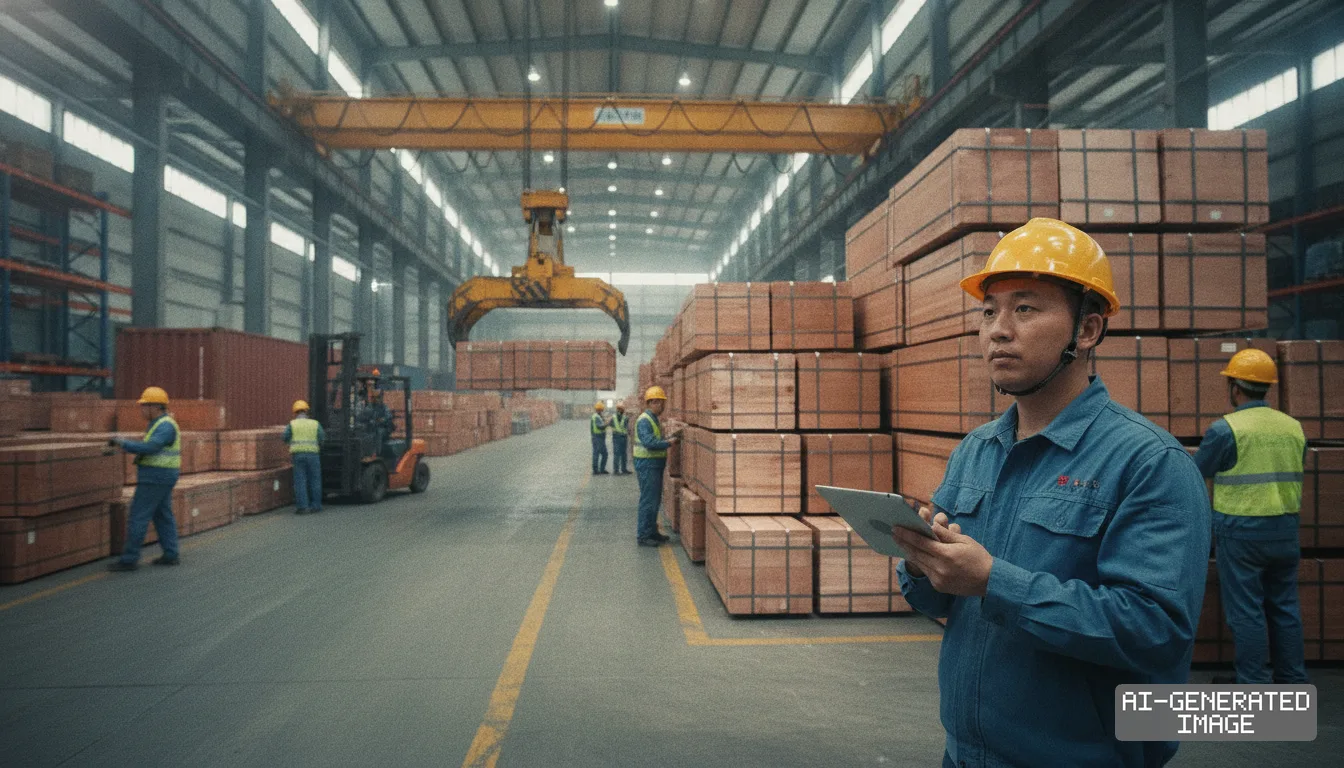
Commodity trading desks on Nov. 21 began booking up to 100,000 metric tons of refined copper from US storage depots for re-export to China.
The trade reverses a two-year accumulation cycle that drew global metal into North American bonded storage. That shift responds directly to physical supply deficits across Chinese manufacturing hubs.
American warehouses currently hold 94% of all refined copper registered across the London Metal Exchange and the Commodity Exchange. Two years ago, American storage held 20% of that metal, according to calculations by broker Marex.
The export incentive opened after the Yangshan copper premium climbed 39% on Nov. 19. That benchmark surcharge, which buyers pay over exchange rates to import physical cathode into China, reached $500 per metric ton.
The $500 quotation marks the highest physical delivery surcharge ever recorded at Chinese ports. That premium stands at more than double the ocean freight rate needed to move containerized cathode across the Pacific Ocean.
Physical supply in China contracted after monitored stockpiles on the Shanghai Futures Exchange fell to 27,642 metric tons in mid-November. That inventory drop pushed domestic exchange reserves to their lowest level since December 2023.
Only 2,270 metric tons of cathode remained deliverable ahead of the November futures contract expiry on Nov. 16. Shanghai exchange officials intervened directly, directing market participants to settle remaining obligations in cash.
International benchmark prices dropped concurrently as three-month copper on the London Metal Exchange declined toward $12,300 per metric ton by Nov. 20. The contract had traded above $14,670 per ton in late October.
The widening spread between international futures and domestic Chinese cash terms opened a profitable trade window. Commercial houses moved immediately to release cathode from American bonded facilities.
BMO Capital Markets tracked commercial bookings of 30,000 to 100,000 metric tons of refined cathode bound for Asian ports, according to a client report released Nov. 20. The firm noted that traders reserved maritime cargo slots once the price gap expanded.
Initial export parcels moved through the Port of Los Angeles aboard the CMA CGM Cassiopeia, an 11,388-TEU container ship operated by CMA CGM. Harbor logs confirmed the vessel completed loading and sailed on Nov. 19.
Vessels departing West Coast terminals take two weeks to reach Chinese unloading berths. That transit allows trading desks to deliver metal into Asian warehouses before annual procurement contracts close in December.
Moving metal out of southern American warehouses requires longer transit schedules. Releasing cathode warrants around New Orleans and transporting material to export docks takes six to eight weeks, freight handlers said.
Traders had stockpiled cathode in the United States over the past two years to position ahead of expected import restrictions. Speculative desks moved metal into domestic yards on expectations of federal tariffs on foreign copper.
The United States Department of Commerce had proposed phased tariff rates on imported refined copper cathode. The recommended schedule outlined a 15% duty starting in January 2027, followed by an increase to 30% in January 2028.
Concerns over imminent trade barriers eased after United States congressional elections, prompting commercial desks to reassess inventory expenses. Holding cathode in domestic warehouses created high carrying charges as interest rates raised financing costs.
Commercial trading firms in Ningbo and Shanghai expanded import orders to supply regional fabricators facing material shortages. China-Base Ningbo Group, a major trading firm, observed that domestic plants have depleted their operational raw metal reserves.
Spot surcharges may rise further as lower international prices stimulate procurement from wire fabricators, Jiang Hang, a senior trader at China-Base Ningbo Group, said.
The incoming cathode shipments provide immediate feedstock to Chinese wire rod plants and power equipment makers. Facilities in Jiangsu and Zhejiang provinces had lowered operational runs in October due to domestic metal shortages.
The Commerce Department has scheduled review procedures for its proposed tariff program ahead of the recommended January 2027 milestone. That timeline leaves domestic industrial buyers and global refiners tracking federal dockets for implementation details.
The White House has not published an executive order or formal federal notice modifying or withdrawing the planned copper tariffs, leaving the regulatory status unchanged.
Physical cathode reserves at Shanghai exchange warehouses closed the week at 27,642 metric tons on Nov. 20, maintaining the widest spot premium over international contracts recorded this decade.
Impact map
How this development propagates across the region and out to global buyers.
| Event | Korea | China | Japan | Global impact |
|---|---|---|---|---|
| Transpacific copper reverse arbitrage | LS MnM and domestic fabricators face tighter spot cathode differentials | Fabricators gain feedstock relief as 100,000 tons offset domestic warehouse deficits | Smelters maintain baseline premia as transpacific shipments bypass Japanese ports | COMEX-LME spread contracts as US bonded warehouses release 94% inventory concentration |
In this story
- Companies
- CMA CGMChina-Base Ningbo Group
- Policy
- Tariffs
- Impact
- Supply ChainPricingOrder Book
Track every Tariffs development →
Related briefings
- Traders book US copper cargoes as China spot premium hits $500 Also on CMA CGM, Tariffs, Pricing
- HD Hyundai delivers world’s first lashing-free boxship to CMA CGM Also on CMA CGM, Order Book
- HD Hyundai delivers lashing-free container ship to CMA CGM Also on CMA CGM, Order Book
- CSSC Reallocates Yard Drydocks to Accelerate Large Containership Output Also on CMA CGM, Order Book
Sources
Reporting
Confidence: medium — how we grade this
The documents behind this briefing are linked above. East Asia Brief produces its English text with AI assistance under human editorial review, and does not translate or republish other outlets' articles. See our methodology and AI policy. Spotted an error? Tell us.
The Morning Brief
What changed in Korean, Chinese and Japanese industry overnight — and what it means for your supply chain. One email, weekday mornings, US time. Free.
The Morning Brief is in preparation. Leave your address and we will write to you once — when the first issue is ready. Nothing before that.