HD Hyundai delivers lashing-free container ship to CMA CGM
The 13,000-TEU methanol-powered vessel CMA CGM GOLD eliminates manual cargo lashings, expanding deck payload weight by over 10% while curbing turnaround delays and box losses at sea.
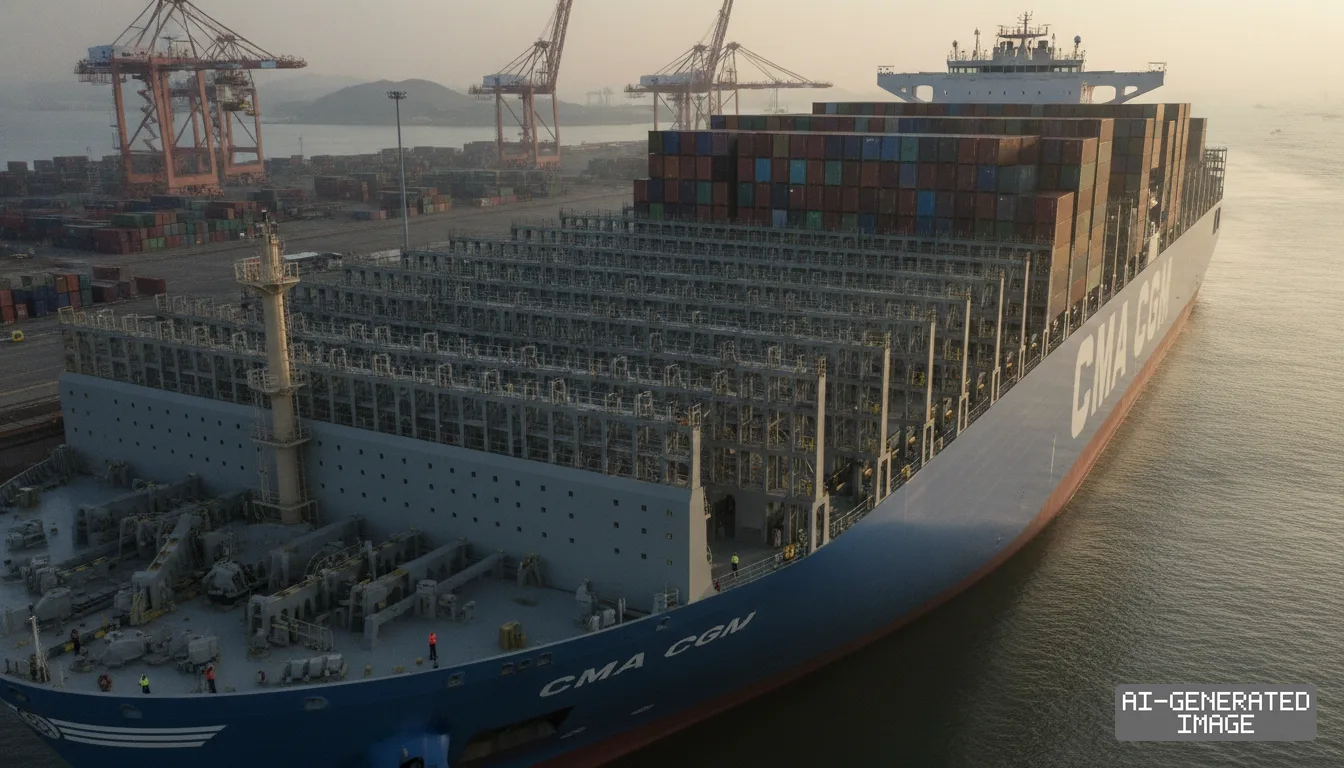
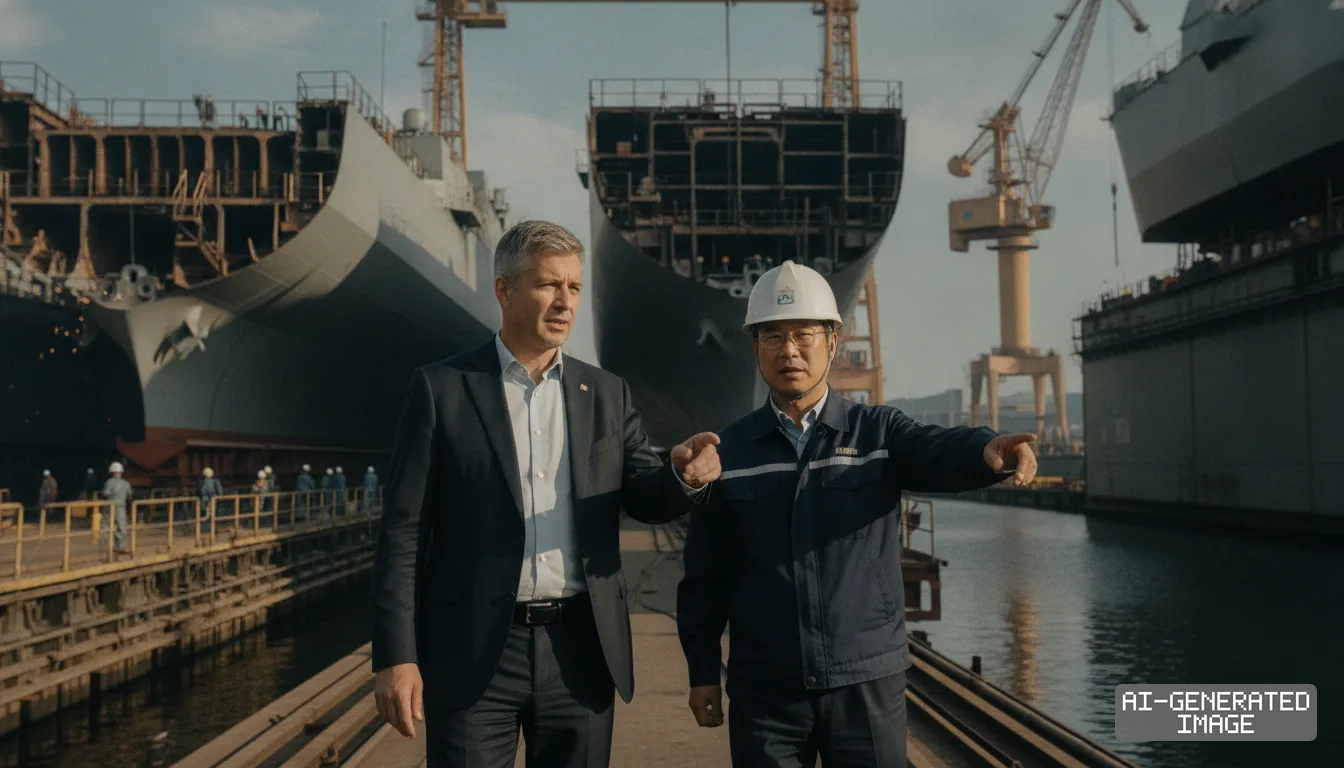
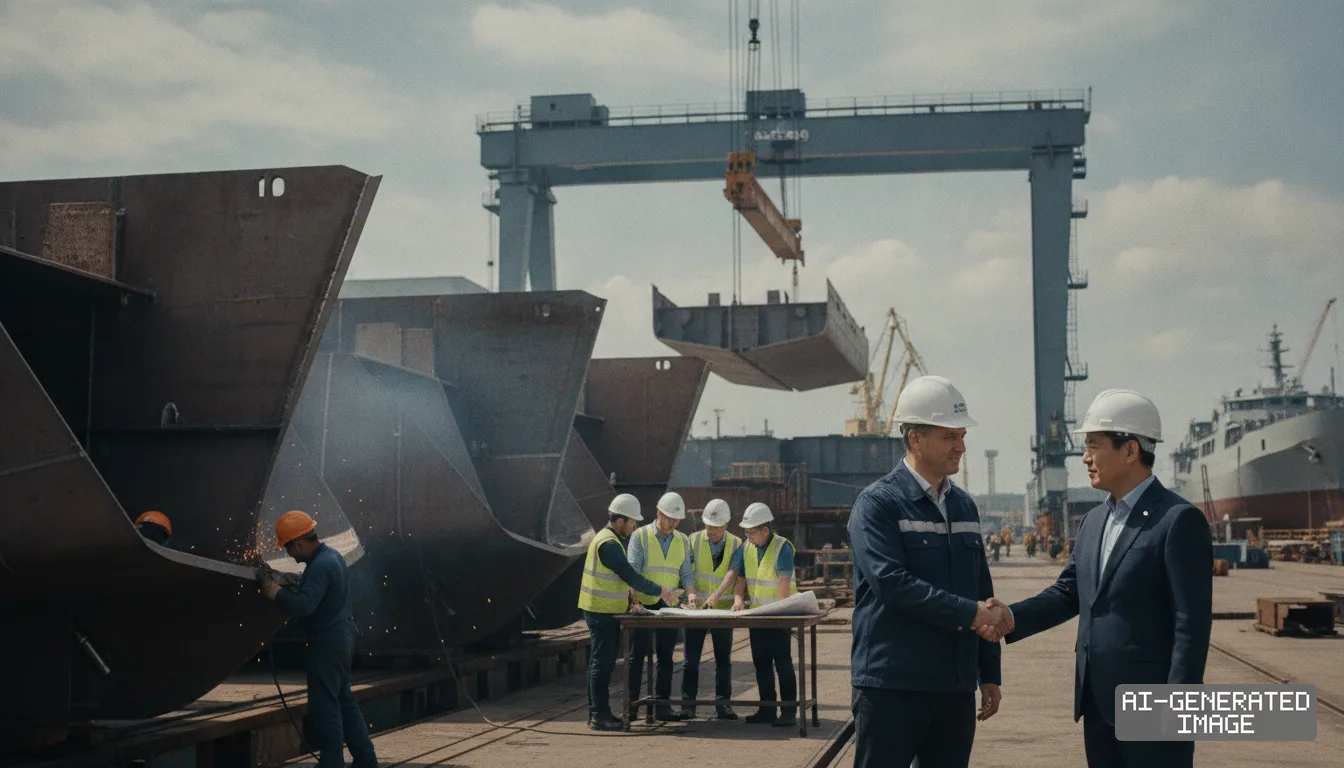
HD Hyundai delivered a 13,000-TEU containership equipped with a proprietary lashing-free cargo system to French carrier CMA CGM on Oct. 8, 2026.
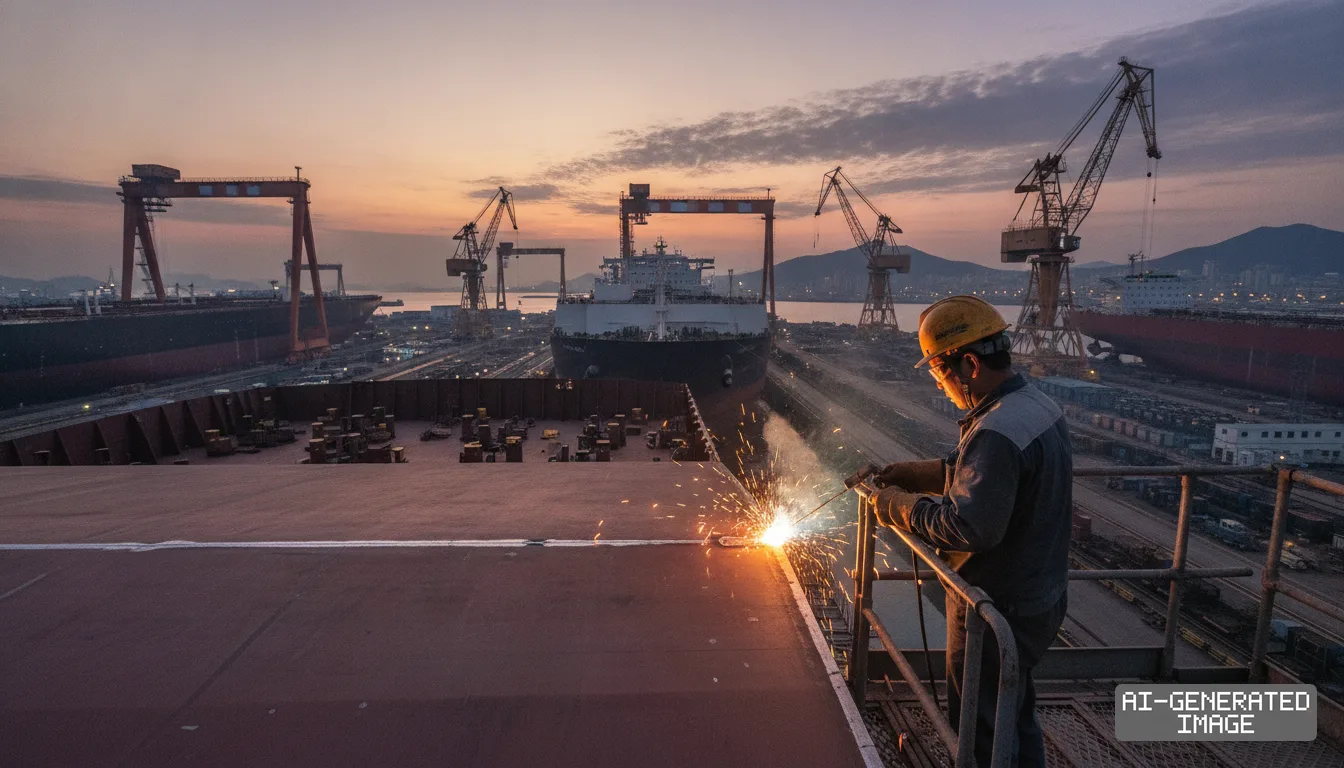
The delivery completes the handover of the methanol dual-fueled vessel, named CMA CGM GOLD, following the conclusion of shipyard acceptance procedures in Yeongam, South Korea.
The shipbuilder confirmed the milestone marks the commercial debut of its hybrid lashing-free architecture, which raises allowable deck cargo weight by over 10%.
The technology addresses one of the most hazardous and time-consuming tasks in container shipping. Traditional deck stacks require dockworkers and crew to manually fasten heavy steel rods, turnbuckles and twistlocks across multiple tiers.
Those physical fittings routinely suffer mechanical fatigue during heavy rolling. Loose lashings remain the leading operational cause of container stacks collapsing and falling overboard during rough ocean transits.
HD Hyundai Heavy Industries developed the underlying engineering structure, which holds container stacks firmly without requiring workers to lash boxes with exterior diagonal steel rods.
Affiliate yard HD Hyundai Samho executed the detailed production design and built the vessel under Hull No. 8222 at its Jeollanam-do shipyard.
The vessel replaces traditional deck lashings with cell guides that extend vertically from the hold above the main deck level. These vertical steel tracks guide containers during loading and restrain horizontal movement throughout transit.
Because traditional rigid hatch covers would block extended cell guides from reaching upward, the shipbuilder developed a modular portable bench.
The bench structure shares the exact exterior dimensions of a standard 40-foot container. Standard terminal gantry cranes can position or remove the bench without specialized rigging gear.
For containers loaded outside the vertical boundaries of the extended cell guides, engineers installed a proprietary Twistlock Rooting System.
The mechanism locks container corner castings directly into strengthened hull connection points, transferring dynamic sea loads safely into the ship's primary framing.
The combination enables CMA CGM to load heavier container stacks onto weather-deck slots without breaching structural stability limits, the shipbuilder said.
Terminal operations also gain significant turn-around velocity. Eliminating manual lash-rod installation and release cuts gang-hour requirements alongside berths during loading and discharge cycles.
Full-scale sea trials conducted in September verified that the hybrid layout reduced structural vibrations compared with conventional ships fitted with raised lashing bridges, the company said.
The platform secured Approval in Principle from the American Bureau of Shipping and the Liberian International Ship & Corporate Registry.
South Korea's Ministry of Science and ICT awarded the design the IR52 Jang Young-shil industrial technology prize earlier in 2026. HD Hyundai also presented technical data on the cargo-securing layout to the International Maritime Organization in 2024.
The French ocean carrier, which operates the world's third-largest container fleet with more than 600 vessels, took delivery as part of its ongoing fleet renewal.
HD Hyundai Samho dispatched the vessel from its dock on Oct. 5, charting a maiden voyage toward Tianjin Port in northern China. The ship is scheduled to complete its initial berth operations in Tianjin on Oct. 12, according to port tracking records.
The shipyard notice did not disclose the precise capital expenditure premium paid for the lashing-free installation over a standard 13,000-TEU specification.
CMA CGM has not published an operational schedule indicating whether sister hulls on order will adopt the identical hybrid configuration.
Engineers at HD Hyundai are designing a second-generation lashing-free hold system featuring enhanced weather-tight closures, targeted for commercial demonstration in 2027.
Impact map
How this development propagates across the region and out to global buyers.
| Event | Korea | China | Japan | Global impact |
|---|---|---|---|---|
| Lashing-free container hold commercialization | HD Hyundai and HD Hyundai Samho establish proprietary technical moat for high-margin mega-containership orders | Chinese competing shipyards face design catch-up pressure on cargo-handling automation patents | Japanese yards remain limited to traditional hatch-cover configurations on current boxship orderbooks | CMA CGM and container lines trim port dwell times and reduce multi-million-dollar cargo-loss liabilities at sea |
In this story
- Companies
- HD HyundaiHD Hyundai SamhoHD Hyundai Heavy IndustriesCMA CGM
- Tickers
- 267250.KS329180.KS
- Exposed
- American Bureau of Shipping
- Policy
- Economic Security
- Impact
- Supply ChainOrder BookCost Structure
Track every Economic Security development →
Related briefings
- CSSC Reallocates Yard Drydocks to Accelerate Large Containership Output Also on CMA CGM, HD Hyundai Heavy Industries, Order Book
- HD Hyundai wins ABS approval for 100MW floating power barge Also on American Bureau of Shipping, HD Hyundai, HD Hyundai Heavy Industries
- Hanwha Ocean unveils 60MW floating data center for AI demand Also on American Bureau of Shipping, HD Hyundai, Order Book
- Hanwha Ocean Wins ABS Approval for 60 MW Floating Data Unit Also on American Bureau of Shipping, Order Book
Sources
Reporting
Confidence: medium — how we grade this
The documents behind this briefing are linked above. East Asia Brief produces its English text with AI assistance under human editorial review, and does not translate or republish other outlets' articles. See our methodology and AI policy. Spotted an error? Tell us.
The Morning Brief
What changed in Korean, Chinese and Japanese industry overnight — and what it means for your supply chain. One email, weekday mornings, US time. Free.
The Morning Brief is in preparation. Leave your address and we will write to you once — when the first issue is ready. Nothing before that.