CSSC Reallocates Yard Drydocks to Accelerate Large Containership Output
China State Shipbuilding Corporation shifts chemical tanker builds to southern docks to clear Changxing Island berths for high-capacity dual-fuel container vessels.
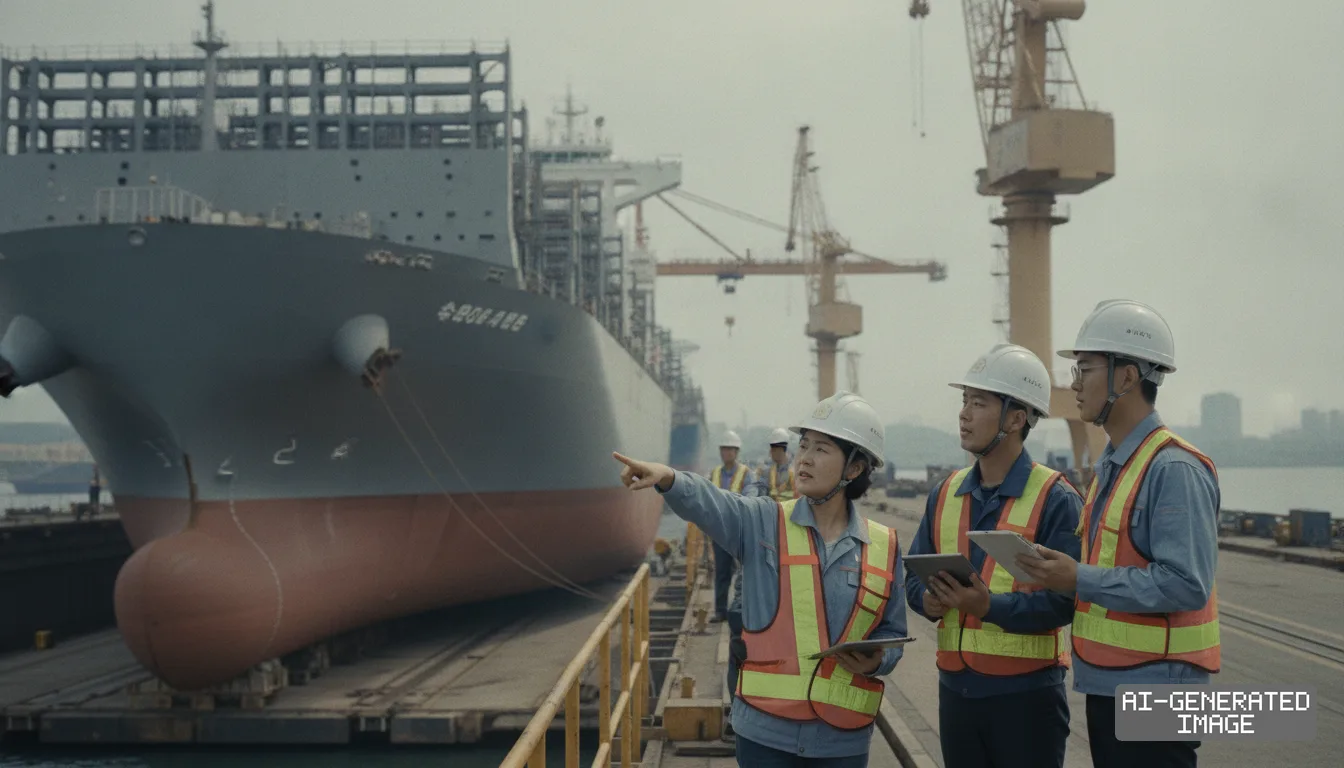
China State Shipbuilding Corporation (CSSC) has begun reallocating construction berths and drydocks across its eastern and southern subsidiaries, transferring chemical tanker and dry bulk contracts away from primary Shanghai yards to prioritize series production of large, dual-fuel container ships.
The state-owned group, which controls approximately a quarter of global shipbuilding output by compensated gross tonnage, is reorganizing dock assignments to clear production bottlenecks at its premier export facilities. Under the revised yard allocation plan, Shanghai-based Jiangnan Shipyard and Shanghai Waigaoqiao Shipbuilding are shedding small-to-midsize product tankers, chemical carriers, and feeder vessels from their main building basins. Those work packages are transferring directly to Guangzhou Shipyard International on Longxue Island and Chengxi Shipyard in Jiangsu province.
The reallocation directly addresses yard congestion caused by overlapping multi-vessel orders placed by international container lines between 2023 and 2025. With delivery windows for 15,000 to 24,000 twenty-foot equivalent unit (TEU) container vessels stretching into late 2028, dock space at Changxing Island and Waigaoqiao has become the critical operational constraint for CSSC. By clearing standard hull forms from their largest drydocks, the Shanghai yards are transitioning to dedicated dual-fuel container ship and liquefied natural gas (LNG) carrier assembly tracks.
For global container carriers, including Mediterranean Shipping Company, CMA CGM, and Cosco Shipping Lines, the consolidation shortens dock occupancy periods per hull. The standard drydock erection cycle for a 24,000 TEU dual-fuel vessel at Jiangnan Shipyard currently requires 65 to 75 days when large mega-block fabrication lines operate without interruption from smaller commercial vessels. When chemical tankers or specialty vessels share the same basin or pre-erection cranes, that dock cycle extends beyond 90 days due to differing craneage requirements and outfitting schedules.
Chemical tankers require complex stainless steel tank welding, internal piping, and specialized coating applications that tie up gantry cranes and skilled outfitting labor for longer periods per compensated gross ton than standard container hulls. Moving stainless steel chemical tanker programs of 25,000 to 50,000 deadweight tons (DWT) to Guangzhou Shipyard International consolidates specialized piping and tank-coating personnel at a single base. Guangzhou Shipyard International already maintains automated plasma welding lines and climate-controlled blast-and-paint workshops configured for chemical containment systems.
The structural shift also alters delivery timelines and slot availability for chemical tanker operators. European and Asian parcel tanker owners negotiating 2027 and 2028 delivery slots now face revised yard allocation options, with CSSC directing all new chemical tanker inquiries to southern berths. Contract terms for transferred hull numbers are being preserved under tripartite supplementary agreements between CSSC, its trading arm China Shipbuilding Trading Company (CSTC), and the vessel buyers, leaving propulsion specifications, financing schedules, and liquidated damage thresholds unchanged.
Chengxi Shipyard, historically focused on bulk carriers and vessel repairs, is taking on an expanded share of standard feeder containerships under 3,000 TEU and Ultramax bulk vessels. This transfer frees Jiangnan Shipyard's Number 3 and Number 4 drydocks exclusively for ultra-large container carriers and very large ethane carriers (VLECs). Shanghai Waigaoqiao Shipbuilding is dedicating its two drydocks to Newcastlemax bulkers, large container vessels, and commercial offshore production units.
The operational consolidation mirrors the construction strategies employed by South Korean competitors HD Hyundai Heavy Industries, Hanwha Ocean, and Samsung Heavy Industries. South Korean yards have long separated high-margin gas carriers and large container vessels into dedicated dock lines at Ulsan, Geoje, and Samho, preventing lower-margin commercial tonnage from disrupting serial block assembly. CSSC's internal realignment brings its Shanghai operations closer to this modular dock model.
Steel processing schedules across CSSC's shared supply chain are adjusting to the new yard configuration. Steel plate cutting and curved block fabrication for Shanghai yards are concentrating on high-tensile steel grades required for container ship coamings, hatch covers, and fuel tank hold structures. Southern yards in Guangdong are scaling up procurement of duplex stainless steel plates and specialized marine piping to support the expanded chemical tanker program.
Global maritime financiers and equity analysts monitoring CSSC-listed entities will see the operational effects reflected in delivery milestones. China CSSC Holdings, the group's flagship listed entity, will recognize vessel stage payments more evenly across fiscal quarters as modular dock cycles normalize. Milestone payments tied to steel cutting, keel laying, launching, and sea trials for containership programs will concentrate heavily within the Shanghai subsidiaries, while chemical tanker revenue recognition shifts southward to Guangzhou Shipyard International's financial reporting lines.
CSSC's commercial marketing team in Shanghai has informed international shipbrokers that standard berth reservations for 2028 containership slots will henceforth require adherence to the group's standardized yard-specific design templates. The shipyard group is scheduled to lay the keels for the next series of 18,000 TEU dual-fuel methanol container vessels under this revised drydock distribution at Jiangnan Shipyard on Oct. 14.
Impact map
How this development propagates across the region and out to global buyers.
| Event | Korea | China | Japan | Global impact |
|---|---|---|---|---|
| CSSC yard realignment | competition on gas and ULCV slots | higher dock efficiency at Shanghai yards | chemical tanker order spillover | compressed containership delivery schedules |
In this story
- Companies
- China State Shipbuilding CorporationChina CSSC HoldingsGuangzhou Shipyard InternationalJiangnan Shipyard
- Tickers
- 600150.SS
- Exposed
- Cosco Shipping HoldingsCMA CGMMediterranean Shipping CompanyHD Hyundai Heavy IndustriesHanwha Ocean
- Policy
- SubsidiesIndustrial Policy
- Impact
- Order BookSupply ChainCapex
Track every Subsidies development → Track every Industrial Policy development →
Related briefings
- Guangzhou Shipyard lands $1 billion dual-fuel car carrier order from Ray Also on China CSSC Holdings, Guangzhou Shipyard International, HD Hyundai Heavy Industries
- Hanwha Ocean bids against Chinese yards for Maersk mega-ships Also on Mediterranean Shipping Company, China State Shipbuilding Corporation, Hanwha Ocean
- HD Hyundai delivers lashing-free container ship to CMA CGM Also on CMA CGM, HD Hyundai Heavy Industries, Order Book
- China opens zero-tariff market access for Seychelles goods Also on COSCO Shipping Holdings
Sources
This briefing carries no sources block. It was written from our desks’ working knowledge of the sector rather than from documents retrieved for this piece. Read it as orientation and check any figure you intend to act on — how we source briefings.
This briefing carries no linked sources: it was written from our desks' working knowledge of the sector rather than from documents retrieved for this piece. East Asia Brief publishes no citation it cannot link. Our English text is produced with AI assistance under human editorial review. See our methodology and AI policy. Spotted an error? Tell us.
The Morning Brief
What changed in Korean, Chinese and Japanese industry overnight — and what it means for your supply chain. One email, weekday mornings, US time. Free.
The Morning Brief is in preparation. Leave your address and we will write to you once — when the first issue is ready. Nothing before that.