Taiwan targets AI server diversion to China with five-year prison terms
The Ministry of Economic Affairs plans to bring AI servers under the Foreign Trade Act, shutting transshipment channels exposed by recent smuggling probes.
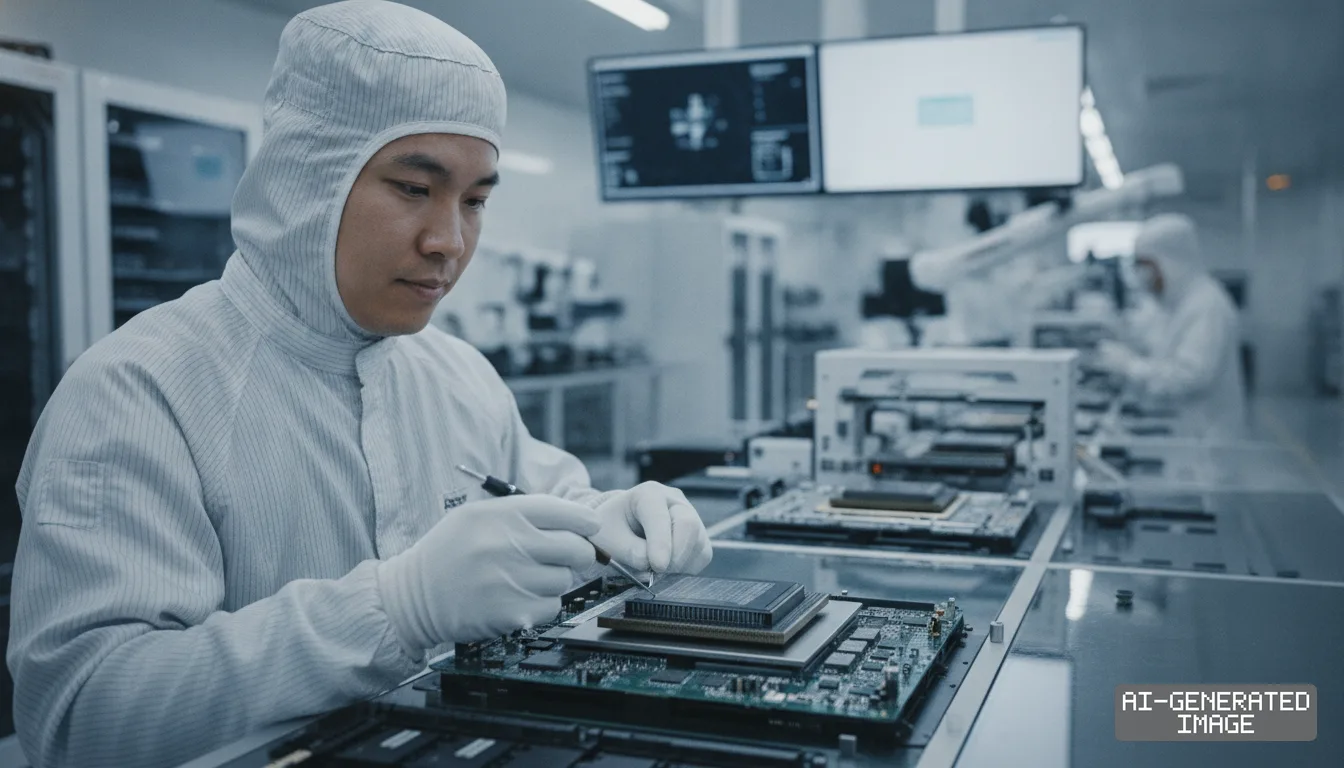
Taiwan’s Ministry of Economic Affairs moved Oct. 17 to impose criminal penalties of up to five years in prison on unauthorized exports of artificial intelligence servers and advanced chips to China.
The measure applies Article 27 of Taiwan’s Foreign Trade Act to high-performance computing hardware. Violations carry prison sentences of up to five years or fines reaching NT$3 million ($92,500), extending criminal enforcement beyond wafer-fabrication equipment.
The enforcement pivot follows an illicit diversion scheme involving 130 Supermicro AI servers equipped with Nvidia B300 graphics processing units. Smugglers successfully delivered 74 of those servers, roughly 57% of the batch, to Chinese buyers before customs seized the remainder.
Economic Affairs Minister Kung Ming-hsin said the expanded control list aligns Taiwan’s export rules directly with United States restrictions. The decision fulfills regulatory commitments established under the bilateral Agreement on Reciprocal Trade, Kung said in Taipei.
Until now, Taiwan’s strategic high-tech goods list restricted only 12 categories of semiconductor manufacturing equipment for China-bound cargo. Advanced processors and finished AI server systems operated outside the criminal scope of the Foreign Trade Act.
That regulatory omission forced prosecutors to rely on standard criminal codes when pursuing smuggling networks. Authorities lacked statutory authority to charge server diversions as national trade violations, limiting initial enforcement actions to corporate fraud and document falsification.
The Keelung District Prosecutors Office exposed that gap on Aug. 24 when it indicted nine individuals linked to the B300 server case. Prosecutors charged the suspects with breach of trust and document forgery rather than export control violations.
Those indicted included an employee from Nvidia’s Taiwan unit, two sales managers at Super Micro Computer’s local subsidiary and the chief executive of distributor Albatron Technology. The network forged end-user declarations to bypass internal supplier vetting.
Nvidia requires strict end-user certification and physical site inspections for transactions exceeding eight advanced servers. The defendants routed orders through intermediary tech entities to obscure the hardware destination, prosecutors said in their charging documents.
Smugglers used three overseas transit routes to funnel the 74 servers into mainland China. The syndicate directed 50 servers through Indonesian warehouses, shipped 16 units directly and moved eight machines through Japan and Hong Kong.
Taiwan customs halted the remaining 56 servers at domestic docks after identifying falsified export documentation. The intercepted hardware was valued at more than $15 million, according to the Keelung prosecutor findings.
The revised export controls will subject server makers and component vendors across East Asia to rigorous shipment audits. Original equipment manufacturers must now trace the end-use location of server enclosures before customs clearance is granted.
Super Micro Computer faces heightened regulatory scrutiny across its Asian logistics footprint. The company draws a major portion of its server assembly from Taiwanese contract facilities, leaving its regional distribution operations exposed to strict criminal compliance standards.
Nvidia’s regional distributor channels in Taipei face identical pressure. Taiwan accounts for the physical assembly and packaging of almost all of Nvidia’s flagship data-center accelerators before final deployment across global server racks.
The policy shift closes off a critical gray-market pipeline for Chinese technology enterprises. Chinese cloud providers have relied on third-party transshipments through Southeast Asian and Northeast Asian hubs to secure restricted American-designed computing infrastructure.
Enforcement will also alter customs inspections at container terminals in Keelung and Kaohsiung. Freight forwarders handling server enclosures must submit verified customer lists and manufacturer serial logs prior to vessel loading, trade officials said.
Regional component suppliers must simultaneously adjust their logistics protocols. Companies distributing power supplies, thermal modules and server motherboards will face expanded tracking demands from primary contractors seeking to avoid criminal liability.
The ministry has not published the technical compute thresholds or the formal effective date for the updated control list. The government also did not clarify whether server components below flagship accelerator specifications will require individual export permits.
Legislative review of the administrative decrees will take place during upcoming committee sessions in Taipei next month. Exporters must maintain verified end-user paperwork as customs authorities begin pre-clearance checks ahead of formal statutory enactment.
Impact map
How this development propagates across the region and out to global buyers.
| Event | Korea | China | Japan | Global impact |
|---|---|---|---|---|
| Taiwan criminalizes illicit AI server exports | Memory suppliers tighten end-user audits for HBM modules bound for Taiwan assembly lines | Domestic AI developers lose primary Southeast Asian transshipment channel for B300 hardware | Logistics hubs in Tokyo face secondary customs audits following transshipment route disclosures | AI server contract manufacturers add mandatory multi-tier compliance checks across East Asian hubs |
In this story
- Companies
- NvidiaSuper Micro Computer
- Tickers
- NVDASMCI
- Exposed
- Albatron Technology
- Policy
- Export Controls
- Impact
- ComplianceSupply Chain
Track every Export Controls development →
Related briefings
- Korean battery makers secure non-FEOC LFP supply contracts Also on Nvidia, Export Controls, Compliance
- US charges tech firm over $300M Nvidia chip exports to China Also on Nvidia, Export Controls, Compliance
- Xi Jinping plans business delegation for Donald Trump summit Also on Nvidia, Export Controls, Compliance
- China Tightens Connected Vehicle Data Rules With Mandatory Local Sensor Scrubbing Also on Nvidia, Export Controls, Compliance
Sources
Reporting
Confidence: medium — how we grade this
The documents behind this briefing are linked above. East Asia Brief produces its English text with AI assistance under human editorial review, and does not translate or republish other outlets' articles. See our methodology and AI policy. Spotted an error? Tell us.
The Morning Brief
What changed in Korean, Chinese and Japanese industry overnight — and what it means for your supply chain. One email, weekday mornings, US time. Free.
The Morning Brief is in preparation. Leave your address and we will write to you once — when the first issue is ready. Nothing before that.