Trump waives 100% secondary tariffs on Indian energy imports
The White House invoked national security waiver powers under the Graham sanctions law, shielding refiners handling 2 million barrels daily of Moscow feedstock from immediate penalty.
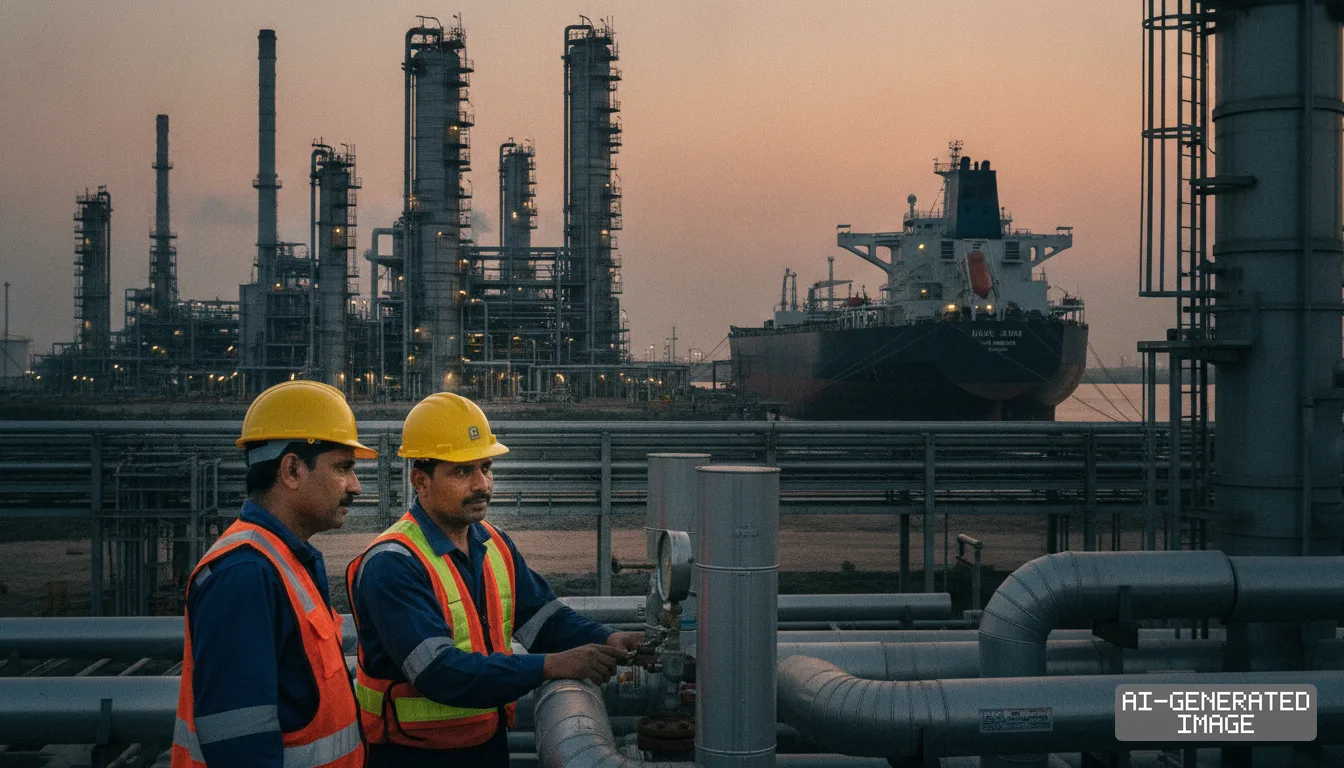
President Donald Trump suspended punitive tariffs of up to 100% against India on Oct. 17, 2026, shielding its refineries from secondary sanctions over their intake of Russian crude oil.
The White House published an executive order implementing the Lindsey O. Graham Sanctioning Russia and Iran Act of 2026. The order waived sweeping penalty duties that were scheduled to take effect automatically on Oct. 18.
The measure eliminates an immediate threat to the flow of discounted Russian petroleum, which accounts for 44% of India's crude import basket. Indian refiners currently process roughly 2.08 million barrels per day of Russian crude.
The sanctions legislation, signed as Public Law H.R. 5334 on Sept. 18, mandated punitive duties on the top five global buyers of Russian energy. The statute ordered tariffs of 500% on Russian goods and duties reaching 100% on third-country importers.
Trump exercised presidential waiver authority under Section 115(a) of the Graham Act. The order suspends the enforcement of Section 112 and Section 113 retaliatory duties, alongside financial restrictions under Sections 102 through 111 and Section 117.
The administration transmitted a formal certification and an explanatory report to congressional committees. The transmittal declared that suspending the secondary tariffs serves the national interests of the United States, according to the White House notice.
The waiver shields India's private and state-owned refining sector from asset freezes and trade barriers. Reliance Industries operates the 1.24 million barrel per day Jamnagar export refining complex, which took 150% more Russian crude in June than in May.
Nayara Energy runs the 400,000 barrel per day Vadinar refinery in Gujarat. The company is 49% owned by Russia's Rosneft and depends on Moscow for nearly all of its daily crude feedstock intake.
Indian Oil Corp operates 10 refineries with a combined processing capacity of 1.204 million barrels per day. The state-run refiner imported about 598,000 barrels per day of Russian crude in recent months, representing more than 40% of India's purchases.
Bharat Petroleum Corp imported 154,000 barrels per day of Russian crude while balancing crude intake through term contracts with Middle Eastern suppliers. State and private refiners together spent €4.5 billion ($4.9 billion) on Russian crude in June alone.
The waiver caps a contentious 14-month dispute between Washington and New Delhi over energy procurement. The Trump administration previously levied an additional 25% duty on Indian merchandise in August 2025 to penalize purchases of Urals crude.
Trump paused that 25% surcharge on Feb. 6, 2026, through Executive Order 14382. That reprieve followed Indian commitments to diversify crude procurement toward suppliers in the Persian Gulf and North America.
Renewed naval confrontations in the Strait of Hormuz disrupted shipments from Iraq and Saudi Arabia earlier this year. The resulting shipping surcharges drove Indian buyers back toward Russian oil tankers operating outside Western insurance networks.
The White House chose to waive the secondary tariffs rather than trigger sudden fuel price increases before the November 2026 congressional midterm elections. Disconnecting Indian refiners from Western finance would have curtailed diesel exports into Europe and Asia.
Indian refineries export substantial volumes of refined transport fuels derived from Russian crude to international markets. Indian, Turkish and regional refiners exported €814 million ($887 million) of refined fuels to sanctions-compliant jurisdictions in June alone.
South Korean refiners SK Innovation and S-Oil monitor Indian middle distillate runs closely. Increased export flows from Jamnagar cap regional diesel crack spreads in Singapore, limiting Asian refining margins across the Pacific basin.
Japanese trading houses and fuel distributors that import naphtha and middle distillates also avoid immediate price shocks. The waiver prevents an estimated 800,000 barrels per day of Indian diesel and jet fuel exports from exiting global sea lanes.
Trump acted fewer than 24 hours before the 30-day statutory grace period expired. Had the executive order not been issued by midnight on Oct. 17, customs collectors would have applied mandatory duties starting at 25% on Indian exports.
The executive order does not specify whether Washington has set an informal volume cap on Indian purchases, and the White House has not published the classified report sent to Congress.
The waiver remains in effect indefinitely unless revoked by the president. The Senate Foreign Relations Committee has scheduled an oversight review of the Section 115 determination for Nov. 12, nine days after the midterm vote.
Impact map
How this development propagates across the region and out to global buyers.
| Event | Korea | China | Japan | Global impact |
|---|---|---|---|---|
| Secondary tariff waiver on Indian refining | SK Innovation and S-Oil face suppressed diesel crack spreads from Jamnagar output | Sinopec and PetroChina retain clearance for Russian seaborne intake without immediate 100% US border duties | Japanese distributors avoid middle distillate price spikes as Indian product flows continue | Global refined product market retains ~800,000 bpd of Indian fuel exports, dampening retail diesel inflation |
In this story
- Companies
- Reliance IndustriesIndian Oil CorpNayara Energy
- Tickers
- RELIANCE.NSIOC.NS
- Exposed
- RosneftBharat PetroleumSK InnovationS-Oil
- Policy
- TariffsSanctions
- Impact
- Supply ChainPricingCompliance
Track every Tariffs development →
Related briefings
- US House advances 100% tariff bill on Russian crude buyers Also on Nayara Energy, Bharat Petroleum, Reliance Industries
- China curbs drone tech exports to US defense contractors in 2026 Also on Sanctions, Compliance
- SK On assumes $1.5 billion debt from US battery subsidiary Also on SK Innovation, Compliance
- Trump signs sanctions act authorizing 100% tariffs on oil buyers Also on Reliance Industries, Tariffs, Compliance
Sources
Primary documents
Reporting
Confidence: high — how we grade this
The documents behind this briefing are linked above. East Asia Brief produces its English text with AI assistance under human editorial review, and does not translate or republish other outlets' articles. See our methodology and AI policy. Spotted an error? Tell us.
The Morning Brief
What changed in Korean, Chinese and Japanese industry overnight — and what it means for your supply chain. One email, weekday mornings, US time. Free.
The Morning Brief is in preparation. Leave your address and we will write to you once — when the first issue is ready. Nothing before that.